Aveline Kirana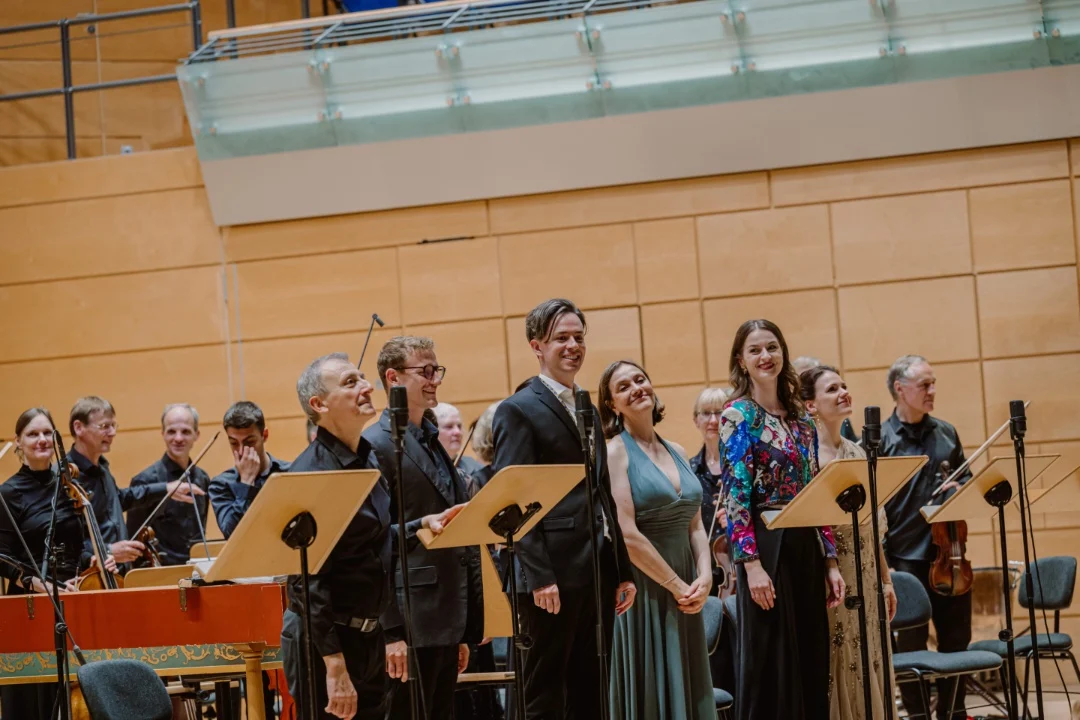
History, while often painted with broad strokes of male achievement, is not entirely devoid of female voices in its grand tapestry of artistic creation. Similarly, chronicles of power readily acknowledge monarchs who wielded not only the scepter but also the musical quill. Yet, the intersection of these two powerful identities—a ruling queen who was also a composer—remains an exceptionally rare and compelling phenomenon. This rarity was brought to vibrant, resonant life at the recent Handel Festival in Halle, where, under the astute baton of Attilio Cremonesi, the Handel Festival Orchestra Halle presented Maria Antonia Walpurgis’s 1760 opera drammatica, “Talestri, regina delle Amazzoni.” The performance served as a brilliant, subversive counterpoint to the festival’s overarching theme for 2026: "Masculinities: heroes, rulers, heartbreakers."
Maria Antonia Walpurgis (1724–1780), a Bavarian princess and later Electress of Saxony, was a true polymath, a figure whose intellectual and artistic prowess defied the conventions of her era. Her tutelage under Baroque titans Nicola Porpora and Johann Adolph Hasse speaks volumes of her dedication to musical mastery. More significantly, she achieved what few aristocrats of any gender dared to attempt: she penned both the libretto and the sophisticated score of her opera. In "Talestri," Walpurgis reframes the mythic Amazon Queen, not as a one-dimensional warrior, but as a complex ruler grappling with an agonizing, deeply human conflict. Her duty to her state, which dictates the sacrifice of male intruders, clashes profoundly with her forbidden love for the captured Scythian Prince Oronte. This internal struggle, woven into the fabric of the opera, offers a profound exploration of leadership, duty, and the universal human experience of love.
The significance of this performance extends far beyond its thematic resonance. Conductor Attilio Cremonesi, leading from the harpsichord, demonstrated a remarkable synergy with the ensemble, a testament to his long-standing relationship with the Handel Festival Orchestra Halle. His personal background as a premier vocal coach undoubtedly contributed to the exquisite sensitivity with which the orchestra supported the singers. The ensemble’s capacity for emotional delineation and vivid tone-painting was extraordinary, establishing a compelling framework for the narrative. Driven by sharp rhythms and a rich palette of sonic textures, the orchestra created an immersive auditory experience. Throughout the evening, the basso continuo section proved a marvel of imagination, functioning not merely as harmonic support but as an active, fluid commentator between scenes, enriching the dramatic flow and underscoring the emotional nuances of the performance.
Illuminating Cast: Voices of Strength and Vulnerability
In the demanding titular role of Talestri, soprano Katharina Ruckgaber delivered a performance of extraordinary emotional range and vocal command. From her initial dilemmas in Act I, Scene II, where she confessed her forbidden love to her sister, Ruckgaber infused the character with a beautifully soft, sensitive, and appropriately fragile vocal quality. As the drama unfolded, her portrayal deepened and grew immensely. By Act II, Scene IV, Ruckgaber navigated intricate thematic lines in the recitative with astonishing agility, charting Talestri’s plotting to subvert the council’s execution laws. This paved the way for her spectacular aria in Act II, Scene V, where, asserting her royal authority against the high priestess, and framed by a brilliant tutti texture and the soaring call of horns, she unleashed a commanding vocal power imbued with metallic strength. This vocal and dramatic evolution culminated in the final act. Following a tense dramatic confrontation over the fate of the prisoners, her scene five aria offered an exquisitely moving, floating alliance with the baroque flutes, showcasing a devastating vulnerability seamlessly paired with masterful breath control.
Standing at the sovereign’s side, mezzo-soprano Corinna Scheurle as Antiope offered a resolute vocal and dramatic foil to Talestri. Scheurle embodied a sharper metallic edge and an unwavering determination that provided a powerful counterpoint to the queen’s internal conflict. Emerging in Act I, Scene III with an unusually dark and muscular voice, Scheurle immediately injected a fierce passion into her performance as she sang of her own willingness to yield to love. Her Act I, Scene VI aria, enhanced by oboe accompaniment, emerged as a lyrical highlight, showcasing the clean and silky aspects of her voice. This grounded dignity carried through to the final act, where her crucial moments in scenes six and seven featured a remarkably solemn and stable vocal production, projecting an unwavering sense of finality and unwavering loyalty.
The formidable character of the high priestess Tomiri was brought to life by veteran soprano Roberta Invernizzi, who infused the role with unquestionable authority from her very first entrance in Act I. Arriving with her signature large dynamic range, her delivery was immediately steeped in dramatic tension. Invernizzi utilized subtle, highly expressive vocal shifts as she urged the hesitant princess toward the throne. This artistic gravitas deepened in Act II, Scene VI, where she employed a complex, multifaceted voice to embody the chilling legalism of the Amazonian state. Yet, beneath this terrifying political exterior, Invernizzi skillfully revealed Tomiri’s deeply complex emotional entanglement with her son, Learco. Her formidable presence reached its peak in the council scene, where she launched a fierce legal assault against Talestri’s leniency. Delivering an aria of immense command, Invernizzi unleashed a true grand heroine aura, powerfully backed by the roaring brass of a potent horn tutti.
Further Ensemble Brilliance and Musical Nuances
The role of Prince Oronte was undertaken by countertenor Ray Chenez, who faced a series of mid-tempo arias that proved to be the longest in the score. The perceived lack of dramatic variety and broad architectural sweep within these numbers presented the evening’s greatest challenge for the performer. In his major Act II, Scene III aria, where Oronte pleads for his friend’s life while reflecting on his former female disguise, Chenez audibly struggled to sustain momentum with his nasal projection. However, by the final act, as Oronte prepared for execution and bid a poignant farewell to his mother, Chenez convincingly navigated the music’s long-breathed lines, transforming the moment into a deeply felt portrait of noble resignation and profound human emotion.
Federico Fiorio delivered a stellar performance as Learco, Oronte’s captive friend. His relatively late entrance in the finale of Act I was unforgettable. Captured but unbowed, he emerged directly to spin soft, rich lines over rolling, wave-like string figurations that beautifully evoked the Thermodon River, executing breathtaking high-register piano singing. Following his enlightening aria in Act II, Scene II, Fiorio returned in the final act with an energetic, princely glamour, displaying a wonderfully flexible upper register and beautifully executed small coloratura figures, solidifying his character’s unwavering spirit.
The casting for the night’s performance was exceptionally well-considered, fostering a natural alignment of vocal color, dramatic temperament, and individual virtuosity across the ensemble. If a single drawback were to be noted, it was a perceptible lack of extensive physical onstage interaction between the performers. This occasionally left the audience to navigate the libretto’s complex web of plots and interpersonal dynamics with purely musical clues, requiring a heightened level of engagement with the text and the score.
Broader Implications and Artistic Significance
Despite this minor observation, the opera’s profound intellectual residue was undeniable. By opting for romantic reconciliation over the cold, rigid retribution of Amazonian law, Maria Antonia Walpurgis’s “Talestri” fundamentally subverts not only the prevailing societal norms of her period but also, perhaps, our own contemporary anxieties surrounding masculinity. In a festival dedicated to exploring the multifaceted nature of masculinities, this work quietly posed a profound question: Does true strength lie in the rigid enforcement of power and control, or in the courageous embrace of empathy and the potential abdication of absolute authority?
The performance at the Handel Festival Halle was more than just a historical rediscovery; it was a potent demonstration of how forgotten musical narratives can offer vital contemporary relevance. Walpurgis, a woman of noble birth and exceptional talent, used her position and her art to challenge prevailing notions of power and gender. Her opera, "Talestri," championed emotional intelligence and the capacity for love as forces equal to, if not more powerful than, martial prowess and unyielding decree. This artistic intervention, made centuries ago, resonated powerfully in the 21st century, prompting reflection on the diverse forms that leadership and strength can take. The festival’s choice to spotlight this opera, alongside its broader thematic exploration, provided a crucial platform for a work that champions a more nuanced and humanistic understanding of power and identity. The success of this production underscores the ongoing importance of unearthing and celebrating the contributions of female artists throughout history, enriching our understanding of the past and informing our vision for the future.