Kholidah
The Incident: A Breakdown of the "Lemon Tang" Performance
On the evening of June 30, 2026, Hearts2Hearts took the stage at the Busan Asiad Main Stadium. As a rookie group that has rapidly gained a reputation for high-caliber vocal ability, expectations were elevated. The group performed "Lemon Tang," a high-energy track characterized by complex choreography and demanding vocal runs. For the majority of the set, the performance appeared seamless, adhering to the high production standards synonymous with SM Entertainment.
However, the atmosphere shifted following the 1:51 mark of the performance. During a bridge section of the song, member Stella was seen moving across the stage as her recorded vocal line played clearly over the sound system. Observers noted that Stella failed to bring her handheld microphone to her mouth during her designated line. Despite the absence of a physical microphone near her face, the vocal output remained consistent in volume and clarity, suggesting the use of a pre-recorded All Recorded (AR) track rather than a Live Music Recording (LMR) or a fully live vocal performance.
The discrepancy was momentary, but the visual evidence was stark. Stella appeared to realize the timing error almost immediately, showing a brief moment of visible hesitation before resuming the choreography. For many in attendance and those watching the livestream, the incident served as a definitive confirmation that the group was not singing live, despite the use of handheld microphones—a tool typically reserved for artists intending to demonstrate live vocal stability.

Chronology of the Controversy and Online Reaction
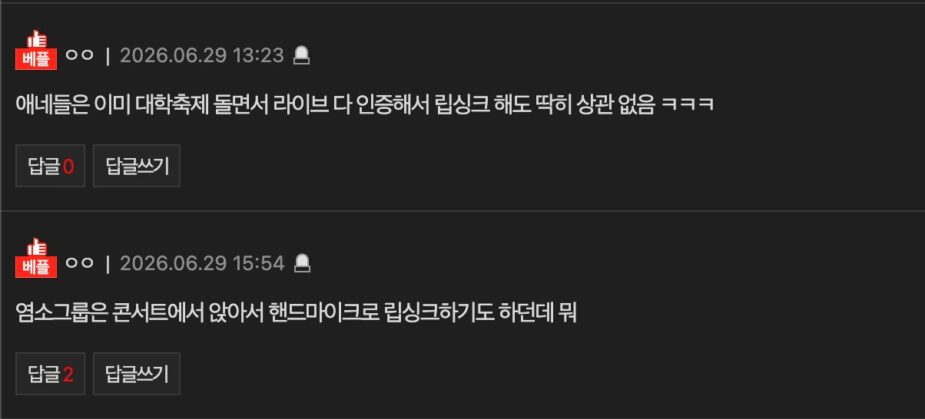
The incident gained immediate traction on major South Korean online communities, including theqoo and Nate Pann. Within an hour of the performance’s conclusion, a post titled "Disappointment regarding Hearts2Hearts’ Busan Stage" began trending, garnering tens of thousands of views and hundreds of comments. The original poster (OP), who identified as a dedicated follower of the group, expressed a sense of betrayal not at the group’s lack of talent, but at the deceptive nature of the staging.
"I am an SM fan who watches all of Hearts2Hearts’ stages and content," the post read. "I know they are capable of excellent live performances, which is why I don’t understand why they were made to lip-sync with handheld microphones in Busan today. The stage looks more polished when they can use both arms for choreography. If the intention was to lip-sync, they should have used headsets or omitted the mics entirely. Using handhelds creates an expectation of a live performance that wasn’t met."
By the following morning, the debate had spread to international social media platforms. The hashtag #Hearts2HeartsLive began trending as fans uploaded "MR Removed" videos—a controversial but common practice where fans attempt to strip away backing tracks to isolate live vocals. In this instance, the MR removed versions of the Busan performance showed a near-total absence of live vocal input, further fueling the fire of the debate.
Supporting Data: The Reputation of Hearts2Hearts
To understand why this specific incident sparked such a heated debate, one must look at the trajectory of Hearts2Hearts since their debut. Unlike many rookie groups that prioritize dance over vocals, Hearts2Hearts was marketed by SM Entertainment as a "vocal-centric" unit. Their debut showcase featured acoustic renditions of their tracks, and their appearances on music variety programs like The Seasons had previously solidified their status as "live-vocal monsters."

Data from music streaming platforms and fan surveys throughout early 2026 indicated that "vocal authenticity" was the primary reason for the group’s rapid fandom growth. A poll conducted by a major K-pop news outlet in May 2026 showed that 68% of Hearts2Hearts fans cited "live singing ability" as the group’s most appealing trait. Consequently, the discovery of lip-syncing at a major festival like BOF felt, to many, like a contradiction of the group’s core brand identity.
Furthermore, industry analysts have pointed out that SM Entertainment has a historical pattern of navigating the "Live vs. AR" debate. Historically, the agency has often prioritized "perfect" audio-visual presentations for televised broadcasts, sometimes requiring their artists to use loud backing tracks or full lip-syncing to ensure that the rigorous choreography does not compromise the sonic quality of the broadcast.
The "Handheld Mic" Factor: A Question of Intent
A significant portion of the criticism directed at the group and their management centers on the use of handheld microphones. In the technical landscape of K-pop, there is an unwritten hierarchy of equipment:
- Headset Microphones: Generally accepted for heavy performance-based stages where the choreography is the primary focus.
- Handheld Microphones: Symbolize a commitment to live vocals, as they limit the performer’s range of motion and require significant breath control.
Critics argue that by equipping Hearts2Hearts with handheld microphones, SM Entertainment was signaling to the audience that the performance would be live. When the 1:51 mishap revealed otherwise, the use of the microphones was reinterpreted by some as a "prop" used to simulate a live environment. This perceived lack of transparency is what many fans found "unfortunate," as it overshadowed the group’s actual skills.

Conversely, some industry insiders suggest that the decision might have been a last-minute technical pivot. "Large-scale outdoor festivals like the Busan One Asia Festival present unique acoustic challenges," noted a former concert sound engineer. "Wind, feedback, and monitor delays can make live singing incredibly difficult for a rookie group. It is possible that the decision to switch to an AR track was made by the production team shortly before the stage to avoid technical errors, leaving the artists in a difficult position."
Official Responses and Industry Implications
As of the time of reporting, SM Entertainment has not issued a formal statement regarding the lip-syncing allegations. This silence is typical for the agency, which generally prefers to let the controversy subside through the release of new content. However, sources close to the group suggest that the members themselves were frustrated by the production choice, as they had prepared for a live set.
The debate has broader implications for the K-pop industry in 2026. As the genre continues to dominate global charts, the demand for "authentic" live performances has reached an all-time high. Following the 2024-2025 "Encore Controversies" that plagued several top-tier groups, the public has become increasingly vigilant. Groups that can prove their vocal stability are rewarded with "prestige" status, while those caught lip-syncing face significant hurdles in maintaining a "serious artist" image.
Broader Impact on the 2026 K-pop Landscape
The Hearts2Hearts debate is not occurring in a vacuum. It reflects a growing tension in the "Fifth Generation" of K-pop, where the divide between "Idol as Performer" and "Idol as Vocalist" is narrowing. In 2026, the industry has seen a resurgence of interest in live band sessions and raw vocal performances, partly as a reaction to the hyper-processed AI-adjacent aesthetics of the early 2020s.
For Hearts2Hearts, the path forward involves reclaiming their vocal reputation. Marketing experts suggest that the group should lean into more "unfiltered" content—such as raw practice room videos or radio appearances—to remind the public of the talent they have already proved. The "Lemon Tang" incident may serve as a cautionary tale for agencies regarding the risks of "over-producing" rookie talent at the expense of transparency.
While the "Busan mishap" remains a point of contention, it is unlikely to derail the group’s long-term success. Their discography continues to perform well on digital charts, and their international tour remains a sell-out. However, the incident has undoubtedly added a layer of scrutiny to their future live appearances. The next time Hearts2Hearts picks up a handheld microphone, the world will be listening—not just to the music, but for the breath, the imperfections, and the undeniable proof of a live voice.