Johan Budi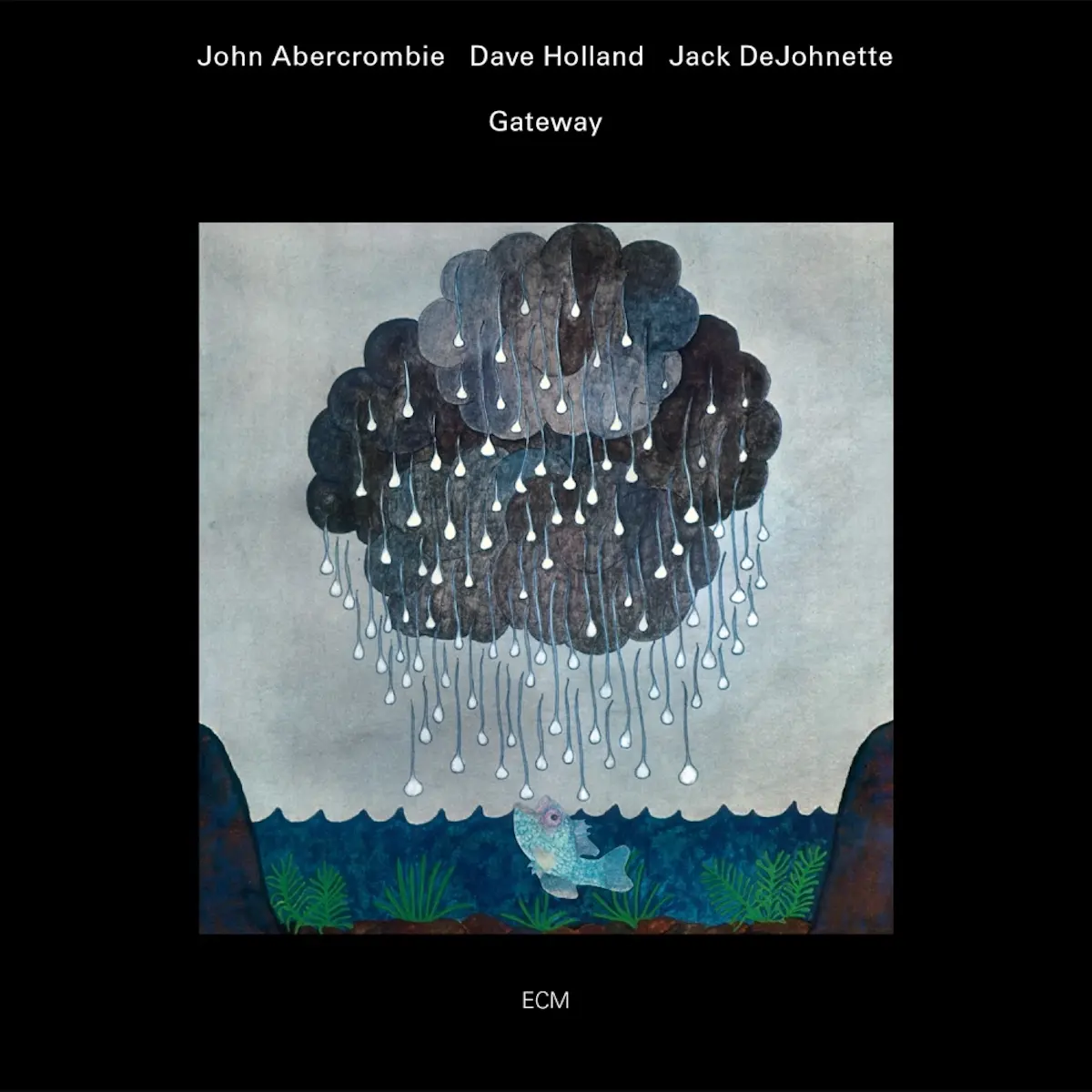
The landscape of contemporary jazz underwent a seismic shift in the mid-1970s, a period defined by the convergence of avant-garde experimentation, the electric energy of rock, and the structural discipline of classical impressionism. At the heart of this transformation was the formation of Gateway, a collaborative trio consisting of guitarist John Abercrombie, bassist Dave Holland, and drummer Jack DeJohnette. While many "supergroups" of the era prioritized individual virtuosity at the expense of cohesive identity, Gateway established a paradigm for democratic interplay that would resonate for decades. A retrospective analysis of the group’s output—anchored by their 1975 debut, the 1977 follow-up, and their 1994 return—reveals a trajectory of musical maturity that balanced visceral power with intellectual rigor.
The Genesis of a Jazz Powerhouse: The 1975 Ludwigsburg Sessions
The trio’s self-titled debut, Gateway, recorded in March 1975 at the Tonstudio Bauer in Ludwigsburg, Germany, remains a cornerstone of the ECM Records catalog. Produced by Manfred Eicher, the album captured a specific moment in jazz history where the boundaries between genres were becoming increasingly porous. The recording session occurred just as the jazz-fusion movement was reaching its commercial peak, yet Gateway chose a path distinct from the high-decibel pyrotechnics of groups like the Mahavishnu Orchestra or Return to Forever.
Critics and historians often point to the track "Sorcery," composed by Jack DeJohnette, as the definitive example of the trio’s early intensity. The piece serves as a vehicle for John Abercrombie to explore the limits of his instrument, utilizing a rock-inflected tone that cuts through the traditional jazz aesthetic. The composition builds to what has been described as a "savage" height, showcasing Abercrombie’s ability to navigate dense chromaticism while maintaining a liquid, legato flow. This "freshness of touch," as noted by critic Michael Tucker in 1996, set the 1975 recording apart from its contemporaries.
The opening track, "Back-Woods Song," offered a stark contrast to the intensity of "Sorcery." Rooted in a country-like simplicity and anchored by Dave Holland’s deeply grooved bass lines, the track demonstrated the trio’s versatility. Holland’s role in the group was foundational; having performed with Miles Davis during the Bitches Brew era, he brought a rhythmic stability that allowed Abercrombie and DeJohnette to explore more ethereal, impressionistic territories.
Individual Pedigrees and the Trio’s Synergy
To understand the impact of Gateway, one must examine the individual trajectories of its members leading up to 1975. John Abercrombie had already established himself as a forward-thinking voice on the guitar with his 1974 release Timeless. His style—a blend of Jim Hall’s sensitivity and the harmonic adventurousness of the fusion era—found its perfect foil in Holland and DeJohnette.
Dave Holland, a British expatriate, had become one of the most sought-after bassists in the world by the mid-70s. His work with Stan Getz and his participation in the avant-garde quartet Circle (with Anthony Braxton and Chick Corea) gave him a unique perspective on both melody and abstraction. Jack DeJohnette, meanwhile, was redefining the role of the jazz drummer. His polyrhythmic approach and keen sense of color made him more than a timekeeper; he was a melodic contributor whose influence on the trio’s compositional direction was profound.
The synergy between these three musicians was not merely a result of their technical skill but of their shared commitment to a "democratic" trio format. Unlike the traditional "leader plus rhythm section" model, Gateway functioned as a true equilateral triangle, where any member could shift the harmonic or rhythmic focus at any moment.
The Evolution of Sound: Gateway 2 and the Oslo Sessions
In July 1977, the trio reconvened at Talent Studio in Oslo to record Gateway 2. While the debut had been defined by a raw, exploratory energy, the second album leaned further into the atmospheric and the intellectual. The recording featured Abercrombie expanding his sonic palette to include the electric mandolin, an instrument that added a shimmering, folk-like texture to the group’s sound.
The tracks on Gateway 2, such as "Opening" and "Reminiscence," showcased a more refined sense of space. The influence of the "ECM sound"—often characterized by its clarity, reverb, and "northern" aesthetic—was more pronounced here than on the debut. Jack DeJohnette also contributed piano on the track "Blue," highlighting the multi-instrumental capabilities that allowed the trio to transcend the standard guitar-bass-drums format.
Despite the high level of craftsmanship on Gateway 2, some critics argued that it lacked the "blistering improvisational elan" found in the 1975 sessions. However, from a historical perspective, the album was essential in proving that Gateway was not a one-off experiment but a sustainable creative entity capable of evolving its language.
The Long Hiatus and the 1994 Homecoming
Following the 1977 release, the members of Gateway focused on their respective solo careers and other collaborations for nearly two decades. It was not until 1994 that the trio officially reunited for the album Homecoming, recorded in New York City. This reunion was preceded by a series of high-profile live performances, most notably at the Bracknell Festival, where the group’s mixture of visceral power and emotional subtlety took the audience by storm.
The Homecoming album represented a mature distillation of the group’s various influences. Tracks like "7th D" and the title track "Homecoming" proved that the trio had lost none of its hard-swinging power. Conversely, "Oneness" and "Short Cut" displayed a newfound emotional depth and a more nuanced approach to collective improvisation.
The 1994 sessions were recorded at Power Station in New York, a studio known for its punchy, immediate sound. This change in environment contributed to a record that felt more grounded and "blues-soaked" than the airy impressionism of their late-70s work. The return of Gateway was hailed as a significant event in the jazz world, signaling that the chemistry between Abercrombie, Holland, and DeJohnette remained potent despite the seventeen-year gap between studio albums.
Comparative Analysis: Freshness vs. Maturity
When evaluating the three primary Gateway releases, a central debate emerges regarding the trade-off between the "freshness" of a debut and the "compositional strength" of later works. Michael Tucker’s 1996 assessment in Jazz Journal favored the 1975 recording for its "exhilarating dynamic range" and "rock-solid" grooves. This perspective posits that the initial spark of a new collaboration often yields a level of energy that is difficult to replicate once a group becomes established.
However, a broader analysis suggests that each phase of Gateway served a different purpose in the evolution of modern jazz. The 1975 album was a statement of intent, breaking down the barriers between jazz and rock. The 1977 album was an exploration of texture and mood, prefiguring much of the "chamber jazz" that would follow in the 1980s. The 1994 reunion was a celebration of longevity and the enduring power of a shared musical vocabulary.
Technical Discography and Session Details
The technical data of these recordings provides insight into the group’s development. The 1975 Gateway (ECM 1061) featured six tracks with a total runtime of 41:47. The session was notable for its use of "open" structures, particularly on the track "Jamala," which allowed for maximum improvisational freedom.
The 1977 Gateway 2 (ECM 1105) consisted of five tracks totaling 44:07. The inclusion of the electric mandolin and piano expanded the trio’s harmonic range, while the recording in Oslo emphasized the "cold" clarity of European jazz production.
The 1994 Homecoming (ECM 1562) was the most expansive of the three, featuring nine tracks and a total runtime of 73:23. This album saw a return to more structured compositions, with Abercrombie and Holland both contributing several pieces. The increased runtime allowed the trio to explore a wider variety of moods, from the calypso-inflected "Calypso Falto" to the introspective "In Your Arms."
The Broader Impact on the Jazz Genre
The legacy of Gateway extends beyond their three primary recordings. The trio’s work influenced a generation of guitarists and rhythm sections by demonstrating that "fusion" did not have to mean "loud." They proved that the energy of rock could be harnessed within the sophisticated frameworks of jazz without sacrificing either.
Furthermore, Gateway’s success helped solidify ECM Records’ reputation as a label that fostered long-term creative partnerships. The label’s willingness to allow the trio to evolve over twenty years—and to record them in different locations with different sonic profiles—was instrumental in the development of the "European" jazz identity, even though all three musicians were deeply rooted in the American jazz tradition.
Conclusion: A Trio for the Ages
In the final analysis, the Gateway trio remains one of the most significant small ensembles in the history of improvised music. Whether one prefers the "savage intensity" of their 1975 debut or the "emotional subtlety" of their 1994 return, it is undeniable that John Abercrombie, Dave Holland, and Jack DeJohnette created a body of work that stands as a testament to the power of collective improvisation.
The joy of Gateway, as evidenced in their discography, lies in the "sheer freshness of touch and energy" that they brought to every session. By balancing the visceral with the intellectual, and the blues with the chromatic, they created a musical language that remains as relevant today as it was thirty years ago. As the jazz world continues to evolve, the recordings of Gateway serve as a vital reminder of the heights that can be reached when three masters of their craft commit to a shared vision of artistic excellence.

![Sijya announces Leather and Brass [Retrofitted] EP, shares Do I Know [Rachika Nayar Edit]: Listen](https://empire-music.net/wp-content/uploads/2026/09/sijya-announces-leather-and-brass-retrofitted-ep-shares-do-i-know-rachika-nayar-edit-listen.webp)