Aveline Kirana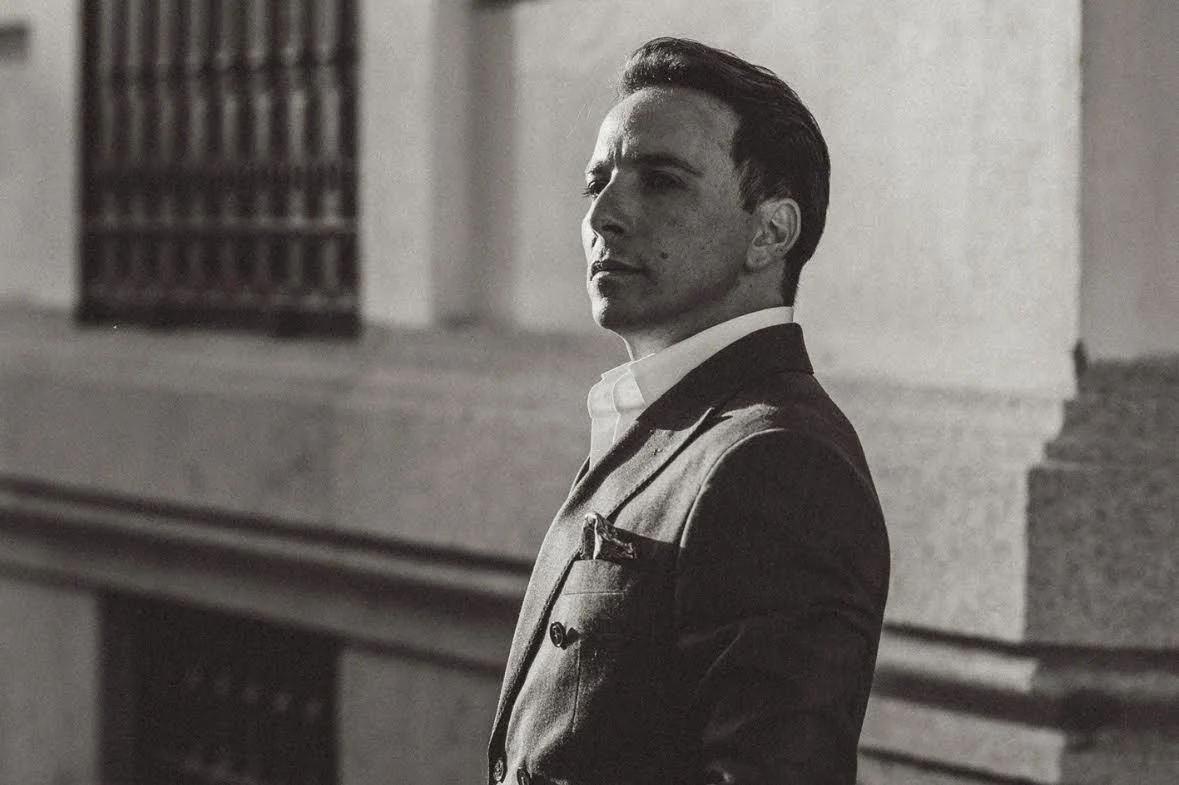
The international opera landscape witnessed a notable management shift this week as acclaimed tenor Santiago Ballerini announced his transition to the prestigious artist management agency, Aart Music. The move signifies a strategic pivot for the Argentine-born singer, who has spent the last several years consolidating his reputation as one of the most versatile tenors of his generation. Ballerini will now be under the direct representation of Alessandro Tumscitz and Adalberto Ruggeri, two figures well-regarded within the European and international classical music circuit for their roles in shaping the trajectories of high-profile vocalists.
This transition comes at a pivotal moment in Ballerini’s professional life, as he balances a robust schedule of global engagements with the demands of an increasingly competitive market. The partnership with Aart Music is expected to provide the logistical and strategic infrastructure necessary to navigate the complexities of top-tier house bookings, recording opportunities, and the specific demands of the contemporary operatic industry.
A Reflective Transition: Honoring the Past While Embracing the Future
In a formal statement released alongside the announcement, Ballerini expressed a mixture of professional enthusiasm and deep appreciation for his previous management. "Feeling grateful with my new team and family: Alessandro Tumscitz and Adalberto Ruggeri, who will be representing me in this new stage," Ballerini stated. "I would also like to express my deepest gratitude to Aleix Palau for three remarkable years of collaboration, trust, and an inspiring artistic journey together."
The acknowledgement of Aleix Palau is significant, as it highlights the stability of the support systems that allow artists to thrive at the highest levels. The three-year period under Palau’s guidance saw Ballerini secure key roles in major international houses, effectively transitioning him from a rising star to a staple of the global operatic stage. Industry observers often note that such transitions are rarely signs of dissatisfaction but rather a natural evolution, as artists seek new networks, different regional focuses, or a shift in the scale of their management teams to accommodate their growing global footprint.
Chronology of an Ascendant Career
Santiago Ballerini’s journey to the international stage is rooted in a disciplined trajectory that blends rigorous training with a rapid expansion of his repertoire. A graduate of the Instituto Superior de Arte del Teatro Colón, Ballerini first gained prominence within the South American opera scene before his talent prompted a move to the United States and Europe.
His participation in the Young Artist programs at prestigious institutions—most notably the Glimmerglass Festival—served as a catalyst for his professional emergence. Over the past decade, his performance timeline shows a deliberate expansion:
- Early Years: Focus on Latin American houses, including extensive work at the Teatro Colón in Buenos Aires, where he established a vocal foundation in the bel canto and lyric tenor repertoire.
- The North American Pivot: Entry into the United States market, featuring high-profile appearances at the Kennedy Center and collaborations with major North American companies.
- International Expansion: The last five years have seen an aggressive expansion into European markets, with critical performances at the Teatro Real in Madrid, the Gran Teatre del Liceu in Barcelona, and the Opéra national de Bordeaux.
- Current Season: The tenor’s current schedule, which includes engagements at the Royal Danish Opera and Musikhuset Aarhus, underscores his status as a performer who is as comfortable in Scandinavian houses as he is in the Mediterranean theaters that defined his early career.
Supporting Data: A Global Footprint
The list of venues where Ballerini has performed provides a clear picture of his standing within the industry. His credits include the Wiener Konzerthaus, the Arena di Verona, and the Teatro Regio di Torino. These are not merely geographic locations; they represent distinct musical cultures, each with specific expectations regarding technique and stylistic interpretation.
To perform at the Wiener Konzerthaus, for instance, requires a level of vocal clarity and chamber-music sensitivity that differs from the power needed to fill the Arena di Verona. Ballerini’s ability to move between these environments has made him a reliable asset for casting directors. His repertoire—often anchored in Rossini, Donizetti, and the lighter Verdi roles—requires a specific agility that remains in high demand.

The industry demand for such tenors is underscored by the current trend in programming, where houses are looking for performers who can handle the vocal demands of the 19th-century repertoire while possessing the stage presence required for modern, often physically demanding, productions.
The Role of Artist Management in Modern Opera
The move to Aart Music highlights the critical importance of artist management in the modern era. In the early 20th century, management was largely about securing dates; today, it involves brand curation, contract negotiation, media relations, and long-term career planning.
Alessandro Tumscitz and Adalberto Ruggeri bring a specific expertise to the table that aligns with Ballerini’s goals. By joining a roster that includes established artists, Ballerini is positioning himself to access a wider range of opportunities. The agency’s influence in European markets is particularly relevant for a singer who has already established a strong presence in the Americas and now seeks to deepen his footprint in the traditional heartlands of opera.
When an artist at Ballerini’s level changes representation, it often suggests a strategy of "scaling up." This could involve seeking more leading roles in A-list houses, exploring recording contracts, or diversifying into crossover or recital-focused work. The involvement of a new management team provides the external perspective often needed to transition from being a "sought-after guest" to a "company-defining artist."
Industry Implications and Future Outlook
The broader implications of this signing are twofold. First, it demonstrates the continued vitality of the operatic talent market despite global economic fluctuations. Agencies are continuing to invest in established tenors who offer a combination of technical proficiency and marketability.
Second, for Ballerini, the timing is optimal. He has reached a point of maturity in his voice where he can begin to explore a slightly heavier repertoire while maintaining the flexibility that made him a favorite of the bel canto school. The collaboration with Aart Music will likely focus on securing a balance between these artistic aspirations and the commercial necessity of maintaining a high-visibility profile.
Looking ahead, audiences can expect to see a continuation of his work across diverse repertoires. His upcoming performances at the Royal Danish Opera serve as a testament to the continued trust that major institutions place in his craft. By aligning himself with a team that understands the nuanced landscape of international casting, Ballerini is ensuring that his next decade of performance will be as strategically managed as it is artistically rewarding.
As the industry continues to evolve in response to digital media, global travel shifts, and changing audience demographics, the relationship between a singer and their management becomes the primary engine for success. For Santiago Ballerini, this change of guard is a clear signal that he is not merely maintaining his current status, but actively planning for the next phase of his operatic career. Whether this results in a move toward more dramatic repertoire or a deeper focus on the core bel canto canon remains to be seen, but the infrastructure for those choices is now firmly in place under the guidance of Aart Music.