 Mia Khoirunisa
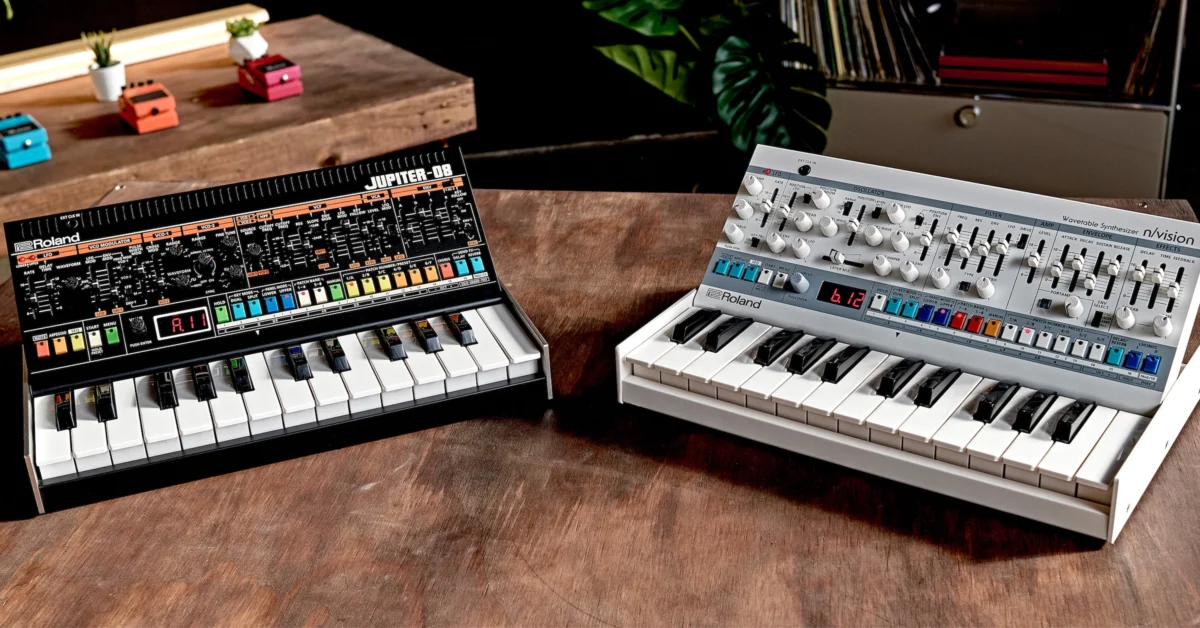
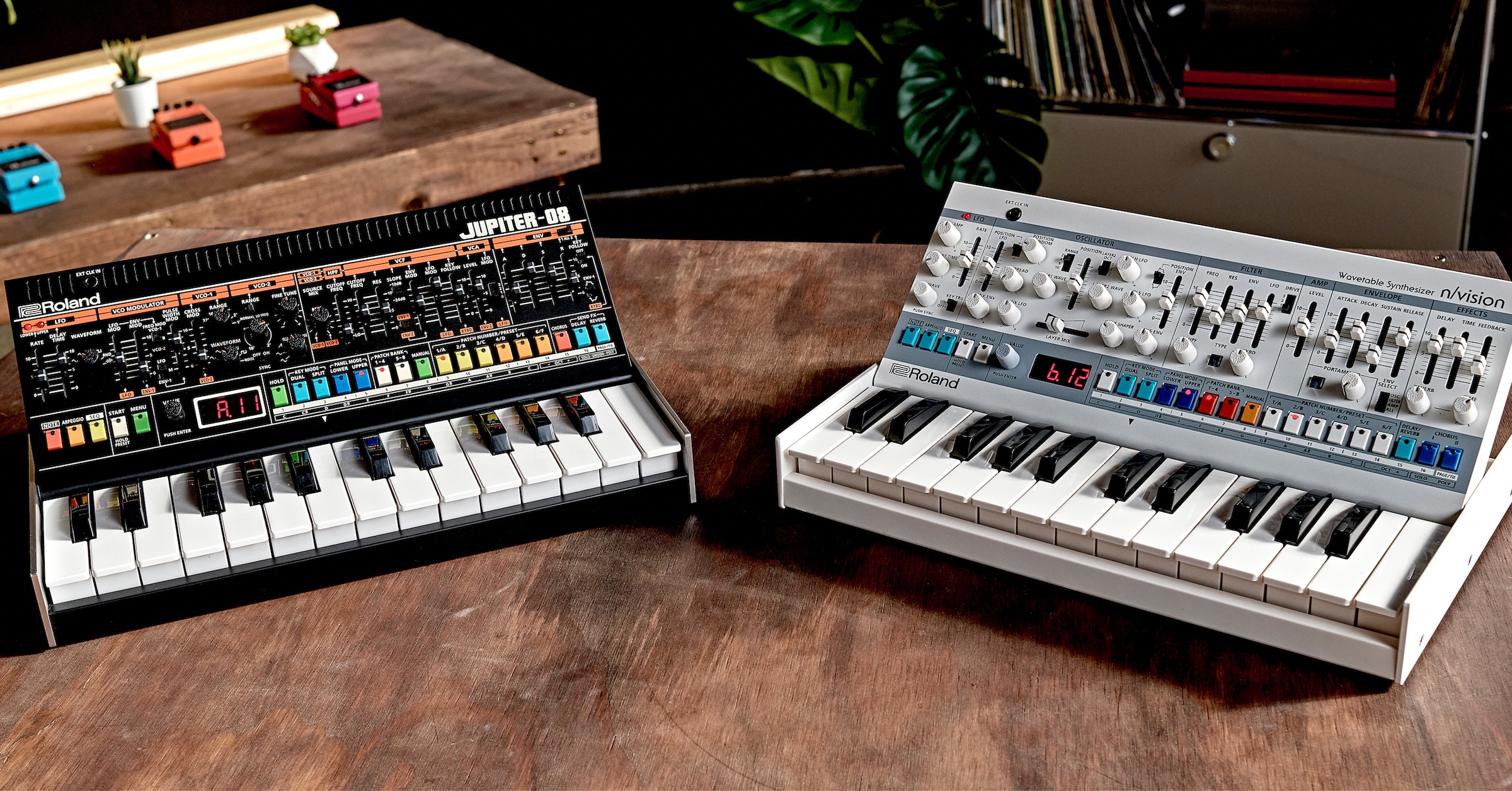
Roland Corporation has announced the expansion of its celebrated compact hardware line with the introduction of two new additions to the Roland Boutique series: the JUPITER-08 vintage remake and an entirely new hardware instrument, the n/vision wavetable synthesizer. Retailing at $549.99, both units arrive bundled with the K-25M keyboard dock, marking a structural shift in how the company packages its miniature desktop synthesizers for consumers.
The launch brings back the distinctive form factor that defined the Boutique series upon its initial debut a decade ago, while significantly upgrading the internal architecture, polyphony limits, and sound design capabilities. As hardware synthesizer enthusiasts adapt to changing global manufacturing costs, shipping logistics fluctuations, and currency shifts, Roland’s latest release signals a continued commitment to micro-form-factor digital and analog-modeled music production tools.
Evolution of the Roland Boutique Series
The Roland Boutique series first captured the electronic music market’s attention by offering miniaturized, highly accessible digital recreations of legendary analog hardware, utilizing Analog Circuit Behavior (ACB) technology. Over the years, the lineup has expanded to include compact emulations of classic rhythm machines and polyphonic synthesizers such as the Juno and Jupiter series.
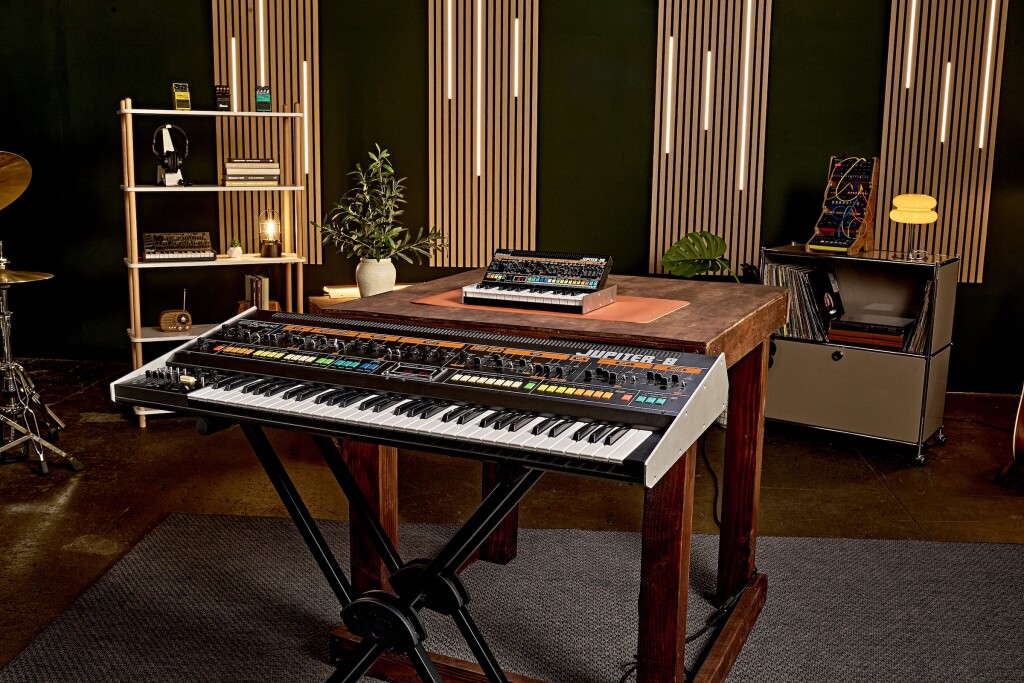
Historically, these modules were sold as standalone desktop units, requiring users to purchase the K-25M keyboard dock separately if they desired physical keys. By bundling the keyboard dock directly into the base $549.99 retail price for both the JUPITER-08 and the n/vision, Roland is streamlining the out-of-the-box experience, addressing user feedback regarding accessibility while adjusting to contemporary production pricing standards.
The JUPITER-08: Celebrating a Polyphonic Milestone
Celebrating the 45th anniversary of the legendary Jupiter-8 architecture, the newly minted JUPITER-08 brings the classic aesthetic into a modern technological framework. One of the primary historical criticisms directed at compact retro-styled synthesizers—such as earlier limitations regarding voice count—has been thoroughly addressed in this iteration.
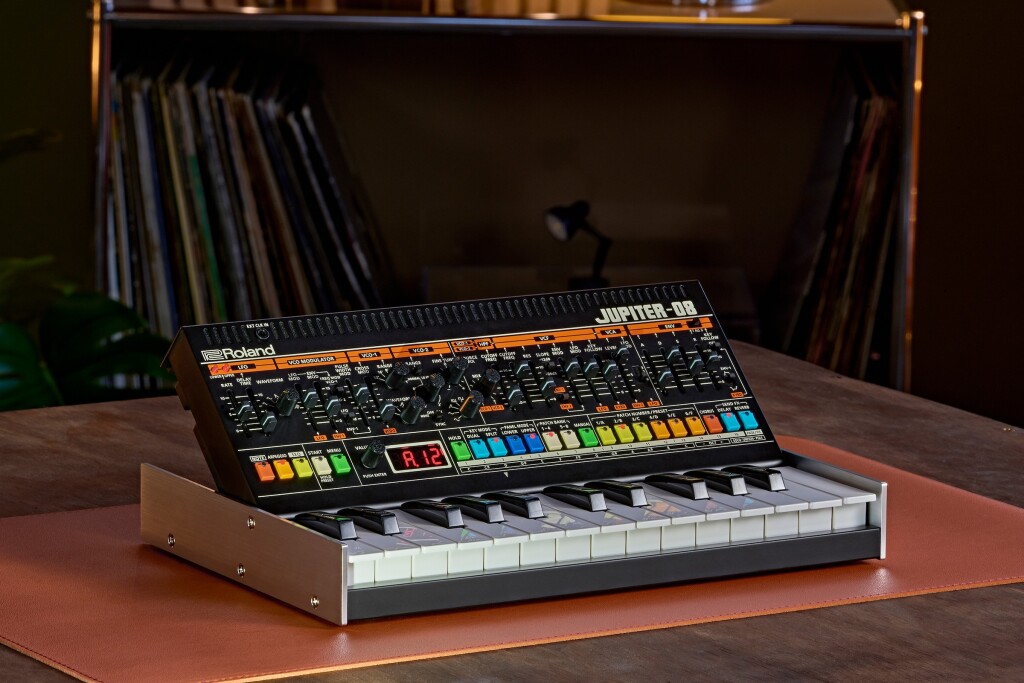
While vintage units and early digital emulations often operated under strict voice constraints, the JUPITER-08 scales its performance architecture significantly, supporting up to 32 voices of polyphony. This substantial increase allows complex pads, layered timbres, and expansive chord structures to sustain without voice stealing or premature note truncation.
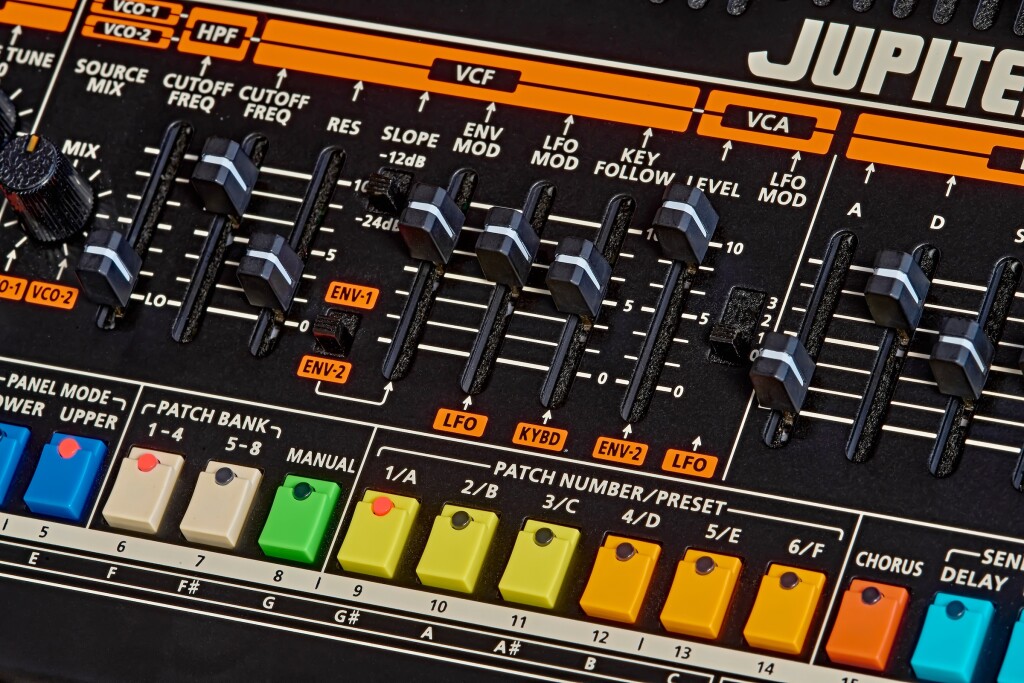
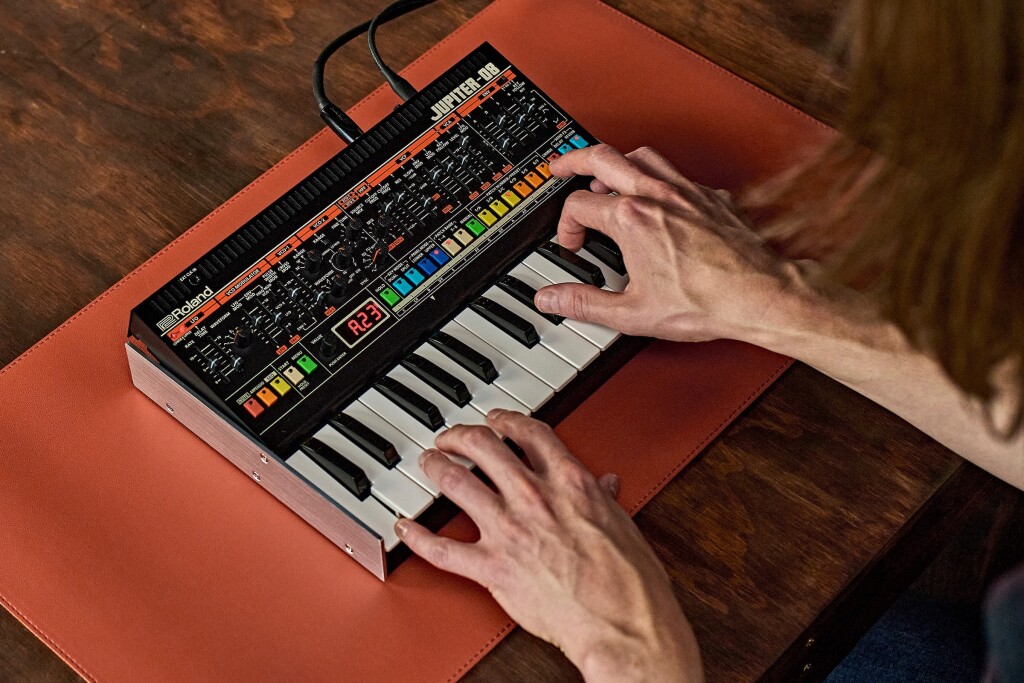
The JUPITER-08 retains the iconic visual layout, control panel spacing, and vibrant aesthetic color palette of its predecessor, scaled down to the portable Boutique dimensions. It features Roland’s sophisticated sound engine modeling, providing authentic frequency response and filter resonance characteristics derived from the original 1980s flagship hardware, while integrating modern connectivity options such as USB-C audio and MIDI implementation.
Introducing the n/vision: A Hybrid Wavetable Synthesizer
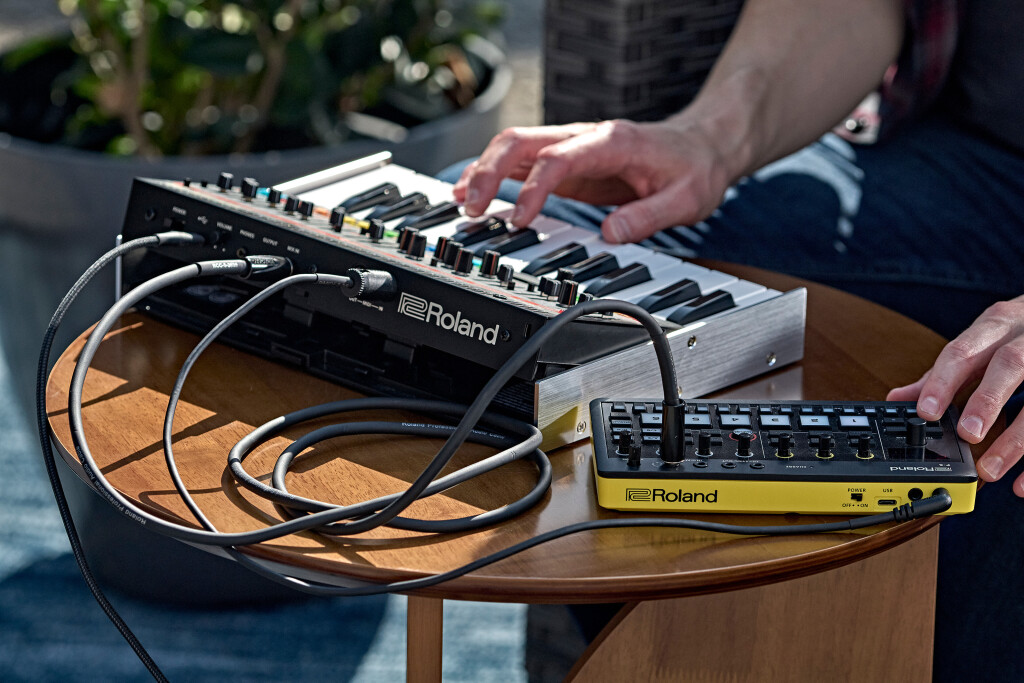
Alongside the JUPITER-08, Roland has introduced the n/vision, an original hardware instrument engineered specifically for the Boutique platform. Unlike the company’s direct vintage remakes, the n/vision explores modern digital territory by combining dual-layer wavetable architecture with onboard analog-modeled filters.
The instrument’s design lineage traces back to software-based sound engines and digital expansions found in Roland’s flagship workstation lines, specifically adapting concepts from the n/zyme Model Expansion originally developed for the Fantom keyboard series. By migrating this deep digital engine into a dedicated hardware desktop box, Roland has created a hybrid sound source capable of complex textural evolution.
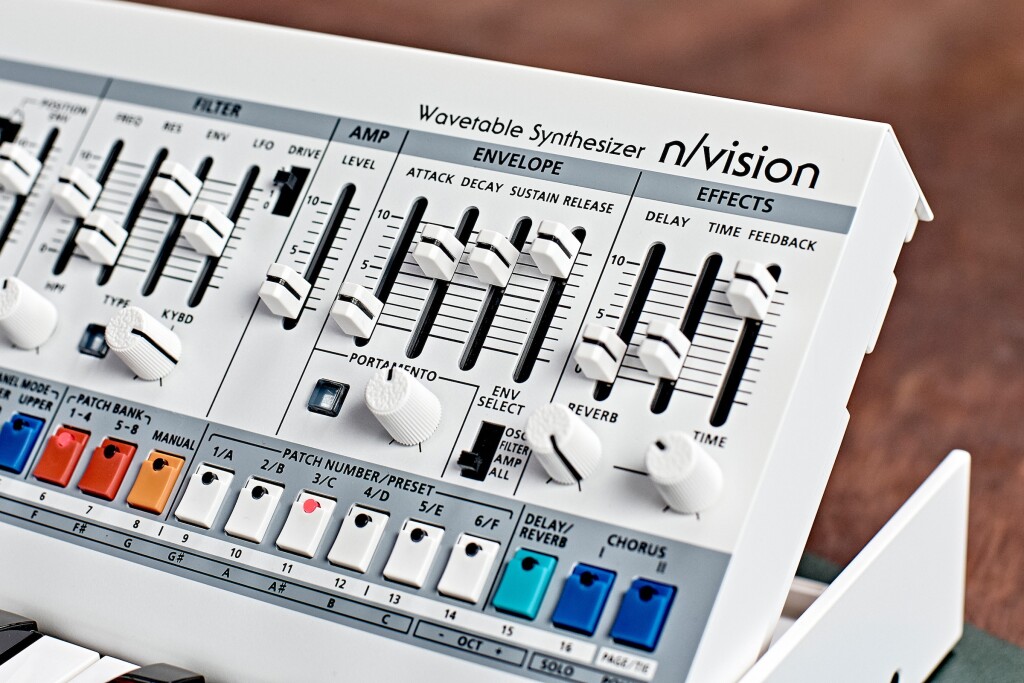
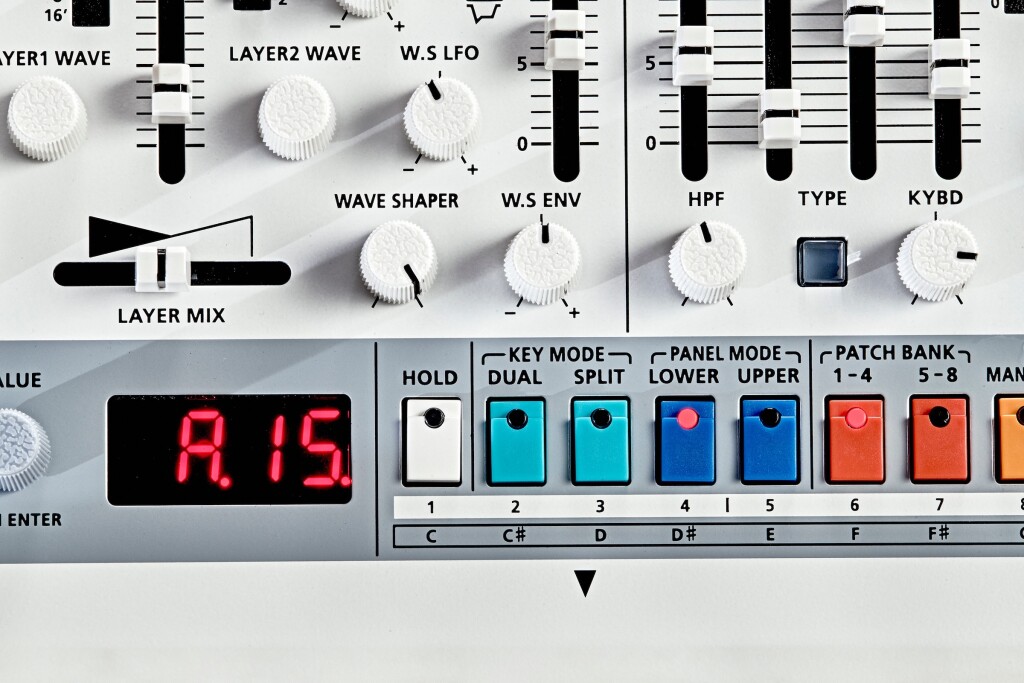
The n/vision features two distinct wavetable layers with continuous crossfading capabilities, supported by an array of modulation sources including step LFOs, dedicated envelope modulators, oscillator modulation, and motion recording. This structure allows users to sequence and animate wavetable position, layer balance, pitch, and shaping in real time.
Sound Shaping and Filter Architecture
The flexibility of the n/vision is further underscored by its signal processing capabilities. The instrument features a comprehensive waveshaper with multiple selectable waveforms, adjustable via dedicated front-panel controls for the Wave Shaper knob, W.S LFO, and W.S Envelope.
Filter options on the n/vision include standard 12 dB and 24 dB slope configurations across lowpass, highpass, and bandpass topologies. Additionally, the unit incorporates specialized lowpass filter variants labeled in system firmware as Lowpass R, Lowpass N, and Lowpass S, offering distinct harmonic colorations inspired by classic synthesizer filter designs. Depending on processing load and voice allocation, the n/vision can achieve up to 56 simultaneous voices.
Shared Effects and Sequencer Capabilities
Both the JUPITER-08 and the n/vision incorporate robust onboard effects processors and sequencer engines inherited from the broader Boutique architecture. The shared effects suite includes multiple variations of chorus and delay, alongside overdrive, fuzz, drive, bit crushers, lo-fi compressors, phasers, multi-mode filters, and pitch shifters.
While both units share a common workflow regarding sequencing and signal routing, they omit certain legacy hardware integrations found on older Boutique models, such as external trigger outputs. Nevertheless, the inclusion of comprehensive MIDI implementation ensures seamless integration into modern hardware and software DAW environments.
Market Positioning and Industry Implications
The release of the JUPITER-08 and n/vision positions Roland directly within the competitive landscape of hardware synthesizer manufacturing. By pairing a high-demand vintage emulation with an innovative digital-hybrid instrument, the company caters to both traditionalists seeking nostalgic workflows and sound designers pursuing contemporary wavetable synthesis.
Industry analysts note that compact hardware synthesizers continue to perform strongly among producers seeking tactile, portable creative tools that do not require computer integration. The inclusion of the K-25M keyboard dock in the base price removes an additional purchasing barrier, ensuring that buyers have immediate tactile control over their instruments upon unboxing.
Preorders for both the Roland JUPITER-08 and the n/vision are currently available through major musical instrument retailers worldwide, with initial shipments anticipated to arrive following the product announcement cycle.