 Mia Khoirunisa
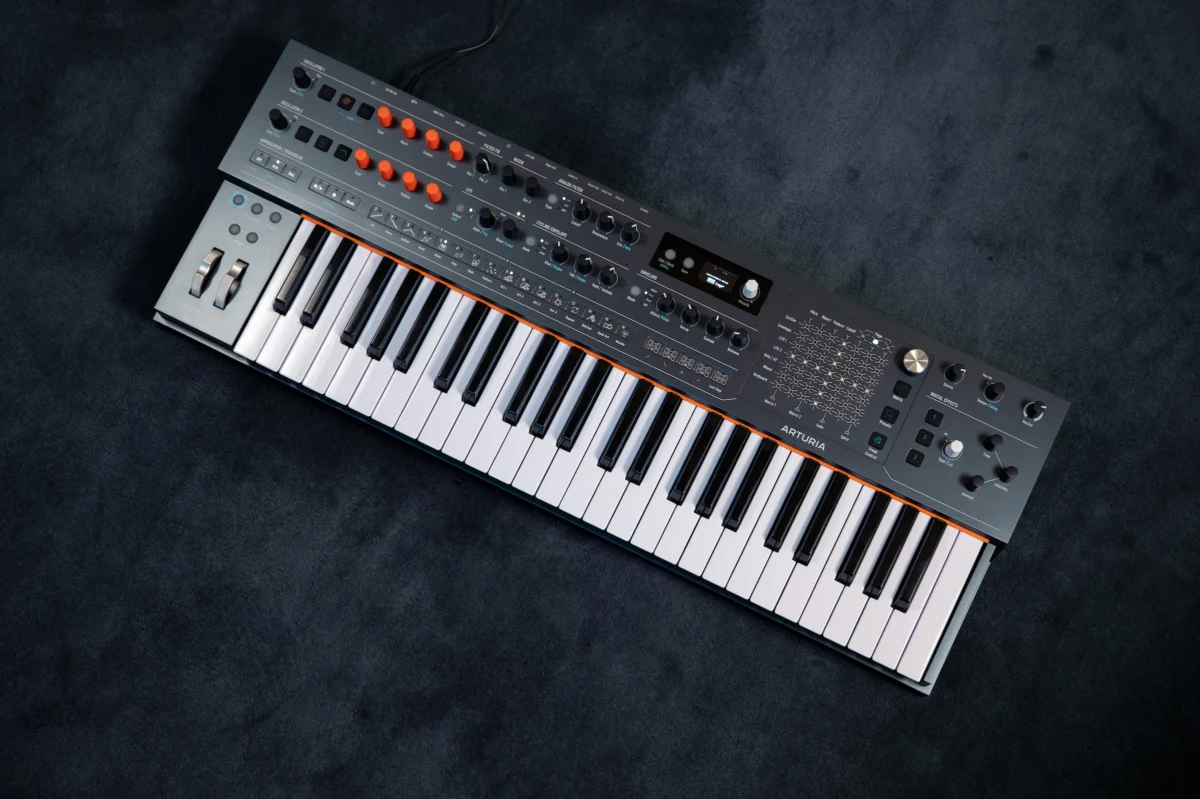
The release of the Arturia MiniFreak 49 marks a significant milestone in the French manufacturer’s celebrated "Freak" product line, transitioning the instrument from a compact experimental synth into a fully realized, performance-grade workstation. Priced at $799 / €799, this latest iteration addresses long-standing critiques regarding keybed size and tactile feedback while expanding the sonic architecture to rival sophisticated software instruments like Arturia’s own Pigments. Featuring 49 full-sized, semi-weighted keys, a proprietary XYZ Touch Matrix, aluminum pitch and mod wheels, and robust sound-design capabilities including filter FM and voice panning, the MiniFreak 49 redefines what musicians can expect from a hybrid hardware synthesizer in the sub-$1,000 market.
Background Context and Lineage
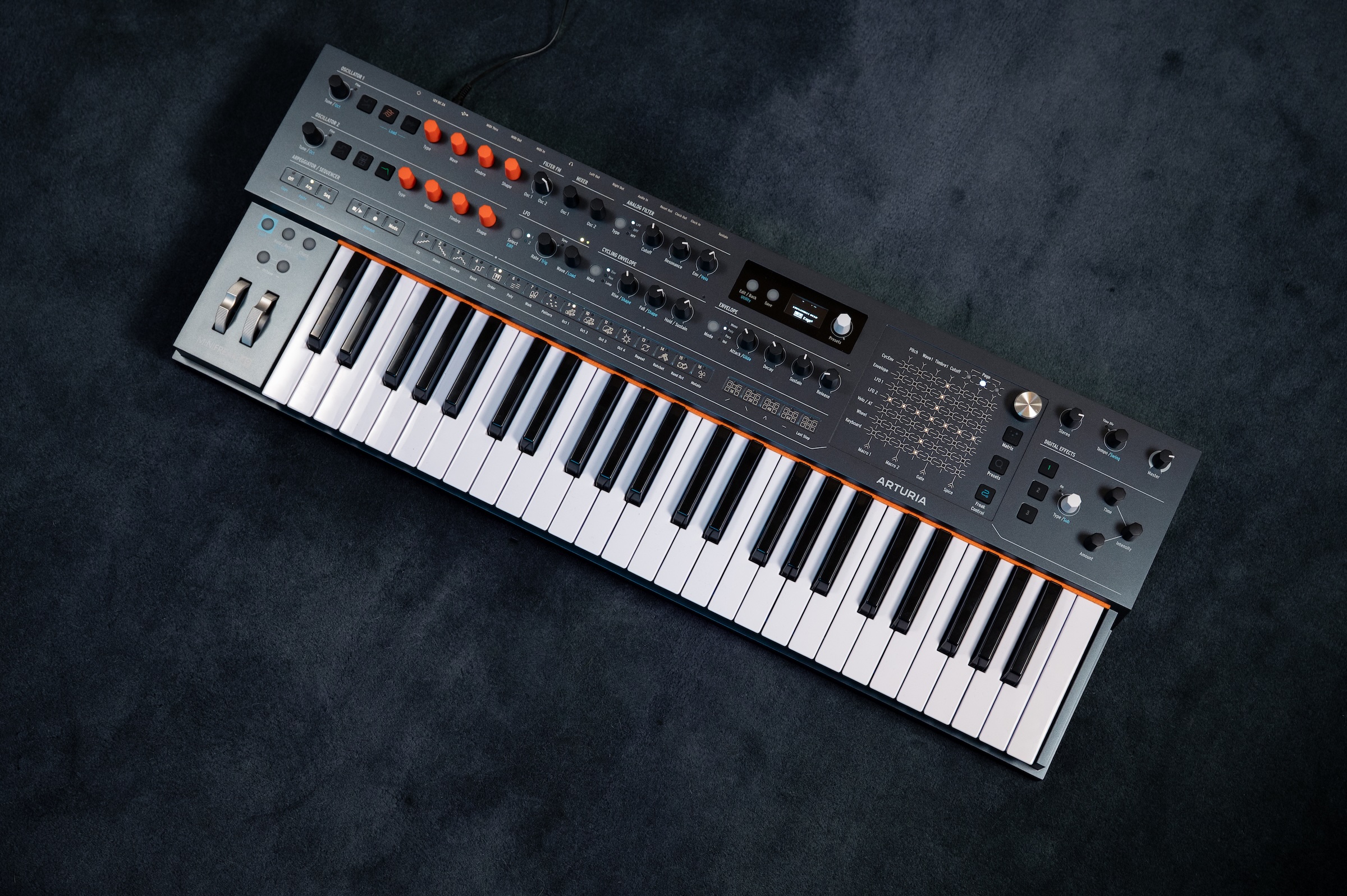
To understand the positioning of the MiniFreak 49, one must examine the trajectory of Arturia’s experimental hardware division. The journey began with the unconventional MicroFreak, a budget-friendly digital synthesizer known for its quirky flat PCB capacitive keyboard, diverse digital oscillator engines developed in collaboration with Mutable Instruments and Noise Engineering, and an analog filter. Despite its diminutive footprint and unusual ergonomics, the MicroFreak achieved cult status among modular enthusiasts and sound designers seeking unpredictable, avant-garde textures.
Building upon this success, Arturia introduced the original MiniFreak, expanding the polyphony and introducing standard mini-keys, stereo effects, and a more traditional layout. However, many users found the standard MiniFreak occupying an awkward middle ground—lacking the hyper-portable, eccentric charm of the Micro while falling short of the commanding physical presence required by traditional keyboardists. Recognizing this feedback, Arturia’s engineering team embarked on a comprehensive hardware overhaul, culminating in the MiniFreak 49.
Core Specifications and Hardware Architecture
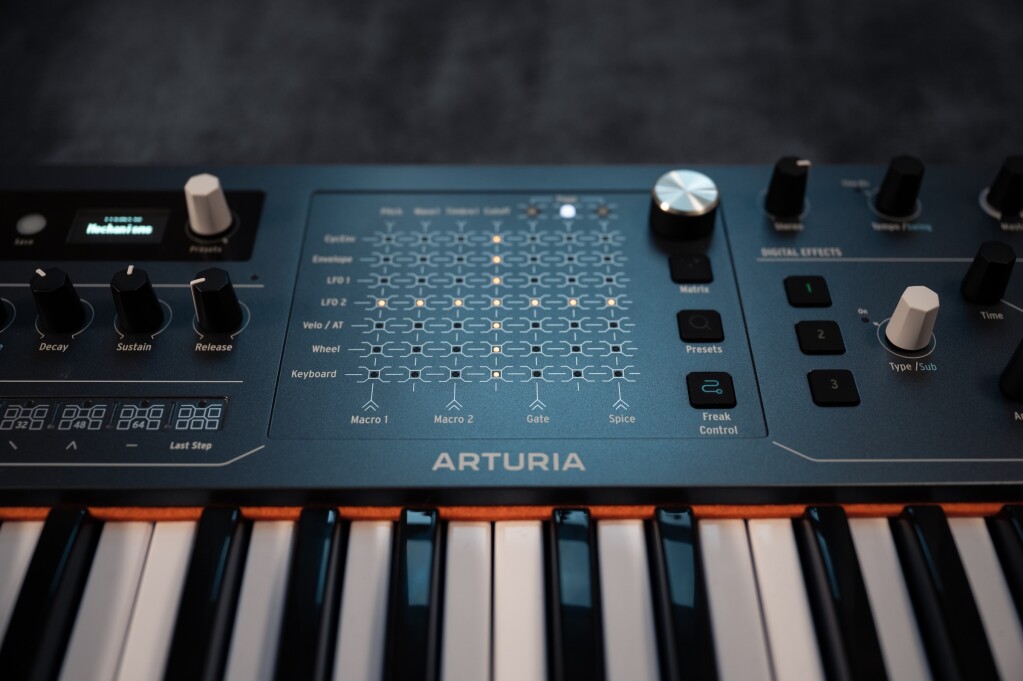
At its core, the MiniFreak 49 retains the dual-engine architecture of its predecessor, offering 31 oscillator modes distributed across two distinct engines per voice. These sound sources feed into a per-voice analog multimode filter, complemented by three dedicated effect slots capable of utilizing 13 distinct spatial and modulation effects.
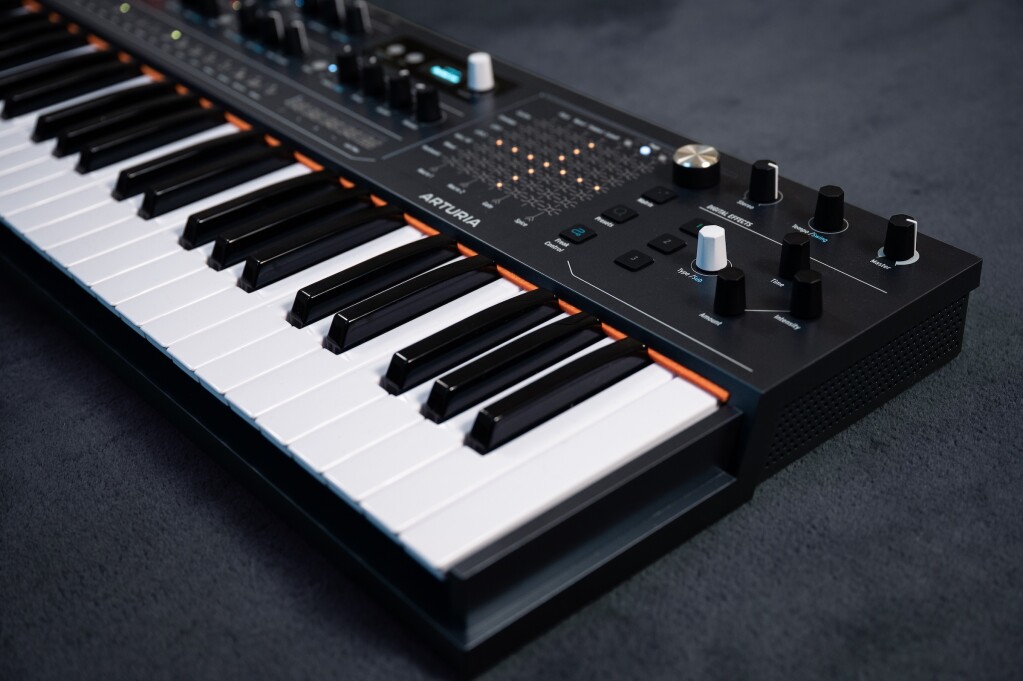
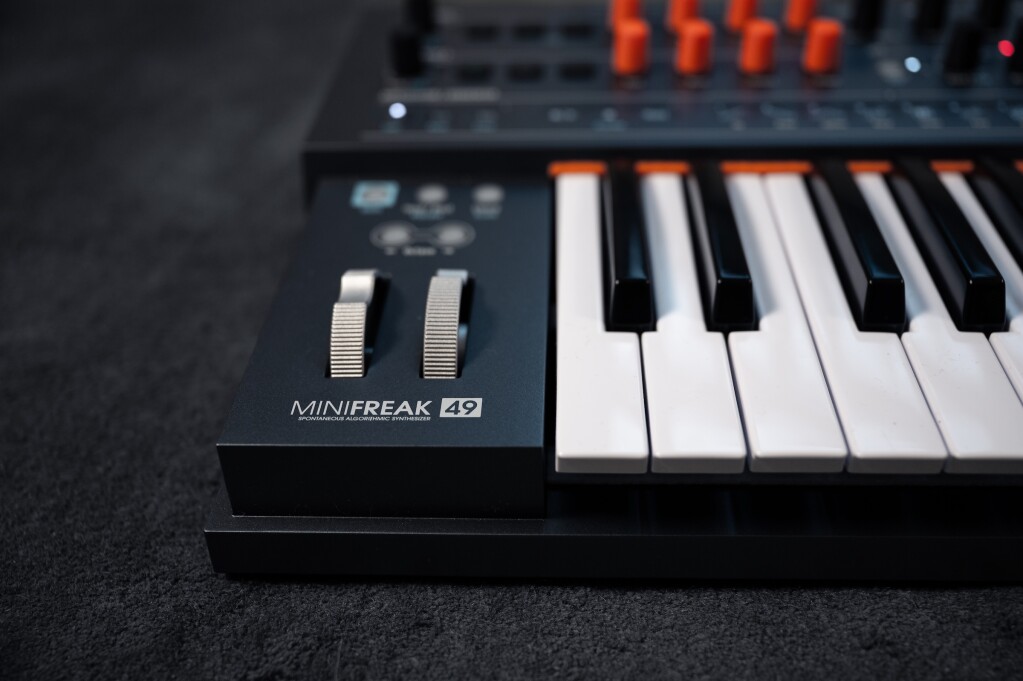
The most prominent physical enhancement is the integration of 49 full-sized, semi-weighted keys utilizing the bespoke keybed design found in Arturia’s flagship KeyLab 49 mk3 controller. Offering a responsive "thonky" action and mono aftertouch, the keybed provides the physical resistance and expression necessary for traditional keyboard performance. This is further complemented by proper aluminum pitch and modulation wheels, replacing the touch strips of earlier models and offering familiar, tactile control for live performers.
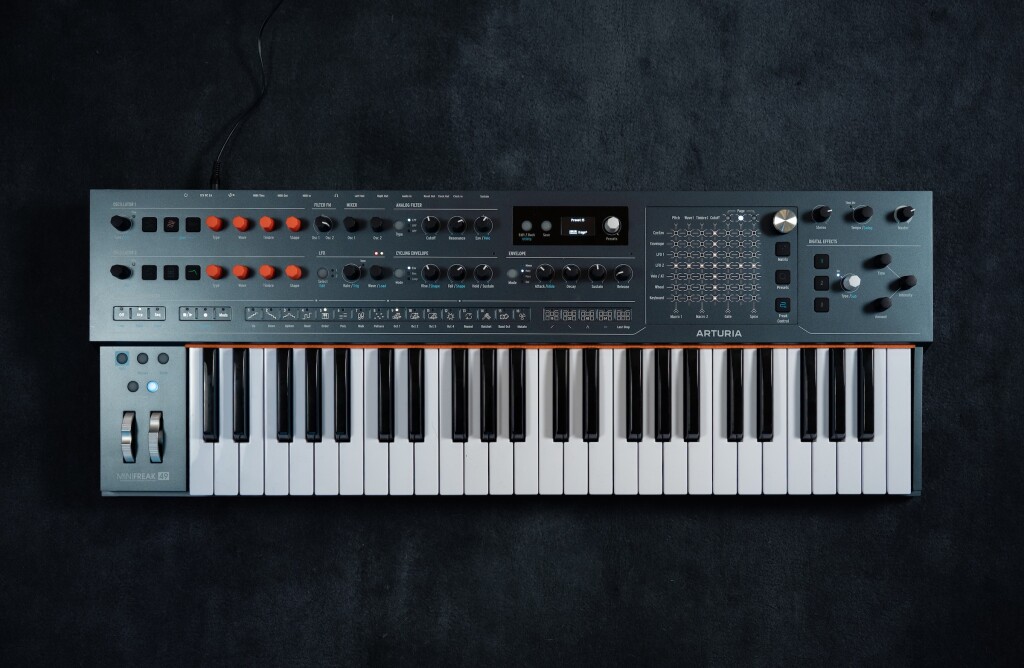
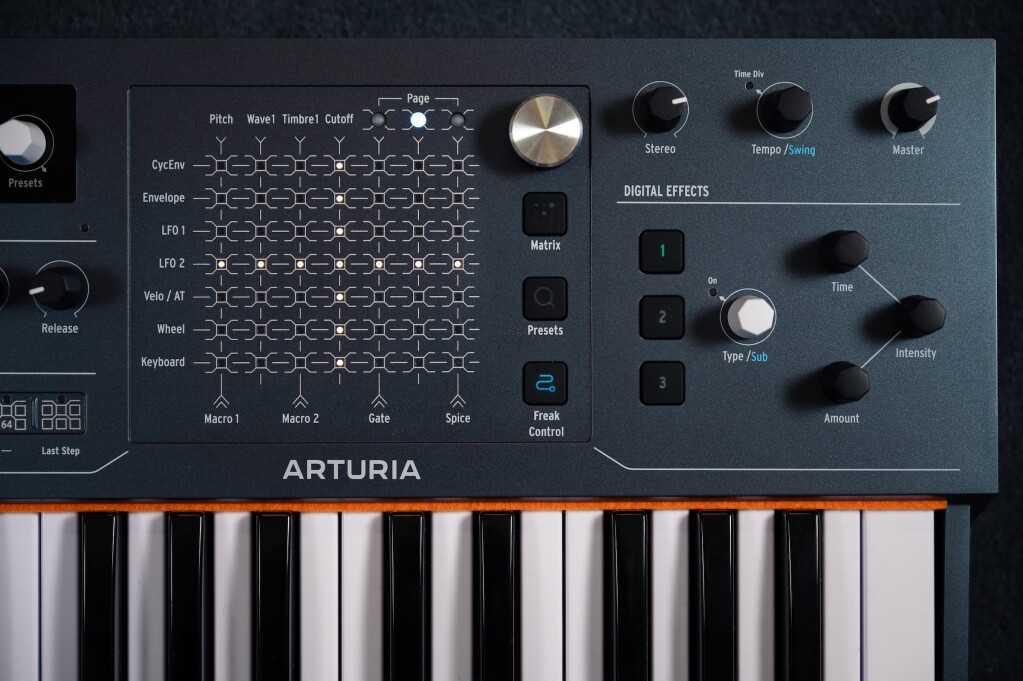
Another major architectural addition is the proprietary XYZ Touch Matrix. Developed entirely in-house by Arturia, this multitouch capacitive surface features a 7×7 RGB LED grid that provides visual feedback, preset navigation, and real-time modulation mapping. Supporting up to eight simultaneous touches and recognizing complex gestures such as swipes and multi-taps, the XYZ pad enables users to manipulate parameters dynamically through the Freak Control mode, utilizing vertical touch macro faders alongside dedicated controls for Gate, Spice, and Hold.
Advanced Sound Design Capabilities
The MiniFreak 49 introduces several advanced sound design features previously reserved for higher-end polyphonic synthesizers like the Arturia PolyBrute. Among these is voice panning, which allows operators to select sophisticated spread algorithms to place individual voices across the stereo field automatically. When combined with the device’s extensive arpeggiator and sequencing modes, this stereo manipulation yields complex, spatially immersive patches reminiscent of vintage modular setups.
Furthermore, the instrument introduces filter FM (Frequency Modulation), enabling users to route Oscillator 1, Oscillator 2, or both directly into the filter on a per-voice basis with continuous control. This capability, alongside amplitude modulation and expanded sample memory—upgraded to 256 MB compared to the 32 MB found on baseline models—empowers sound designers to generate everything from pristine digital transients to aggressive, distorted industrial drones.
Software Integration and Workflow
Hardware-software integration remains a cornerstone of Arturia’s product ecosystem, and the MiniFreak 49 is bundled with MiniFreak V 5.0. This companion plug-in acts as a bidirectional editor, librarian, and DAW-ready virtual instrument. Upon registering the hardware via the Arturia Software Center and connecting the unit, users unlock an exclusive custom UI theme featuring dedicated controls for filter FM and access to hardware-exclusive presets.
While the software installation process requires specific authorization steps—such as entering the hardware serial number or establishing a USB-C connection—the resulting synchronization ensures seamless transitions between studio production inside a digital audio workstation and live performance on stage. Furthermore, backwards compatibility ensures that legacy presets created on original MiniFreak models can be imported and executed seamlessly on the 49-key variant.
Market Implications and Analysis
The launch of the Arturia MiniFreak 49 arrives at a time of intense competition within the electronic music instrument sector. Manufacturers are increasingly tasked with bridging the gap between the limitless flexibility of software plugins and the tactile immediacy of dedicated hardware. By equipping the MiniFreak 49 with an expressive keybed, precise multi-touch control, and a hybrid digital-analog engine, Arturia has successfully synthesized these paradigms.
Industry analysts note that the pricing strategy of $799 places the instrument directly in competition with mid-range polyphonic synthesizers from competitors like Sequential, Korg, and Roland. However, the unique inclusion of Mutable Instruments-derived oscillator algorithms, extensive modulation routing, and robust hardware-software interoperability gives the MiniFreak 49 a distinct competitive advantage.
Conclusion and Future Outlook
The Arturia MiniFreak 49 represents the culmination of years of iterative hardware design and firmware refinement. By listening closely to consumer feedback regarding ergonomics, physical controls, and sonic depth, Arturia has delivered an instrument that encourages intuitive exploration rather than tedious menu-diving. Whether deployed as a standalone performance keyboard, a master controller via its comprehensive MIDI and analog connectivity, or an expansive sound design workstation, the MiniFreak 49 establishes a new benchmark for hybrid synthesis.