Aveline Kirana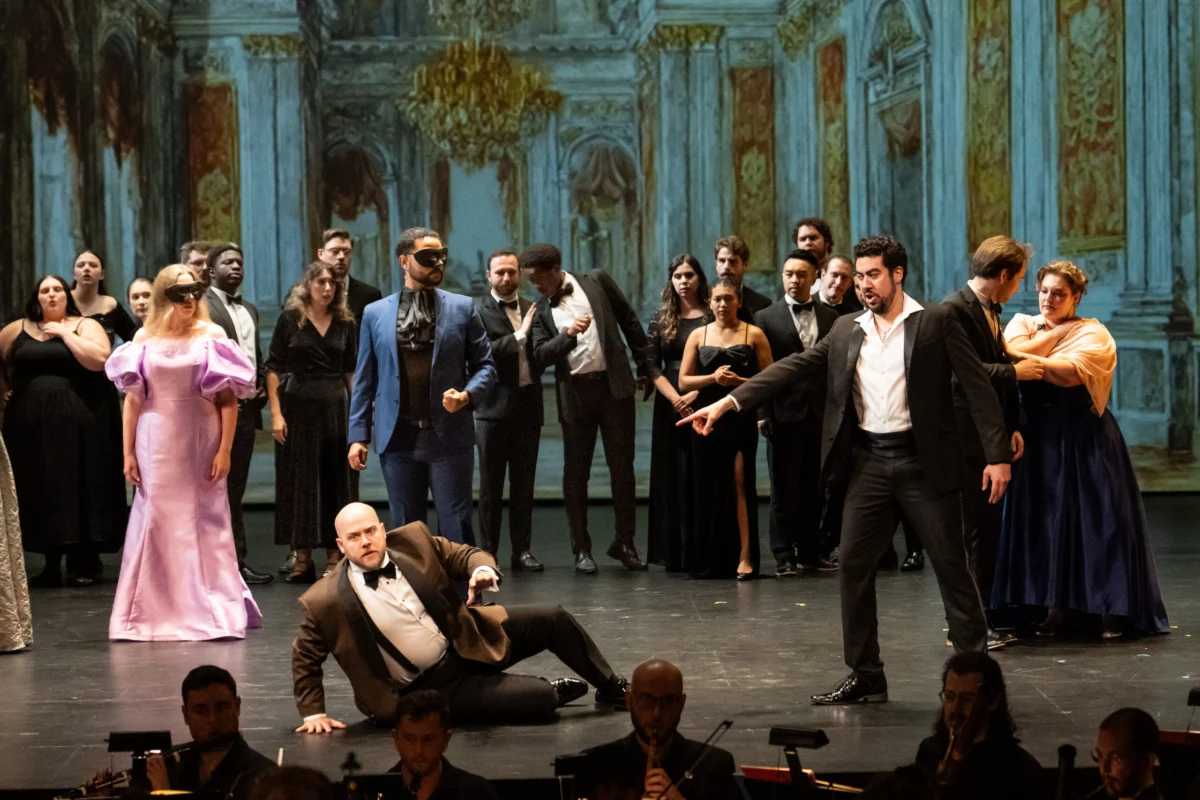
(Credit: Steven Pisano)
Teatro Nuovo’s recent production of Wolfgang Amadeus Mozart and Lorenzo Da Ponte’s celebrated opera, "Il Don Giovanni," dared to tread where few major opera companies venture: a fundamental re-evaluation of the musical text itself. In an art form often characterized by reverence for the composer’s original score, particularly one as revered as Mozart’s dramma giocosa, Teatro Nuovo embraced a bold vision, treating the music not as immutable scripture, but as a canvas for historical performance practices and the expressive liberties of the bel canto tradition. This audacious approach, inspired by the opera’s 1826 New York premiere under Manuel Garcia Sr., sought to inject a potent dose of improvisation and vocal ornamentation, aiming to unlock new dramatic dimensions within a work dissected and reinterpreted countless times since its 1787 premiere.
A Legacy of Bold Interpretations
"Don Giovanni" stands as a titan in the operatic repertoire, a work that has continuously invited fresh perspectives. From Mozart’s own revisions, incorporating new arias to suit specific performers, to Da Ponte’s adjustments for the New York premiere to enhance dramatic pacing, the opera has always been subject to adaptation. While directorial and staging overhauls are commonplace, the musical score itself has largely remained sacrosanct. The prevailing performance ethos, particularly in recent decades, has leaned towards historical accuracy, emphasizing the composer’s written notes with minimal deviation. This "come scritto" (as written) approach, while respecting Mozart’s genius, often overlooks the prevalent interpolations and improvisational freedoms enjoyed by singers during his era. This tradition, where ornamentation was not merely decorative but an integral part of vocal expression and dramatic communication, is what Teatro Nuovo sought to revive.
The "Bel Canto" Imperative
Teatro Nuovo’s program explicitly stated its intention to approach "Don Giovanni" as a bel canto opera. This stylistic shift, drawing inspiration from the 1826 Garcia troupe’s performance, signaled a departure from standard practice. The bel canto era, roughly spanning the early to mid-19th century, placed a premium on vocal agility, expressive lyricism, and the singer’s ability to embellish the written melody with virtuosic ornamentation, often in repeated sections. This philosophy prioritizes the singer’s individual artistry and emotional expression over strict adherence to the score. The tagline for the production, "Expect the Unexpected," perfectly encapsulated the company’s commitment to pushing the boundaries of conventional operatic performance.
A Symphony of Ornaments and Omissions
The implementation of this bel canto approach manifested in a rich tapestry of vocal ornamentation. Repeated passages, particularly in arias like "Il mio tesoro" (Don Ottavio) and "Deh! vieni a la finestra" (Don Giovanni), were transformed, sounding often dramatically different, and at times, nearly unrecognizable from their familiar iterations. While the extensive embellishments in "Il mio tesoro" allowed tenor Martin Luther Clark to explore a more aggressive facet of Don Ottavio’s character, the added ornaments in "Deh! vieni a la finestra" were perceived by some as detracting from the aria’s inherent elegant simplicity. This led to a critical observation that while subtle ornamentation might have sufficed, the ambition to fundamentally re-compose melodies through embellishment was not always successful.
The application of ornamentation was notably inconsistent. Some arias, such as "Or sai chi l’onore" (Donna Anna) and "Madamina! Il catalogo è questo" (Leporello), featured more restrained embellishments, while ensembles generally remained less altered. A recurring point of critique was that the ornamentation frequently prioritized vocal display over enhancing the dramatic weight of the music. Given the "semi-staged" nature of the production, the emphasis was understandably on the vocal performance, yet the balance between musical embellishment and dramatic impact was not always achieved.
However, there were moments where the ornamentation proved dramatically effective. The duet "Là ci darem la mano" between Don Giovanni and Zerlina served as a prime example. Don Giovanni’s lines remained largely intact, while Zerlina’s ornamented responses conveyed a palpable sense of her burgeoning instability and internal conflict.
Beyond ornamentation, Teatro Nuovo implemented significant structural alterations. The omission of Masetto’s aria, for instance, dramatically reduced the character’s presence, diminishing his impact on the overall narrative. While the arias of Don Giovanni and Leporello in Act II, though enjoyable, were deemed not essential, their excision was noted. The removal of "Dalla sua pace," Don Ottavio’s beautiful aria, was felt as a loss of a gorgeous musical moment, though its dramatic contribution was deemed minimal, and its cutting was justified as a means to maintain the dramatic momentum of Act I.
A significant alteration involved the substitution of Donna Elvira’s Act I aria, "Ah! fuggi il traditor," with her Act II aria, "Mi tradi." This strategic move aimed to circumvent the perceived lag in Act II, which often features an extended series of arias following the renowned sextet. While the omission of "Ah! fuggi il traditor," a piece described as "ferocious and sarcastic," was unfortunate, the placement of "Mi tradi" in Act I was seen to offer Elvira greater depth in a moment where she is being repeatedly ridiculed, and it flowed seamlessly into the subsequent quartet.
The opera concluded, as it historically did for many years, immediately after Don Giovanni’s demise, eschewing the traditional coda where characters explicitly articulate the moral of the story. This abrupt ending, returning to the opera’s initial D minor tonality, was perceived as fitting and thematically resonant, leaving the audience to ponder the unresolved consequences.
Orchestral Nuances and Performance Dynamics
Under the baton of Geoffrey Loff, the orchestra, operating with a reduced ensemble, provided a dynamic and often incisive accompaniment. The overture, particularly its Allegro section, was characterized by a punchy intensity, with the lower instruments accentuating dissonances and lending a profound contrast to the lighter passages. Loff’s decision to avoid overextending the opening chords, a common practice, created a sense of spaciousness and anticipation, framing the musical phrases as questions rather than definitive statements.
The reduced orchestra allowed for inventive re-orchestration. A solo cello accompanied the continuo in recitatives, adding textural richness. The absence of a mandolin in "Deh! vieni alla finestra" enabled a solo violin to take prominence, offering a fresh sonic palette. These choices generally enhanced the performance.
However, the balance between the orchestra and the singers was not consistently achieved. Baritone Ricardo José Rivera, as Don Giovanni, was notably overpowered during "Fin ch’han dal vino," pushed to his vocal limits by a full-throttle orchestral accompaniment. The application of rubato, particularly in "Batti, batti" (Zerlina), felt unmusical and disruptive for both the singer and the ensemble, suggesting a lack of cohesive interpretation in these moments.
A Cast of Distinctive Interpretations
The title role of Don Giovanni was portrayed by baritone Riccardo José Rivera, who delivered a performance marked by a resonant and elegant voice. Rivera’s legato was luxurious, particularly in "Deh! vieni alla finestra" and "Là ci darem la mano." Despite the orchestral challenges in "Fin ch’han dal vino," his baritone projected forcefully. His upper register was a notable strength, with interpolations of high notes adding dramatic flair. His performance in the Act III trio was particularly compelling, with physical gesturing and ornamentation amplifying Don Giovanni’s exaggerated seduction of Elvira.
Kevin Spooner, as Leporello, showcased an agile and potent bass-baritone. The ornamentation in the catalogue aria was minimal, but the extended fermatas employed to link disparate sections created a seamless flow, lending Leporello’s conniving nature a fluid, pre-meditated quality. Spooner’s stage presence and dynamic interplay with Rivera were particularly effective, especially during confrontations with the Commendatore, portrayed with stentorian tone and strong diction by Daniel Mobbs.
Martin Luther Clark’s Don Ottavio prioritized vocal potency to underscore the character’s escalating frustration. His repetitions of "Lo giuro" in his duet with Donna Anna crescendoed with increasing accentuation, culminating in a held note for emphasis. While Clark exhibited some discomfort with the role’s tessitura, leading to occasional muddiness in intonation on higher notes, his rendition of "Il mio tesoro" was solid, albeit with an aggressive quality that, coupled with the aria’s embellishments, contributed to a sense of desperation. His final scene with Anna was characterized by aggressive, fortissimo singing, effectively highlighting the toxic dynamic of their relationship.
The omission of Masetto’s aria was a point of disappointment, as it diminished the character’s potential for depth. Noah B. Rogers, despite the limited stage time, delivered a baritone that blended well with Simona Genga’s Zerlina.
The standout performance of the evening belonged to soprano Elizabeth Novella as Donna Anna. Her voice possessed tremendous intensity from her opening lines, portraying Anna as a formidable force. Her vocal control at dynamic extremes, shifting from hushed pianissimos to voluminous fortissimos, was brilliant, particularly in her recitative before "Or sai chi l’onore." The aria itself was articulate, pointed, and technically secure, with an interpolated high note adding a dramatic flourish. Her contributions to ensembles were equally compelling.
Sedona Libero as Donna Elvira delivered a captivating performance. Despite being initially overpowered in her opening aria, her singing maintained elegance. Her rendition of "Mi tradi quell’alma ingrata" was fluid, with added ornaments enhancing her portrayal of pain and disappointment. She matched vocally with Novella and delivered visceral forte singing in her pleas with Don Giovanni.
Simona Genga’s Zerlina was strong, though the rubati in "Batti, batti" were unusual. Her cadenza and interpolated high notes in this aria were beautifully executed, as were her gentle and playful embellishments in "Vedrai carino." Her polished legato was evident throughout "Là ci darem la mano."
Broader Implications for Operatic Interpretation
Teatro Nuovo’s "Don Giovanni" offered a vocal feast and a profound re-examination of a canonical work. It reignited the perennial debate surrounding operatic interpretation. In an era where directors possess considerable freedom in staging and libretto adaptation, the question arises: should music directors and conductors also be afforded similar latitude in re-evaluating and interpreting the musical score? If so, what are the acceptable limits of such reinterpretation? Conversely, if the score is to remain largely untouched, does this diminish the potential for operatic identity and innovation, or does it reinforce the score’s intrinsic role as the foundational element of opera? Teatro Nuovo’s daring experiment provided a compelling case for a more flexible and historically informed approach to musical interpretation, challenging the industry to consider the dynamic interplay between composer’s intent and the evolving expressive capabilities of performers and conductors.