Aveline Kirana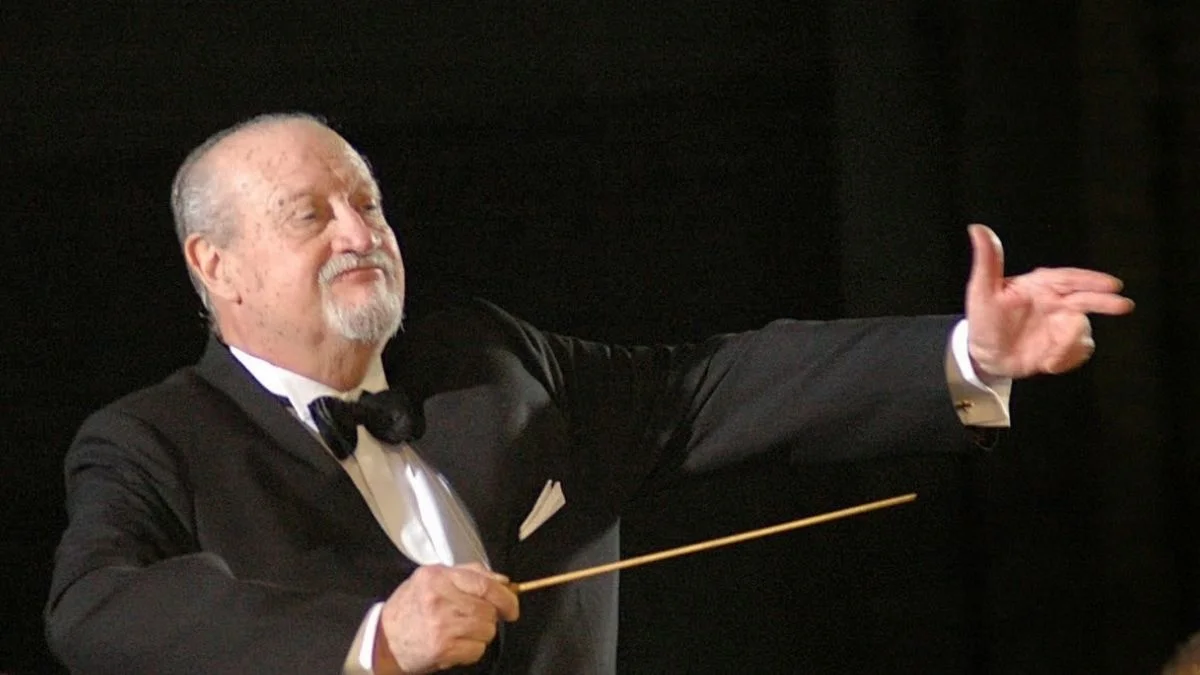
The world of classical music mourns the loss of Maestro Pedro Ignacio Calderón, a towering figure in Argentine orchestral leadership and international conducting, who passed away on July 13, 2026, at the age of 92. His death was officially announced by Leonardo Cifelli, the Secretary of Culture for Argentina, marking the end of a distinguished career that spanned over seven decades and left an indelible mark on the musical landscape.
Born Pedro Ignacio Calderón on December 31, 1933, in Paraná, Entre Ríos, Argentina, his musical journey began at a remarkably young age. His mother recognized his innate talent and introduced him to music lessons at the tender age of seven. By thirteen, his burgeoning passion and ambition propelled him to Buenos Aires, where he commenced rigorous studies at the prestigious Conservatorio Nacional Superior de Música. This foundational period was crucial, laying the groundwork for the exceptional skills he would later demonstrate on the world stage.
Calderón’s formal education was further enriched by tutelage under some of Argentina’s most esteemed musical luminaries. He honed his compositional craft under the guidance of Alberto Ginastera, a composer whose innovative spirit and distinctly Argentine musical language profoundly influenced generations of musicians. Simultaneously, his piano skills were refined under the tutelage of Vincenzo Scaramuzza, a pedagogue renowned for his meticulous approach and the caliber of pianists he produced. These formative experiences under such influential mentors instilled in Calderón a deep understanding of musical structure, interpretation, and performance.
His precocious talent was evident from his early years. At the astonishing age of fifteen, Calderón conducted his inaugural concert with the Entre Ríos Symphony Orchestra. This was swiftly followed by another significant engagement at sixteen, leading a concert in San Juan. By twenty, he was at the helm of the Orquesta Sinfónica de Radio Nacional, a testament to his rapidly growing reputation and conducting prowess. His career trajectory continued its upward ascent when, in 1955, he secured a position at the iconic Teatro Colón, one of the world’s most revered opera houses and concert halls. This appointment marked his entry into the professional elite of Argentine classical music.
A Career of Leadership and Innovation
Calderón’s tenure at the Teatro Colón was the beginning of a long and impactful period of leadership. He rose to become the Principal Conductor of the Symphony Orchestra of the National University of Tucumán, a role that further solidified his commitment to fostering orchestral excellence and nurturing musical talent. In 1960, his dedication and potential were recognized with a prestigious grant from the Fondo Nacional de las Artes, enabling him to undertake a year of advanced study at the Conservatorio Santa Cecilia in Rome, Italy. This international immersion provided him with invaluable exposure to European musical traditions and a broader perspective on orchestral performance.
The year 1963 proved to be a watershed moment in Calderón’s career. He triumphed in an International Conducting Competition, an achievement that catapulted him onto the global stage. This victory led to a highly sought-after opportunity: a year-long tenure as an assistant conductor to the legendary Leonard Bernstein at the New York Philharmonic Orchestra. Working alongside Bernstein, an artist of immense charisma and musical insight, provided Calderón with unparalleled experience in managing one of the world’s foremost orchestras, observing and learning from one of the 20th century’s most influential conductors.
Upon his return to Argentina, Calderón continued to shape the nation’s musical fabric. In 1966, he founded the Ensemble Musical de Buenos Aires. This ensemble distinguished itself by performing a diverse repertoire, encompassing both popular and chamber music, and by actively engaging with audiences through television broadcasts. This initiative underscored Calderón’s belief in the accessibility of classical music and his desire to reach a wider public.
His association with the Teatro Colón remained a cornerstone of his career. Over the course of more than 25 years, he conducted numerous performances at the renowned institution, solidifying his reputation as a master interpreter. He ascended to the positions of Artistic and General Director of the Buenos Aires Philharmonic Orchestra, an orchestra he guided with vision and dedication. In 1994, he transitioned to the Argentine National Symphony Orchestra, assuming the role of conductor and continuing his commitment to leading Argentina’s premier orchestral ensembles. His long and fruitful relationship with the National Symphony Orchestra concluded in 2015, when he retired after more than two decades of distinguished service.
A Global Reach and Enduring Legacy
While Calderón’s heart and career were deeply rooted in Argentina, his influence extended far beyond its borders. He was a sought-after guest conductor, leading many of the world’s most prestigious orchestras. His international engagements included appearances with the Leningrad Philharmonic Orchestra (now the Saint Petersburg Philharmonic Orchestra), the Orchestre national du Capitole de Toulouse, the Orchestre national de Lille, the Pasdeloup Orchestra, the RTVE Symphony Orchestra, the Spanish National Orchestra, the Tchaikovsky Symphony Orchestra, and the Tonkünstler Orchestra. These collaborations with orchestras in Russia, France, Spain, and Austria are a testament to his international standing and the universal appeal of his conducting.
Calderón’s contributions to the arts were widely recognized and lauded. He received numerous accolades throughout his career, including the prestigious Konex Merit Diploma from the Konex Foundation Awards in 1989, a significant honor in Argentina that acknowledges outstanding contributions to culture. In 1999, he was further distinguished with the Konex Platinum award, the foundation’s highest honor, cementing his status as one of Argentina’s most important cultural figures.
Context and Chronology of a Remarkable Career
The life of Pedro Ignacio Calderón can be viewed as a microcosm of the evolution of classical music performance and education in Argentina and its integration into the global artistic community. His early training at the Conservatorio Nacional Superior de Música in Buenos Aires during the mid-20th century placed him within a vibrant musical milieu. The Conservatorio, established in 1893, has been a cornerstone of musical education in Argentina, producing generations of accomplished musicians. His studies with Ginastera, a titan of 20th-century composition, exposed him to the avant-garde and the development of a distinctly national musical voice. Ginastera’s influence, particularly his later serial and electronic music experiments, likely provided Calderón with a sophisticated understanding of contemporary compositional techniques, which he would later interpret with clarity and conviction.
Scaramuzza’s tutelage represented a link to a more classical and Romantic piano tradition, emphasizing technical mastery and expressive interpretation. This dual grounding in both contemporary and established repertoire would prove invaluable throughout his conducting career.
Key Milestones in Maestro Calderón’s Career:
- 1933, December 31: Born in Paraná, Entre Ríos, Argentina.
- 1940 (approx.): Begins music lessons with his mother.
- 1946: Moves to Buenos Aires to study at the Conservatorio Nacional Superior de Música.
- 1948: Conducts his first concert with the Entre Ríos Symphony Orchestra at age 15.
- 1949: Conducts a concert in San Juan at age 16.
- 1953: Conducts the Orquesta Sinfónica de Radio Nacional at age 20.
- 1955: Hired at the Teatro Colón.
- Undated (post-1955): Becomes Principal Conductor of the Symphony Orchestra of the National University of Tucumán.
- 1960: Receives a grant from the Fondo Nacional de las Artes to study in Rome.
- 1963: Wins an International Conducting Competition.
- 1963-1964 (approx.): Serves as assistant conductor to Leonard Bernstein at the New York Philharmonic Orchestra.
- 1966: Founds the Ensemble Musical de Buenos Aires.
- Post-1966: Conducts for over 25 years at the Teatro Colón.
- Undated (likely during his directorships): Becomes Artistic and General Director of the Buenos Aires Philharmonic Orchestra.
- 1994: Moves to the Argentine National Symphony Orchestra as conductor.
- 2015: Retires from the Argentine National Symphony Orchestra after over twenty years.
- 1989: Receives Konex Merit Diploma.
- 1999: Receives Konex Platinum Award.
- 2026, July 13: Dies at the age of 92.
Calderón’s ability to transition between the established grandeur of the Teatro Colón and the more experimental outreach of the Ensemble Musical de Buenos Aires reflects a broader trend in the latter half of the 20th century, where orchestras and conductors sought to broaden their appeal and connect with new audiences. His year with Bernstein at the New York Philharmonic, a period of immense cultural exchange and musical innovation, undoubtedly provided him with insights into managing a world-class orchestra and engaging with a diverse public, skills he then brought back to Argentina.
The international recognition he achieved, conducting ensembles like the Leningrad Philharmonic and the Spanish National Orchestra, speaks to the high regard in which he was held by his peers and critics globally. These engagements were not merely performances; they were cultural diplomacy, showcasing Argentine talent on the international stage and fostering cross-cultural understanding through the universal language of music.
Official Responses and Broader Impact
The announcement of Maestro Calderón’s passing by Secretary of Culture Leonardo Cifelli signifies the national importance of his contributions. While specific direct quotes from Cifelli are not provided in the initial information, a statement from his office would likely express deep sorrow and acknowledge Calderón’s "profound and lasting impact on Argentine culture and the international music scene." Such a statement would probably highlight his dedication to nurturing musical talent within Argentina and his role in elevating the nation’s orchestras to global prominence.
The implications of Maestro Calderón’s death are significant for the future of classical music in Argentina. He leaves behind a legacy of excellence, a generation of musicians he mentored, and a public that experienced the transformative power of his conducting. His passing prompts a reflection on the institutions he shaped and the ongoing need for support for classical music. The success of orchestras like the Buenos Aires Philharmonic and the Argentine National Symphony Orchestra, to which he devoted so much of his career, relies on continued investment in artistic development, infrastructure, and audience engagement.
Calderón’s career serves as an inspiration for aspiring conductors and musicians. His journey from a small town in Entre Ríos to the world’s most prestigious concert halls demonstrates the power of talent, dedication, and unwavering commitment. His passing is not just the end of an era for Argentine music but a moment to celebrate a life dedicated to the pursuit and dissemination of musical artistry, leaving an enduring testament to the power of sound and interpretation. His extensive discography, though not detailed here, would undoubtedly serve as a vital archive of his interpretive genius for future generations to study and appreciate.