 Aveline Kirana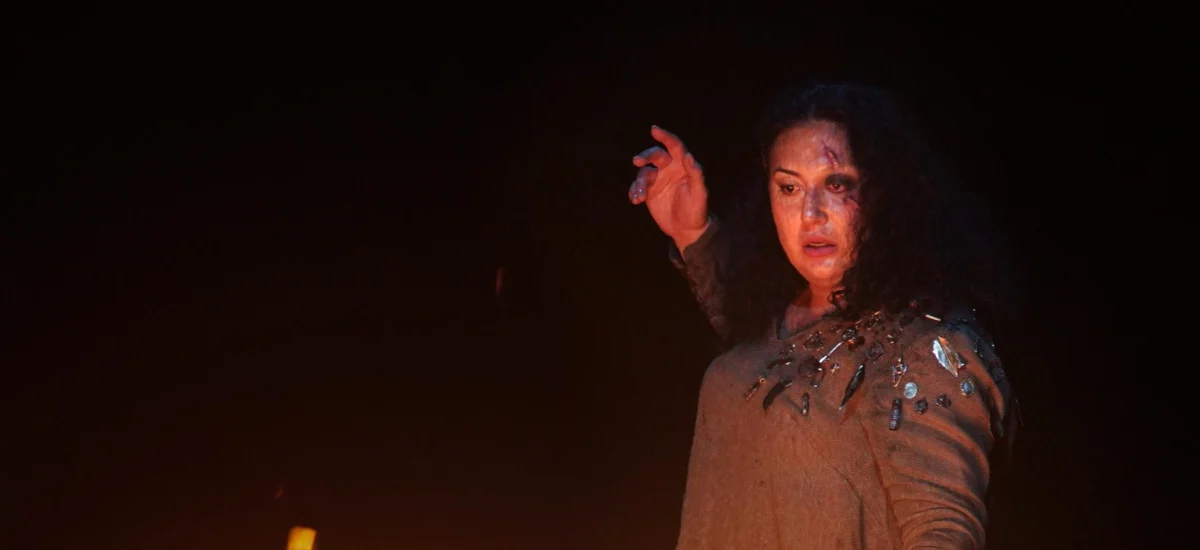
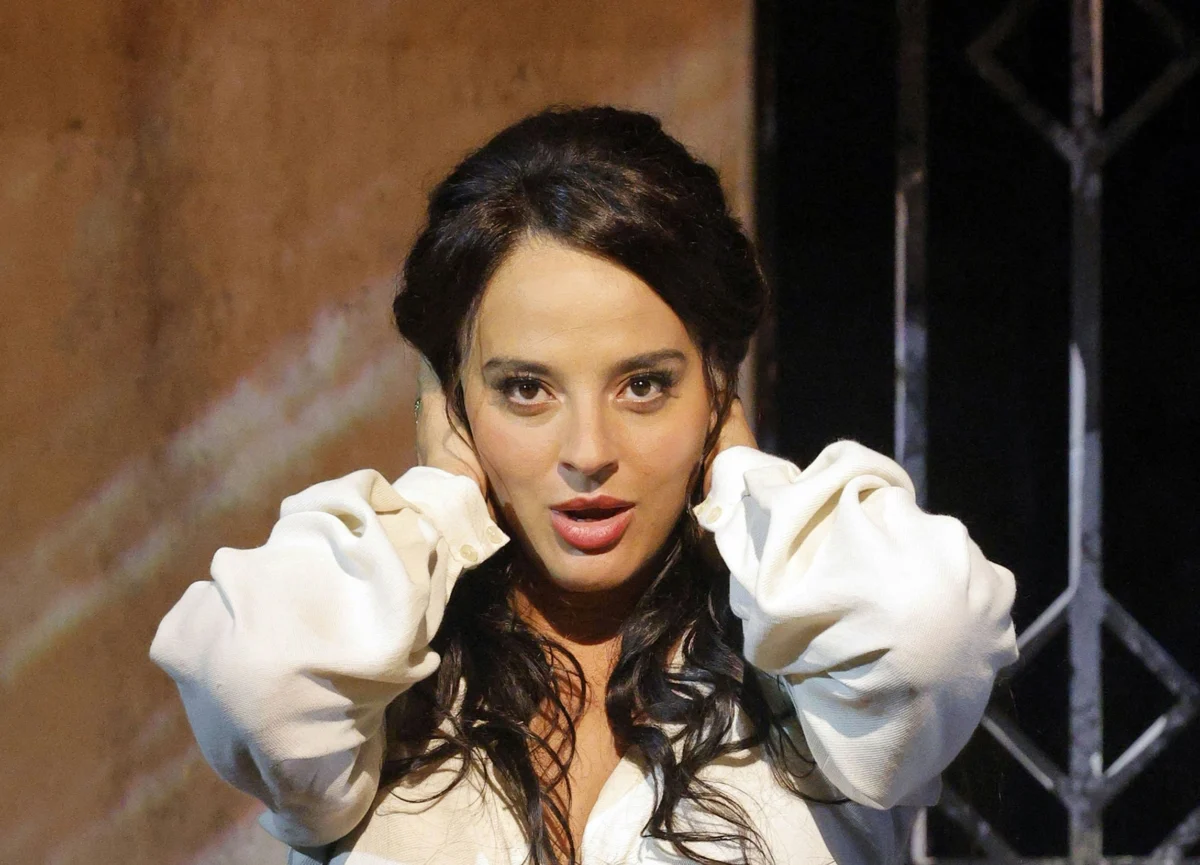
Madrid, Spain – The Teatro Real de Madrid has brought its 2023-2024 season to a dramatic close with a seventeen-performance run of its in-house production of Giuseppe Verdi’s iconic opera, "Il Trovatore." The production, which has been a consistent fixture in the theater’s programming since its 2019 premiere, offered a rotating cast, a testament to the demanding nature of Verdi’s score and the operational complexities of a major opera house. Notably, the season saw significant adjustments to the principal casting, particularly following the announced cancellation of operatic superstar Anna Netrebko, necessitating a dynamic ensemble of five sopranos, four tenors, three baritones, and five mezzo sopranos who shared the vocal heavy lifting across the various performances. OperaWire attended the July 8 performance, an evening marked by the highly anticipated house debut of the celebrated tenor Vittorio Grigolo in the pivotal role of Manrico.
A Season of Artistic Choices: Production and Casting Dynamics
The Teatro Real’s staging of "Il Trovatore," directed by Francisco Negrin, has been a subject of considerable discussion since its initial unveiling in 2019. This revival maintained the production’s distinctive aesthetic, characterized by its abstract and often stark visual language. The stage design centers around a monolithic concrete cube, punctuated by an open gallery from which the chorus, costumed as a spectral ensemble of "zombies," delivers significant portions of the opera’s text and music. Minimalist set pieces, including large bars of bright LED lighting, traverse the stage, intended to delineate scenes and moods. While these lighting elements proved effective when employed with color, their intense white luminescence frequently directed at the audience created a visually jarring and uncomfortable experience for many patrons, raising perennial questions about the balance between artistic vision and audience comfort in stage lighting design.
The production’s dramatic interpretation leans heavily into theatrical spectacle, incorporating significant pyrotechnic displays. Furthermore, the spectral figures of the burned child and the gypsy Azucena are depicted with graphic and detailed makeup, emphasizing a macabre and supernatural dimension. The directorial choice to consistently employ a "zombie" motif, particularly for the chorus, has been a point of divergence, with critics questioning its thematic resonance with Verdi’s original narrative, which, while acknowledged as possessing a somewhat convoluted plot, primarily revolves around a passionate love triangle and familial vengeance. The visual impression generated by this production, however, prioritizes themes of witchcraft, fire, and the undead over the opera’s core dramatic conflicts. This artistic interpretation has undeniably polarized audiences and critics alike, highlighting the subjective nature of operatic staging and its potential to either illuminate or obscure the composer’s intent.
Vittorio Grigolo’s Manrico: A Lyrical Tenor in a Dramatic Role
The performance on July 8 was particularly significant for the house debuts of tenor Vittorio Grigolo as Manrico and mezzo soprano Anita Rachvelishvili as Azucena. The fact that both artists, possessing extensive international careers and numerous recordings, were making their Teatro Real debuts in Madrid is noteworthy, underscoring the theater’s strategic casting choices and the global appeal of these prominent vocalists.
Manrico, the tormented troubadour, is a role traditionally conceived for a spinto or dramatic tenor, demanding a robust vocal instrument capable of projecting over a full orchestra and navigating a challenging tessitura. The role’s vocal demands are rooted in a predominantly central range, requiring significant strength in the middle register. While it engages with the passaggio, its highest written notes generally do not exceed an A-flat, with the exception of the duet with Azucena, where an A-natural is repeatedly reached. The score includes only one optional B-flat in the Act One terzetto, with the higher B-flats and the climactic high C in "Di quella pira" being interpolated traditions rather than composer requirements. Crucially, the role’s characterization calls for a heroic and powerful vocal quality to convey Manrico’s warrior spirit and desperate passion.
Vittorio Grigolo’s vocal instrument is intrinsically lyrical, characterized by a bright timbre, a pronounced vibrato, and an effortless command of the upper register. While Grigolo has recently expanded his repertoire to include more dramatic roles such as Cavaradossi in "Tosca" and Turiddu in "Cavalleria Rusticana," his career has largely been built on lighter, more lyric-focused roles like the Duke of Mantua in "Rigoletto," Nemorino in "L’elisir d’amore," and Roméo in "Roméo et Juliette." These earlier roles, while showcasing his vocal agility and charm, might not have seemed ideal preparation for the demands of Manrico. Nevertheless, Grigolo demonstrated a considerable improvement in vocal projection. Despite his timbre sounding somewhat lean and lyrical for the role’s inherent dramatic weight, his voice possessed ample volume and strength. His characterization was imbued with a determined and passionate intensity. The high B-flats in his initial aria, "Deserto sulla terra," and the subsequent terzetto were delivered with apparent ease, brightness, and a ringing squillo. He proved to be a compelling Manrico, embodying heroic resolve, aggressive fervor, and lyrical tenderness as the music dictated. Grigolo also displayed commendable dynamic control, particularly in his use of mezza voce, as evidenced in "Tu vedrai che amore in terra," where he executed a smooth diminuendo on a high G. His phrasing, legato technique, and breath management were on full display in his Act Three aria, "Ah, sì, ben mio," which he concluded with an original vocal embellishment. The show-stopping aria "Di quella pira" was sung with ardor and conviction. While Grigolo chose to lower the key by a half step from the more lyrical rendition to secure the high Cs rather than B naturals, his rendition was met with enthusiastic applause. His final scenes, set within the confines of the tower and the prison, conveyed a powerful range of emotions, shifting seamlessly between sorrow, lyricism, and aggression. Overall, Grigolo delivered a robust and engaging portrayal of Manrico, marking a significant artistic achievement in his house debut.
Saioa Hernández’s Leonora: A Lyric Coloratura Triumph
Soprano Saioa Hernández took on the demanding role of Leonora, a character whose vocal requirements contrast sharply with the dramatic roles for which Hernández has gained considerable acclaim. Having recently impressed audiences with her interpretations of Gioconda and Maddalena, roles that showcase her genuinely dramatic vocal instrument, Hernández faced the challenge of embodying Leonora, a character written in the same period as "La Traviata" and "Rigoletto," and whose vocal lines are characteristic of a true lyric coloratura soprano.
In her rendition of the first aria, "Tacea la notte placida," Hernández exhibited long, flowing legato lines and attacked her B-flats with secure, straight entrances. She adeptly navigated between mezza voce passages and moments of strong, dramatic power. A particularly thrilling moment occurred during the final cadenza, where she introduced an unwritten D-flat. This note, delivered directly and without the support of a vocal scale, was a bold and unexpected choice, especially considering the inherent difficulty for a voice of her dramatic caliber. This vocal flexibility and daring execution underscored her technical prowess and artistic courage.
The subsequent cabaletta, "Di tale amor," was executed with impeccable coloratura, featuring clear trills, rapid scales, and bright high notes. This display of agility was a further surprise, given that Verdi’s coloratura for Leonora is typically written in a more lyrical and lighter style compared to the florid passages found in roles from operas like "Nabucco" or Bellini’s "Il Pirata," works that Hernández has previously tackled. She demonstrated a remarkable ability to lighten her vocal sound and execute swift, clean scales. By the aria’s conclusion, she had fully inhabited the role, culminating Act One with a resounding D-flat.
Following the delivery of what is often considered the opera’s most exquisite melody, "Sei tu dal ciel disceso," infused with deep emotion and lyricism, Hernández then offered a masterclass in bel canto technique in her fourth-act aria, "D’amor sull’ali rosee." Here, she soared to high B-flats and a high C, showcasing her legato and breath control. She then transitioned to a more dramatic and aggressive vocal delivery for the ensuing cabaletta and the crucial duet with Count di Luna, delivering powerful high Cs. Her portrayal of Leonora’s death scene was genuinely moving and emotionally resonant. Throughout the performance, Hernández consistently demonstrated the strength and versatility of her technique, proving her ability to lighten her tone, execute precise coloratura, and seamlessly bridge the gap between lyric and dramatic repertoire.
Anita Rachvelishvili’s Azucena: A Magnetic Presence with Vocal Omissions
Mezzo soprano Anita Rachvelishvili reaffirmed her status as one of the preeminent singers of her generation with her portrayal of Azucena. Her performance was distinguished by her astonishingly dark, penetrating voice, magnetic stage presence, and considerable acting acumen. While her voice remained as powerful as ever, Rachvelishvili notably omitted several of the role’s written high notes, including a high C and several high B-flats, which are integral to the score and not marked as optional.
While the omission of the high C in Azucena’s part is generally accepted due to its extreme placement for a mezzo-soprano, it is unusual for a performer to forgo all of the written high B-flats in a performance of "Il Trovatore." The first of these, in the Act One duet with Manrico on the line "mio figlio avea bruciato," was subtle enough to be missed by those not intimately familiar with the score. However, the final B-flat in the climactic phrase "Sei vendicata, o madre!" marks a significant dramatic culmination of the opera, and its absence was more readily apparent. Rachvelishvili’s potent low register remained impressively intact and powerful, as she demonstrated on lines such as "drizzarsi ancor," which are written well below the stave and descend to low A-naturals. Despite this, she consistently avoided singing above A-natural, omitting the written high notes throughout. Nevertheless, her characterization of Azucena was thrilling, imbued with a palpable sense of fear and magnetism, captivating the audience with her dramatic intensity.
Juan Jesús Rodríguez’s Count di Luna: A Vocal Powerhouse
Baritone Juan Jesús Rodríguez delivered an ardent and technically impeccable performance as Count di Luna. His voice, possessing a dark and substantial timbre, navigated the role’s demanding tessitura with apparent ease. The role’s high range consistently sits around E and F-sharp, which Rodríguez handled with confidence. His contribution to the terzetto was powerful and aggressive, featuring strong, sustained G-flats. He displayed a remarkable ability to shift to a lyrical and sorrowful tone for the challenging aria "Il balen del suo sorriso." This aria, despite its elevated tessitura, requires sustained legato lines and two exposed high Gs delivered over a delicately orchestrated passage. Rodríguez executed all three with notable ease and security. He then transitioned to a heroic and aggressive vocal sound for the subsequent cabaletta and the pivotal Act Four duet with Leonora, further solidifying his command of the role.
Conductor Nicola Luisotti and the Teatro Real Orchestra and Chorus
Conductor Nicola Luisotti presided over a performance marked by a strong and well-balanced interplay between the orchestra and the vocalists. His tempi for arias and cabalettas provided the singers with ample space to perform comfortably, and a clear artistic connection was evident between the conductor and the cast throughout the run. The Coro y Orquesta Titulares del Teatro Real upheld the consistently high standards for which the company is renowned, delivering a performance of considerable musicality and dramatic impact.
Broader Implications and Future Outlook
The Teatro Real’s decision to revive this particular production of "Il Trovatore" for an extended run, coupled with the strategic casting of both established stars and emerging talents, underscores the theater’s commitment to presenting a diverse and dynamic operatic season. The success of this run, despite the polarizing nature of the production’s aesthetic, speaks to the enduring appeal of Verdi’s masterpiece and the drawing power of its leading artists.
The varied casting approach, while necessitated by circumstances such as Netrebko’s cancellation, also highlights a broader trend in opera houses seeking to maximize performance opportunities for a wider pool of singers, fostering artistic development and offering audiences a spectrum of interpretations. Vittorio Grigolo’s foray into the dramatic tenor repertoire with Manrico will undoubtedly be closely watched by his devoted following and the wider opera community, potentially signaling a new chapter in his already illustrious career. Similarly, Saioa Hernández’s demonstrated versatility across dramatic and lyric coloratura roles solidifies her position as a significant force in contemporary opera.
The Teatro Real’s season finale, with its blend of artistic ambition and vocal excellence, serves as a powerful reminder of the vibrant and evolving landscape of operatic performance. As the theater prepares for its upcoming season, the success of "Il Trovatore" provides a strong foundation, setting a high bar for future productions and reaffirming Madrid’s status as a major hub for world-class opera. The discussion surrounding Negrin’s production is likely to continue, fueling critical debate about the role of directorial interpretation in the 21st century opera house and the delicate balance between tradition and innovation.