Jia Lissa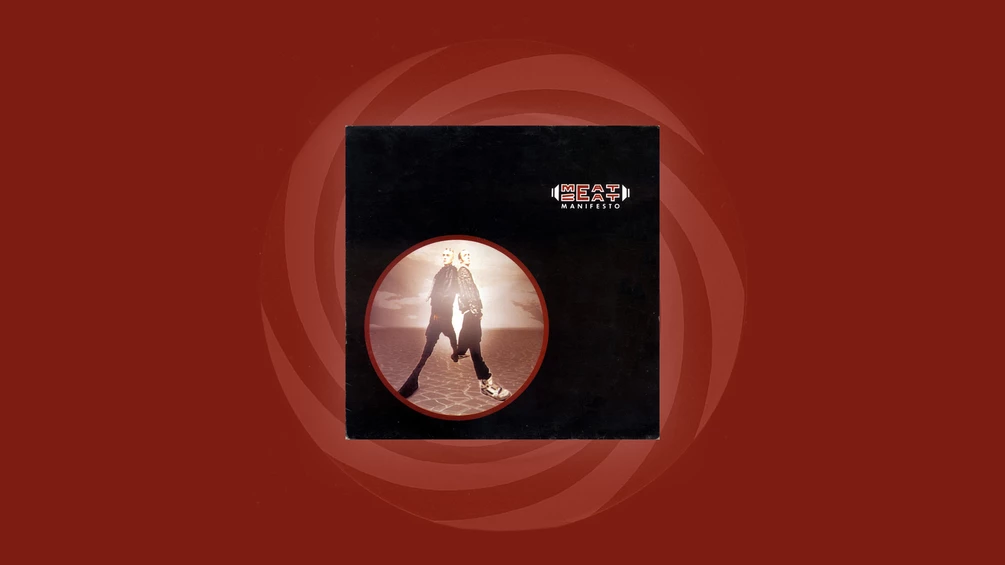
The intersection of British rave culture, industrial electronica, and dub production at the dawn of the 1990s yielded some of the most influential electronic music in history, yet few foundational tracks were born through such an unpredictable collision of methodology and coincidence. Released in 1990 by the British electronic project Meat Beat Manifesto, spearheaded by Jack Dangers, the track "Radio Babylon" initially raised eyebrows for its unconventional construction. Produced almost entirely out of disparate sound bites, found audio, and heavily processed instrumentation, the single was not explicitly engineered for the burgeoning UK warehouse party circuit. Instead, it was a studio collage rooted in Dangers’ fixation on the rhythmic placement of drum breaks and deep reggae-derived basslines.
Over the course of 1990 and into the subsequent years, however, the track transcended its industrial origins. It was rapidly adopted by the proto-jungle producers and foundational breakbeat hardcore DJs emerging out of London’s seminal club nights, such as AWOL and Rage. Played alongside seminal cuts by artists like Lennie De Ice and 4hero, "Radio Babylon" became a mandatory inclusion in sets by heavyweights including DJ Hype, Krust, Jumpin Jack Frost, and Fabio & Grooverider. Its heavy, off-beat snare placement, monolithic dub bass, and scattergun sampling strategy laid down a technical blueprint that would later be emulated or sampled by the likes of The Prodigy, Aphex Twin, and The Future Sound of London. Decades after its creation, the single is widely recognized as a pivotal milestone of the era, establishing a bridge between late-1980s post-industrial experimentation and the high-tempo dance floor dynamism of early-90s UK rave.
Chronological Evolution and Studio Origins
The genesis of "Radio Babylon" can be traced through the musical awakening and early career of Jack Dangers, born and raised in Swindon, Wiltshire. Growing up with older siblings who exposed him to diverse radio broadcasts, Dangers found inspiration in the electronic precision of Kraftwerk and The Human League’s early output. This foundation was significantly expanded by listening to John Peel’s eclectic late-night BBC Radio 1 broadcasts, where Peel championed post-punk acts like Cabaret Voltaire alongside foundational Jamaican dub and reggae records.
By the early 1980s, Dangers had secured employment at Tudor Studios, Swindon’s primary recording facility at the time. Starting out by making tea and operating tape machines, he gradually transitioned into an engineering role. He later moved to Drive Studio in the mid-1980s, balancing tedious commercial recording sessions with late-night experimentation. Capitalizing on off-hours studio time, Dangers began teaching himself production techniques despite lacking traditional instrumental training. He initially picked up the bass guitar, practicing extensively to the reggae-influenced basslines of Robbie Shakespeare and Grace Jones.
After fronting the funk-infused post-punk band Perennial Divide—which released material produced by XTC’s Andy Partridge—Dangers launched Meat Beat Manifesto as a solo-focused creative vehicle, occasionally collaborating with studio personnel such as Colin James, Jonny Stephens, Mark Pistel, and Ben Stokes. Following the release of the project’s debut album, "Storm The Studio," which showcased a heavy reliance on the cut-and-paste sampling aesthetics of hip-hop pioneers like Steinski and Coldcut, Dangers entered Drive Studio in November 1989 to work on remix material surrounding his second album, "99%."
During these sessions, Dangers attempted to reshape his track "Dog Star Man" into a more club-oriented piece, resulting in "Helter Skelter." Driven by a desire to push the boundaries of rhythmic placement rather than adhering to rigid four-to-the-floor house structures, Dangers further dissected and stripped down "Helter Skelter" to build what would become "Radio Babylon."
Technical Construction and Production Methodology
The construction of "Radio Babylon" relied heavily on innovative sampling techniques and vintage studio hardware. The track’s iconic, rumbling bassline was generated through a mixture of live performance and accidental digital processing. Unwilling to carry his Aria Pro II bass guitar through a rainy walk to the studio, Dangers plugged the instrument directly into his home Akai S-1000 sampler, playing a series of random notes while holding a piece of toast in his mouth. He saved the audio data to a floppy disk, loaded it into the identical studio sampler, and discovered that the resulting random sequence, tuned down by several semitones, possessed an anomalous, otherworldly timbre that could not be replicated through traditional playing.
The rhythmic backbone of the track was anchored by one of the most famous drum breaks in popular music history: the drum loop from Bobby Byrd’s 1988 Urban Records 1988 12-inch reissue of "Hot Pants," a cover of the James Brown classic. While the break featured a natural off-beat second snare hit—a structural nuance that would heavily influence the development of hardcore and jungle—Dangers programmed the loop to make it even more staccato and aggressive.
To achieve the track’s spatial, enveloping atmosphere, Dangers routed the drums and instruments through a suite of high-end and analog processors, including a Yamaha Rev 5 reverb, a Vesta Fire RV-2 spring reverb, Roland SDE 1000 digital delays, and a Roland RE-201 tape echo. Furthermore, to simulate the acoustic resonance of a live performance environment within a control room equipped with relatively small monitors, Dangers brought in a bespoke, high-powered sound system belonging to a friend and positioned it at the back of the studio.
The audio palette was further populated by a diverse array of pop culture, film, and broadcast samples loaded into the Akai S-1000. These included dialogue snippets from the 1950s TV detective drama Johnny Staccato, vocal fragments from soul singer Cheryl Lynn and rock band The Troggs, radio communications from NASA astronauts, and a distinct vocal sample from Boney M’s commercial pop cover of "Rivers of Babylon." Dangers intentionally incorporated these contrasting elements—particularly the pop music reference—as a deliberate subversion of the serious, rigid image often associated with industrial music projects of the era.
Reception, Distribution, and the Accidental Title
Despite its eventual stature within electronic music history, "Radio Babylon" was initially met with a muted or outright dismissive response in the United Kingdom upon its release in 1990 as the AA-side to "Helter Skelter." Early critical reception was largely indifferent or hostile, with domestic press outlets occasionally mocking the moniker "Meat Ball Manifesto" while panning the release. Paradoxically, the record found an earlier and more receptive audience for its opposite side in international markets, particularly the United States, where listeners initially gravitated toward "Helter Skelter."
The track received its title entirely by chance on the way to the mastering house. While riding a train to London and listening to headphones playing The Clash’s "Radio Clash," Dangers was reading a newly purchased copy of Kenneth Anger’s scandalous Hollywood chronicle Hollywood Babylon. Upon arriving at the studio, when the mastering engineer requested a title for the untitled master recording, Dangers improvised on the spot, combining the two cultural touchstones into "Radio Babylon."
Legacy and Broader Cultural Implications
As 1990 progressed, "Radio Babylon" steadily infiltrated the UK club underground. Its heavy sub-bass frequencies, dub-infused mixing style, and rapid-fire breakbeat editing resonated deeply with the aesthetic shifts occurring within the rave scene. As acid house mutated into breakbeat hardcore and eventually birthed jungle, producers recognized Dangers’ track as an essential text. The record’s DNA can be traced through the foundational output of key UK dance music architects who utilized similar techniques of sample manipulation, breakbeat reconstruction, and deep-frequency sound system weighting.
Following the commercial and cultural fallout of the track’s unexpected rise, Dangers continued an exceptionally prolific career. He relocated permanently to San Francisco in 1993 after touring with industrial hip-hop projects such as the Disposable Heroes Of Hiphoprisy and Consolidated. Over the ensuing decades, Meat Beat Manifesto released a vast catalog of structurally diverse albums, ranging from the dubstep-aligned "Autoimmune" released on Planet Mu in 2008 to "Extinct," a 2024 collaboration with Japanese noise artist Merzbow.
Reflecting on the enduring legacy of "Radio Babylon," industry analysts and music historians view the track as a vital bridge connecting the avant-garde post-industrial soundscapes of the 1980s with the sample-heavy, rhythmically complex electronic dance music of the 1990s and beyond. By treating the mixing console as an instrument and embracing aleatoric studio processes, Jack Dangers inadvertently authored one of the definitive blueprints for modern breakbeat culture, cementing a legacy that continues to influence successive generations of electronic music producers.