Jia Lissa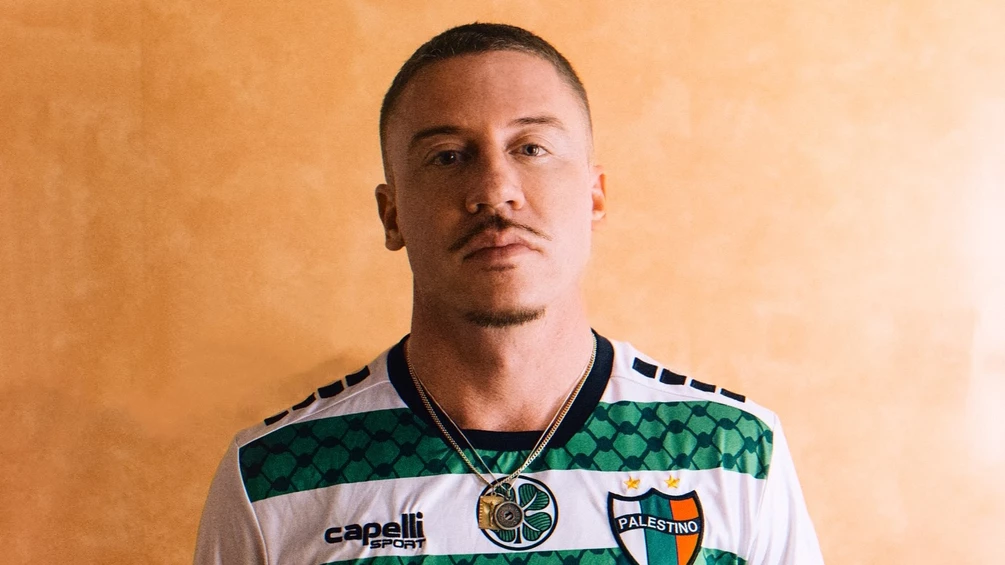
American rapper Macklemore has announced he will donate his entire $1 million net earnings from being booked as a supporting act on Ed Sheeran’s ongoing tour to humanitarian organizations aiding Palestinians in Gaza and the West Bank. The decision follows a highly publicized controversy that resulted in the hip-hop artist being dropped from the United States leg of Sheeran’s tour due to his vocal advocacy for a free Palestine during a performance in New Jersey.
The unfolding situation has ignited a wider conversation regarding artistic freedom, corporate influence in the live entertainment industry, and the responsibilities of major venue owners when artists express political views on stage. It has also prompted a ripple effect across the tour, drawing boycotts from other musicians and intense scrutiny from cultural watchdog organizations.
The Financial Contribution and Beneficiary Organizations
Macklemore, whose legal name is Ben Haggerty, confirmed via social media that his complete financial proceeds from the scheduled appearances—totaling $1 million—will be distributed among five distinct humanitarian organizations. These agencies are actively involved in on-the-ground relief efforts, providing essential medical care, food security, and infrastructure support to civilians impacted by the ongoing conflict in Gaza and the West Bank.
The designated beneficiaries include HEAL Palestine, the Gaza Soup Kitchen, Medical Aid for Palestinians, the UNRWA USA National Committee, and Anera. These organizations have faced immense operational challenges due to the severity of the humanitarian crisis, making substantial financial infusions critical to sustaining their local missions.
In an official statement published on Instagram, the rapper elaborated on his motivations for the donation, emphasizing a desire to refocus public discourse on the plight of the civilian population. "I want to bring the conversation back to where it belongs: to the Palestinian people who are still being killed, still living under military occupation, and still fighting for their freedom," Macklemore stated.
Chronology of the Tour Removal Controversy
The sequence of events leading to Macklemore’s departure from the tour began during the early dates of Ed Sheeran’s itinerary.
During a performance in New Jersey, Macklemore used his platform as a supporting act to speak publicly in support of Palestinian rights. Shortly thereafter, the rapper revealed to his fanbase that he had been removed from the remainder of the US leg of the Loop tour.
The sudden removal sparked immediate speculation and online debate regarding censorship and political blacklisting within major music tours. As public pressure mounted, Ed Sheeran addressed the situation, clarifying that the decision to drop Macklemore did not originate from him or his management team. Instead, Sheeran maintained that the action was forced upon the production by venue promoters and owners who objected to the rapper’s political statements.
According to statements shared by Macklemore, Sheeran disclosed that Robert Kraft, owner of Gillette Stadium—one of the key stops on the tour—objected strongly to the rapper’s presence. Sheeran allegedly reported that Kraft coordinated with fellow venue proprietors to issue a collective ultimatum: if Macklemore remained on the tour lineup, the production would be barred from performing in their respective stadiums.
Direct Challenges and Responses from Venue Management
Following his formal removal, Macklemore utilized his social media reach to direct a specific challenge toward Robert Kraft. In his announcement regarding the $1 million donation, the rapper called on the billionaire sports executive and stadium owner to match the contribution dollar-for-dollar.
"Whatever we disagree about, perhaps we can agree on this: Palestinian lives are worth protecting," Macklemore wrote, addressing Kraft directly.
In response to the public call-out, a representative for Gillette Stadium issued a statement clarifying the developments behind the scenes. According to the venue’s response, prior to Macklemore’s public challenge, Ed Sheeran had directly approached Kraft to request a $2 million commitment to aid humanitarian efforts addressing the regional crisis. Furthermore, the statement indicated that Sheeran intends to engage other venue owners in ongoing collaborative efforts aimed at bridge-building.
Notably, Kraft’s public response utilized broader terminology, referencing humanitarian needs in "the region" rather than explicitly mentioning Palestine, a linguistic choice that observers noted mirrors the careful framing frequently adopted by corporate and institutional entities navigating geopolitical sensitivities.
Broader Industry Reactions and Boycott Calls
The controversy surrounding Macklemore’s exclusion quickly expanded beyond the immediate stakeholders, drawing the attention of international advocacy groups. Earlier in the week, the Palestinian Campaign for the Academic and Cultural Boycott of Israel (PACBI), a founding member of the Boycott, Divestment, Sanctions (BDS) movement, released a scathing critique of the tour’s handling of the situation.
PACBI characterized the tour as "compromised" and criticized the production for capitulating to corporate and billionaire pressure. The organization formally called upon opening acts, technical crew members, and ticket-holding audience members to boycott the tour until substantial changes were made or accountability was established.
The call to action yielded tangible results within the music community. In the days following the statement, several associated acts elected to withdraw from the tour in solidarity with the Palestinian cause and in support of Macklemore. Among those pulling out were singer-songwriter Finneas and members of Ed Sheeran’s own backing band, Beoga. These departures introduced significant logistical and artistic hurdles for the headlining production, forcing a re-evaluation of the tour’s remaining schedule.
Implications for Live Entertainment and Political Speech
The collision of international politics, stadium infrastructure ownership, and mainstream commercial music tours highlights a growing trend of corporate risk aversion within the entertainment industry. Major concert venues, often tied to billionaire owners, corporate conglomerates, and institutional partnerships, increasingly seek to avoid controversies that could alienate specific demographics, attract protests, or result in property security concerns.
Conversely, artists with substantial independent leverage, such as Macklemore, are increasingly willing to leverage their platforms, financial gains, and social media reach to maintain consistency between their personal convictions and professional engagements. By redirecting their financial compensation into direct humanitarian aid, artists establish alternative pathways to influence cultural and political discourse outside traditional corporate structures.
As the live music sector grapples with these competing pressures, the fallout from the Ed Sheeran tour serves as a prominent case study in the complexities of modern performance, where geopolitical conflicts intersect directly with the business operations of global entertainment.