Mia Khoirunisa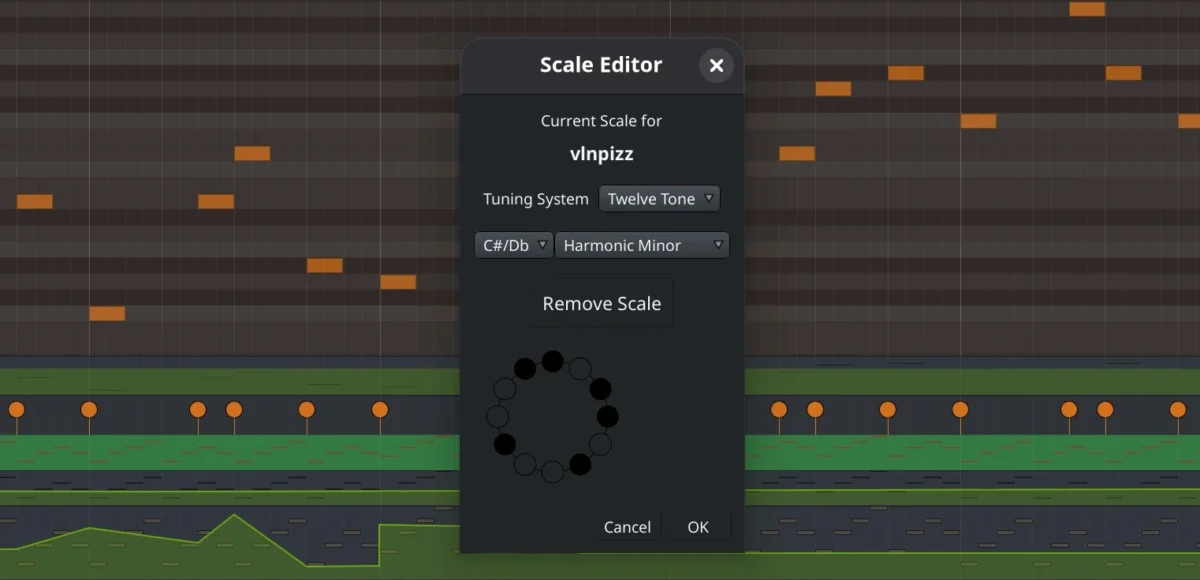
The release of Ardour 9.8 marks another milestone in the rapid and meticulous development cycle of the prominent open-source digital audio workstation (DAW). As a free software project sustained by a global community of contributors, Ardour continues to challenge proprietary industry standards. Version 9.8 introduces vital enhancements to session recovery mechanisms, clip recording features, and MIDI toolsets, alongside a major expansion in hardware and controller compatibility. However, the most significant technical achievement in this release is the integration of scales and keys designed with a profound structural shift: unlike competing commercial digital audio workstations, Ardour’s new scale and mode features are engineered to be inherently tuning-aware.
This architectural development addresses a long-standing limitation within music production software. Historically, digital audio workstations have operated under the assumption that Western common-practice tuning—specifically 12-tone equal temperament (12-TET) anchored at a reference pitch of A=440 Hz—is a universal standard. While this framework serves the majority of contemporary Western commercial music production, it functions merely as an edge case within the vast tapestry of global musical traditions. Music from non-Western cultures, historical European and North American classical repertoires predating the 19th century, and contemporary microtonal compositions all operate outside the rigid constraints of 12-TET. By treating alternative temperaments as an afterthought or isolating tuning systems entirely from scale editing interfaces, mainstream software developers have historically reinforced Eurocentric biases in music technology design.
Chronology of Modern Microtuning and DAW Architecture
The evolution of microtuning support within digital audio environments has progressed in distinct phases over the past two decades. Initially, alternative tunings were restricted to specialized software synthesizers or third-party plug-ins that altered pitch output independently of the DAW’s host grid. Over time, developers began recognizing the need for native integration.
In recent years, major commercial software packages have introduced proprietary solutions. Notable implementations include Bitwig Studio’s built-in microtuning tools and Ableton Live’s project-wide Tuning Systems framework. However, these implementations often enforce rigid design boundaries. In Ableton Live, for instance, activating a custom Tuning System separates the tuning environment from the default Scale functionality, disabling scale tools when alternative temperaments are engaged. Such software constraints force producers to choose between grid-aligned scale assistance and accurate historical or non-Western tunings.
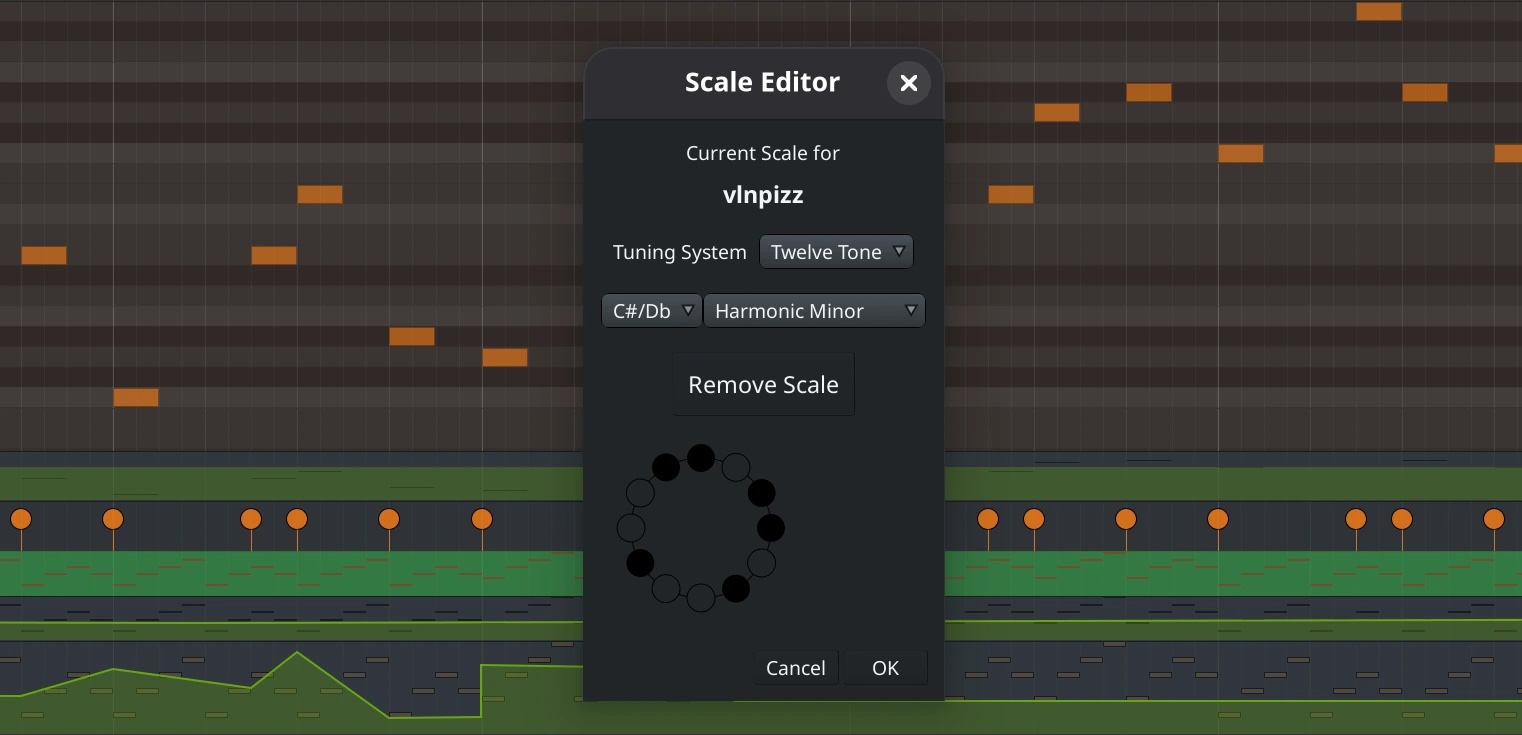
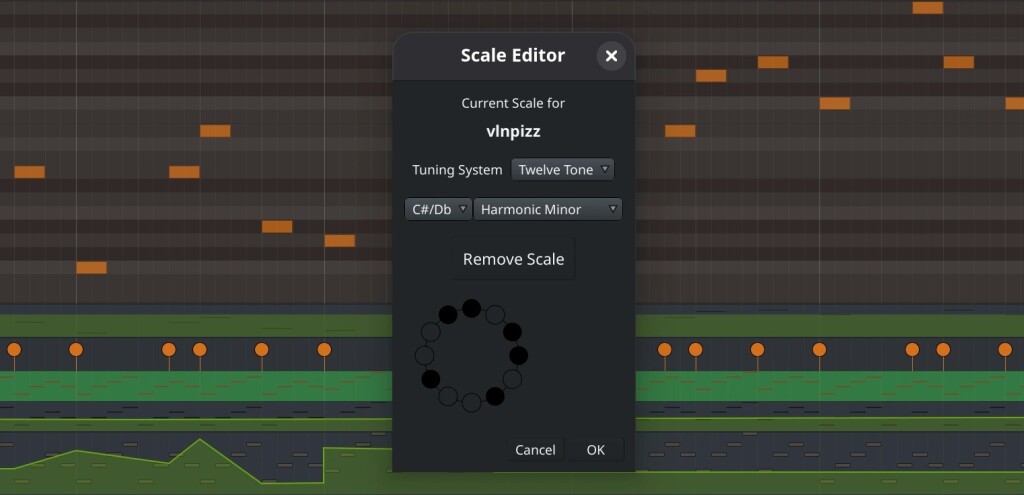
Ardour’s development team has approached this challenge by building a foundational infrastructure where tuning systems and scale definitions work in tandem. The version 9.8 update introduces an interface that allows users to edit roots and modes directly within the piano roll view while simultaneously applying targeted tuning systems. Although the feature set is currently in an early developmental phase and carries explicit limitations, it represents a structural paradigm shift. Producers can govern note entry by forbidding out-of-scale notes or instructing the DAW to automatically adjust errant MIDI inputs according to predefined algorithmic rules.
Technical Implementation and Workflow Implications
The complexity of supporting diverse tuning systems within a linear software environment cannot be overstated. Standardization simplifies interface design but restricts creative affordances. Ardour’s initial implementation of tuning-aware scales provides users with granular control over pitch collections, accommodating multiple methods for mapping notes to MIDI controllers.
While the software’s current nomenclature—such as terms like "keys" and "scales"—still reflects 20th-century Western common-practice terminology, the underlying engine is designed to accommodate broader applications. In future iterations, these capabilities are expected to support complex modal shifts found in non-Western traditions, such as the modulation between jins in Arabic modal theory, or non-repeating octave structures.
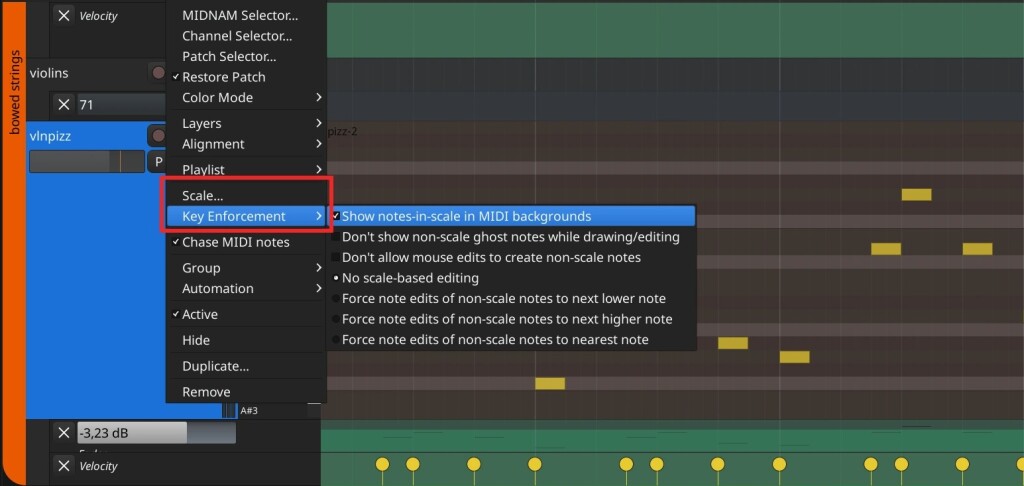
From a workflow perspective, Ardour’s host-level scale representation operates similarly to a digital score, determining how pitch collections are visualized and edited. This differs conceptually from plug-in-based solutions, such as Khyam Allami’s open-source Tanghām plug-in, which function more analogously to physical instrument retuning. Integrating these concepts at the DAW level allows for a more cohesive workflow when composing microtonal or historically informed music.
Expanded Clip Recording, MIDI Tools, and Hardware Support
Beyond its work on tuning systems, Ardour 9.8 delivers a robust array of productivity and workflow updates designed to streamline professional audio and MIDI production.
Clip recording has received significant refinement, featuring a streamlined two-bar countdown, enhanced visual feedback, and improvements to the underlying audio clip editor. These enhancements reduce friction for users migrating to Ardour from competing loop-based production environments like Ableton Live.
Within the MIDI toolset, chord editing functionality has been expanded to natively support arpeggios, allowing producers to generate complex rhythmic and melodic patterns directly from chord blocks without relying on external MIDI effects processors.
Hardware integration has also seen a substantial boost. Version 9.8 expands native support for external control surfaces and MIDI keyboards, most notably incorporating seamless integration for the popular Novation Launchkey product line. While support for newer models such as the Launchkey Mk4 88 remains flagged as untested by the development team, the inclusion of updated device profiles paves the way for immediate community testing and adoption. Furthermore, the update introduces compatibility configurations for hardware controllers like Ableton’s Push 2, broadening the operational flexibility of Ardour across diverse studio setups.
Broader Impact and Future Development
The release of Ardour 9.8 underscores the distinct advantages of the open-source development model. By releasing features in their early stages, the Ardour development team invites direct feedback from musicians, composers, and ethnomusicologists worldwide. This collaborative approach ensures that complex features—particularly those addressing global musical traditions that have been historically marginalized by commercial software vendors—are refined based on practical, real-world usage rather than corporate assumptions.
As development continues across subsequent point releases, the refinement of tuning-aware scales in Ardour is expected to serve as a case study for the broader audio software industry. By dismantling the assumption that 12-tone equal temperament is the universal default of digital music production, Ardour is establishing a more inclusive technical foundation for the future of computer-based composition.