Johan Budi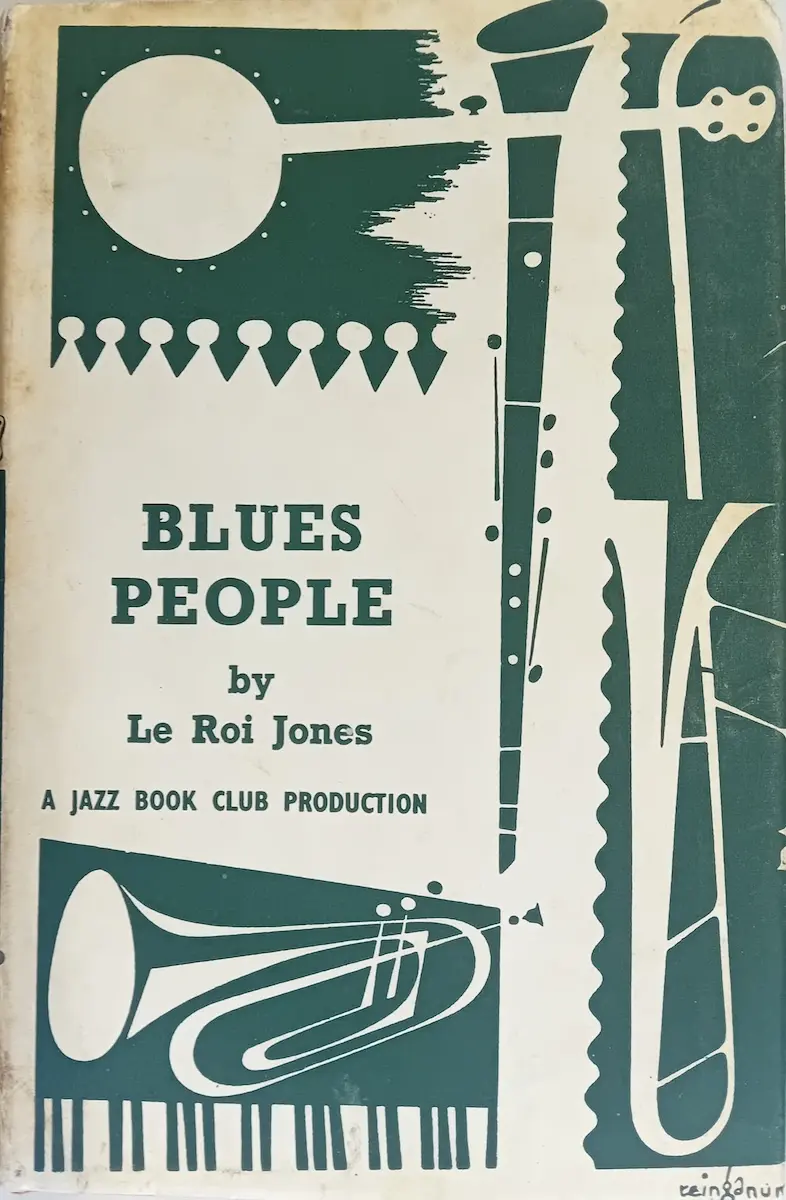
The publication of Le Roi Jones’s seminal work Blues People: Negro Music in White America in the mid-1960s sparked a profound intellectual and cultural reckoning that continues to resonate within the realms of musicology, sociology, and American history. Originally reviewed in the September 1966 issue of Jazz Journal by critic Don Lindon, the book emerged during a volatile period of social upheaval, civil rights agitation, and radical artistic transformation. Lindon’s retrospective analysis captured a dual sentiment shared by many contemporary observers: a profound intellectual stimulation counterbalanced by deep-seated personal and political discomfort. Jones, who later changed his name to Amiri Baraka, was widely identified with the most militant wing of the Civil Rights Movement. His uncompromising artistic output extended far beyond the printed page into the theatrical domain; his controversial New York theatrical productions of 1964—specifically The Slave, The Toilet, and The Dutchman—provoked intense public furore. These provocative dramas, ironically financed in part by federal funds allocated through the Anti-Poverty Bill, challenged white liberal sensibilities with raw militancy and unsparing anti-white political rhetoric. Yet, as Lindon astutely observed, Blues People was less a direct assault on white America than a scathing, unflinching critique of the black middle class and its aspirations toward integration and cultural assimilation.
Historical Context and the Genesis of Blues People
To understand the seismic impact of Blues People upon its release by the Jazz Book Club, one must examine the landscape of jazz criticism and socio-political thought in the United States during the early 1960s. Prior to Jones’s intervention, the historiography of jazz had been almost exclusively authored by white European and American critics, collectors, and historians. This paradigm meant that the narrative arc of America’s classical music was largely framed through an external, often paternalistic lens that frequently divorced the art form from the lived socio-political realities of its creators.
Jones disrupted this academic and critical monopoly. As the first major jazz history written by an African American author, Blues People provided an authoritative, insider account that positioned jazz not merely as a localized entertainment genre or an exotic sonic curiosity, but as the central socio-cultural archive of Black life in the United States. Jones famously posited in his introduction that if the Negro represents or is symbolic of something unique in American culture, that essence should be decipherable through his characteristic music. By tracing the evolution of the music from its foundational African roots, through the crucible of chattel slavery, the blues, swing, bebop, and ultimately into the avant-garde Free Form Movement of the 1960s, Jones established a continuous, unbroken chain of cultural expression directly tied to the changing socio-political conditions of African Americans.
Chronology of Artistic and Political Radicalism
The trajectory of Le Roi Jones’s career in the 1960s is essential for contextualizing the ideological underpinnings of Blues People. The timeline of his radicalization mirrors the broader transition of the Civil Rights Movement into the Black Power era:
- 1960: Jones travels to Cuba, an experience that radically shifts his geopolitical worldview and accelerates his disillusionment with American liberalism and pacifist integrationism.
- 1961: He publishes his first major collection of poetry, Preface to a Twenty Volume Suicide Note, marking his emergence as a distinct voice in the burgeoning Lower East Side literary scene.
- 1963: Blues People is published by Morrow, instantly establishing a new benchmark for music criticism and cultural theory.
- 1964: The production of his explosive plays—The Slave, The Toilet, and The Dutchman—in New York City generates national controversy, cementing his reputation as a leading theatrical militant.
- 1965: Following the assassination of Malcolm X, Jones leaves Greenwich Village, moves to Harlem, and founds the Black Arts Repertory Theatre/School, pivoting decisively toward cultural nationalism.
- 1966: The British edition of Blues People is circulated via the Jazz Book Club, prompting extensive international critical engagement, including Don Lindon’s notable review in Jazz Journal.
Critical Analysis of the Text and Its Provocations
Don Lindon’s 1966 review highlighted several key strengths and contentious elements of Jones’s methodology. Unquestionably, the chapters dedicated to slavery and the genesis of slave music were recognized immediately as masterclasses in cultural historiography. Jones articulated how African spiritual traditions, work songs, and field hollers were systematically adapted under the brutal constraints of plantation slavery to form the primordial soup of the blues.
However, as the book progressed into the twentieth century, the seamless integration of historical fact and subjective ideology became a primary point of debate among critics. Lindon noted that in later chapters, objective musicological history occasionally took a backseat to Jones’s fierce polemical opinions. This was particularly evident in Jones’s treatment of the Rhythm and Blues movement and his venomous contempt for white appropriation of jazz, specifically targeting white swing bands of the big band era. Jones argued that white musicians and commercial enterprises systematically diluted the expressive urgency and cultural specificity of Black jazz, reducing a revolutionary folk-art expression into sanitized, mainstream entertainment for mass consumption.
For white liberal critics of the era, engaging with these assertions required navigating a complex maze of intellectual discomfort. Lindon explicitly acknowledged the inherent dangers and presumptions of a white English liberal attempting to critique an African American intellectual’s diagnosis of racial pathology and liberation pathways in the United States. The core ideological divergence identified by Lindon lay in Jones’s prescription for the future: rather than advocating for integration—which Jones viewed as a compromised surrender to white cultural hegemony—Jones increasingly looked toward racial separation, self-determination, and cultural autonomy. This fundamental ideological schism explained his profound scorn for the Black middle class, whom he accused of abandoning their cultural roots in a hollow quest for bourgeois white acceptance.
Industry Reactions and Broader Implications
The publication and subsequent international distribution of Blues People elicited varied reactions across the transatlantic literary and musical establishment:
- Musicologists and Historians: Praised the book for anchoring jazz securely within sociological and anthropological frameworks, forcing traditional historians to reckon with the socio-economic conditions of Black artists.
- Mainstream Jazz Critics: Exhibited defensiveness regarding Jones’s harsh indictments of white-dominated jazz criticism and the commercial exploitation of swing music, sparking vigorous debates in publications like DownBeat and Jazz Journal.
- The Literary Community: Acknowledged Jones’s formidable prose style and intellectual rigor, eagerly anticipating subsequent prose works, such as his debut novel System of Dante’s Hell, published later that year by MacGibbon & Kee.
- Civil Rights and Black Power Organizations: Recognized Blues People as an important foundational text that prefigured the cultural nationalism of the Black Arts Movement, bridging the gap between political activism and artistic production.
Legacy and Contemporary Relevance
Looking back from the vantage point of the twenty-first century, the historical significance of Blues People extends far beyond the specific polemics of the 1960s jazz scene. Le Roi Jones successfully shattered the myth of music criticism as a politically neutral, purely aesthetic exercise. By demonstrating that every syncopated rhythm, blue note, and harmonic substitution carried the weight of historical trauma, resistance, and cultural triumph, he revolutionized how scholars approach American art.
While debates surrounding integration versus cultural separatism have continued to evolve over the decades, Jones’s core thesis—that Black music cannot be fully understood independently of the social conditions of the people who created it—has become an accepted axiom of modern musicology. Blues People remains required reading not merely for jazz aficionados seeking discographical data or matrix numbers, but for anyone dedicated to understanding the intricate, often painful interplay between race, identity, and artistic expression in the modern world.