Jia Lissa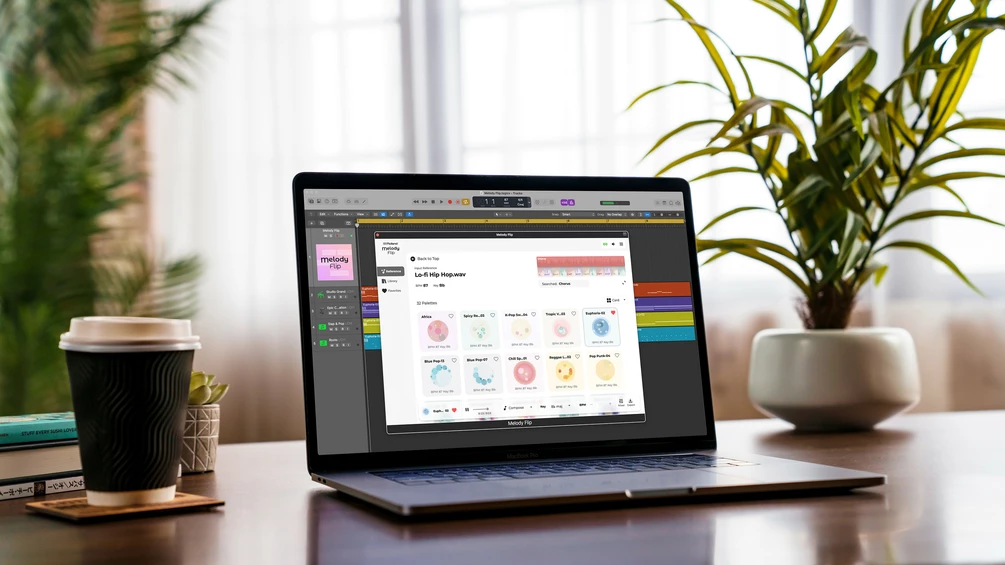
Japanese electronic musical instrument manufacturer Roland Corporation has officially unveiled its latest innovation in music production technology, introducing an artificial intelligence-assisted melody-generation plug-in titled Melody Flip. Marketed by the company as a collaborative "music creation partner" for contemporary producers, songwriters, and beatmakers, the software is engineered to combat the persistent phenomenon of writer’s block while streamlining the initial stages of the composition workflow. The announcement arrives amidst a broader corporate push by Roland to integrate cutting-edge computational tools with its historic hardware lineage, bridging the gap between traditional analog synthesis and modern algorithmic assistance.
The Core Mechanics and Workflow of Melody Flip
At the structural foundation of Melody Flip is a curation of musical building blocks categorized into four distinct functional pillars known as Palettes. These Palettes encompass a comprehensive library of pre-structured musical patterns spanning core compositional elements, including lead melodies, harmonic chord progressions, basslines, and rhythmic drum patterns. In total, the plug-in ships with upwards of 250 distinct Palettes, offering users a vast array of starting points that can be manipulated, layered, and evolved within a digital audio workstation environment.
Beyond its internal library of patterns, Melody Flip incorporates an analytical sampling feature designed to convert external audio sources into functional creative prompts. Producers can import favorite tracks or isolated audio stems directly into the plug-in interface, which then analyzes the source material for key musical characteristics such as tempo, tonal key signature, and harmonic structure. Utilizing these extracted metrics, the software generates contextual suggestions that align with the harmonic and rhythmic profile of the imported reference track.
Once a pattern or variation is generated, the workflow allows for seamless integration into existing studio setups. Producers retain full editorial control by exporting the resulting musical data as standard MIDI files or raw audio stems. This flexibility ensures that the plug-in acts as an ideation engine rather than a rigid composition tool, remaining fully compatible with most major digital audio workstations utilized in professional and project studios worldwide.
Chronological Context and Recent Product Releases
The debut of Melody Flip continues an aggressive product rollout strategy by Roland, which has spent recent years balancing forward-looking technological developments with nods to its storied corporate heritage. This contemporary trajectory reflects a deliberate effort to capture both the modern laptop-based producer demographic and purists devoted to vintage hardware.
In early 2026, Roland expanded its software catalog with the release of the CR-78 Software Rhythm Composer. This digital emulation faithfully recreated the groundbreaking hardware unit originally released in the late 1970s. The original CR-78 occupies a revered position in pop and electronic music history, famously providing the pulsating rhythmic backbone for seminal tracks such as Phil Collins’s "In the Air Tonight" and Blondie’s new wave anthem "Heart of Glass."
Prior to the CR-78 software emulation, Roland achieved a significant milestone in hardware manufacturing by releasing the TR-1000 Rhythm Creator. Touted as the company’s first true analog drum machine in over four decades, the TR-1000 drew heavily upon the design philosophies, workflow paradigms, and sonic characteristics of the legendary TR-808, TR-909, and TR-606 drum machines that fundamentally shaped the sonic architecture of modern house, techno, hip-hop, and electro.
The juxtaposition of the TR-1000 analog hardware release and the algorithmic Melody Flip plug-in highlights a multi-pronged corporate strategy. Roland is simultaneously catering to the tactile, hands-on preferences of physical hardware collectors and the rapid-fire workflow demands of modern, software-centric producers operating within DAW environments.
Historical Legacy and Evolution of the Brand
To fully understand Roland’s current technological trajectory, industry analysts frequently look back at the company’s foundational impact on electronic music culture over the last half-century. Founded in Osaka, Japan, in 1972 by Ikutaro Kakehashi, the company spent decades pioneering instruments that inadvertently spawned entirely new global musical subcultures.
During the 1980s, Roland introduced synthesizers, drum machines, and sequencers—such as the Juno and Jupiter series synthesizers alongside the aforementioned TR-808 and TR-909 rhythm composers—that became the bedrock of electronic dance music. When these machines were commercially discontinued in the mid-1980s due to changing market trends, they were acquired cheaply by underground producers in cities like Detroit, Chicago, and London. These artists utilized the distinctive, punchy analog sounds to pioneer techno and house music, permanently cementing Roland’s hardware in the annals of music history.
In 2023, the company marked its 50th corporate anniversary, prompting widespread reflection from music historians, gear enthusiasts, and working producers regarding how deeply embedded Roland’s innovations are within contemporary audio production. The shift toward integrating artificial intelligence features like Melody Flip represents the latest chapter in a continuous evolution from analog circuitry to digital modeling, and now, to machine-learning-assisted composition tools.
Industry Implications of AI in Music Production
The introduction of Melody Flip enters a rapidly expanding and frequently debated market sector: artificial intelligence in creative workflows. While some traditionalists express concern regarding the automation of artistic expression, major music technology developers increasingly frame AI tools not as replacements for human creativity, but as sophisticated catalysts designed to overcome creative stagnation.
By offering algorithmic pattern generation based on imported reference material, Melody Flip addresses a common bottleneck for modern producers who face mounting pressure to output high volumes of music within compressed timeframes. The ability to quickly parse tempo and key characteristics from existing audio allows creators to experiment with unfamiliar harmonic structures or jumpstart stalled projects without violating copyright, as the tool generates unique derivative MIDI data rather than copying proprietary audio.
Furthermore, the integration of such tools by legacy institutions like Roland signals a broader industry normalization of artificial intelligence within professional audio software. As competitors across the software plug-in landscape introduce algorithmic mixing assistants, intelligent EQ matching, and generative rhythm generators, Roland’s entry into AI melody generation via Melody Flip establishes a competitive foothold in the next generation of music production infrastructure.
Future Outlook and Availability
As the boundaries between human-driven composition and machine assistance continue to blur, products like Melody Flip are expected to play an increasingly central role in shaping how commercial and independent music is made. By marrying its extensive historical archive of musical patterns—codified into the 250-plus Palettes—with adaptive algorithmic analysis, Roland has positioned the plug-in as a versatile utility for creators working across diverse genres, from pop songwriting to underground electronic music production.
Detailed information regarding system requirements, pricing tiers, and DAW compatibility for the Melody Flip plug-in is currently accessible through Roland’s official global product portal, signaling the immediate availability of the software for digital creators worldwide.