Mia Khoirunisa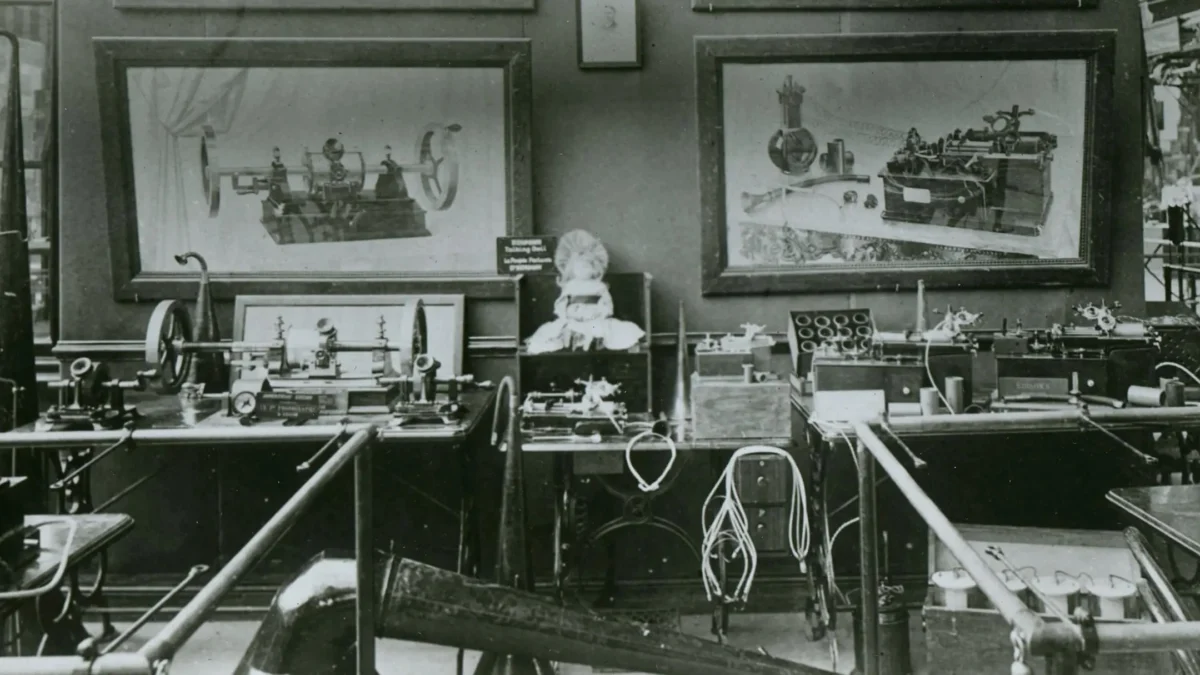
The intersection of early audio technology and 19th-century material culture has long fascinated historians and sonic experimentalists alike. Recently, Tempest Instruments—a specialized boutique sound design enterprise led by film, television, and video game composer Alex Davis—has drawn renewed public interest to one of history’s most eccentric and ill-fated inventions: Thomas Edison’s late-19th-century talking dolls. Known for curating esoteric sound libraries derived from vintage and rare acoustic artifacts, Tempest Instruments has cataloged these historical novelties, shedding light on a commercial failure that continues to captivate modern audiences and sound designers.
Thomas Edison’s venture into automated children’s toys represents a fascinating, albeit deeply flawed, chapter in the history of recorded sound. While Edison is celebrated globally for pioneering the phonograph in 1877, his subsequent commercial adaptations frequently pushed the boundaries of manufacturing capabilities and societal reception of the era. The talking doll project, launched in the late 1880s, stands as a prime example of an ambitious technological concept hindered by the mechanical limitations of its time.
Historical Background and Chronology of the Edison Talking Doll
The genesis of the talking doll dates back to the perfection of the phonograph cylinder. Following his success with audio recording and playback devices, Edison envisioned a miniature phonograph mechanism that could be housed inside the torso of a child’s toy.
By 1889, the Edison Phonograph Toy Manufacturing Company was established to produce the dolls. The chronology of their brief market lifespan reveals a rapid cycle of production, consumer rejection, and withdrawal:
- 1877: Thomas Edison invents the tin-foil phonograph, laying the technical foundation for voice recording and reproduction.
- 1889: Production of the talking dolls begins in Orange, New Jersey. The dolls feature a miniature wax cylinder phonograph built into a tin interior, driven by a small hand-cranked flywheel operated through a hole in the doll’s back.
- April 1890: The dolls officially go on sale to the public in select retail markets, carrying a hefty price tag ranging from $10 to $20 depending on the clothing and size—a significant sum equivalent to hundreds of dollars today.
- August 1890: Sales are abruptly halted after only a few weeks of widespread distribution. The product is pulled from shelves due to a cascade of mechanical failures, high return rates, and consumer dissatisfaction.
Design Mechanics and Mechanical Limitations
The physical construction of Edison’s talking doll was an engineering marvel for its era, yet it proved entirely impractical for everyday use by children. According to archives maintained by the Smithsonian Institution and the Thomas Edison National Historical Park, the dolls stood roughly 12 inches tall, featuring imported ceramic heads paired with heavy, cast-metal bodies designed to house the delicate acoustic mechanism.
Inside the torso sat a miniature wax cylinder measuring approximately one to two inches in length. A tiny stylus traced grooves on the cylinder, reproducing nursery rhymes such as "Twinkle, Twinkle, Little Star" or "Jack and Jill" when the user turned the external crank.
However, several critical design flaws doomed the product:
- Fragility of the Recording Medium: The wax cylinders were exceptionally delicate. Normal handling, changes in temperature, and humidity caused the wax to warp or degrade rapidly, rendering the audio garbled or completely silent.
- Usability Issues: Operating the hand crank required a delicate touch. Children often struggled to maintain a consistent speed, resulting in erratic, distorted playback that contemporary accounts frequently described as unsettling rather than amusing.
- Audio Fidelity and Tone: Due to the primitive state of acoustic recording, the voices—provided by young women hired to speak into recording horns—sounded high-pitched, tinny, and ghostly when played back through the miniaturized apparatus.
Public Reception and Cultural Legacy
Contemporary reactions to the dolls were mixed, leaning heavily toward bewilderment and alarm. While adults viewed the mechanical marvels as a novelty, children frequently found the eerie, disembodied voices terrifying. The Smithsonian Institution has publicly categorized the artifacts as "expensive, heavy, non-functioning, and a little scary looking," a sentiment echoed by modern cultural historians.
Parents were quick to return the products, not only because the mechanisms routinely broke within days of purchase, but also due to the unsettling nature of the audio output. Consequently, surviving examples of the original Edison talking dolls are exceptionally rare and command exorbitant prices among private collectors and museums today.
Broader Sonic Exploration by Tempest Instruments
Tempest Instruments’ focus on the Edison doll is part of a broader archival mission to preserve and repurpose vanishing auditory history. Alex Davis and his team specialize in capturing the sonic signatures of antique instruments and rare acoustic oddities, integrating them into modern digital audio workstations (DAWs) via platforms like Native Instruments Kontakt.
Beyond the 1890s talking dolls, Tempest Instruments’ catalog and educational outreach explore foundational moments in audio history. These include analyses of the earliest human vocal recordings—which frequently captured experimental shouting into primitive phonautograph and phonograph apparatuses—as well as acoustic recordings of notable historical figures, such as Prussian Field Marshal Helmuth von Moltke the Elder, who was born in 1800 during the final decades of the Holy Roman Empire.
Furthermore, the enterprise applies this historical reverence to functional musical artifacts, such as sampling a historic piano played by Frédéric Chopin in 1848. By releasing libraries like Sona/Chroma, Tempest Instruments bridges a century-and-a-half technological gap, allowing contemporary film and game composers to texture their modern scores with the authentic acoustic resonance of the 19th century.
Implications for Modern Sound Design and Media
The resurgence of interest in Edison’s mechanical failures highlights a growing appetite among sound designers and experimental artists for imperfect, analog textures. In an era dominated by pristine digital audio synthesis and flawless artificial intelligence generation, creators increasingly turn to vintage equipment, acoustic artifacts, and historical oddities to inject character and emotional depth into media scoring.
The narrative arc—from Edison’s industrial laboratories to modern digital sample libraries—demonstrates how technological missteps of the past can be reimagined as creative assets for the future. Whether inspiring avant-garde sound art installations, specialized sample libraries, or academic historical research, the haunting legacy of the 1890s talking doll endures as a testament to humanity’s persistent drive to capture, replicate, and sometimes inadvertently terrify with the human voice.