Johan Budi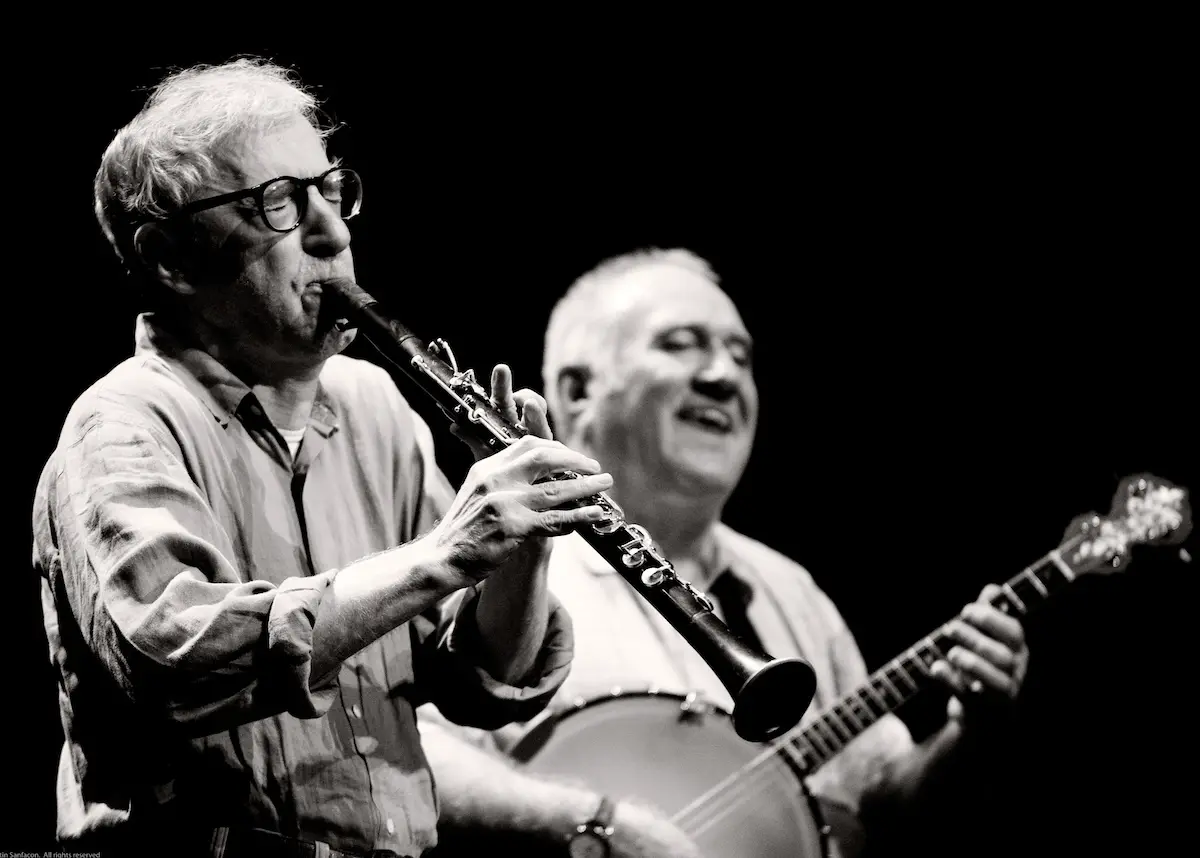
The release of archival live jazz recordings often serves as both a historical preservation effort and a recalibration of a legendary artist’s recorded legacy. In the realm of hard bop and post-war American jazz expatriates, few figures loom as large or play as rapidly as tenor saxophonist Johnny Griffin, universally known as "The Little Giant." Storyville Records’ recent mining of its vaults has yielded Live In Helsingborg 1990, a formidable document capturing Griffin in peak performance alongside a seasoned Danish rhythm section comprising pianist Thomas Clausen, bassist Mads Vinding, and drummer Svend-Erik Norregard. Recorded on July 27, 1990, in Helsingborg, Sweden, the album places a magnifying glass on a transatlantic partnership that defined the latter decades of European jazz culture. Simultaneously, the broader marketplace has seen complementary archival packages, such as New Continent’s Manhattan Swing – Music From The Movies Of Woody Allen, highlighting how classic jazz recordings continue to find new institutional and cinematic life decades after their initial pressing. Together, these releases underscore an ongoing commercial and cultural appetite for mid-century jazz masterpieces and high-octane live documentation.
Historical Chronology and the Evolution of Johnny Griffin
To fully contextualize the blistering speed and harmonic authority demonstrated on the Helsingborg stage, one must retrace a career that spanned more than half a century. Johnny Griffin’s professional trajectory commenced in 1945 at the remarkably young age of 17, when he joined the orchestra of legendary bandleader Lionel Hampton. During the post-war era, Griffin navigated the booming rhythm and blues circuits before emerging as a formidable exponent of the hard bop movement in the late 1950s.
His resume reads as a definitive roll call of modern jazz royalty. Griffin achieved widespread international recognition through pivotal tenures with Art Blakey’s Jazz Messengers and the Thelonious Monk Quartet. Furthermore, his incendiary quintet recordings featuring dueling tenor saxophone battles with Eddie "Lockjaw" Davis cemented his reputation as an instrumental powerhouse capable of holding his own against any contemporary.
In 1963, in search of broader artistic horizons and a more receptive performance climate, Griffin joined the exodus of American jazz musicians emigrating to Europe. He initially settled in Paris before establishing roots in the Netherlands and Denmark. From these European bases, he maintained a relentless international touring schedule, bridging the gap between American bebop royalty and European audiences. This background frames the 1990 Helsingborg performance not as an isolated concert, but as the mature culmination of a nomadic career spent perfecting the art of spontaneous, high-velocity improvisation.
Detailed Performance Analysis: The Helsingborg Concert
The Helsingborg setlist is a masterclass in contrasting stylistic approaches within the hard bop idiom. Accompanied by a Danish trio intimately familiar with his phrasing and harmonic tendencies, Griffin wastes no time establishing his authority. On the opening track, Just Friends, he steps out with characteristic kinetic energy, deploying urgent, fluently fast-fingered runs underpinned by a diverse array of ingeniously unpredictable rhythmic patterns. Throughout the piece, he flashes his trademark fondness for brief, amusing musical quotes, signaling a performer entirely at ease with his instrument and his collaborators.
A sharp stylistic pivot occurs on These Foolish Things, where Griffin reveals a deeply expressive, introspective dimension to his musicianship. Rather than relying solely on pyrotechnics, he delivers an intensely felt treatment of the melody, graced by delicate and deeply lyrical improvisation.
However, this restraint is entirely abandoned on All The Things You Are. Conventionally approached as a slow, romantic ballad, the composition is taken at a blistering upbeat tempo, dismantled, and completely transformed. Griffin unleashes a torrent of frenetic improvisation characterized by dizzying speed, uncompromising skill, and relentless rhythmic drive. While instrumental mastery and a fecundity of creative ideas are unmistakably demonstrated on this track, the exercise arguably comes at the expense of the song’s inherent melodic beauty—a trade-off characteristic of Griffin’s more adrenaline-fueled live appearances.
Rhythm Section Dynamics and Ensemble Balance
The supporting trio led by pianist Thomas Clausen sounds thoroughly fired-up throughout the off-the-cuff, free-ranging jam. Possessing deep technical skill and extensive experience within the modern jazz idiom, Clausen, Vinding, and Norregard constantly strive to match Griffin’s exuberant and unpredictable flights. Consequently, very little of the performance sounds relaxed or casually tossed off.
Mads Vinding’s basswork is undeniably impressive—nimble, inventive, and articulate. Yet, from a mixing and balance perspective, the bass is occasionally over-recorded, creating an ensemble texture that feels overly busy. Rather than laying down a steady, propulsive, and rock-solid momentum directly beneath Griffin’s spectacular trajectories, the rhythm section occasionally crowds the sonic space. At various points in the mix, the ensemble takes on a curiously congested feel, creating the impression that every musician is attempting to solo simultaneously.
Interestingly, Griffin himself appears entirely unfazed by this dense collective improvisation. The rhythm section finally achieves an optimal, breathable groove during the slow and expansive 14-minute-and-30-second rendition of Blue Monk. This track allows for patient, substantive blues playing from Griffin, Clausen, and Vinding, before unexpectedly riding out with two swinging choruses of Duke Ellington’s Time’s A Wastin’, leaving the memory of Blue Monk seemingly forgotten by the final chord. Clausen subsequently contributes strongly to the hectic, breakneck closer, providing a fittingly breathless punctuation mark to the evening.
For dedicated aficionados of virtuoso tenor saxophone performance and high-energy small-group hard bop jamming, Live In Helsingborg 1990 represents a vital addition to the Storyville catalog.
Discography and Personnel:
Tracks: Just Friends; Call It What You Wanna; These Foolish Things; All The Things You Are; Blue Monk; Wee (Total Duration: 65.44)
Personnel: Johnny Griffin (tenor saxophone); Thomas Clausen (piano); Mads Vinding (bass); Svend-Erik Norregard (drums).
Recorded: Helsingborg, Sweden, July 27, 1990.
Label: Storyville Records (Catalog No. 1018548).
Cinematic Jazz Samplers: Manhattan Swing and Woody Allen’s Musical Universe
In parallel with archival live releases from European vaults, the commercial market continues to service casual listeners through thematic jazz compilations. A prime example is the release of Manhattan Swing – Music From The Movies Of Woody Allen via New Continent.
Film director, screenwriter, actor, and playwright Woody Allen has long maintained a well-documented public profile as a dedicated jazz enthusiast and an active clarinetist. Throughout his decades-long cinematic career, Allen has frequently utilized passages from classic vintage jazz recordings to establish historical atmosphere, psychological tone, and emotional resonance within his film soundtracks. Prominent examples include the throbbing Gallic melodic charm of Sidney Bechet’s Si Tu Vois Ma Mère, which anchored key emotional scenes in Midnight In Paris (2011); Erroll Garner’s lush rendition of Misty in A Rainy Day In New York (2019); and a specially commissioned recreation of Ain’t We Got Fun for Allen’s satirical 1920s mockumentary Zelig (1983).
Compilation Evaluation and Market Implications
Manhattan Swing offers an exceptionally enjoyable and wide-ranging selection of tracks, making it an appealing sampler and an effective introduction to jazz for the casual, non-specialist consumer. However, music critics and dedicated collectors have noted certain frustrating editorial oversights. While Woody Allen’s films are meticulously cataloged by release year in the album’s promotional materials, the compilation itself offers virtually no historical documentation, recording dates, or detailed personnel credits beyond basic titular attributions.
The musical selections span diverse eras of swing and early modern jazz. Count Basie and Duke Ellington are pleasingly represented, sticking close to the inviting melodies of Lil’ Darlin and I Let A Song Go Out Of My Heart, respectively. Billie Holiday’s emotive reading of Easy To Love dates back to her more carefree younger days in 1936, while Louis Armstrong stretches out exuberantly at a jogging tempo in his classic 1931 recording of Stardust.
Instrumental virtuosity abounds across the tracklist. Coleman Hawkins is backed by Django Reinhardt for Out Of Nowhere, though notably, Reinhardt is denied a solo spot. Pianistic brilliance is heavily featured via Art Tatum (alongside Ben Webster) on My Ideal, and Teddy Wilson in a storming, high-velocity reading of I Got Rhythm. The core swing era is further bolstered by Artie Shaw’s Moonglow, the Benny Goodman Sextet’s If I Had You, Harry James and Helen Forrest with I’ve Heard That Song Before, and Tommy Dorsey’s honey-toned trombone on I’m Getting Sentimental Over You.
Minor curatorial anomalies appear in the inclusion of Domenico Modugno’s Italian pop standard Volare (whose original title is misspelt on the cover art as Nel Blue Dipinto Di Blue instead of Nel Blu, Dipinto Di Blu) and Tony Bennett’s vocal performance of Because Of You. While these tracks deviate slightly from the core swing aesthetic, they provide agreeable enough listening within the broader cinematic context of Allen’s filmography.
Ultimately, while Manhattan Swing features exceptional music and boasts superior vinyl sound reproduction, it provides little new material for the dedicated jazz historian or collector who likely already owns these canonical sides in multiple master editions.
Discography and Cinematic Associations:
Sidney Bechet – Si Tu Vois Ma Mere [sic] (Midnight In Paris, 2011); Count Basie – Lil’ Darlin’ (Mighty Aphrodite, 1995); Art Tatum & Ben Webster – My Deal (September, 1987); Billie Holiday – Easy To Love (Anything Else, 2003); The Charleston City All-Stars – Ain’t We Got Fun (Zelig, 1983); Benny Goodman – If I Had You (You Will Meet A Tall Dark Stranger, 2010); Domenico Modugno – Nel Blue Dipinto Di Blue [sic] (Volare) (To Rome With Love, 2012) (27.31); Teddy Wilson – I Got Rhythm (Celebrity, 1998); Coleman Hawkins & Django Reinhardt – Out Of Nowhere (Deconstructing Harry, 1997); Duke Ellington – I Let A Song Go Out Of My Heart (Melinda & Melinda, 2004); Erroll Garner – Misty (A Rainy Day In New York, 2019); Louis Armstrong – Stardust (Stardust Memories, 1980); Tommy Dorsey – I’m Getting Sentimental Over You (Radio Days, 1987); Artie Shaw – Moonglow (Alice, 1990); Tony Bennett – Because Of You (Wonder Wheel, 2017) (Total Duration: 28.59).
Editorial Note: No recording dates provided; personnel restricted to primary artists listed above.
Label: New Continent Records (Catalog No. 101049).