Johan Budi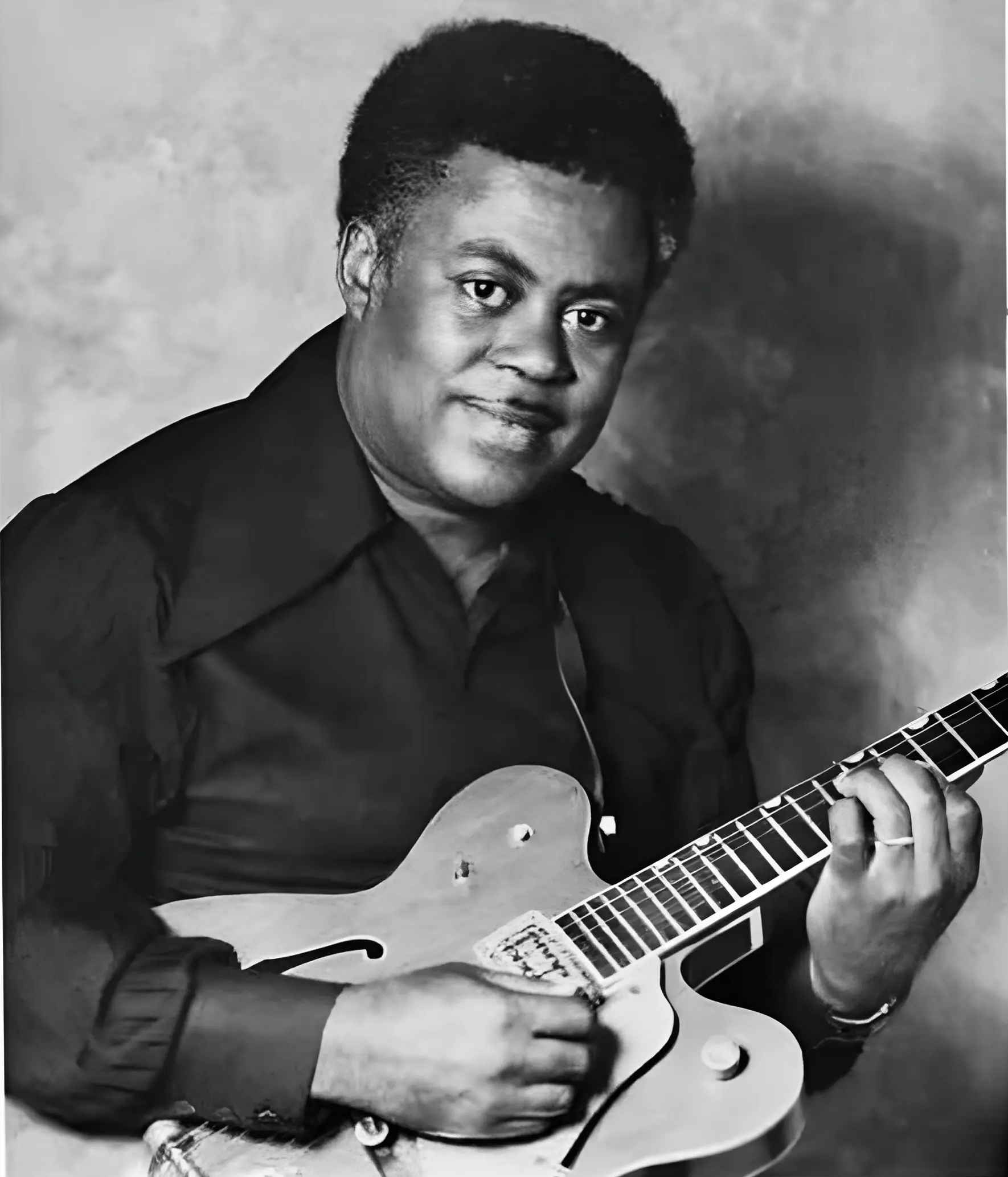
The second annual Bracknell Jazz Festival at South Hill Park concluded this past weekend, once again blessed by fortuitous meteorological conditions that mirrored the optimistic branding of the event—symbolized by the sun playing the alto saxophone. Organized under the stewardship of festival promoter John Cumming, the weekend-long gathering successfully transcended purely musical occasional hiccups through sheer atmospheric warmth and community engagement, even if the overall artistic programme proved slightly less consistent than its inaugural predecessor. Spanning an eclectic spectrum of genres from traditional New Orleans marching bands and swinging mainstream big bands to cerebral free improvisation and contemporary jazz-rock fusion, the festival offered a panoramic view of the contemporary UK and international jazz landscapes. Over the course of the weekend, thousands of enthusiasts converged on the Berkshire arts centre, navigating multiple performance spaces—including the main auditorium, the intimate Cellar Bar, and a bustling festival marquee—to witness a diverse roster of legendary veterans, celebrated European innovators, and rising domestic talents.
Main Facts of the Festival and Curatorial Direction
The core of the 1970s festival circuit relied heavily on balancing commercial accessibility with uncompromising artistic exploration, a tightrope that Cumming and his programming team walked with varying degrees of success. This year’s edition was characterized by a distinct heavy weighting toward jazz-rock and fusion acts, a curatorial choice that drew mixed reactions from purists in attendance. While the scheduling occasionally leaned too heavily into contemporary crossover territory—much to the chagrin of traditionalists who favored acoustic swing and hard bop—the sheer volume of music on offer ensured that virtually every subgenre was represented. Financial and logistical support from South Hill Park Arts Centre provided a stable foundation for the event, which has rapidly established itself as a premier fixture on the British summer festival calendar. Despite occasional transport and logistical hurdles faced by touring musicians—such as traffic delays affecting key performers—the festival maintained a rigorous schedule across its multiple stages, cementing Bracknell’s reputation as a vital incubator for progressive European improvised music and mainstream jazz heritage alike.
Chronology and Weekend Highlights
The festival’s chronological unfolding presented a fluctuating narrative of high-profile anticipations and unexpected triumphs. The weekend commenced under clear skies, drawing immediate crowds to the outdoor grounds and preliminary indoor sets. Early afternoon programming was designed to ease audiences into the multi-day event, but the initial momentum hit a notable speedbump during the highly anticipated festival debut of American guitarist Ralph Towner. A veteran of prestigious collaborations with Stan Getz, Gary Burton, and Keith Jarrett, alongside his work with the acclaimed ensemble Oregon, Towner arrived in Britain with an illustrious pedigree. However, his performance failed to captivate the audience in the manner expected of a top-billed act. Critics noted that his fastidious technique felt overly clinical, evoking the atmosphere of a masterclass or a guitar lesson rather than a living, breathing jazz performance. Moments of genuine swing were frustratingly sparse, and while his harmonic ideas occasionally touched upon moments of sublime beauty, the overall aesthetic led comparisons to a classical virtuoso—such as Yehudi Menuhin—straying uncomfortably into jazz territory.
In sharp, almost theatrical contrast, American bluesman Eddie "Guitar" Burns followed with a set defined by raw emotional resonance rather than pristine technical execution. Though Burns’s guitar technique was widely regarded by observers as suspect, his historical credentials—including periods spent working alongside harmonica pioneer Sonny Boy Williamson—lent immediate authenticity to his performance. Delivering a compelling masterclass in the "Bluebird Song Book," Burns worked his way through regional favorites such as My Little Woman, Whiskey Headed Woman, and his signature tune, Bottle Up And Go. Infused with an uncompromising conviction and a deeply felt blues sensibility, Burns provided an inadvertent lesson in rhythmic timing and phrasing that threw the preceding technical rigidity of Towner’s set into stark relief.
The momentum continued to build with the arrival of tenor saxophonist Johnny Griffin, whose playing made an explicit virtue of theatrical overstatement. Griffin delivered a relentless, high-intensity set characterized by blistering tempos and a ferocious inventive flow. Sustaining complex improvisational lines at tempos exceeding eighty bars to the minute, Griffin’s performance was hailed as a masterclass in physical endurance and harmonic imagination, anchoring the festival’s jazz-heavy core with undeniable authority.
Supporting Data: Navigating the Fusion and Mainstream Diffs
The saturation of jazz-rock fusion within the programme drew scrutiny from critics who argued that diluted acoustic jazz compromised the festival’s thematic integrity. Nevertheless, within the fusion sub-programme, several ensembles managed to distinguish themselves through exceptional musicianship and tight ensemble cohesion. The Brian Smith/Terry Smith Quintet emerged as the standout fusion act of the weekend. Terry Smith, notorious in British jazz circles for occasional bouts of inconsistency, delivered a career-highlight performance, offering a sophisticated tutorial in thematic guitar development that challenged listeners and peers alike. Bolstered by the driving, propulsive drumming of Alan Jackson, the quintet executed a polished and invigorating set.
Similarly, the ensemble Turning Point surpassed their previous outings at London’s renowned Ronnie Scott’s Jazz Club. Anchored by the formidable bass work of Jeff Clyne, the articulate and inventive keyboard stylings of Brian Miller, and the immaculate intonation of reed player Dave Tidball, Turning Point commanded an enthusiastic and sustained response from the audience.
Conversely, John Stevens’s ensemble Away struggled to find a cohesive voice within the festival’s dynamic environment. Despite John Stevens being widely recognized as one of the preeminent and most innovative drummers in Europe, the group’s hybrid musical identity appeared to leave the leader himself conceptually divided. Oscillating between moments of startling, unpredictable audacity and rigid, metronomic rock grooves, the performance highlighted the difficulties of bridging free improvisation with commercial fusion structures.
The inclusion of the ensemble Red Brass similarly sparked debate regarding festival boundaries. While trombonist Paul Nieman and woodwind specialist Chris Biscoe performed with admirable technical proficiency, the group’s primary focus—centered heavily around their vocalists—pushed them into pop-cabaret territory that arguably belonged elsewhere. Reviewers wryly suggested that the group might have benefited from studying the unadorned blues authenticity of Eddie Burns.
Traditional Jazz, Big Band Brilliance, and Novelty Acts
The festival’s traditional and mainstream offerings provided historical ballast against the experimental edges of the programme. The London Jazz Big Band shouldered the absence of saxophonist Bruce Turner—delayed due to an eccentric travel itinerary that routed him from London to Bracknell via Durham—with remarkable poise. Under the confident piano-stool leadership of Stan Greig, the big band compensated for a rhythm section that occasionally lacked a definitive swing pulse by unleashing a formidable wall of brass sound. Trumpeters Colin Smith, Al Fairweather, and Ray Crane, alongside trombonists John Picard, Mike Hogh, and Tony Milliner, drove the ensemble with precision and power.
By the time veteran bandleader Humphrey Lyttelton took the stage, Bruce Turner had arrived to inject his characteristic nonchalant creativity into the proceedings. Lyttelton curated a forward-looking programme that deliberately sidestepped tired standards in favor of fresh arrangements, while gracefully accommodating the virtuosic, jaw-dropping footwork of tap dancer Will Gaines, blending physical novelty with genuine musical sensitivity.
Traditional jazz enthusiasts faced minor logistical frustrations. A timely flat tire prevented one reviewer from catching the Excelsior Brass Band, while overlapping schedules in the festival marquee led to missed performances by Sammy Rimington. However, those who sought out the Cellar Bar were rewarded with two robust sets from the San Jacinto Jazz Band, praised for their disciplined riff patterns behind soloists and a refreshingly light rhythm section.
Breakout Performances: Local Talent Steals the Show
Perhaps the most gratifying narrative of the 1970 Bracknell Jazz Festival was the manner in which homegrown British talent eclipsed several of the heavily touted international imports. As Saturday evening drew to a close, the Cellar Bar played host to the Mike Osborne Trio, delivering what many critics considered the single most electrifying performance of the weekend. Driven by Louis Moholo’s thunderous, seismic drumming from the corner of the room and anchored by Harry Miller’s commanding bass authority, alto saxophonist Mike Osborne delivered a revelation. Balancing fiery, visceral swing with an astonishingly rigorous structural control, Osborne played with such compositional clarity that listeners could easily mistake the improvised set for a thoroughly premeditated suite.
Equally triumphant was the late-festival showcase of the Stan Tracey Octet, assembled to perform Tracey’s ambitious multi-part composition, The Bracknell Connection. Backed by his regular collaborators—including Malcolm Griffiths, Art Themen, Don Weller, and Harry Beckett—Tracey presided over a complex, demanding score that pushed the ensemble to its technical limits. Despite the formidable difficulty of the charts, musical errors were virtually nonexistent, culminating in soaring solo improvisations and a resounding standing ovation from the packed auditorium.
Broader Impact and Implications for Future Programming
As the second annual Bracknell Jazz Festival drew to a close, industry observers and organizers alike evaluated the broader implications of the weekend’s successes and shortcomings. The event demonstrated that regional arts centers like South Hill Park can successfully sustain large-scale, multi-genre music festivals capable of drawing diverse audiences from across the United Kingdom. However, the critical reception of acts like Ralph Towner and various fusion ensembles underscores an ongoing curatorial tension within the British jazz community: the perpetual tug-of-war between commercial crossover accessibility and acoustic artistic purity.
Financial and logistical analyses of the weekend indicate that ticket sales remained robust, aided by favorable weather and strong local patronage. Yet, the administrative strain on festival organizers remains palpable. In light of the critical triumph of locally anchored ensembles like the Mike Osborne Trio and the Stan Tracey Octet, industry analysts suggest that future editions may lean more heavily into supporting and showcasing progressive British and European jazz innovators, whose adventurous artistic directions consistently resonate deeply with discerning festival-goers.
Festival organizer John Cumming now faces the enviable task of building upon this year’s momentum while addressing structural criticisms regarding programme balance. If the enthusiastic audience response to The Bracknell Connection and the packed late-night Cellar Bar sessions are any indication, the organizational stress and logistical headaches—jokingly referred to as potential ulcer-inducing planning sessions—are more than justified by the cultural vitality of the event. As Bracknell looks ahead to its third year, the festival stands on firm financial and artistic ground, poised to remain a vital anchor point in the architecture of British jazz.