Kholidah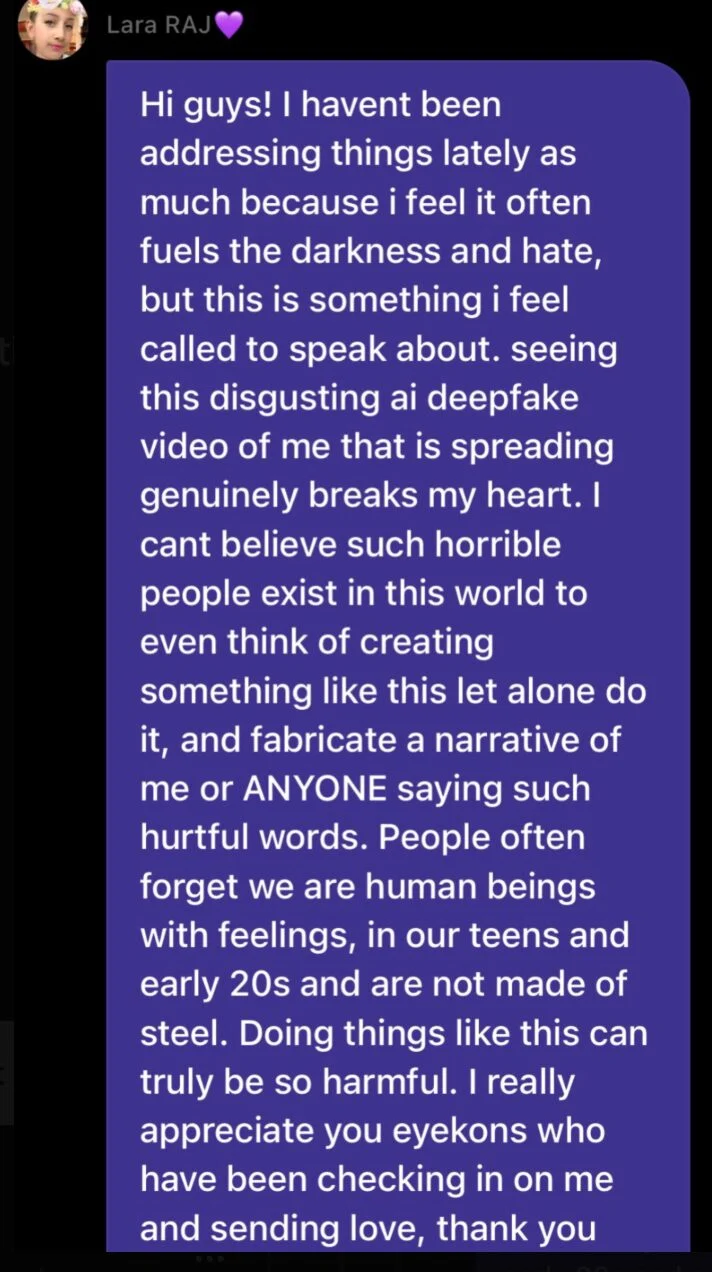
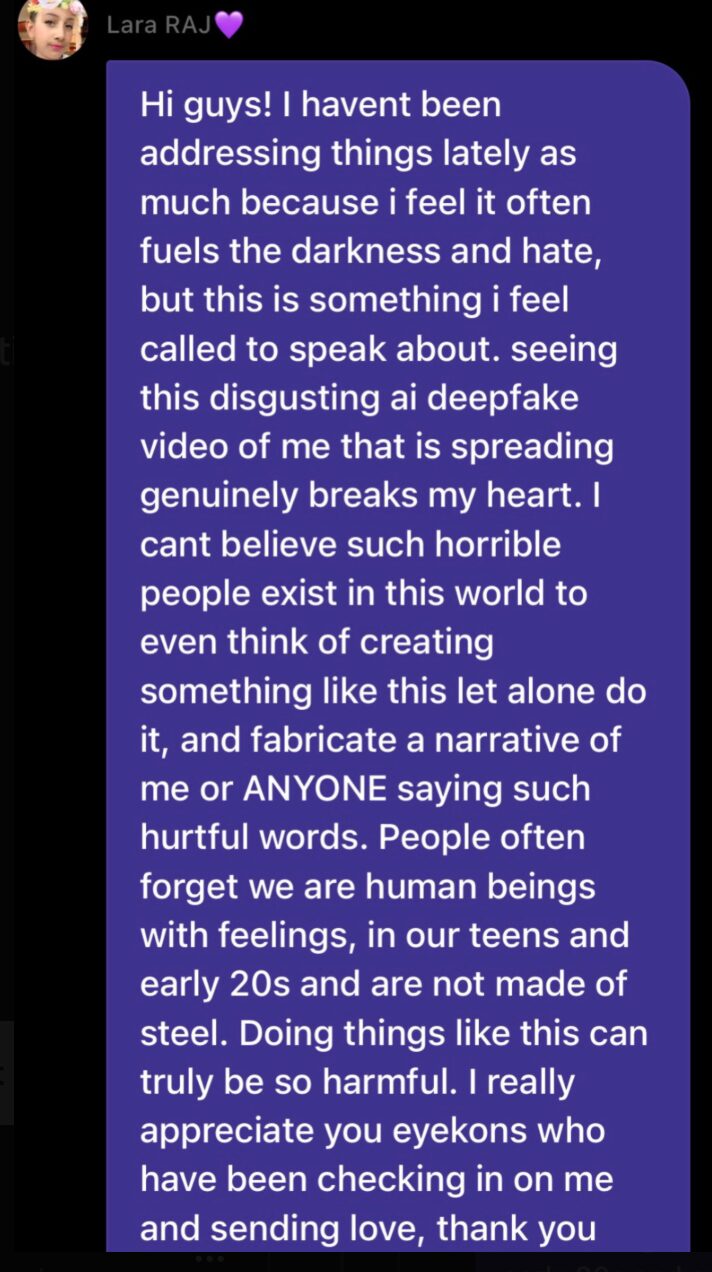
Lara, a prominent member of the rising global pop group KATSEYE, recently broke her silence regarding a distressing incident involving the unauthorized use of her likeness in a synthetic media production. In a candid communication shared via the fan-engagement platform Weverse DMs, the artist addressed the circulation of an AI-generated deepfake video that falsely depicted her making inflammatory and racist remarks. While the singer typically maintains a policy of not engaging with malicious internet discourse, she noted that the gravity of this specific transgression compelled her to speak out, highlighting the growing vulnerability of public figures to sophisticated digital manipulation.
The video, which has since been removed from the platform where it originated, utilized advanced generative AI technology to superimpose Lara’s face and voice onto a scripted interview. The content was designed to mimic her likeness with high fidelity, creating a narrative that was entirely fabricated. The incident serves as a stark reminder of the escalating risks posed by the democratization of deepfake technology and its capacity to damage the reputations of artists while inciting online hostility.
Chronology of the Incident
The incident gained traction on September 23, 2026, when fans of KATSEYE, known as EYEKONS, began flagging the video on social media. The content, which appeared to show Lara participating in a sit-down interview, featured audio manipulated to make it sound as though she were expressing bigoted views.

Within hours of the video’s initial upload, the fanbase mobilized to report the content for violating platform policies regarding harassment and misinformation. By mid-day on September 23, the pressure from the community and the artist’s own intervention forced the removal of the video. However, the viral nature of the content meant that clips and screenshots had already been circulated across multiple social media platforms, necessitating an official acknowledgement from the artist herself. Lara’s decision to address the matter directly on Weverse marked a significant moment, as it shifted the focus from the malicious content back to the artist’s own agency and boundary-setting.
The Rise of Synthetic Media and Celebrity Vulnerability
The targeting of Lara is not an isolated event but rather part of a broader, concerning trend within the entertainment industry. As generative AI tools become more accessible to the general public, the threshold for creating convincing deepfakes has lowered significantly. Industry experts note that high-profile individuals, particularly those with a global digital footprint, are increasingly susceptible to "digital impersonation."
According to recent cybersecurity reports, the volume of malicious deepfakes targeting public figures has increased by approximately 240% over the last eighteen months. These videos are often used for a variety of nefarious purposes, ranging from the dissemination of political disinformation and fraudulent financial schemes to character assassination. For pop stars like those in KATSEYE, the damage is twofold: it creates a direct emotional toll on the performer and necessitates extensive reputation management to ensure that audiences can distinguish between genuine content and AI-generated fabrications.
Fan Response and Community Outcry
The reaction from the global fan community was immediate and overwhelming. Social media platforms, particularly X (formerly Twitter), became hubs for support as fans expressed both anger and profound concern for the artist’s well-being. The consensus among supporters is that the creation of such content is not merely an act of "fan behavior" but a malicious attempt to ruin a career and incite hatred.

The discourse among fans centered on the "inhumane" nature of the attack. Many pointed out the psychological impact that such violations have on young artists, who are often expected to maintain a constant, polished online presence. The sentiment was captured by various high-profile fan accounts, which called for stricter platform moderation and legal consequences for those who manufacture and distribute non-consensual synthetic media. By standing in solidarity with Lara, the community emphasized that the responsibility for safety lies not only with the individual artist but with the platforms that host and monetize such content.
Legal and Ethical Implications
The legal landscape surrounding deepfakes remains complex and is currently struggling to keep pace with the rapid advancement of the technology. In many jurisdictions, laws protecting individuals from defamation and identity theft are being tested by the nuances of AI-generated content. For an artist like Lara, seeking legal recourse involves navigating international copyright laws, personality rights, and the specific terms of service of various social media giants.
From an ethical standpoint, the incident raises questions about the responsibility of AI developers. Many software companies have implemented "guardrails" to prevent the use of their tools for non-consensual impersonation, but the prevalence of open-source models makes these safeguards difficult to enforce. Experts in digital ethics argue that without a standardized, industry-wide approach to digital watermarking and provenance tracking, celebrities will continue to be primary targets for bad actors looking to weaponize their public images.
Broader Industry Impact
For the K-pop and global pop industries, the incident involving KATSEYE serves as a warning. Management companies are now tasked with the difficult job of protecting their artists’ digital identities in a landscape where traditional public relations strategies are no longer sufficient. This includes implementing advanced monitoring services that use AI to detect deepfakes in real-time before they can reach a wide audience.
Furthermore, the incident highlights the need for greater transparency in media consumption. As audiences become more accustomed to the presence of AI, the burden of "media literacy"—the ability to identify and verify the authenticity of information—is shifting onto the viewer. However, the speed at which misinformation spreads often outpaces the average person’s ability to verify the facts, making the initial harm caused by a deepfake difficult to fully rectify even after a retraction is issued.
Conclusion: Moving Forward
Lara’s decision to speak out is a testament to her resilience and a necessary step in reclaiming her narrative. By naming the issue, she has effectively neutralized the power of the fake video, framing it as an act of bad faith rather than a reflection of her true character.
As the entertainment industry continues to grapple with the dual-edged sword of digital innovation, the case of the KATSEYE member will likely be cited as a critical inflection point. It underscores the necessity for more robust protective measures, stronger legislation against non-consensual synthetic media, and a more concerted effort by social media platforms to prioritize the safety of the individuals they host. While technology continues to evolve, the fundamental right to one’s own image and identity remains a cornerstone of professional and personal integrity that must be defended with increased vigilance. For now, the support from the global community remains the primary line of defense for artists caught in the crosshairs of this new, digital frontier.