Mia Khoirunisa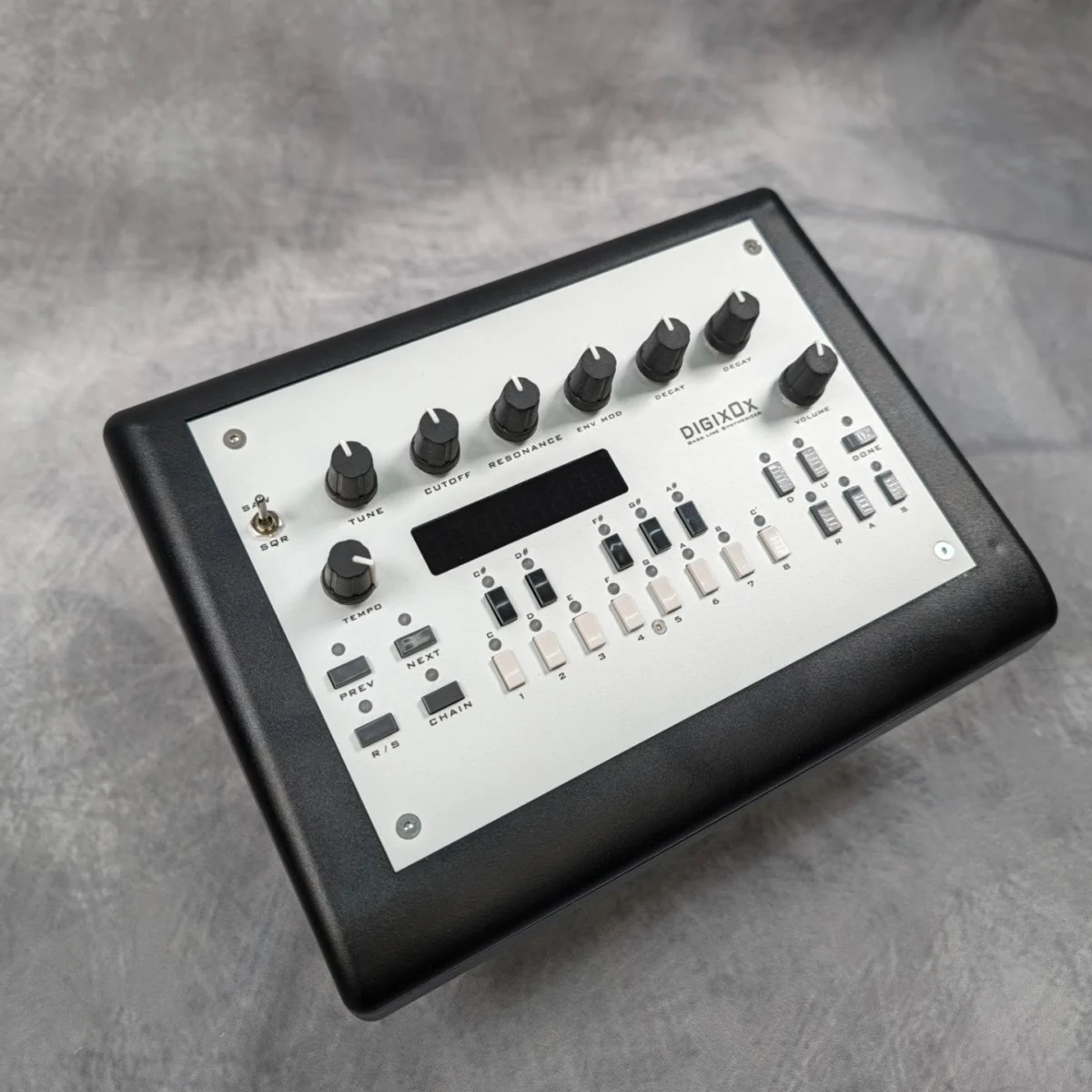
Few musical instruments have shaped electronic music culture as profoundly as the Roland TB-303. Originally introduced in the early 1980s as a commercial failure marketed to accompany solo guitarists, the compact silver box eventually found its true calling in the hands of underground producers who twisted its squelchy, acidic resonance into the bedrock of acid house and techno. As original hardware units grew increasingly scarce and financially out of reach, a vibrant cottage industry of clones, DIY kits, and emulations emerged to satisfy the global demand for that unmistakable sound.
Among these community-driven creations, the x0xb0x stood out as a monumental achievement. Released over two decades ago, the hardware clone not only recreated the distinct architecture of the TB-303 but also served as a cornerstone for the open-source hardware movement. Now, the x0xb0x is making an unexpected return. Developed by the original creator in collaboration with Michigan Synth Works and unveiled at the Knobcon synthesizer convention, the new iteration—dubbed the Digix0x—reimagines the legendary device as a fully digital emulation while preserving its core open-source philosophy.
The Evolution of an Open-Source Icon
To understand the significance of the Digix0x, one must revisit the origins of its predecessor. The original x0xb0x was co-created and co-marketed by Limor Fried, founder of Adafruit Industries (then known as Ladyada), alongside an anonymous German engineer. At the time of its release, the project represented a groundbreaking milestone not merely for electronic music gear, but for the broader open-source hardware community.
Before the widespread commercialization of maker culture, the x0xb0x proved that complex electronic musical instruments could be successfully documented, shared, and built by hobbyists using transparent schematics and community-sourced knowledge. It established a structural and philosophical blueprint for numerous subsequent DIY projects, influencing enterprises like MeeBlip and paving the way for Mutable Instruments, which later became a dominant force in the Eurorack synthesizer market. Furthermore, the x0xb0x helped ignite formal discussions regarding open-source licensing for physical hardware, contributing to the establishment of the Open Hardware Summit and shaping the legal and collaborative frameworks that modern makers rely on today.
The Technological Shift: From Analog Clones to Digital Emulation
The decision to transition the x0xb0x concept from an analog circuit clone to a digital emulation was driven largely by industrial realities. Constructing an authentic analog replica of the TB-303 or a traditional x0xb0x relies on specific electronic components—such as particular transistors and diodes—that were readily available two decades ago but have since gone out of production or become prohibitively expensive. Sourcing vintage-spec parts at scale has grown increasingly difficult for modern boutique manufacturers.
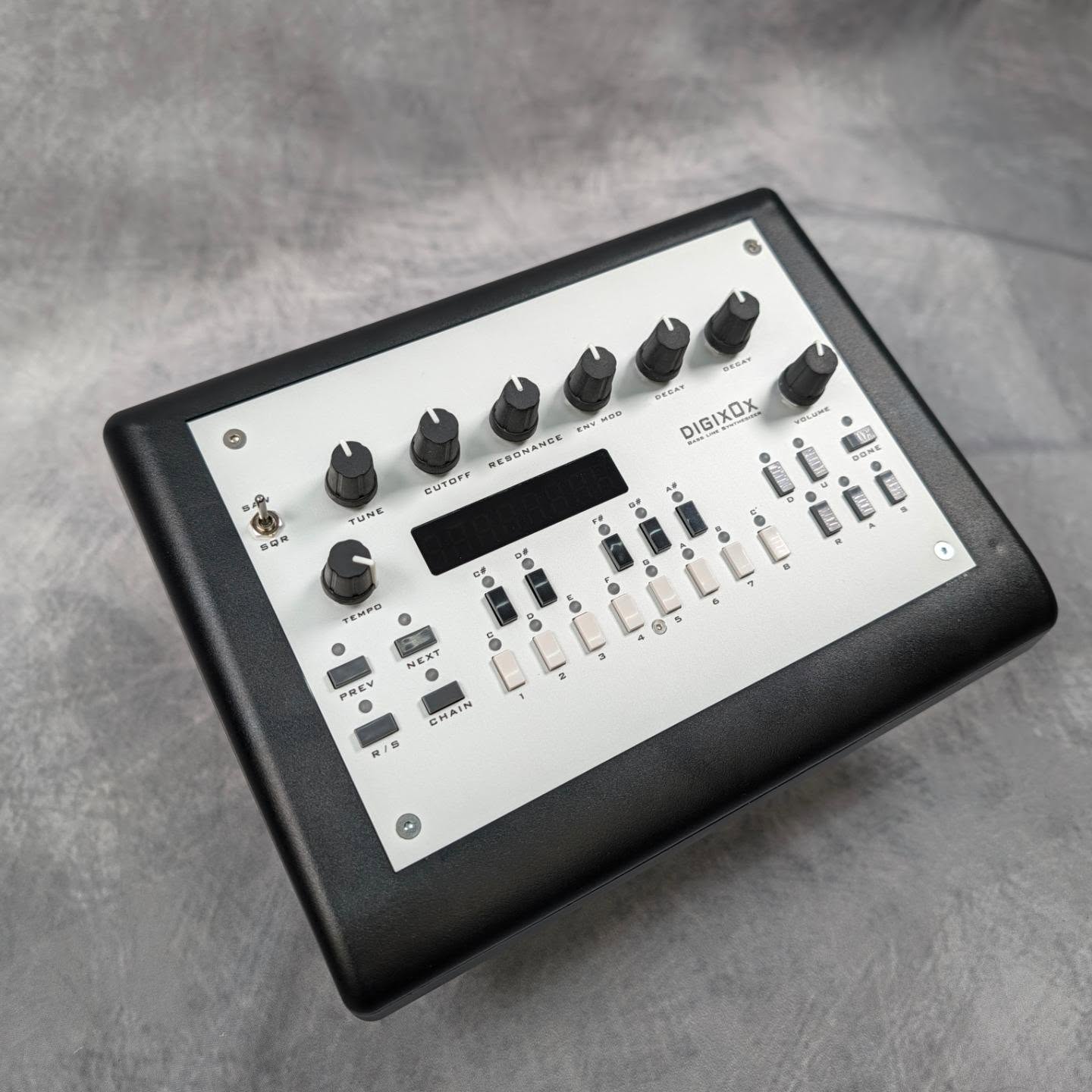
Faced with these supply chain limitations, the anonymous German engineer behind the original x0xb0x—referred to in official announcements simply as Guest—spent several years meticulously modeling the acoustic behavior and circuitry of the 303 sound architecture in the digital domain. The resulting Digix0x utilizes advanced digital modeling to capture the nuanced frequency response, filter resonance, and envelope characteristics of the original analog hardware without the physical constraints imposed by scarce components.
Official Unveiling and Product Ecosystem
The Digix0x made its formal public debut at Knobcon, the prominent annual synthesizer convention held in the United States, via an announcement from Michigan Synth Works (MSW). According to the official documentation provided by the manufacturer, the device represents the culmination of years of engineering dedicated to faithful sonic preservation.
Alongside the all-digital Digix0x, Michigan Synth Works has curated a broader ecosystem catering to enthusiasts across the analog-digital spectrum. For purists who prefer traditional circuitry, MSW continues to support and produce analog-based hardware solutions, including the LRB303 analog kit and additional 303-inspired analog synthesizers unveiled concurrently. By offering both digital emulation and traditional analog options, the manufacturer aims to accommodate every segment of the electronic music community, regardless of their preferred workflow or sonic philosophy.
Broader Impact and Industry Implications
The introduction of the Digix0x carries several noteworthy implications for the electronic musical instrument industry and the open-source community at large. First, it demonstrates the viability of transitioning classic analog hardware designs into modern digital platforms without sacrificing the community-centric ethos that defined their origins. By maintaining a fully open-source framework, the creators of the Digix0x ensure that the device remains accessible to developers, programmers, and hardware modifiers who wish to inspect, adapt, or build upon the underlying code.
Second, the project bridges a generational gap in music technology. The original x0xb0x emerged during an era when DIY electronics required extensive soldering, meticulous component matching, and direct participation in physical maker spaces. Today’s landscape, dominated by digital signal processing (DSP) and microcontroller-based synthesis, allows for greater sonic consistency and accessibility while lowering the barrier to entry for modern producers.
As electronic music hardware continues to evolve in response to environmental regulations, component scarcity, and technological innovation, projects like the Digix0x highlight how classic designs can endure. By marrying the digital precision of modern modeling with the democratic principles of open-source collaboration, the rebirth of the x0xb0x ensures that the distinctive character of the 303 sound will continue to inspire producers for generations to come.