Aveline Kirana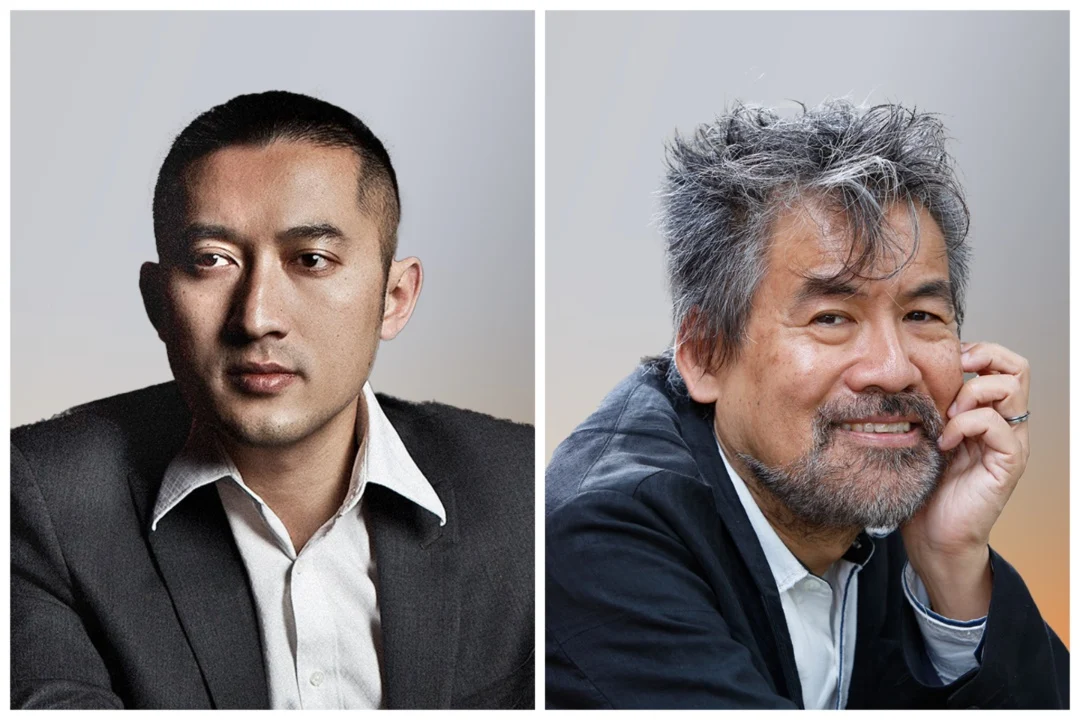
Two black granite stones, each stretching 246.75 feet into the landscape of the National Mall, carve a V-shaped incision into the earth, marking the final resting place of 58,000-plus names listed in chronological order of their passing. This structure, the Vietnam Veterans Memorial, remains one of the most polarizing and revered architectural feats in modern American history. Conceived in 1981 by Maya Lin, a 21-year-old Yale undergraduate, the design emerged from a blind competition that pitted her minimalist vision against 1,420 other professional entries. Today, this monument serves as the primary inspiration for The Rift, a new opera by composer Huang Ruo and librettist David Henry Hwang, featured as a centerpiece of the 2026 China Now Music Festival: Chasing Dreams.
The genesis of the project dates back to a commission from the Washington National Opera, which sought to commemorate the 50th anniversary of the John F. Kennedy Center for the Performing Arts. Artistic Director Francesca Zambello invited four pairs of composers and librettists to explore the stories behind the capital’s iconic monuments. For Ruo and Hwang, the Vietnam Veterans Memorial offered a narrative of profound resilience and historical complexity that resonated with the contemporary American landscape.
A Chronology of Controversy and Creation
The historical weight of the memorial cannot be overstated. When Maya Lin’s design was unveiled, the reception was not universally positive. Critics—including some veterans and politicians—described the sunken, black, reflective granite as a "black gash of shame." The controversy was exacerbated by the demographic profile of the architect: a young, female, Chinese-American student. This friction, which Lin navigated with remarkable poise, serves as a thematic cornerstone for the opera.
The timeline of the memorial’s development mirrors the broader national struggle to process the Vietnam War. From the initial 1980 design competition to the 1982 dedication, the project acted as a lightning rod for post-war anxieties. Ruo and Hwang’s opera, which premiered in 2022, was developed during the COVID-19 pandemic—a period characterized by social isolation and a resurgence of anti-Asian sentiment. These environmental factors significantly influenced the creative process. According to Ruo, the pandemic-induced climate of hostility made the act of creating art about a long-ended war feel unexpectedly urgent.
Operatic Structure and Thematic Depth
The Rift is not merely a biographical account of Maya Lin; it is a polyphonic examination of four distinct perspectives on the Vietnam War. The libretto, crafted by Hwang, weaves together the experiences of:
- Maya Lin, the young architect grappling with artistic integrity and public scrutiny.
- A Vietnam veteran struggling with the psychological burden of combat and lost comrades.
- Robert McNamara, the former U.S. Secretary of Defense and key architect of the war, reflecting on his role in the conflict’s escalation.
- A Vietnamese mother seeking recognition for the losses experienced on both sides of the conflict.
The musical language employed by Huang Ruo is designed to reconcile these disparate viewpoints. The composer utilizes a recurring "turbulent wave" motif—a sonic representation of the ocean separating the United States from Vietnam, as well as the clashing ideologies that defined the era. The opera utilizes a lean cast of four singers, who perform multiple roles to suggest the interconnectedness of these characters. This "track" system, common in theatrical productions but challenging in opera, allows the vocal lines to maintain distinct identities while merging into a unified, healing chorus by the final act.
Fact-Based Analysis: Art as a Sociopolitical Catalyst
The cultural impact of the Vietnam Veterans Memorial lies in its departure from traditional war monument aesthetics. By eschewing statues and heroic imagery in favor of a reflective, earth-bound design, Lin forced visitors to confront the individual cost of war. The decision to list names chronologically, rather than alphabetically, transforms the visitor’s experience into a physical timeline of the conflict’s progression.
The opera functions as an extension of this design philosophy. By providing a platform for the Vietnamese perspective—a group often omitted from domestic American war memorials—The Rift expands the definition of "healing." Historical data suggests that the memorial has become the most visited site in Washington, D.C., attracting millions annually. Its ability to serve as a communal space for disparate groups—from anti-war activists to veterans—is the central argument of the opera.
Official Responses and Artistic Collaboration
While Maya Lin has maintained a private stance on the project, her engagement with the work has been constructive. Following a live performance of excerpts, Lin provided positive feedback to the creators. For Ruo and Hwang, the involvement of the subject was less about securing approval and more about honoring the "social event" nature of opera. They view the medium as a vehicle for collective memory, capable of transforming a historical narrative into an active, ongoing dialogue.
The production team, including director Eric Ting and projection designer Shawn Duan, has utilized technology to bring the monument’s construction to life within the confines of a semi-staged concert setting. At Carnegie Hall’s Zankel Hall, the performance will move beyond traditional concert aesthetics, incorporating visual elements that simulate the experience of walking along the granite wall.
Broader Implications for the 250th Anniversary
As the United States approaches its semiquincentennial in 2026, the theme of the China Now Music Festival—Chasing Dreams—gains added resonance. The festival explores the "American experiment," a concept championed by public figures like cellist Yo-Yo Ma, who often describes the country as a work in progress.
The Rift positions the "American Dream" not as a static achievement, but as an iterative, often painful process. In the context of 2026, the opera serves as a reminder that the national identity is shaped by its failures as much as its successes. The act of "chasing a dream," in Lin’s case, involved the relentless pursuit of an artistic vision despite societal resistance. For the audience, the takeaway is intended to be one of civic responsibility. By witnessing the reconciliation of the four characters on stage, viewers are invited to consider their own roles in addressing the contemporary "rifts" within American society.
Conclusion: A Legacy of Reconciliation
The Rift stands as a testament to the power of artistic interpretation to bridge historical and social divides. By focusing on the intersection of personal ambition and collective trauma, Huang Ruo and David Henry Hwang have created a work that serves as a mirror to the present. The opera does not claim to resolve the complexities of the Vietnam War or the current political environment, but it does offer a framework for engagement.
As the production prepares for its upcoming festival run, the focus remains on the capacity for communal spaces—whether they are granite monuments or concert halls—to facilitate healing. Through the marriage of structural complexity and vocal intimacy, The Rift provides a nuanced exploration of what it means to build a monument, and by extension, a country, in the shadow of a conflicted past. The performance is expected to draw interest from both the architectural community, given the subject’s iconic design, and the broader public, as the nation continues to grapple with the legacy of its twentieth-century conflicts and the evolving nature of its national narrative.