 Indra Aziz
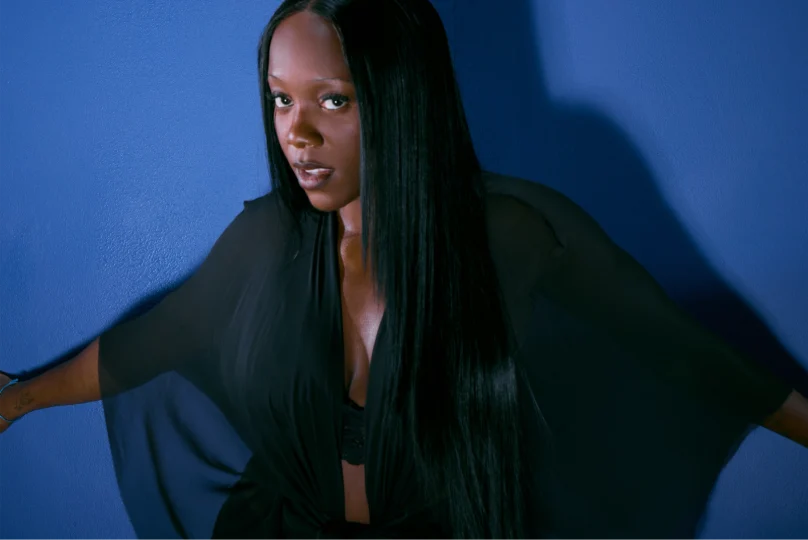
Chinese multidisciplinary artist Lexie Liu is currently spearheading a transformative shift in contemporary pop music, blending turn-of-the-millennia sonic nostalgia with bleeding-edge electronic production. Since her formal debut in 2019, Liu has continuously morphed programmed sensibilities, culminating in her critically acclaimed 2024 EP, Teenage Ramble. That release marked a definitive turning point in her artistic trajectory, amplifying early-2000s dance-pop tropes and indie-rock anthemics while preserving an intimate, fanzine-esque authenticity. Building upon the foundational success of Teenage Ramble and its pulsating centerpiece, POP GIRL, Liu has expanded her vision into a collaborative two-track project titled POP GIRLS CLUB. Enlisting South Korean rising star Yves, New York City’s BAYLI, and Honduran innovator Isabella Lovestory, the release solidifies Liu’s status as a visionary architect of borderless, self-affirming pop music. In an expansive interview with Clash, Liu reflects on her recent creative chapters, the psychological duality of modern digital visibility, and the broader implications of redefining the global pop landscape.
Evolution of an Artist: From Teenage Ramble to the Global Stage
The chronology of Lexie Liu’s career highlights a deliberate, methodical dismantling of traditional genre boundaries. Emerging onto the international music scene in 2019, Liu established herself as a meticulous world-builder, constructing tightly controlled aesthetic and sonic environments for her releases. However, the release of Teenage Ramble served as a crucial palette cleanser. Taking on an unprecedented level of writing, production, and recording responsibilities, Liu sought to inject raw spontaneity into her discography. Collaborating with seasoned producers such as Digitalism and Radio Mars, alongside new co-creators including Danny L Harle, Nicopop, and AO Beats, Liu allowed her music to embrace the messiness and curiosity she had previously filtered out.
Data from music streaming analytics indicate a sharp surge in international listenership following the rollout of Teenage Ramble, signaling a growing appetite for cross-cultural, genre-fluid experimentation. Looking back at the project a year after its release, Liu emphasizes her pride in retaining the sound of an artist figuring things out in real time. This ethos of unvarnished self-discovery directly informed the genesis of POP GIRL, a track born from Liu’s introspection regarding the psychological toll of digital omnipresence. Navigating social media platforms, she observed the dizzying contrast between algorithmic validation—measured in digital likes—and the immediate vulnerability triggered by critical commentary. By embedding this underlying anxiety beneath a veneer of high-energy, vibrant pop production, Liu positioned the modern "pop girl" not as an untouchable icon, but as an evolving individual trying on identities in the public eye.
Deconstructing the Pop Pantheon and the Anatomy of POP GIRLS CLUB
Liu’s sonic palette draws heavily from the late-2000s golden era of mainstream pop, citing seminal records such as Britney Spears’s Blackout as formative reference points. These historical touchstones provided a sense of scaled-up escapism, offering expansive worlds that made her own future feel limitless. By translating this sense of grandiosity into her modern output, Liu seeks to recreate that feeling of transportive scale for her audience, ensuring that a song can momentarily magnify the listener’s perception of the world.
This conceptual framework reached its zenith with the release of the POP GIRLS CLUB EP, an all-women collaborative reimagining of her track POP GIRL. By integrating Yves, BAYLI, and Isabella Lovestory, Liu transformed a solitary reflection into a collective, multi-faceted escapade. Each collaborator was given the autonomy to infuse their distinct artistic identities into the source material, resulting in contrasting portals into the same conceptual universe.

According to industry analysts and cultural critics, collaborative cross-border projects of this nature represent a vital evolution in how Asian and Western markets intersect. Rather than relying on traditional, manufactured crossover attempts, artists like Liu and Yves are spearheading organic partnerships rooted in shared aesthetic reverence. Liu herself has been vocal about the necessity of dismantling the homogenization of Asian artists within the global music industry. By highlighting the distinct artistic choices, individual tastes, and regional backgrounds of performers like Yves, Liu challenges critics and fans to evaluate non-Western artists as multifaceted individuals rather than a monolithic category.
Visual Iconography and the Anxiety of Hyper-Visibility
The visual campaign accompanying the POP GIRL release further underscores Liu’s analytical approach to contemporary celebrity. Drawing direct inspiration from late-2000s and early-2010s music television, teen magazines, and tabloid culture, the visual media reflects an era when pop stars were viewed through carefully curated, distant windows. Liu notes the stark contrast between the untouchable fantasy of her childhood idols and the modern reality of hyper-visibility, where artists are accessible to audiences around the clock. This constant state of being seen introduces a new psychological layer of performance anxiety, a theme she successfully captures and critiques within her music videos.
Her eclectic listening habits further inform this forward-thinking methodology. Beyond mainstream pop, Liu’s current rotation features ambient pioneers Boards of Canada, alongside contemporary innovators such as Belle Chen, Tamaryn, Fimiguerrero, Young Miko, Taichu, and kwn. She points to Belle Chen’s unique fusion of classical piano, electronic soundscapes, and field recordings as a primary source of inspiration, demonstrating an ongoing commitment to expanding the boundaries of songcraft.
Implications and Future Outlook: The Anticipated New Album
As Lexie Liu looks toward the future, the implications of her current artistic trajectory point toward a more inclusive, globally integrated pop ecosystem. By bridging independent electronic sensibilities with high-gloss pop production, she is actively redefining what commercial success and artistic integrity look like for independent artists operating across international markets.
Currently, Liu is channeling this momentum into the development of her next full-length studio album, slated as her most ambitious undertaking to date. Having been in production since the summer prior, the upcoming record is conceived as a conceptual journey through various iterations of the self. Anchored by a mythic narrative thread rooted in lived experiences, the album promises to push her sonic boundaries even further. While the final shape of the project is still revealing itself in real time, the overarching narrative remains clear: Lexie Liu is not merely participating in the modern pop conversation—she is authoring its next chapter.