 Muhammad Ibadurrohman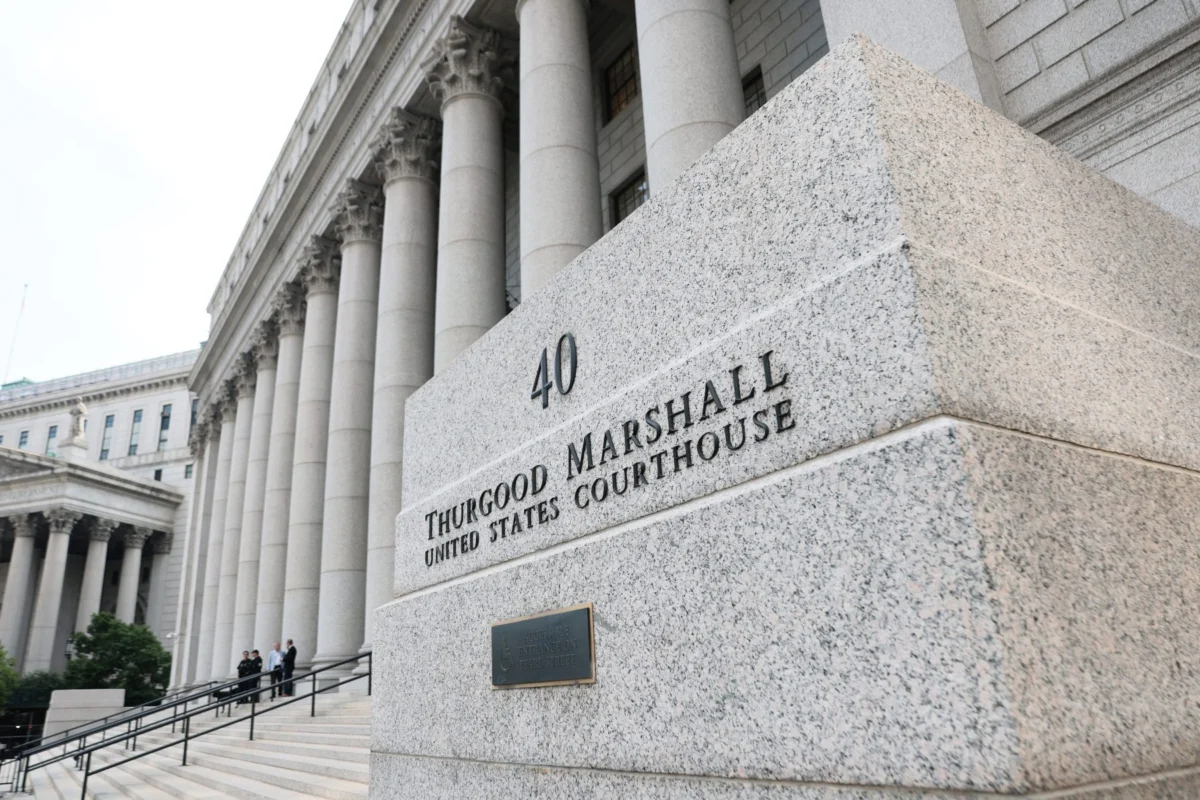
The United States Department of Justice has formally pushed back against a request for leniency from Michael Smith, the 54-year-old North Carolina man at the center of the first-ever criminal enforcement action involving large-scale music streaming fraud. In a filing submitted to the federal court on September 29, 2026, prosecutors urged a judge to impose a minimum 46-month prison sentence, characterizing Smith’s multi-year operation as a sophisticated white-collar crime that directly undermined the livelihoods of legitimate artists and songwriters.
This sentencing battle follows Smith’s guilty plea in March 2026, during which he admitted to orchestrating a scheme that utilized artificial intelligence and automated bot technology to generate billions of fake streams across major digital service providers (DSPs) such as Spotify and Apple Music. While Smith’s legal defense has argued that the financial impact of his actions was diluted across millions of songs—resulting in "insignificant" harm to any single individual—federal authorities maintain that the sheer scale of the theft represents a fundamental attack on the integrity of the global music streaming economy.
A Chronology of the Fraudulent Operation
The investigation into Smith’s activities revealed a highly methodical approach to digital exploitation. According to federal indictments, the scheme began as early as 2017. Over the following seven years, Smith allegedly created an expansive catalog of AI-generated music, which he then uploaded to streaming platforms under thousands of different artist profiles.
To maximize revenue, Smith deployed a network of thousands of "bot" accounts. These automated programs were programmed to stream his AI-generated tracks on a loop, 24 hours a day. By artificially inflating the stream counts, Smith triggered the algorithmic and royalty-payout mechanisms of the streaming platforms. Because streaming revenue is distributed via a "pro-rata" model—where a fixed pool of money is divided based on an artist’s total share of all streams on the platform—every fake play generated by Smith’s bots effectively siphoned a fraction of a cent away from every other artist on the service.
The scheme reached a tipping point in 2024 when federal authorities formally arrested Smith. The indictment detailed three counts of wire fraud conspiracy. By the time of his guilty plea, the government had calculated that Smith had secured more than $8 million in fraudulent royalties, all of which he has now agreed to forfeit.

The Defense: The "Drop in the Ocean" Argument
In the lead-up to his sentencing, Smith’s legal team filed a memorandum requesting that the court forgo a prison sentence entirely. The core of their argument rests on the statistical distribution of his fraud. They contend that because the $8 million was effectively "stolen" from the collective pool of all artists on the platforms—which includes some of the world’s most popular musicians—the actual financial loss per artist was mathematically imperceptible.
"The effect each individual stream of one artist’s song has on every other artist’s share of total streams is not akin to a drop in a proverbial bucket—it is a drop in an ocean," his lawyers argued in court documents. The defense further emphasized that Smith has expressed profound remorse and has accepted full responsibility for his conduct, suggesting that a term of probation or community service would be a sufficient deterrent given the nature of the crime.
The Prosecution’s Rebuttal: Protecting the Integrity of the Industry
The government’s response on September 29 was pointed and firm. Prosecutors argued that the "insignificant harm" defense is a dangerous mischaracterization of white-collar crime. They asserted that if the court were to accept such a logic, it would essentially decriminalize high-volume, low-impact fraud, setting a precedent that would encourage future bad actors to exploit digital infrastructure.
"Smith was the architect of, and led, a sophisticated and multi-faceted fraud scheme over the course of many years to divert musical royalties from legitimate and hard-working songwriters and other rightsholders to himself," the prosecutors wrote. They emphasized that the victims are not merely high-earning pop stars, but the thousands of independent, "hard-working and often underpaid" musicians who rely on royalty streams to sustain their careers.
The prosecution noted that the federal sentencing guidelines for this offense range from 46 to 57 months. While federal probation officials initially suggested a lighter 24-month sentence, the government is explicitly asking the judge to reject that recommendation in favor of the higher range, arguing that a lenient sentence would fail to reflect the severity of the crime or provide adequate deterrence to others looking to leverage AI for illicit gain.
Broader Implications for the Music Industry
This case is widely viewed as a bellwether for the music industry’s ongoing struggle with artificial intelligence and digital manipulation. As AI tools become more accessible, the barriers to entry for creating music—and for flooding platforms with that music—have plummeted. This, in turn, has exacerbated existing vulnerabilities in the streaming royalty system.

The industry has long grappled with "streaming fraud," but the rise of AI-generated content has allowed for a level of industrial-scale automation previously unseen. Major labels, independent distributors, and streaming platforms have begun to implement more rigorous detection algorithms to identify non-human listening patterns. However, the prosecution of Michael Smith serves as a critical legal enforcement component, proving that digital theft is subject to the same criminal scrutiny as traditional fraud.
Furthermore, the case highlights the tension between the "pro-rata" payment model and the fairness of royalty distribution. Critics of the current model argue that it is inherently susceptible to gaming, and that cases like Smith’s provide the necessary impetus for platforms to shift toward "user-centric" payment models or more aggressive filtering technologies.
The Economic Impact on Independent Creators
For the independent music community, the impact of the $8 million theft is not just theoretical. In an era where many songwriters earn modest sums from their catalogs, the dilution caused by bot-driven streaming can significantly alter the financial viability of a creative career. When thousands of artificial songs are prioritized or simply present within the stream pool, they displace real artists who rely on those royalties to pay for equipment, production costs, and daily living expenses.
The Department of Justice’s insistence on a 46-month sentence is, therefore, framed as a form of restorative justice for the creative class. By labeling Smith’s actions as a "serious white-collar crime," the government is signaling to the tech and music industries that the digital nature of the crime does not diminish its reality.
Looking Ahead
The presiding judge is now tasked with weighing the defense’s plea for mercy against the prosecution’s demand for a significant custodial sentence. A decision is expected in the coming weeks. Regardless of the final outcome, the case of United States v. Smith has already established a legal precedent that will likely shape how future streaming fraud cases are litigated.
As the industry continues to integrate AI, the legal system is being forced to adapt to a landscape where the perpetrators of financial crime are increasingly leveraging automation to mask their activities. For now, the music industry is watching the courthouse in New York closely, waiting to see if the law will provide a strong enough deterrent to protect the future of the digital music economy. The final sentencing will serve as a definitive statement on whether the court views the "drop in the ocean" as a victimless act or a significant systemic threat to the creative arts.