 Indra Aziz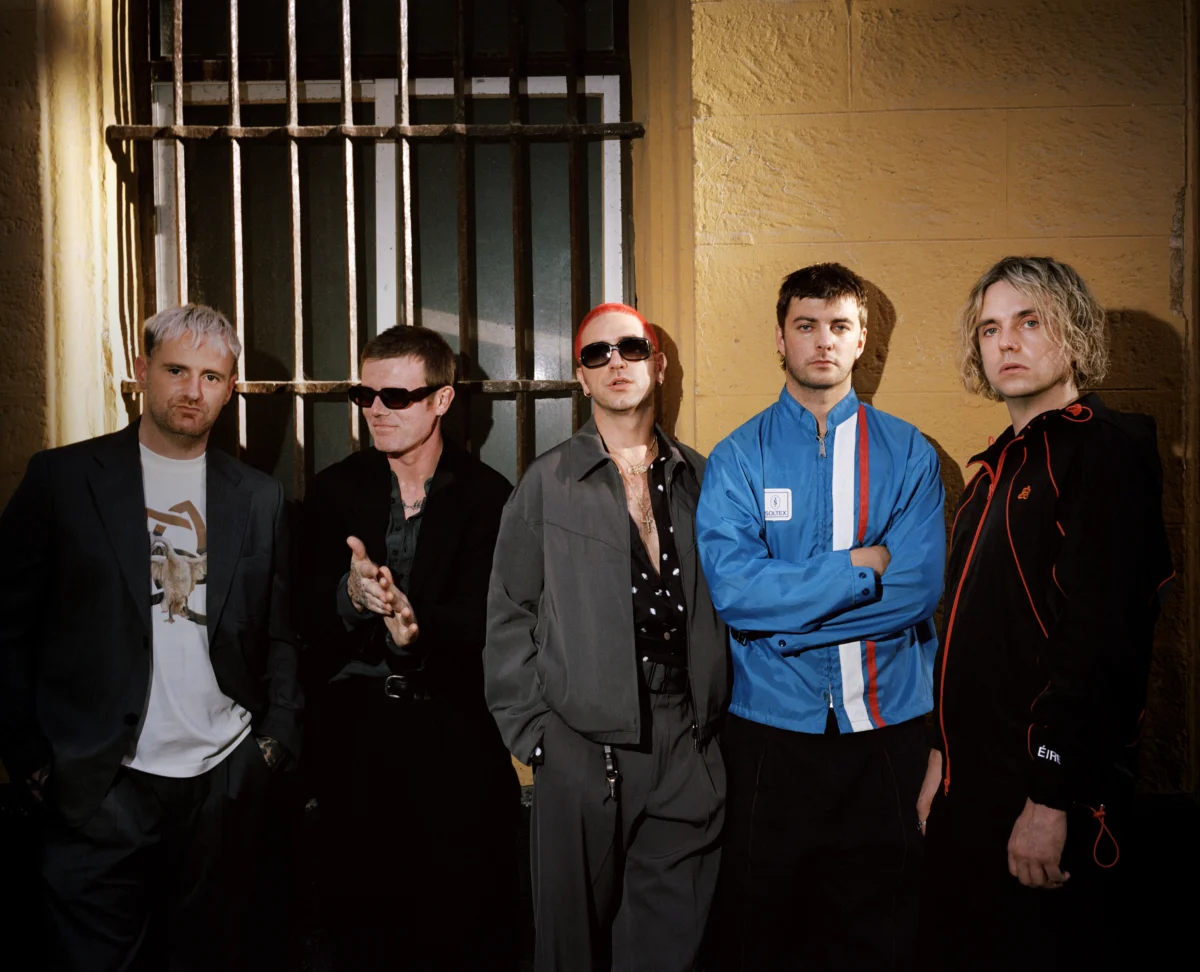
Irish post-punk innovators Fontaines D.C. have officially released their latest single, Tongue, serving as the second offering from their highly anticipated fifth studio album, Dopamine Chamber. Set for release on October 16 through XL Recordings, the upcoming record follows the critical and commercial triumph of their 2024 UK platinum-certified album, Romance. Alongside the audio release, the band has debuted an official music video directed by John Angus Stewart and filmed independently by the group on location in New York City.
The rollout of Dopamine Chamber continues a prolific and transformative period for the Dublin-formed quintet, comprising Grian Chatten, Carlos O’Connell, Conor Curley, Conor Deegan III, and Tom Coll. Having steadily evolved from the gritty, guitar-driven urgency of their early releases into a genre-defying alternative powerhouse, Fontaines D.C. are once again shifting their sonic parameters. Tongue arrives on the heels of the album’s lead single, Marianne, providing listeners with a deeper glimpse into the expansive, texture-heavy landscape that defines the forthcoming 11-track collection.
Production Techniques and Sonic Evolution
The creation of Tongue highlights a deliberate departure from traditional studio setups. According to guitarist Conor Curley, the band leaned heavily into studio experimentation during the recording sessions, adopting a methodology that prioritizes atmosphere over immediate live instrumentation.
"We continued where Romance left off, leaving the live-band elements until they were really needed," Curley explained regarding the track’s developmental phase.
This philosophy is most evident in the song’s rhythm section and vocal production. Bassist Conor Deegan achieved the track’s characteristic slouchy, undulating low-end by manipulating tape speed—a vintage studio technique historically favored by artists like Prince. This analog distortion evokes the loose, pitched character typically associated with sampled hip-hop basslines rather than standard live bass performance. Furthermore, guitarist Carlos O’Connell pushed frontman Grian Chatten’s vocals through a hardware sampler, aggressively altering their pitch until the voice resembled an alien transmission beamed from an external source.
The resulting soundscape is deliberately visceral, blending raw physicality with heavily processed digital degradation. While the human elements of the band are morphed into unfamiliar shapes, the track retains an urgent, breathing pulse, aligning with the broader thematic ambitions of the parent album.
Conceptual Framework of Dopamine Chamber
Frontman Grian Chatten has offered insight into the conceptual underpinnings of Dopamine Chamber, framing the record as a psychological and sonic laboratory.
"The album itself is a dopamine chamber," Chatten remarked. "You step inside and we test these different mind or mood-altering pieces of music on you."
Lyrically and conceptually, the record extends the existential inquiries introduced on Romance. Operating against a backdrop of global uncertainty, the album interrogates how human pleasure mutates in the face of widespread peril. Rather than offering simplistic escapism, Fontaines D.C. examine the compulsive pursuit of dopamine, asking what our modern coping mechanisms reveal about contemporary human psychology and societal decay.
Chronology of the Era
The trajectory leading to the release of Dopamine Chamber marks a rapid escalation in both international stature and artistic risk-taking for Fontaines D.C.
In August 2024, the band released Romance via XL Recordings to universal critical acclaim. The album debuted at the summit of the UK Albums Chart, earned widespread praise for its sophisticated synthesis of Britpop, industrial textures, and gothic romance, and ultimately achieved platinum status in the United Kingdom. It also secured the band Grammy nominations, cementing their status as one of the most vital rock acts of the decade.
By mid-2025, rumors of a follow-up began circulating within music journalism circles as the band balanced an exhaustive international touring schedule with sporadic studio sessions. The formal campaign for Dopamine Chamber kicked off in late summer 2026 with the release of the lead single Marianne, a rousing introduction that signaled a continuation of the lush, widescreen production values pioneered on Romance. The announcement of the full-length project set an official release date for October 16, 2026, positioning the record as one of the fourth quarter’s most significant cultural releases. The rollout continued with the late-September premiere of Tongue, supported by a self-shot visual artifact from New York City and promotional photography captured by Ewen Spencer.
Industry Impact and Commercial Implications
The release of Tongue and the impending arrival of Dopamine Chamber arrive at a crucial juncture for modern alternative rock. As major labels increasingly prioritize algorithm-friendly pop and nostalgic revivalism, Fontaines D.C. have carved out a commercial lane by consistently challenging their audience’s expectations.
Industry analysts note that the band’s association with XL Recordings—home to vanguard acts such as Radiohead, Arca, and The xx—has provided them with the institutional backing necessary to execute high-concept artistic pivots without commercial penalty. The platinum certification of Romance proved that the group’s fanbase is willing to follow them away from the straightforward post-punk of 2019’s Dogrel and 2020’s A Hero’s Death and into more sophisticated, avant-garde territory.
Furthermore, the cross-pollination of analog tape manipulation, hip-hop production tropes, and traditional rock instrumentation places Fontaines D.C. at the vanguard of contemporary genre-fluid music-making. By refusing to rest upon the laurels of their guitar-heavy origins, the band has successfully positioned itself alongside acts like Idles and Turnstile who are actively redefining what contemporary rock music can sound like on an international commercial scale.
Broader Cultural and Societal Themes
Beyond its technical innovations, the thematic core of Dopamine Chamber taps into a pervasive cultural anxiety surrounding modern attention spans, digital overstimulation, and the pharmaceutical or behavioral pursuit of happiness. In an era dominated by short-form video algorithms, perpetual crisis news cycles, and chemical solutions to existential dread, the band’s focus on the titular "dopamine chamber" serves as a fitting metaphor for contemporary life.
By questioning how pleasure mutates amid peril, Fontaines D.C. channel the collective disillusionment of a generation navigating climate instability, economic precarity, and hyper-connectivity. The juxtaposition of clinical processing—such as pitched-down vocals and distorted tape speeds—with deeply emotional lyricism mirrors the modern human experience of feeling mediated and altered by technology while desperately seeking authentic connection.
As the release date for Dopamine Chamber approaches, anticipation remains high across both critical and consumer fronts. With a major global touring cycle anticipated to follow the album’s October premiere, Fontaines D.C. are poised to solidify their status not merely as standard-bearers for modern guitar music, but as comprehensive sonic architects of the mid-2020s cultural landscape.