 Nayara Elvina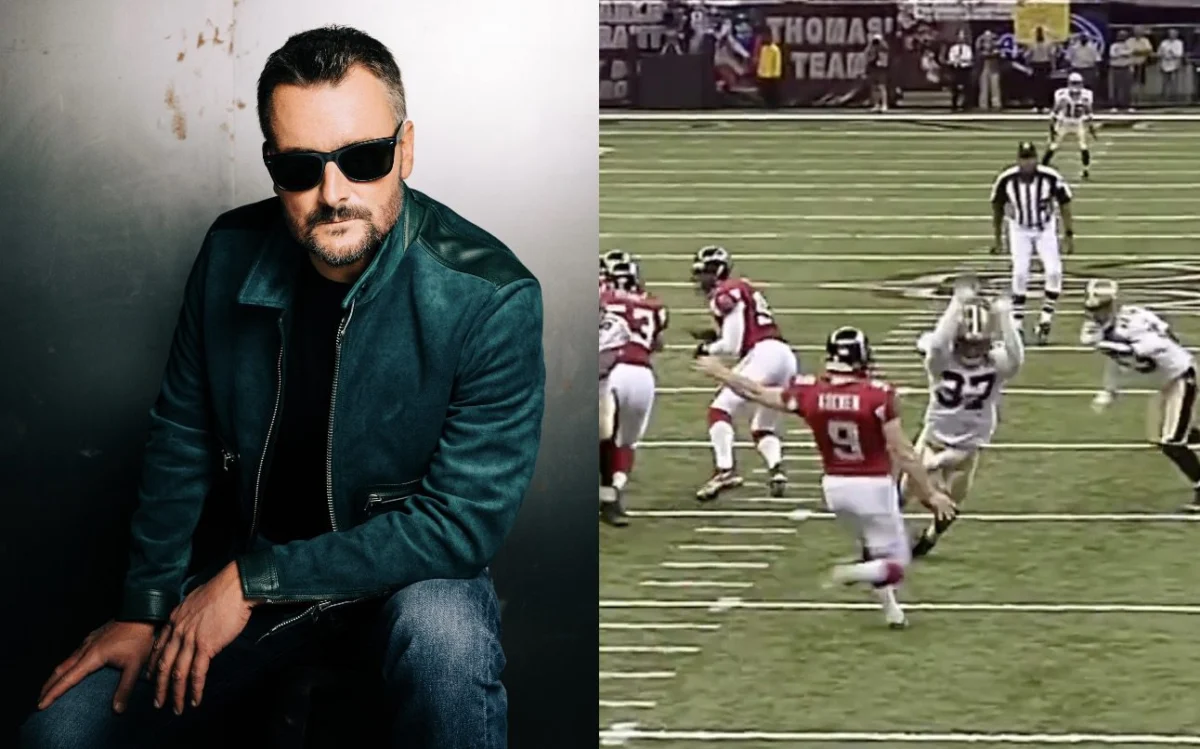
The New Orleans Saints have officially announced that country music star Eric Church will join a powerhouse, star-studded musical lineup for the halftime show during their upcoming Monday Night Football matchup against the Atlanta Falcons. Headlined by renowned New Orleans native Trombone Shorty, the performance will also feature musical luminaries Kirk Franklin, Juvenile, Cyril Neville, and Ivan Neville. While Church may initially appear to be an unexpected addition to a bill heavily weighted toward the distinct musical heritage of the Big Easy, his inclusion is the result of a rapidly deepening artistic collaboration between the country singer and Trombone Shorty that has bridged genres and captivated audiences across the American South.
The forthcoming performance at the Caesars Superdome carries profound historical significance beyond standard NFL entertainment. The prime-time contest marks the official 20-year commemoration of the Saints’ triumphant return to their home stadium following the catastrophic devastation inflicted by Hurricane Katrina in August 2005. By blending contemporary country music with traditional New Orleans brass, gospel, and hip-hop, the halftime show aims to honor two decades of civic resilience, cultural preservation, and community rebuilding.
A Musical Partnership Forged Across Genres
Eric Church’s integration into the New Orleans music scene is not a random booking, but rather the culmination of a series of mutual guest appearances and creative exchanges with Trombone Shorty, born Troy Andrews. Their professional relationship intensified earlier this year when Church made a surprise appearance at Andrews’ star-studded “Shorty Turns 40” birthday concert in New Orleans.
The collaboration traces back further to Church’s Gather Again tour, during which he invited Trombone Shorty to join him on stage. Alongside R&B and jazz vocalist Ledisi, the musicians delivered high-energy renditions of classic covers, including "Ophelia" and "Proud Mary," as well as Church’s own hit track, "Cold One."
The artistic cross-pollination continued when Trombone Shorty invited Church to perform at his annual "Treme Threauxdown," a staple event hosted during the New Orleans Jazz & Heritage Festival. Reflecting on that specific performance, Church noted that the experience fundamentally altered his creative process and inspired the sonic direction of his recent album, Evangeline vs. The Machine.
"Trombone Shorty came and played a show with me in New Orleans on the Gather Again tour, and we ended up in the dressing room after and got in this incredible conversation about brass instruments and string instruments and the history of music," Church recalled. "Later he invited me to come play this show he does during Jazz Fest. There were probably two white people onstage that night: me and Steve Miller."
Church described the unique instrumentation of the performance—featuring a traditional New Orleans brass section, background singers, and a localized violin arrangement that departed entirely from classical conservatory standards. "Everything was wrong for what that song is," Church said of performing his track ‘Cold One.’ "I’m not convinced anyone even knew the song. But we found our spot in the middle of it, and it was killer. I flew home thinking: I want to do a record this way."
Chronology of Recovery: The Road Back to the Superdome
To fully understand the gravity of the upcoming Monday Night Football game, one must examine the timeline of displacement, survival, and ultimate return that defined the city of New Orleans in the mid-2000s.
On August 29, 2005, Hurricane Katrina made landfall along the Gulf Coast, breaching levees and submerging roughly 80 percent of New Orleans under floodwaters. In the immediate aftermath, the Caesars Superdome—designed as a premier entertainment and athletic venue—became an improvised, highly controversial shelter of last resort. Tens of thousands of stranded residents converged on the facility without adequate food, water, power, or medical supplies, creating a severe humanitarian crisis that drew international scrutiny.
With the Superdome severely damaged and the city uninhabitable, the New Orleans Saints were forced to relocate their operations for the remainder of the 2005 NFL season. The team played home games across multiple venues, primarily LSU’s Tiger Stadium in Baton Rouge, Louisiana, and the Alamodome in San Antonio, Texas, finishing the season with a 3-13 record. The franchise’s long-term future in New Orleans was openly questioned by sports analysts and league executives amid economic devastation and population loss.
The definitive turning point occurred on September 25, 2006. Nearly 13 months after the storm, the Saints returned to a repaired and renovated Superdome to host their arch-rivals, the Atlanta Falcons, in front of a national television audience on Monday Night Football.
The Sports Milestone That Became a Civic Turning Point
The magnitude of the September 25, 2006, game transcended standard athletic competition. For a traumatized population scattered across the United States or struggling to rebuild their flooded homes, the event served as a powerful psychological marker of rebirth and communal survival.
The game began with an emotional pregame ceremony featuring soul icon Irma Thomas performing the national anthem—a duty she is scheduled to reprise for the 20-year anniversary game. Just over a minute into the first quarter, Saints safety and special teams standout Steve Gleason provided the defining moment of modern New Orleans sports history. Gleason burst through the line to block a punt by Atlanta’s Michael Koenen. Cornerback Curtis Deloatch recovered the loose ball in the Falcons’ end zone for a touchdown, eliciting a roar from the sellout crowd that registered seismically and remains etched in NFL lore.
The emotional momentum propelled the Saints to a decisive 23-3 victory, igniting an unexpected run to the NFC Championship game that season and laying the groundwork for the franchise’s first Super Bowl victory four years later in Super Bowl XLIV.
The impact of Gleason’s play was subsequently immortalized outside the Superdome through a bronze statue titled Rebirth, depicting the exact moment of the blocked punt. In the years following his retirement, Gleason became a globally recognized advocate for amyotrophic lateral sclerosis (ALS) research after being diagnosed with the neurodegenerative disease in 2011, establishing the Gleason Initiative Foundation to assist others living with neuromuscular diseases.
Broader Implications and Cultural Impact
Sociological and economic analyses of post-Katrina New Orleans consistently highlight the psychological role played by the Saints franchise in accelerating tourism recovery, boosting local morale, and retaining a population determined not to abandon their cultural identity. The team’s sustained success through the late 2000s and 2010s provided a steady economic anchor and a unified civic identity during years of arduous rebuilding.
As the NFL prepares for the twentieth-anniversary broadcast, league officials and local organizers emphasize that the event is designed to celebrate not merely a football game, but the enduring tenacity of the Gulf Coast region. The integration of Eric Church alongside local stalwarts like Trombone Shorty, Kirk Franklin, Juvenile, Cyril Neville, and Ivan Neville underscores the unifying power of music in a city defined by its vibrant cultural traditions.
With global media attention focused once again on the Caesars Superdome, Monday night’s broadcast will serve as a dual tribute: a commemoration of a dark chapter overcome by collective willpower, and a celebration of the unique cultural tapestry that continues to define New Orleans two decades after its darkest hour.