 Indra Aziz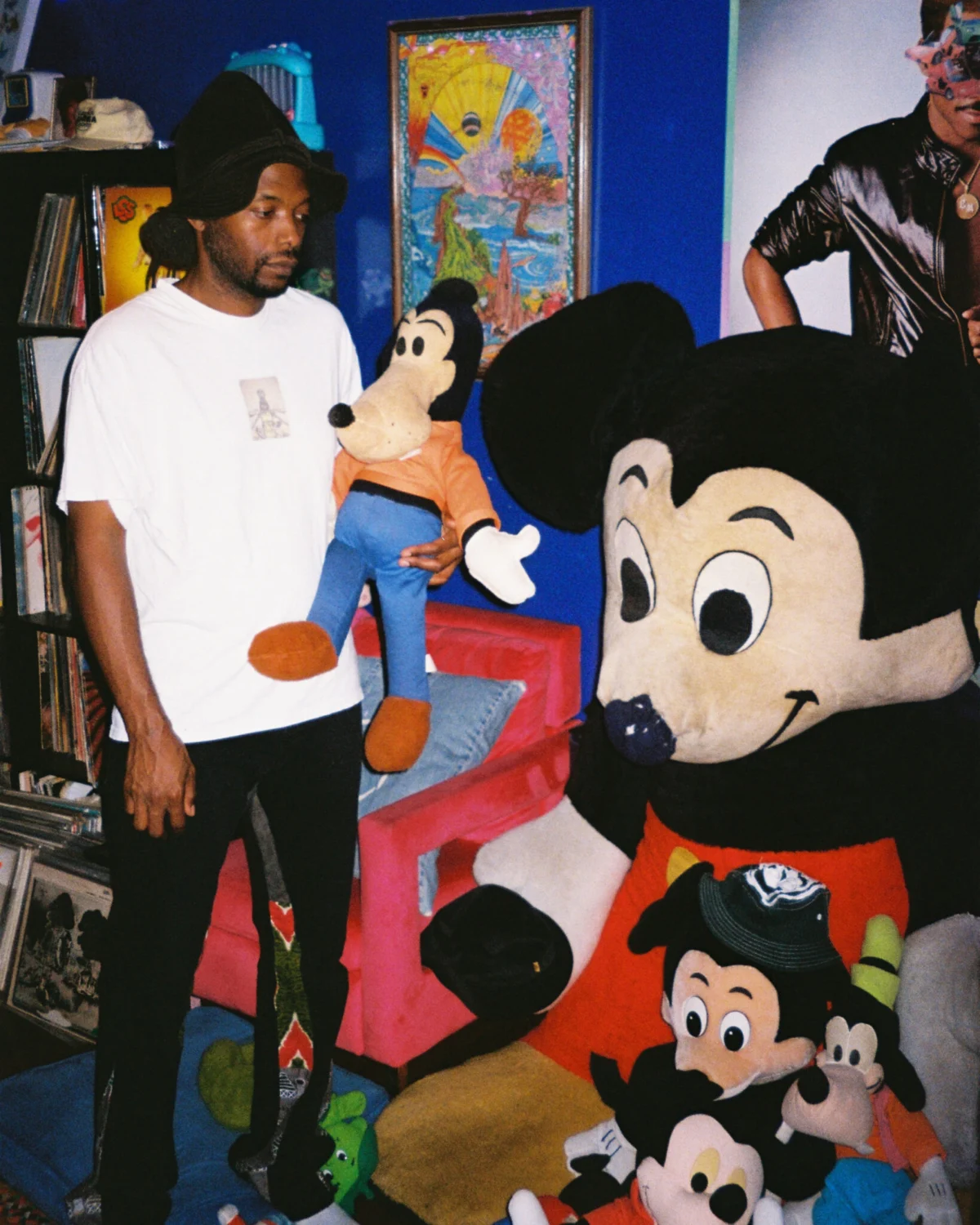
The contemporary landscape of independent hip-hop frequently rewards artists who balance conceptual ambition with deeply personal introspection. Dominick Purdy, widely recognized by his moniker The Koreatown Oddity, has consistently operated at the vanguard of this stylistic intersection. Arriving via the esteemed independent imprint Stones Throw Records, his fourth full-length studio album, Purdy, marks a significant milestone in a career defined by narrative-driven experimentation and surrealist world-building. Comprising 15 tracks, the new LP arrives four years after his 2022 release, ISTHISFORREAL?, continuing an artistic evolution that bridges hyper-specific Los Angeles lore with existential philosophy.
Conceptual Framework and Lyrical Themes
At its core, Purdy functions as a multifaceted examination of identity, fatherhood, and creative consciousness. The Los Angeles-based rapper and producer utilizes a diverse array of metaphorical scenarios to dissect both mundane observations and profound life transitions. On the track “Balance Beam,” Purdy juxtaposes the internal psychological landscape of a knight confronting his first battle with the delicate balance required to navigate modern life. Conversely, “Astro Turf” finds humor and philosophical depth in the meticulous cultivation of a residential lawn, grounding lofty artistic concepts in the hyper-local reality of domestic existence.
The album also addresses socio-cultural observations through unconventional lenses. On “Ragu & Prego,” Purdy uses the corporate and consumer rivalry of competing pasta sauce brands as a satirical mirror for petty human conflicts and hollow industry rivalries. Yet, beneath the wry humor lies a developing maturity. Throughout the project, the artist reckons with the profound shift in perspective that accompanies starting a family, realizing that his actions and legacy are now inextricably tied to a collective future.
This thematic self-awareness reaches its apex on “Artist in the Painting.” In this conceptual centerpiece, Purdy constructs a kaleidoscopic narrative wherein an artist paints a landscape, subsequently paints himself painting that landscape, and recursively repeats the process until he dissolves into the very artwork he seeks to comprehend. Describing the album’s overarching perspective in his own words, Purdy characterizes the project as being crafted by “the artist inside the painting and the observer of the painting while the painting is being painted.” This dual positioning allows the creator to simultaneously participate in the lived experience of life while maintaining the critical distance required to analyze it.
Chronological Evolution: From Origin Story to Existential Reflection
To fully understand the weight of Purdy, one must examine the trajectory of the artist’s preceding major releases, which reveal a deliberate movement from externalized storytelling to internalized philosophy.
In 2020, The Koreatown Oddity released Little Dominique’s Nosebleed, a critically acclaimed album that functioned primarily as an origin story. That project utilized spoken-word interludes, childhood memories, and formative experiences in Los Angeles to construct a biographical foundation for the listener. It was a visceral, highly grounded record that explored health scares, familial bonds, and the geographic specificity of growing up in Koreatown.
Two years later, in 2022, he returned with ISTHISFORREAL?. Marking a sharp pivot in format, that release adopted the stylistic conventions of a mockumentary and a sketch comedy show. Critics and fans frequently compared its structural fluidity to legendary sketch institutions such as In Living Color and Saturday Night Live. Rather than offering straightforward autobiography, ISTHISFORREAL? deployed satire, absurdist humor, and fictionalized vignettes to interrogate the music industry, media consumption, and societal perceptions of Black artistry.
With Purdy, the artist has synthesized the emotional vulnerability of Little Dominique’s Nosebleed with the conceptual theatricality of ISTHISFORREAL?, stepping into a distinctly mature phase of his career. Observers note that while the music retains the idiosyncratic curiosity and genre-bending production choices that initially defined his catalog, it sheds the protective layers of satire in favor of direct, unvarnished self-examination.
The Stones Throw Partnership and Industry Context
The release of Purdy via Stones Throw Records reinforces a long-standing, symbiotic relationship between the artist and one of independent music’s most influential incubators. Founded in 1996 by Peanut Butter Wolf, Stones Throw has built a decades-long legacy of championing left-of-center hip-hop, electronic, and experimental artists, including Madvillain, J Dilla, Knxwledge, and Mndsgn.
The alignment between The Koreatown Oddity and Stones Throw is structurally logical. Both entities share a commitment to artistic autonomy, refusing to pander to algorithmic trends or mainstream radio formats. By housing Purdy under the Stones Throw banner, the album benefits from an established global infrastructure tailored to physical vinyl distribution, specialized merchandising, and a dedicated listenership that actively seeks out avant-garde hip-hop.
Industry analysts and cultural critics have noted that releasing a 15-track conceptual album in an era dominated by short-form streaming snippets and singles-driven promotion is a deliberate artistic statement. By demanding sustained attention from the listener, both the artist and the label are signaling a commitment to the album format as a cohesive literary and sonic journey.
Live Performances and Upcoming Appearances
In support of Purdy, The Koreatown Oddity is slated to bring his complex audio-visual world to the stage. Most notably, the rapper is scheduled to perform at the upcoming Stones Throw Festival in Los Angeles later this month. These live engagements provide a crucial platform for material that relies heavily on atmospheric world-building and intricate lyricism.
Given the dense narrative structure of songs like “Artist in the Painting” and the rhythmic experimentation of tracks featuring accompanying visual media—such as the official music video for “Yahtzee”—translating these recordings into a live setting represents both a challenge and an opportunity for the artist. Observers anticipate that the Los Angeles performance will serve as a homecoming celebration, highlighting his deep roots within the local independent music community while showcasing his expanded sonic palate to new and returning audiences alike.
Broader Impact and Critical Implications
The arrival of Purdy arrives at a fascinating juncture for independent West Coast hip-hop. As traditional geographic boundaries in rap music continue to blur due to digital streaming, artists who anchor their work to hyper-local realities while tackling universal philosophical questions occupy a unique space in contemporary culture.
The Koreatown Oddity’s ability to weave everyday occurrences—such as maintaining a lawn or analyzing commercial condiment brands—into broader meditations on existence reflects a distinct literary tradition within hip-hop, one that values observation and wit over empty bravado. Furthermore, the album’s meta-commentary on the nature of creation (“the artist inside the painting”) offers a timely reflection on the role of the creator in an age of hyper-saturated media production and automated content generation.
As Purdy circulates among critics, fans, and fellow musicians, its long-term implications point toward a continued redefinition of what a hip-hop artist can achieve within the independent ecosystem. By refusing creative stagnation and consistently shifting his narrative lens, The Koreatown Oddity has secured his position as one of the most innovative voices operating within modern underground music.