Johan Budi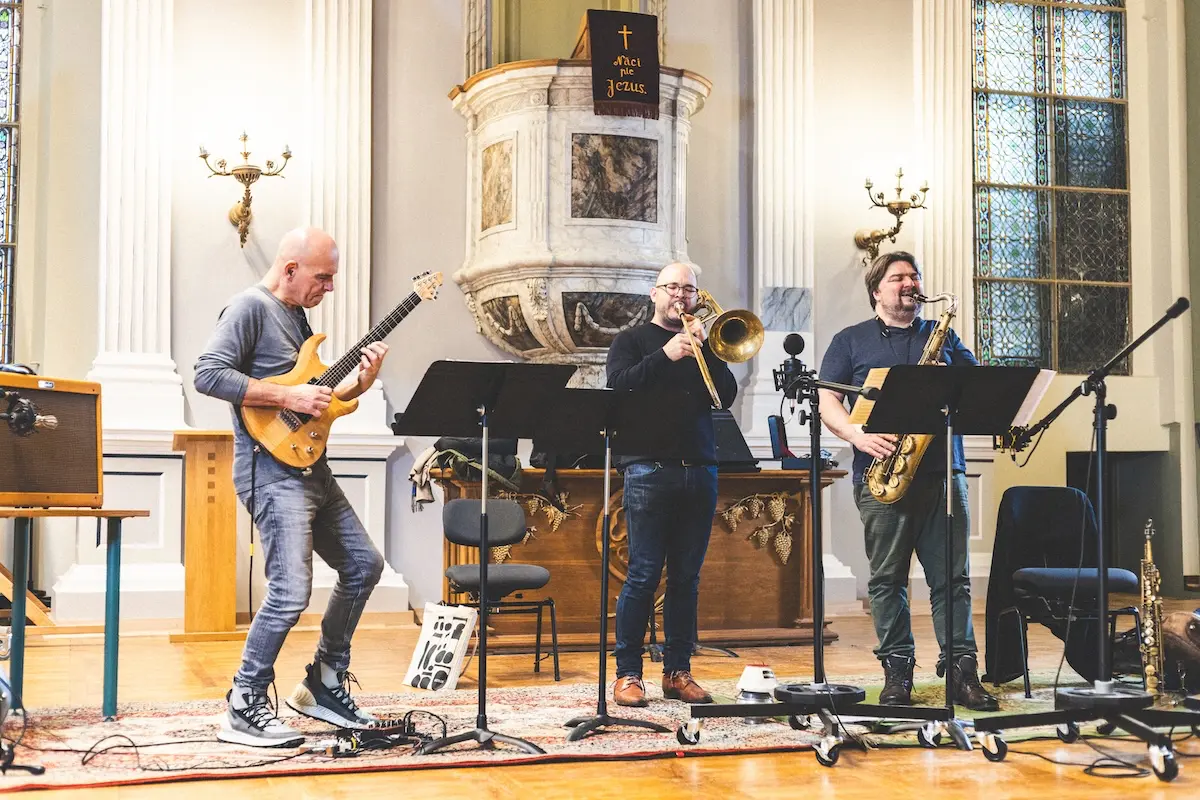
The global jazz landscape is currently witnessing a significant shift toward genre-fluidity, technical precision, and a renewed interest in traditional recording methods, as evidenced by three major new releases from prominent European artists. Liudas Mockūnas, in collaboration with Samuel Blaser and Marc Ducret, has unveiled Twisted Summer, a project that bridges the gap between mid-century chamber jazz and contemporary improvisation. Simultaneously, the Berlin-based collective Conic Rose has released Wedding, an album that captures the urban essence of Germany’s capital through a blend of indie-rock and electronica. Completing this trifecta of innovation is Terje Evensen’s Reclusive Mountain, which further cements the Norwegian drummer’s reputation as a leading figure in the second generation of Scandinavian electro-jazz. Together, these works represent a broader trend in the music industry where historical reverence meets avant-garde exploration, reflecting the sophisticated demands of modern listeners and the technical capabilities of 21st-century production.
The Resurgence of Analogue Purity: Liudas Mockūnas’ Twisted Summer
Twisted Summer marks a pivotal moment in the careers of Lithuanian multi-reedist Liudas Mockūnas, Swiss trombonist Samuel Blaser, and French guitarist Marc Ducret. The album, released under the Jersika Records label, was recorded at the Riga Recording Studio in Latvia on December 2 and 3, 2023. In an era dominated by digital manipulation and multi-track editing, this project distinguishes itself through its commitment to analogue tape recording with no edits or overdubs. This "live-to-tape" approach demands a high level of virtuosity and telepathic communication between the performers, capturing the raw energy and immediate tension of the improvisational process.
While the album has been characterized by some critics as a tribute to the legendary American reedman Jimmy Giuffre, particularly his 1950s trios with Jim Hall and Bob Brookmeyer, the artists have clarified that the connection is more spiritual than literal. Samuel Blaser noted that while Giuffre’s influence is undeniable, the trio did not use his music as a conscious blueprint. Instead, Twisted Summer functions as an "accidental homage," utilizing the same instrumental configuration—reeds, trombone, and guitar—to explore contemporary structures.
The recording sessions in Riga were structured to allow each musician to contribute both a concise "chamber-jazz" composition and a more expansive piece. This balanced the program between disciplined structure and open-ended exploration. Mockūnas’ "Drop It" sets a tone of atmospheric menace, while Ducret’s 15-minute title track serves as the album’s centerpiece, blending traditional phrasing with avant-garde soundscapes. The technical data of the recording reveals a preference for high-fidelity spatial awareness, a hallmark of Jersika Records, which has built a niche market for audiophiles seeking the warmth of analogue sound.
Urban Geometry and Genre Blending: Conic Rose’s Wedding
In contrast to the abstract improvisations of the Mockūnas-Blaser-Ducret trio, the Berlin-based ensemble Conic Rose offers a more structured, yet equally innovative, fusion of styles in their second full-length album, Wedding. Named after the culturally diverse district in Berlin where the band lives and works, the album is a direct reflection of its environment. The group, led by trumpeter Konstantin Döben and keyboardist Johannes Arzberger, integrates elements of jazz, indie-rock, and glitch-techno into a cohesive sound that is distinctly European.
The lineup of Conic Rose brings together musicians with deep roots in both classical and contemporary jazz. Bassist Franzi Aller and guitarist Bertram Burkert have previously collaborated with heavyweights such as Tony Lakatos and Michael Wollny, providing the technical foundation necessary to navigate the band’s complex arrangements. Wedding represents an evolution from their 2020 debut, Babyghosts EP, and their 2023 release, Heller Tag. The new material is characterized by a "retro-pop" sensibility, drawing comparisons to the experimental pop of Stereolab and the electronic textures of Bonobo and Radiohead.
Industry analysts point to Conic Rose as a prime example of the "NuJazz" resurgence, a movement that prioritizes melody and atmosphere over the traditional solo-centric format of bebop. The track "Patterns" utilizes fractured beats and experimental electronica, while "Never Ending Story" leans into ambient jazz balladry. The production on Wedding is polished and intentional, aimed at a demographic that bridges the gap between traditional jazz enthusiasts and alternative music fans. The album’s success in capturing a "sense of place" suggests a growing trend where regional identity becomes a key marketing and creative driver in the international jazz scene.
The Cinematic Northern Sound: Terje Evensen’s Reclusive Mountain
The Scandinavian contribution to this wave of releases comes from Terje Evensen, a drummer and sound artist whose work on Reclusive Mountain continues the legacy of Norwegian electro-jazz pioneered by Nils Petter Molvær and Bugge Wesseltoft. Released on the Records Abstract Goat label, this five-track EP is a masterclass in cinematic production. Evensen, who gained early recognition for his web-only releases in 2010, has curated a prestigious group of collaborators for this project, including Molvær himself, UK guitarist Leo Abrahams, and saxophonist Julian Argüelles.
The conceptual framework of Reclusive Mountain is built on "dramaturgy," with each piece functioning as an imagined scene or narrative. This approach is supported by the inclusion of unique instrumentation, such as the serpent played by Michel Godard on the closing track "Glimpse of Closeness." The serpent, a 16th-century wind instrument, provides a grainy, ancient texture that contrasts sharply with Evensen’s modern electronic pulses and the precision mastering of Ed Woods.
Technical production is a critical component of Evensen’s work. The mixing process for Reclusive Mountain involved a delicate balance between acoustic timbres and synthesized layers, ensuring that the music remained organic despite its heavy reliance on technology. This "Northern Sound"—often characterized by its use of space, reverb, and melancholic lyricism—remains a dominant force in European jazz. Evensen’s ability to integrate high-profile guest soloists like Argüelles and Molvær into a cohesive electronic landscape demonstrates the continued viability of the sub-genre.
Chronology and Production Timeline
The timeline of these releases indicates a productive period for European jazz labels following the disruptions of the early 2020s.
- Late 2023 (December 2-3): Liudas Mockūnas, Samuel Blaser, and Marc Ducret record Twisted Summer at Riga Recording Studio. The decision to use analogue tape is made to ensure a specific historical aesthetic.
- Early 2024: Conic Rose completes the final mixing for Wedding in Berlin. The album is positioned as a follow-up to their successful 2023 tour cycle.
- Mid 2024: Terje Evensen finalizes the production of Reclusive Mountain, utilizing remote collaboration for certain electronic layers while recording core instrumental parts in a studio setting.
- Present: All three works are distributed globally, appearing on major streaming platforms and high-quality physical formats (vinyl and CD), catering to both the digital and analogue markets.
Supporting Data and Market Analysis
The release of these albums coincides with a 4.5% increase in jazz consumption across European markets over the past 24 months, according to industry reports. This growth is largely driven by "cross-over" acts like Conic Rose, who appeal to younger audiences. Furthermore, the "Twisted Summer" session highlights a 12% rise in demand for vinyl releases among jazz collectors, who prioritize the analogue recording techniques employed by labels like Jersika Records.
From a technical standpoint, the diversity of instrumentation across these three albums—ranging from the 16th-century serpent to modern glitch-techno synthesizers—illustrates the "polyglot" nature of modern jazz. The genre is no longer defined by a specific set of instruments or rhythms but by an improvisational ethos applied to any sound source.
Broader Impact and Implications
The release of Twisted Summer, Wedding, and Reclusive Mountain has several implications for the future of the music industry. First, it reaffirms the importance of independent labels (Jersika, Records Abstract Goat) in fostering artistic risks that major labels might avoid. These labels serve as incubators for the "chamber jazz" and "electro-acoustic" niches that keep the genre vibrant.
Second, the geographical diversity of these projects—spanning Lithuania, Switzerland, France, Germany, Norway, and the UK—underscores the decentralized nature of the modern jazz scene. While New York remains a historical hub, the creative impetus has shifted significantly toward European centers like Berlin, Riga, and Oslo. These cities provide the infrastructure and cultural cross-pollination necessary for projects like Conic Rose’s Wedding to flourish.
Finally, the focus on "authenticity" and "place" suggests that audiences are increasingly looking for music that tells a specific story. Whether it is the analogue warmth of a Latvian studio or the industrial echoes of a Berlin neighborhood, the most successful contemporary jazz albums are those that offer a unique, non-generic experience. As these three albums continue to gain traction, they set a high bar for production quality and creative integrity in the global music market.