Johan Budi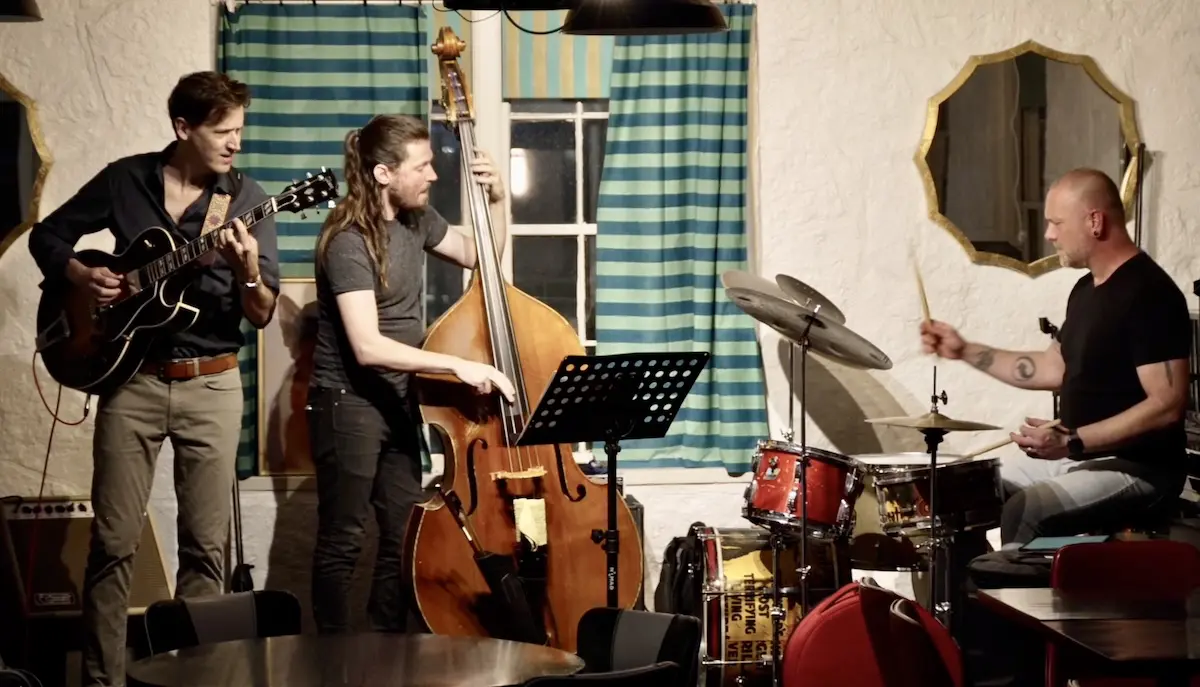
The global jazz landscape in 2025 continues to be defined by a sophisticated tension between the preservation of historical legacies and the pursuit of regional innovation. Three recent releases—Don Cento’s Halfway To Mellowtown, Ricardo del Fra’s retrospective box set My Chet My Song, and Doug MacDonald’s Tribute To South Central—offer a comprehensive look at the diverse trajectories of modern jazz. From the Americana-infused landscapes of the American Southwest to the high-concept orchestral tributes of Europe and the steadfast hard-bop traditions of Los Angeles, these recordings underscore the genre’s enduring versatility and its practitioners’ commitment to technical excellence.
Don Cento and the Evolution of the Americana-Jazz Fusion
In the contemporary jazz guitar hierarchy, figures such as John Scofield, Bill Frisell, and Julian Lage have long been celebrated for their ability to weave the threads of Americana, folk, and blues into a jazz tapestry. However, the emergence of Austin-based guitarist Don Cento suggests that the most compelling iterations of this subgenre may currently be found in localized scenes where these influences naturally intersect. Cento’s latest project, Halfway To Mellowtown, represents a significant contribution to the "prairie jazz" aesthetic, prioritizing melodic clarity and atmospheric resonance over technical ostentation.
Don Cento’s approach is characterized by a "steely and crystalline" guitar tone, a choice that intentionally distances his work from the high-decibel traditions of Texas blues or the polished commercialism of modern country music. Instead, his trio—comprising bassist Phil Spencer and drummer Norm Bergeron—crafts a soundscape that evokes the cinematic minimalism often associated with the films of the Coen Brothers. This "noir-Americana" quality is evident throughout the album’s eleven tracks, which were recorded in Austin and released under the Secondbridge Records label.
Analysis of the Cento Threeo Repertoire
The album’s composition reflects a deep immersion in vintage popular music and a keen sense of storytelling. While most of the tracks are Cento originals, the inclusion of Rosanne Cash’s "Seven Year Ache" serves as a bridge between the jazz world and the high-water marks of 1980s country-pop. This choice highlights Cento’s ability to recontextualize familiar melodies through a jazz lens without sacrificing their emotional core.
The track "The Builder," composed by bassist Phil Spencer, offers an intriguing stylistic pivot by integrating Bach-inspired fugues into the trio’s interactive framework. This juxtaposition of Baroque structure with the earthy, supportive drumming of Norm Bergeron demonstrates the group’s intellectual range. Other notable tracks include the Spanish-influenced "It Takes What It Takes," the rhythmic "Dennis Muren," and the expansive "Horse-Breaking Hector," which solidifies the album’s "prairie jazz" credentials.
Ricardo del Fra: Curating the Legacy of Chet Baker
While Cento explores the frontiers of Americana, the Italian bassist and composer Ricardo del Fra has released a monumental three-CD box set through the Frémeaux & Associés label that looks back at one of the most poignant eras in jazz history. My Chet My Song is both a tribute to and an evolution of the aesthetic established by the late trumpeter Chet Baker, with whom Del Fra performed extensively during the 1980s.
Del Fra’s career was indelibly shaped by his tenure in Baker’s band, a period characterized by a focus on melodic finesse, the strategic use of space, and a certain "cool" vulnerability. This box set collects three previously released albums, providing a chronological and thematic overview of Del Fra’s attempts to reconcile Baker’s influence with his own progressive compositional voice.
Chronology of the Box Set
The collection begins with A Sip Of Your Touch (1989), recorded shortly after Baker’s death. This session features a high-caliber ensemble including Dave Liebman, Art Farmer, and Enrico Pieranunzi. Liebman’s deconstruction of "I’m Old Fashioned" stands as a testament to the album’s ability to balance avant-garde leanings with lyrical sensitivity.
The centerpiece of the collection, and arguably Del Fra’s most successful endeavor, is the 2014 session My Chet My Song. Recorded in Potsdam and Paris, the album utilizes a quintet bolstered by progressive orchestral voicings. This "extreme updating" of the Baker aesthetic transforms standards like "I’m A Fool To Want You" and "For All We Know" into challenging yet accessible works of modern art. The presence of veteran drummer Billy Hart and trumpeter Airelle Besson ensures that the music remains grounded in a rigorous jazz tradition even as it explores symphonic textures.
The final disc, Moving People (2018), represents a departure from the Chet Baker-centric repertoire. Featuring the acclaimed guitarist Kurt Rosenwinkel, this session leans toward "headstrong neo-fusion." While some critics have questioned its inclusion over other Baker-focused projects like Chet Visions (2019), Moving People demonstrates Del Fra’s versatility and his ability to collaborate with the leading lights of the contemporary jazz scene.
Doug MacDonald: The Preservation of the West Coast Tradition
The third pillar of this recent wave of releases is Doug MacDonald’s Tribute To South Central. While Cento looks to the prairie and Del Fra looks to the European orchestral tradition, MacDonald remains firmly rooted in the hard-bop and blues foundations of Los Angeles. A Philadelphia native who relocated to the West Coast, MacDonald has built a career playing alongside legends such as Ray Brown, Buddy Rich, and Brother Jack McDuff.
Tribute To South Central is MacDonald’s latest exploration of the traditional jazz format. The album serves as a stylistic homage to the historic jazz scene of South Central Los Angeles, particularly the legacy of Central Avenue, which was once the "Harlem of the West." MacDonald’s commitment to "tried-and-true" formats is not a sign of creative stagnation but rather a disciplined devotion to the roots of the genre.
Technical Mastery and Ensemble Dynamics
The album features a diverse array of rhythmic styles, from the boogaloo of "Mr. Walker" to the Latin-tinged "Blues In The Desert." MacDonald’s playing is noted for its relaxed phrasing and a particular focus on the beauty of sustained notes, a technique that allows his melodies to breathe.
The ensemble on Tribute To South Central is instrumental to the album’s success. Trumpeter Wayne Cobham (who also utilizes the flugelhorn and flugelbone) provides a lively melodic foil to MacDonald’s guitar. Pianist Richard Turner Jr. adds further depth by alternating between acoustic piano, organ, and electric piano, giving the record a rich, varied textural palette. The rhythm section, consisting of Del Atkins on bass and Ronnie Kaufman on drums, maintains a consistent, swinging drive that defines the "West Coast" sound.
Broader Impact and Industry Analysis
These three releases, though distinct in their geographic and stylistic origins, reveal several key trends within the 2025 jazz industry.
First, the role of independent labels remains paramount. Secondbridge Records, Frémeaux & Associés, and Dmac Music are providing the infrastructure necessary for artists to release niche, high-quality projects that might be overlooked by major conglomerates. The Frémeaux & Associés box set, in particular, highlights the continued viability of physical media and curated collections for the serious jazz listener.
Second, there is a visible trend toward "geographic storytelling." Don Cento’s work is inseparable from the Austin environment, just as MacDonald’s is a product of the Los Angeles lineage. This regionalism provides jazz with a sense of place and narrative that resonates with audiences seeking authenticity in a digital age.
Finally, the influence of historical figures like Chet Baker and Ray Brown continues to serve as a North Star for contemporary musicians. Whether through direct tribute (Del Fra) or stylistic adherence (MacDonald), the "greats" of the 20th century remain the foundation upon which modern innovation is built. Even an artist like Don Cento, who operates on the periphery of traditional jazz, acknowledges the weight of history by referencing the "Grand Ol’ Opry" and vintage popular music.
In conclusion, the releases of Halfway To Mellowtown, My Chet My Song, and Tribute To South Central provide a snapshot of a genre that is healthy, diverse, and deeply respectful of its origins. These artists demonstrate that whether one is "halfway to Mellowtown" or firmly rooted in the traditions of South Central, the language of jazz remains a potent vehicle for both personal expression and cultural preservation.