 Johan Budi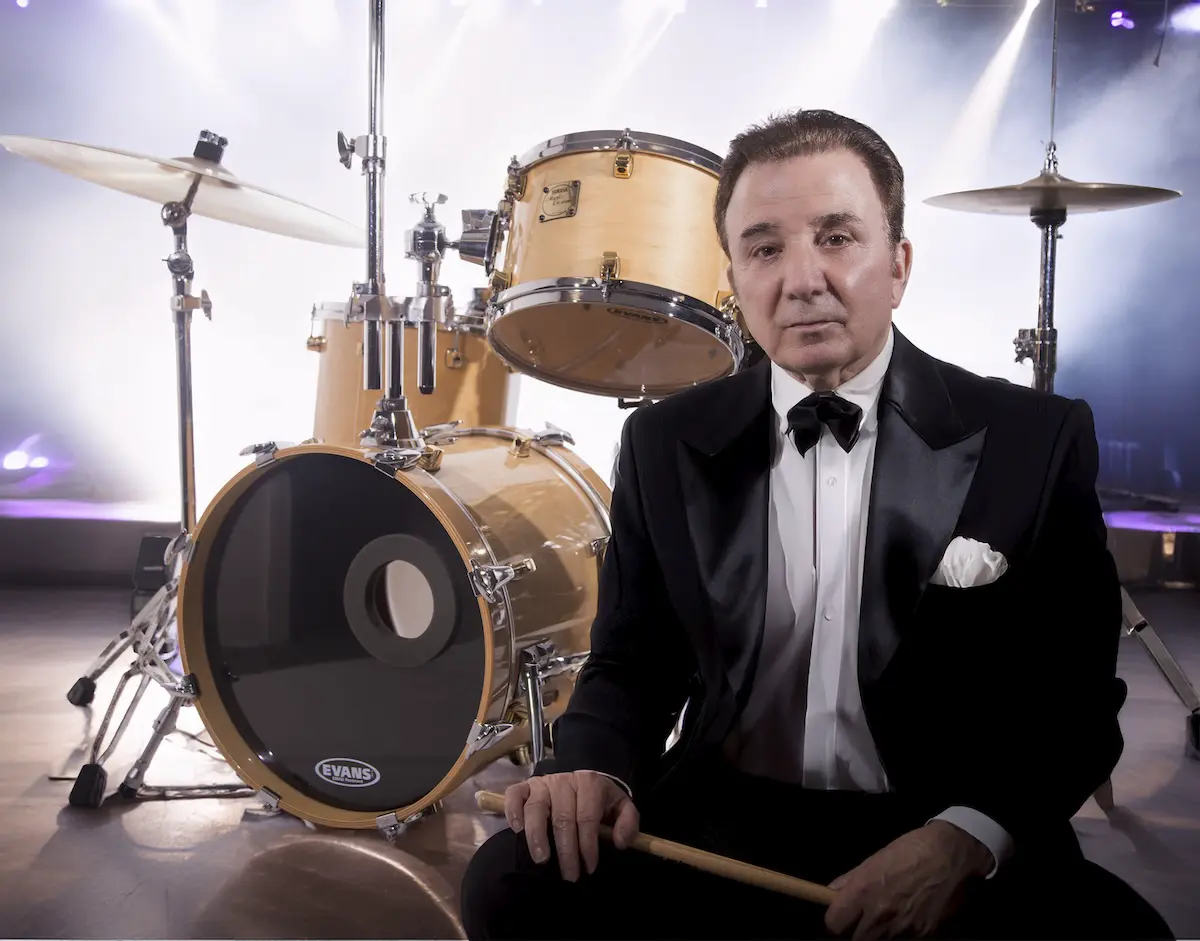
The landscape of contemporary jazz continues to be shaped by a dual force: the emergence of sophisticated new arrangements and the meticulous unearthing of historical recordings that redefine our understanding of the genre’s pioneers. Recent releases from the Joe Syrian Motor City Jazz Octet, the Pierre Favre Trio, and a re-examination of John Coltrane’s seminal work for Impulse! Records offer a comprehensive look at the evolution of jazz from the early 1960s to the present day. These recordings, spanning from 1962 to 2025, highlight the enduring influence of Latin rhythms, the radical shifts of the European avant-garde, and the structural consolidation of the post-bop era.
Joe Syrian Motor City Jazz Octet: Modern Interpretations of the Latin Jazz Tradition
The Joe Syrian Motor City Jazz Octet’s latest offering, A Blue Time, serves as a bridge between classic hard-bop sensibilities and contemporary Latin jazz arrangements. Recorded in New Jersey across sessions in May 2023 and October 2025, the album represents a sophisticated effort by drummer Joe Syrian to lead an ensemble of high-caliber musicians through a repertoire that balances traditional standards with adventurous stylistic pivots.
The album’s structure is notably weighted toward Latin-influenced compositions, featuring six such tracks out of a ten-song collection. The opening track, Duke Jordan’s "Jordu," establishes a baseline of straight-ahead jazz, showcasing the technical proficiency of trombonist Doug Beavers and baritone saxophonist Carl Maraghi. However, the ensemble quickly shifts its focus toward the bossa nova and Afro-Cuban spheres. Adam Birnbaum, who serves as the primary pianist and arranger, is a central figure throughout the recording, providing a percussive and punchy foundation that defines the album’s harmonic character.
One of the more polarizing entries on the album is the rendition of "Black Magic Woman." Featuring percussionist Luisito Quintero and guitarist Paul Bollenback, the track leans heavily into a rock-oriented "Santana mode." Industry analysts have noted that while Bollenback’s electric guitar work is technically impressive, the backing arrangement skirts the line between jazz fusion and highly polished commercial music. This stylistic choice highlights a broader trend in modern octet recordings where the line between "easy listening" and "art jazz" becomes increasingly blurred.
The inclusion of Henry Mancini’s "Charade" and Eden Ahbez’s "Nature Boy" further illustrates the ensemble’s versatility. In "Charade," the addition of Dave Riekenberg’s bass clarinet introduces a Middle Eastern tonal palette, suggesting a move toward world-music integration. Meanwhile, "Nature Boy" is reimagined with an Afro-Cuban tilt, a decision that has sparked discussion regarding the preservation of the original’s "hippie" ethos versus the modernization required for a contemporary "dinner club" aesthetic.
Pierre Favre Trio: The Genesis of European Free Improvisation
Shifting from the polished octet sounds of the 21st century to the raw experimentation of the late 1960s, the release of the Pierre Favre Trio’s Bird Food provides a vital historical document. Recorded in Zurich on February 10, 1968, this album captures a pivotal moment in the development of European free jazz. It marks the first recorded partnership between Swiss drummer Pierre Favre and pianist Irene Schweizer, a duo that would go on to become a cornerstone of the FMP (Free Music Production) movement.
At the time of this recording, both Favre and Schweizer were transitioning away from American-style modern jazz toward a more fragmented, improvisational language. They were joined by the Czech bassist George Mraz, whose technical fluidity was already evident before his subsequent move to New York City to join the Thad Jones/Mel Lewis Orchestra.
The title track, Ornette Coleman’s "Bird Food," serves as a manifesto for the trio’s approach. It utilizes Coleman’s signature "harmolodic" style—disjointed subsets of free playing that are intermittently anchored by thematic melodies. Schweizer’s performance is particularly noteworthy; her ability to formalize abstract clusters of sound into a cohesive narrative prefigures her later work with legendary drummers like Andrew Cyrille and Han Bennink.
The album also features original compositions by Schweizer, such as "Sounds II" and "Hinten," which explore the contrast between pensive silence and dense, direct "clusters" of sound. The track "The Attack" offers a rare glimpse of the trio’s ability to return to a traditional "swing" feel before deconstructing it entirely. While the album’s total duration is relatively short at just under 30 minutes, its release is considered a significant archival event, filling a gap in the timeline of the European avant-garde.
John Coltrane: Consolidating the Classic Quartet
The third pillar of this musical survey is the re-issue of John Coltrane’s 1962 self-titled album, Coltrane, on 20th Century Masterworks. This period in Coltrane’s career was defined by his transition from Atlantic Records to the newly formed Impulse! label. Under the guidance of producer Bob Thiele, Coltrane was encouraged to explore a wide range of formats, including large-scale orchestrations (Africa/Brass) and more accessible projects (Ballads).
However, the 1962 Coltrane album was a deliberate effort to consolidate the advancements made by his "Classic Quartet," featuring McCoy Tyner on piano, Jimmy Garrison on bass, and Elvin Jones on drums. The album is often viewed by historians as an essential bridge between the "sheets of sound" period and the more spiritual, avant-garde explorations of his later years.
The track "Out Of This World" serves as a centerpiece, demonstrating the quartet’s ability to sustain high-intensity, extended modal improvisations that became their hallmark during live performances. In contrast, "Soul Eyes," a ballad composed by Mal Waldron, showcases Coltrane’s lyrical depth and elegance. The album also reflects the industry standards of the time by including popular show tunes, such as Frank Loesser’s "The Inch Worm," which Coltrane utilizes as a vehicle for his soprano saxophone work.
The re-issue includes several "extra" tracks that provide further insight into the quartet’s studio process. "Impressions" (an excerpt from the June 1962 session) and the piano-less trio track "Up ’Gainst The Wall" offer a look at the ensemble’s internal dynamics. The latter, which features only Coltrane, Garrison, and Jones, highlights the stark, muscular rhythmic interplay that would eventually lead to the radical structures of albums like Interstellar Space.
Chronology of Recordings and Personnel
To understand the broader implications of these releases, it is necessary to examine the chronological timeline of their production:
- February 10, 1968 (Zurich, Switzerland): The Pierre Favre Trio records Bird Food. This marks the beginning of the Schweizer-Favre collaboration and George Mraz’s final European sessions before his American ascent.
- April, June, and September 1962 (New Jersey, USA): The John Coltrane Quartet records the sessions that would form Coltrane. This period establishes the definitive lineup of the Classic Quartet.
- May 2023 and October 2025 (New Jersey, USA): The Joe Syrian Motor City Jazz Octet records A Blue Time. These sessions reflect the modern capability of independent labels like Circle 9 Records to produce high-fidelity, large-ensemble jazz in the digital age.
Technical Personnel and Discography Data
Joe Syrian Motor City Jazz Octet – A Blue Time (Circle 9 Records C90016)
- Total Time: 51:03
- Key Personnel: Joe Syrian (d), Nick Marchione (t), Carl Maraghi (as, bar, cl), Tim Ries (ts), Dave Riekenberg (ts, bcl), Doug Beavers (tb), Adam Birnbaum (p), Paul Bollenback (g), Lorin Cohen/Boris Kozlov (b), Luisito Quintero (pc), Lucy Yeghiazaryan (v).
Pierre Favre Trio – Bird Food (Songs 004CD)
- Total Time: 29:55
- Key Personnel: Pierre Favre (d), George Mraz (b), Irene Schweizer (p).
John Coltrane – Coltrane (20th Century Masterworks 350303 LP)
- Total Time: 47:35 (approx.)
- Key Personnel: John Coltrane (ts, ss), McCoy Tyner (p), Jimmy Garrison (b), Elvin Jones (d).
Industry Analysis: The Role of Archival and Independent Labels
The release of these three albums highlights the current state of the jazz recording industry. The Joe Syrian project, released via Circle 9 Records, exemplifies the rise of artist-centric, boutique labels that prioritize high-level arrangements and ensemble precision. By utilizing a "hybrid" session approach (recorded over two years), Syrian was able to assemble a "who’s who" of New York and New Jersey session players, a feat that would be financially prohibitive for many traditional labels today.
The Pierre Favre Trio release, on the other hand, represents the "archival gold mine" trend. Small European labels are increasingly searching for unreleased tapes from the 1960s to cater to a dedicated audience of avant-garde enthusiasts. The historical value of documenting Irene Schweizer’s early development cannot be overstated, as it provides the missing link in the evolution of the European "New Thing."
Finally, the Coltrane re-issue on 20th Century Masterworks reflects the enduring commercial viability of the "Classic Quartet." Despite these recordings being over 60 years old, they continue to be repackaged and analyzed, serving as the pedagogical and aesthetic standard for nearly all contemporary jazz education.
Broader Impact and Implications
The convergence of these releases suggests that jazz is currently in a period of "circular evolution." While new artists like Joe Syrian are looking back to the mid-century octet traditions and Latin infusions, archival releases of Favre and Coltrane are being used as blueprints for future experimentation.
The Joe Syrian Octet’s work indicates a move toward "chamber jazz" accessibility, where complex arrangements are presented with a sheen that appeals to a broader demographic. Conversely, the Favre and Coltrane recordings remind the industry of the genre’s capacity for radical disruption and spiritual depth.
In conclusion, these three disparate recordings—separated by geography and decades—collectively affirm the resilience of the jazz idiom. Whether through the meticulously arranged Latin grooves of a modern octet, the frantic deconstructions of a 1960s trio, or the foundational mastery of the Coltrane quartet, the genre continues to offer a profound reflection of both musical history and future potential. For the listener and the historian alike, these albums provide a necessary roadmap through the shifting sands of the jazz landscape.