 Aveline Kirana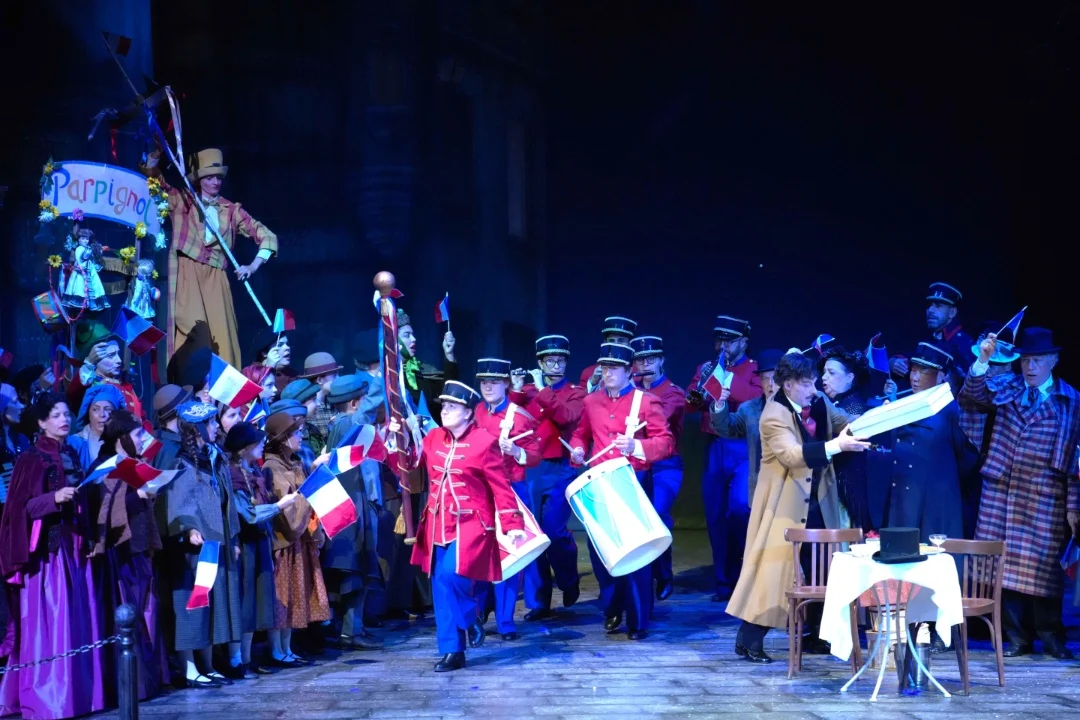
The operatic landscape in recent years has been defined by a contentious tug-of-war between radical directorial revisionism and the preservation of historical integrity. When major regional theaters announce staples of the standard repertoire—works as ingrained in the cultural consciousness as Giacomo Puccini’s La Bohème—audiences often brace for avant-garde reinterpretations that prioritize director-driven concepts over the composer’s original vision. However, the October production at the Teatro Municipale di Piacenza offered a deliberate departure from this trend. By entrusting the staging to the legendary baritone Leo Nucci, the theater signaled a commitment to artistic continuity, resulting in a production that serves as a profound meditation on the relationship between vocal performance and theatrical gesture.
A Legacy of Authenticity and the Nucci Approach
The production, a co-production between the Teatro Municipale di Piacenza and the Teatro di Modena, first premiered in 2019. Its revival in October 2026 underscored a growing trend in European opera houses: the return to "traditionalist" aesthetics that lean heavily on the visual language established by masters such as Franco Zeffirelli. Leo Nucci, whose career as a singer spans decades of association with the world’s most prestigious stages, brings an insider’s perspective to the director’s chair. His methodology is not one of imposition but of distillation.
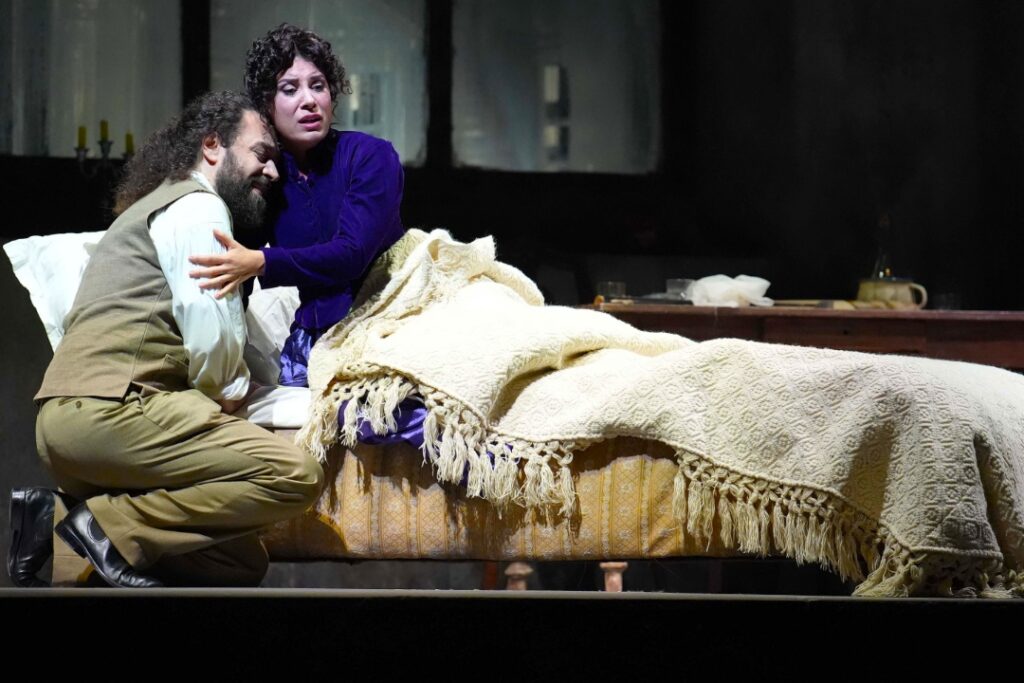
Nucci’s direction relies on a deep-seated understanding of the "dramma per musica." By focusing on the precise placement of actors and the nuanced use of eye contact and subtle movement, he allows the libretto to breathe without the interference of unnecessary directorial artifice. This production avoids the common pitfalls of "concept opera," where historical settings are discarded in favor of abstract symbolism, choosing instead to honor Puccini’s Parisian world through rigorous attention to period-accurate detail.
Scenography and the Visual Language of 19th-Century Paris
The visual identity of the production is anchored by the work of set designer Carlo Centolavigna and costume designer Artemio Cabassi. Centolavigna’s sets serve as a masterclass in atmospheric construction. The Act one garret is depicted with a stark, gloomy realism that captures the desperate poverty of the protagonists, yet it is simultaneously suffused with the kinetic, youthful energy essential to the narrative arc.
Lighting designer Michele Cremona plays a pivotal role in this transformation, utilizing shadow and warmth to define the emotional shifts between the protagonists. In Act two, the transition to the vibrant, bustling environment of the Quartiere Latino provides a necessary visual contrast, with Cabassi’s costumes meticulously recreating the silhouettes and textures of the period. This commitment to the visual score of the opera ensures that the audience remains anchored in the world Puccini intended, allowing the music to dictate the emotional tenor of the performance rather than competing with anachronistic visuals.
Musical Direction and Orchestral Rigor
Under the baton of Vincenzo Milletarì, the Orchestra Filarmonica Italiana delivered a performance characterized by academic precision and technical competence. Milletarì’s approach to the score focused on maintaining a balanced, supportive relationship between the pit and the stage, ensuring that the vocalists were never overpowered.
While the interpretation was lauded for its clarity, some critical analysis suggests that it leaned heavily toward the technical side of verismo at the expense of its inherent, volatile intensity. Puccini’s scores require a certain "plasticity"—the ability to stretch and compress tempo to match the heartbeat of the drama. While Milletarì demonstrated a sophisticated command of the orchestral-vocal interplay, the performance occasionally lacked the raw, visceral push-and-pull that defines the most gripping accounts of the work. Nevertheless, his ability to manage the delicate textures of the orchestral writing was evident, providing a stable foundation for the cast to explore their respective roles.
Vocal Performances: The Female Protagonists
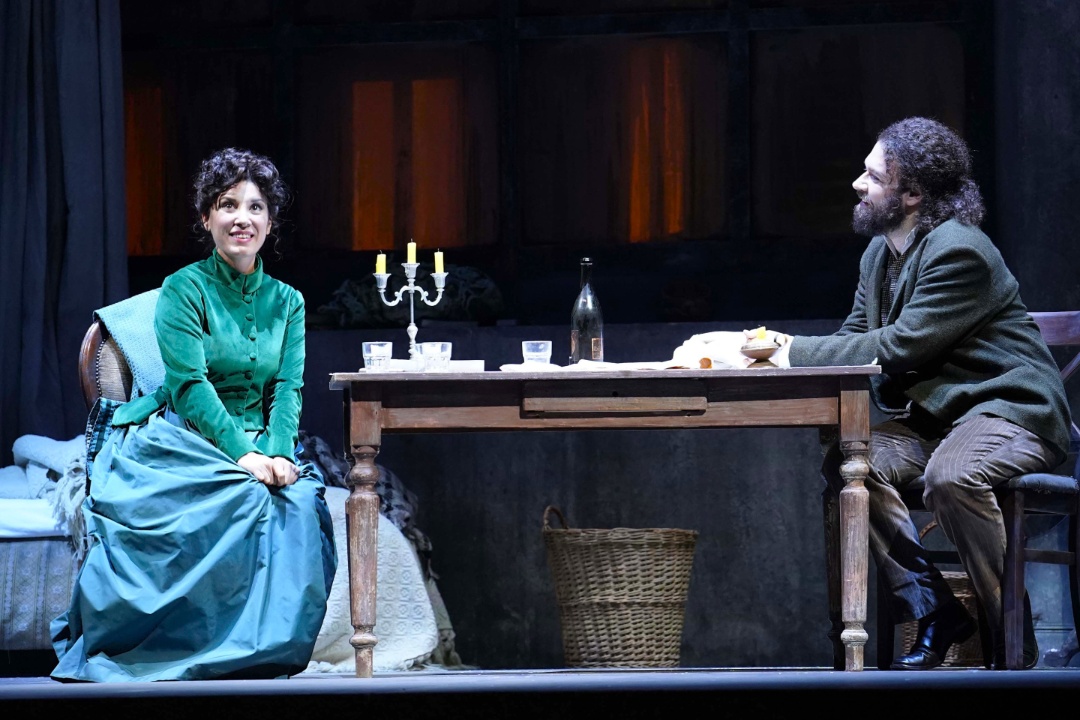
The vocal hierarchy of the production saw the female leads, Claudia Pavone and Mariam Battistelli, emerge as the undeniable highlights of the evening. Pavone’s portrayal of Mimì was a study in artistic progression. Beginning the evening with a grounded, technically secure "Sì, mi chiamano Mimì," she gradually expanded her interpretive reach as the opera progressed. By Act three, her delivery of "Donde lieta uscì" was marked by a poignant vulnerability, reaching a dramatic and vocal crescendo in the final act. Her ability to navigate the upper register with luminous harmonics established a sense of fragile, crystalline beauty that served as the emotional anchor for the entire production.
Conversely, Mariam Battistelli’s Musetta was characterized by a refreshing, naturalistic vigor. Battistelli utilized her vocal instrument—noted for its lightness and power—to craft a character that felt both sensual and deeply human. Her execution of "Quando m’en vo" was a technical triumph, but it was her subtle acting in the final act, amidst the tragic passing of Mimì, that solidified her contribution to the production’s emotional resonance.
Challenges and Resilience in the Male Ensemble
The male ensemble faced an unexpected hurdle with the late-notice casting of Davide Giusti as Rodolfo. Replacing a performer in a role as demanding as Rodolfo is a significant logistical and artistic challenge for any company. While Giusti demonstrated a powerful instrument and an effortless upper register, the lack of rehearsal time was occasionally reflected in a discontinuous vocal line and minor technical struggles with breath management. Despite these constraints, his performance of "Che gelida manina" was well-received, and his chemistry with the rest of the cast in the later acts provided the necessary dramatic impetus to carry the story to its tragic conclusion.
Fabrizio Brancaccio, portraying Marcello, provided a balanced counterpoint to Giusti. Though his voice possessed a lighter quality than some might expect for the role, his evenness of tone and stage presence were consistent throughout. The supporting cast, including Fernando Cisneros as a highly capable Schaunard and Diego Maffezzoni as an authoritative Colline, ensured that the ensemble pieces, such as the Act four quartet, were delivered with the necessary cohesion. Maffezzoni’s performance of "Vecchia zimarra, senti" stood out as a highlight of the male vocal contributions, showcasing depth and maturity.
Broader Implications for the Italian Opera Circuit
The success of this production—evidenced by the enthusiastic reception from the audience and the warm accolades bestowed upon Leo Nucci—suggests a significant shift in audience appetite. After a decade of experimentation in European opera houses, there is a palpable fatigue among patrons regarding productions that prioritize directorial novelty over the composer’s intent. The Piacenza experiment proves that traditionalism, when executed with high-level craft and intellectual honesty, remains a viable and commercially successful model.
Furthermore, the production highlights the importance of institutional memory. By bringing in a veteran like Nucci to mentor a younger cast and guide the theatrical development of the opera, the Teatro Municipale di Piacenza is effectively participating in the transmission of operatic tradition. This pedagogical aspect—the passing of the "art of the stage" from one generation to the next—is perhaps the most significant implication of this production.
Conclusion and Future Outlook
As the curtain fell on the Piacenza production, the final images were those of a cast united, with the audience’s applause extending beyond the singers to the director. The spontaneous celebration of Davide Giusti’s 40th birthday on stage served as a poignant reminder of the humanity behind the performance—a fitting coda to a production that prioritized emotional authenticity.
While the production may not have sought to reinvent the wheel, it achieved something arguably more difficult: it provided a definitive, high-quality staging of a core classic that respected the audience’s intelligence and the composer’s legacy. As regional theaters continue to navigate the financial and artistic pressures of the post-pandemic era, the model provided by the Teatro Municipale di Piacenza offers a clear path forward: one that balances fiscal responsibility with a dedication to the timeless, emotional power of the opera tradition. The success of this La Bohème revival serves as a benchmark for future productions, suggesting that the most innovative thing a modern director can do is to trust the material to speak for itself.