Nayara Elvina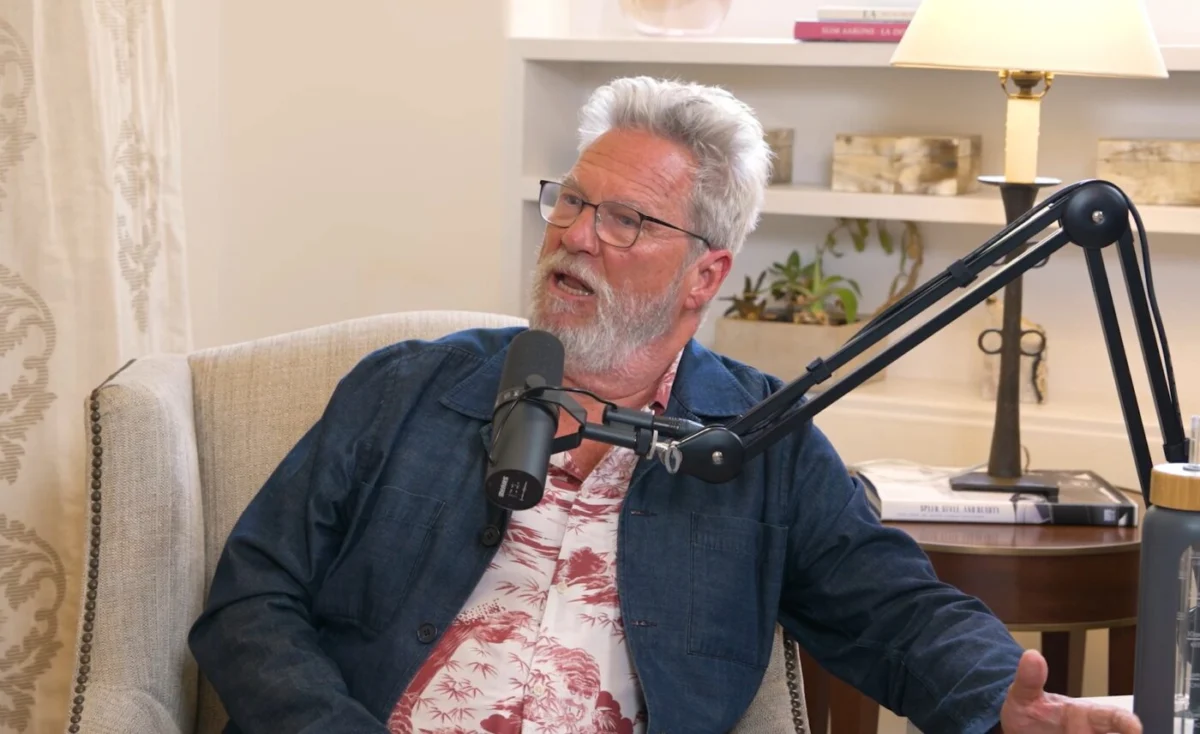
Academy Award-winning actor and musician Jeff Bridges has sparked a significant industry-wide debate following his recent appearance on the podcast This Past Weekend with host Theo Von. During the interview, Bridges openly praised the generative artificial intelligence software Suno, demonstrating how he uses the platform to create music and claiming that the technology is becoming a standard tool within the Nashville recording community. The endorsement has drawn sharp criticism from across the creative arts spectrum, as musicians, producers, and intellectual property advocates argue that such technology undermines the livelihood of human creators and the intrinsic value of artistic expression.
The conversation, which aired in June 2026, featured Bridges showcasing an AI-generated country track he created for Von. Bridges described the technology as an "amalgamation" of human wisdom and soul, despite acknowledging the "frightening" nature of its capabilities. His comments come at a time of heightened tension between the tech sector and the entertainment industry, as generative AI continues to infiltrate mainstream music production and distribution channels.
The Intersection of Technology and the Nashville Music Scene
One of the most contentious points of the interview was Bridges’ assertion regarding the adoption of AI in traditional music hubs. Bridges claimed that "all the guys in Nashville" are currently utilizing Suno as a cost-cutting measure, suggesting that the software allows creators to bypass the traditional $10,000 expense of a professional studio session.
"Instead of going into the studio and paying, you know, $10,000, they can do this for nothing, man," Bridges told Von. This statement has been viewed by industry professionals as a direct dismissal of the economic ecosystem that supports session musicians, sound engineers, and producers. In Nashville, a city whose economy is deeply intertwined with the "human-in-the-loop" recording process, the shift toward AI-generated stems and compositions represents a potential existential threat to thousands of technical and creative jobs.
While Bridges framed the shift as a pragmatic evolution, critics argue that the "cost-cutting" he described is achieved by cannibalizing the intellectual property of the very artists who built the foundation of the genre. Generative AI models like Suno are trained on massive datasets of existing music, often without the explicit consent of or compensation to the original copyright holders.
A Chronology of AI Infiltration in the Music Industry
The controversy surrounding Bridges is the latest chapter in a rapidly accelerating timeline of AI integration within the music business. To understand the gravity of the current backlash, it is necessary to examine the events leading up to this moment:
- April 2024: The Artist Rights Alliance (ARA) issued an open letter signed by over 200 prominent artists, including Billie Eilish, Stevie Wonder, Kacey Musgraves, and Chappell Roan. The letter called on tech companies to stop using AI to "infringe upon and devalue the rights of human artists," labeling the predatory use of AI as an "assault on human creativity."
- October 2025: The industry reached a tipping point when an AI-generated entity named "Breaking Rust" secured the #1 spot on a Billboard country chart. This marked the first time a fully AI-generated track outperformed human artists on a major commercial ranking. The event prompted widespread media coverage, including deep-dive reports by NPR, and forced a reevaluation of chart eligibility rules.
- May 2026: Spotify, the world’s largest music streaming platform, announced a new premium add-on feature. Developed in partnership with Universal Music Group (UMG), the feature allows users to "cover" or "remix" songs from participating UMG artists using generative AI tools. While marketed as a tool for fan engagement, it raised concerns about the dilution of artist branding and the potential for deepfake audio.
- June 2026: Jeff Bridges’ appearance on This Past Weekend serves as a high-profile endorsement of these technologies, bridging the gap between corporate implementation and individual artist adoption.
Economic Data and the Cost of Human Production
The "10,000 dollar" figure cited by Bridges highlights the stark economic disparity between human-led production and algorithmic generation. A standard professional recording session in a city like Nashville or Los Angeles involves several layers of financial investment:
- Studio Rental: High-end studios can cost between $1,000 and $2,500 per day.
- Session Musicians: Expert players often charge union rates (AFM) which can range from $150 to $500 per song, per musician.
- Engineering and Mixing: Professional engineers and mixers typically command fees ranging from $500 to several thousand dollars per track, depending on their experience and the complexity of the project.
- Mastering: Finalizing a track for distribution adds another $150 to $500 per song.
By contrast, Suno and similar platforms operate on subscription models that often cost less than $30 per month for unlimited or high-volume generation. This radical reduction in the cost of production is what Bridges referred to as "doing this for nothing." However, labor advocates point out that this "nothing" comes at the expense of the professional middle class of the music industry.
Public and Industry Reaction to the "Amalgamation of Soul"
Bridges’ philosophical defense of AI—calling it an "amalgamation of all our wisdom, our soul"—has been met with significant skepticism. Critics on social media and within the professional community were quick to point out the irony of an actor who won an Oscar for portraying a weathered, authentic country singer in Crazy Heart promoting a "soulless" digital alternative.
Faithless Town, a musical collective, responded to the interview by stating, "No, it’s not an amalgamation of our souls. It’s actually, quite literally, soulless. It’s sad to see the boomers buying into AI." Others, such as Kevin Gamble Music, characterized the technology as "outright theft of everyone’s work, stolen in broad daylight for the benefit of people who don’t value it at all."
The backlash also touched upon Bridges’ status as a veteran of the Screen Actors Guild (SAG-AFTRA). The acting community has fought its own battles against AI, specifically regarding the use of digital likenesses and voice cloning. Observers noted that Bridges’ enthusiasm for AI music might change if the technology were used to replace human actors with digital "amalgamations" of their previous performances—a practice that was a central sticking point in the 2023 Hollywood strikes.
Legal and Regulatory Implications
The promotion of Suno by a figure as influential as Bridges adds fuel to the ongoing legal battles surrounding generative AI. Currently, the Recording Industry Association of America (RIAA) and various artist groups are pursuing litigation and legislative remedies to curb the unauthorized use of copyrighted material for AI training.
In the United States, the "NO FAKES Act" and Tennessee’s "ELVIS Act" (Ensuring Likeness Voice and Image Security) represent early attempts to provide artists with legal recourse against AI-generated replicas. However, as Bridges noted in the podcast, the technology is moving faster than the law. The ease with which he was able to generate a high-quality country song suggests that "restricted" access is becoming increasingly difficult to enforce.
The Future of Creative Labor
The Bridges incident highlights a growing divide within the arts. On one side are those who view AI as an inevitable evolution and a tool for democratization, allowing anyone to "create" music regardless of technical skill or financial backing. On the other side are those who view it as a devaluing force that replaces the "blood, sweat, and tears" of human experience with a statistical average of existing data.
As Bridges himself noted, generating music with AI can be "challenging" in its own right—though he did not elaborate on how prompting a machine compares to the years of practice required to master an instrument or the emotional toll of songwriting. His comments have left many in the industry wondering if the "The Dude," a character synonymous with laid-back authenticity, has fundamentally misunderstood the stakes of the digital revolution.
The fallout from this interview is expected to continue as more artists are forced to take a stand on the use of generative tools. For the time being, the music industry remains in a state of flux, caught between the traditional craftsmanship of Nashville and the algorithmic efficiency of Silicon Valley. While Jeff Bridges may see AI as the future, for many of his peers, it represents a future where the "soul" he praised is the first thing to be automated out of existence.