Reynand Wu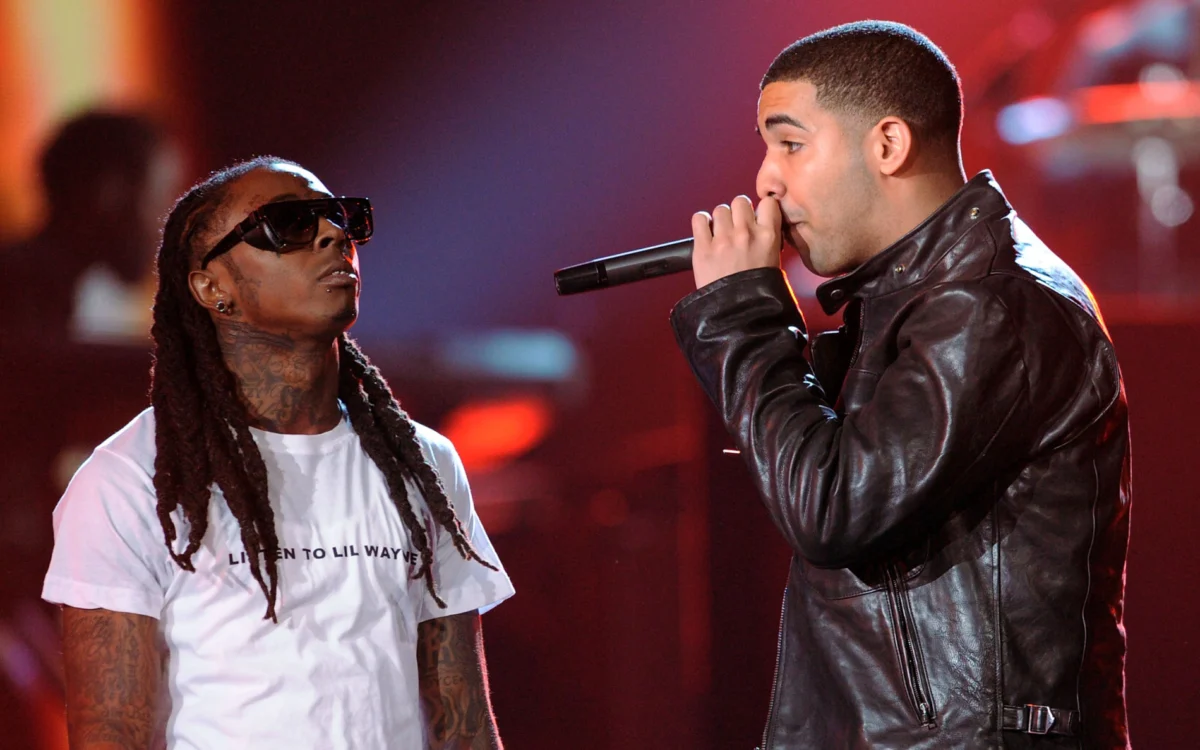
The history of hip-hop is replete with tales of humble beginnings and meteoric rises, and few narratives encapsulate this journey as distinctly as the early career of Drake within the orbit of Young Money Entertainment. A recent revelation from Adam Bhala Lough, the acclaimed director of Lil Wayne’s seminal 2009 documentary The Carter, sheds fascinating light on Drake’s initial, somewhat awkward, integration into the formidable Young Money crew, detailing a period when the future global superstar was reportedly not even permitted on Lil Wayne’s tour bus due to perceived disconnect and an intimidating environment. This anecdote, shared during an interview with music journalist Andre Gee for his Substack newsletter, offers a vivid glimpse into the raw, formative years of one of hip-hop’s most influential labels and its eventual kingpin.
Drake’s Early Days: A "Dorky" Outsider in Young Money’s Inner Circle
Adam Bhala Lough’s insights stem from his immersive experience documenting Lil Wayne at the zenith of his powers, specifically during the culturally seismic Tha Carter III era, which solidified Wayne’s status as an undeniable rap titan. Lough recounted spending significant time with the nascent Young Money collective, including Tez Bryant (Wayne’s then-manager), Mack Maine, and a then-unknown Nicki Minaj, during periods when Wayne himself was absent. It was within this dynamic, pre-stardom environment that Lough observed the curious position of a young Aubrey Graham, better known as Drake.
"The majority of the time when I wasn’t shooting with Wayne, but when I was on set, Wayne would disappear and I was just hanging out with Tez [Bryant, Wayne’s then-manager], Mack Maine and Nicki Minaj," Lough stated. He continued, "At one point, I spent some time with her before Wayne did The Jimmy Kimmel Show, when nobody knew who she was, and they wouldn’t even let Drake on the bus. He was, like, such a dork that they wouldn’t even let him on the bus." This striking image of Drake, now a multi-platinum, Grammy-winning artist and cultural phenomenon, being relegated to the periphery highlights the stark contrast between his early reception and his eventual global dominance.
Lough elaborated on the intimidating atmosphere that likely contributed to Drake’s exclusion and discomfort. "When he started selling millions and millions of records, it was a different story entirely. But he was definitely not allowed on the bus and wouldn’t hang out with any of [them] because there were real Blood gang members around all the time. And I’m sure he was intimidated by them, too. I was, even though they were super cool to me. These are serious, Blood gang members with guns on them. Like, some shit could go down." This candid description paints a picture of the raw, street-oriented reality that underpinned Young Money’s early operations, a world far removed from Drake’s background as a Canadian actor on Degrassi: The Next Generation.
The Ascent of a Superstar: From Outsider to Icon
Drake’s journey from a self-described "dork" to a foundational pillar of Young Money, and eventually, a global music icon, is a testament to his undeniable talent, strategic acumen, and the transformative power of Lil Wayne’s mentorship. Prior to his official signing to Young Money in 2009, Drake had already garnered significant buzz with mixtapes like Room for Improvement (2006) and Comeback Season (2007), but it was So Far Gone (2009), featuring hits like "Best I Ever Had" and "Successful," that catapulted him into mainstream consciousness. This mixtape, famously championed by Lil Wayne, demonstrated Drake’s unique blend of melodic R&B and introspective rap, a style that was distinct from the harder-edged sounds often associated with Young Money’s core.
The Tha Carter III era, during which Lough filmed, was a period of immense creative and commercial success for Lil Wayne and, by extension, Young Money. Released in June 2008, Tha Carter III sold over 1 million copies in its first week in the United States, an astonishing feat that underscored Wayne’s unparalleled cultural impact at the time. The album went on to become certified 8x platinum by the RIAA, producing chart-topping singles like "Lollipop" and "A Milli." This commercial juggernaut provided the perfect launchpad for artists like Drake and Nicki Minaj, who, despite their initial peripheral status, possessed a unique magnetism that Wayne recognized.
Drake’s subsequent debut album, Thank Me Later (2010), debuted at number one on the Billboard 200, selling 447,000 copies in its first week. This was followed by a string of critically and commercially successful albums, including Take Care (2011), Nothing Was the Same (2013), Views (2016), and Scorpion (2018), each breaking sales records and dominating global charts. His ability to seamlessly blend rapping and singing, coupled with his emotive lyricism, resonated with a vast audience, allowing him to transcend traditional genre boundaries. The once-excluded "dork" had not only earned his spot on the bus but had effectively become the driver of his own multi-million dollar empire, influencing an entire generation of artists.
The Carter Documentary Legacy: Unveiling Lil Wayne’s Creative Process
The Carter documentary, released in 2009, offered an unprecedented and intimate look into the life and creative process of Lil Wayne during the peak of his Tha Carter III recording sessions. Directed by Adam Bhala Lough, the film captured Wayne’s relentless work ethic, his profound dedication to music, and the eccentricities that defined his artistic persona. Despite facing legal challenges and initial resistance from Wayne’s management regarding its candid portrayal, the documentary was lauded by critics for its raw honesty and its ability to humanize one of music’s most enigmatic figures. It quickly became a significant piece of hip-hop filmography, providing a rare window into the making of a masterpiece.
Lough, whose directorial credits also include music videos for MF DOOM and a documentary on dub pioneer Lee "Scratch" Perry, brought a distinctive eye to The Carter. His ability to capture authentic moments, even those that were uncomfortable or unflattering, was central to the film’s impact. The documentary’s success solidified its place as a crucial document for understanding the cultural phenomenon that was Lil Wayne in the late 2000s, offering fans and critics alike a deeper appreciation for the artistry behind the commercial success.
A Leaked Sequel and the Unforeseen Path to Release
More than a decade after the original film’s release, a rough cut of a long-awaited sequel to The Carter recently surfaced online, igniting a wave of excitement and speculation among Lil Wayne fans. This leaked footage, recorded years earlier during the Tha Carter and Tha Carter II eras, provides an even earlier historical context to Wayne’s evolution. The two-hour video, shared by Lough himself on YouTube after hackers initially leaked the material, showcases a young Lil Wayne immersed in the studio, playing unreleased music, and collaborating with artists who would later achieve their own fame, such as 2 Chainz (then known as Tity Boi) and Curren$y. Crucially, the footage also delves into Wayne’s burgeoning issues with Cash Money Records, a foreshadowing of the protracted legal battles that would later plague his career.
The leak has put Adam Bhala Lough in a unique position. While unauthorized leaks are typically detrimental, Lough views this as an opportunity to finally bring the comprehensive story to light. He has expressed a clear intention to produce a finished version of the sequel and has engaged in positive discussions with Wayne’s manager, Fabian Marasciullo, regarding its official release.
Lough outlined two primary options for the sequel’s distribution: "There’s basically two options: There’s a big [streaming network] that would pick it up and put it out," he said, describing his ideal scenario. "The other option that I talked to [Fabian] about was some type of self-distribution where we just put it out ourselves to the fans. We’ll see where it ends up. It’ll go how it needs to go." This flexibility highlights the evolving landscape of content distribution, where filmmakers can now consider direct-to-fan models alongside traditional streaming deals.
The sheer volume of archival footage suggests that the sequel could potentially be a multi-part project. Lough hinted at this, stating, "There’s so much footage, I think maybe there could be two films. So in that regard, it would be like 40% done. But if it’s just this one part, then I would say closer to 70% done. But then it also needs to be mixed and color corrected and all that stuff." The technical work required to polish a rough cut into a broadcast-ready film is substantial, involving sound mixing, color grading, editing, and potentially securing clearances for music and imagery.
The Unlikely Backers: Weinstein and Bannon’s Brief Foray into Hip-Hop
Adding another layer of intrigue to The Carter‘s origin story is the revelation about its initial financiers. Lough disclosed that the original backing for the documentary was slated to come from a company owned by none other than disgraced Hollywood mogul Harvey Weinstein and former Trump strategist Steve Bannon. This unexpected pairing underscores the often-unpredictable intersections of art, commerce, and controversial figures within the entertainment industry.
"Quincy Jones III contacted me. He had seen one of my previous films, and he was like, ‘I really want to work with you. I have this company. We have a deal with an offshoot of Miramax.’ You’re not going to believe this, but it was a company owned by Harvey Weinstein and Steve Bannon," Lough explained. He elaborated on Bannon’s surprising background: "A lot of people don’t remember, but Steve Bannon actually came from Hollywood; he was a movie producer. So the original financiers of The Carter were going to be Harvey Weinstein and Steve Bannon, which would have been amazing if it had actually happened, but they shut down their company during production of the film."
Harvey Weinstein, co-founder of Miramax Films and The Weinstein Company, was once one of Hollywood’s most powerful producers, known for shepherding acclaimed films to Oscar success before his career imploded amidst numerous allegations of sexual assault and harassment. Steve Bannon, while more recently known for his political strategizing and role in the Trump administration, indeed had a significant career in film production and finance, including executive producing several films and serving as chairman of Breitbart News. The short-lived partnership between these two figures in funding a documentary about a major hip-hop artist like Lil Wayne highlights a peculiar chapter in the film’s production history, demonstrating the diverse and sometimes incongruous sources of capital that can fuel creative projects. Their company’s collapse during production necessitated a scramble for new funding, ultimately leading to the film’s eventual release through other channels.
Broader Implications: Narratives of Resilience and Industry Evolution
The intertwining narratives within this story—Drake’s journey from a perceived outsider to a global icon, Lil Wayne’s enduring artistic legacy captured in a seminal documentary, and the unexpected financial backing of controversial figures—collectively paint a rich tapestry of the modern music industry.
Drake’s initial struggle for acceptance within the Young Money hierarchy serves as a powerful testament to resilience and the subjective nature of early impressions. It underscores that even the most talented individuals may face skepticism or find themselves initially out of sync with established cliques. His eventual triumph validates the notion that authenticity and consistent quality can ultimately overcome initial barriers, shaping not just his career but also inspiring countless artists who might feel like outsiders.
For Lil Wayne, the renewed interest in The Carter and the potential official release of its sequel reinforce his unparalleled impact on hip-hop. The footage from earlier eras, particularly his discussions about Cash Money, offers crucial context to his later legal battles and artistic frustrations, providing a more complete picture of an artist grappling with both creative ambition and industry constraints. It also highlights the enduring value of documentary filmmaking as a historical record, preserving critical moments in cultural history that might otherwise be lost.
The circumstances surrounding the documentary’s funding, involving figures like Weinstein and Bannon, remind us of the complex and often morally ambiguous ecosystem of financing in the entertainment world. It prompts reflection on the sources of capital that enable artistic endeavors and the ethical considerations that artists and creators must navigate.
Finally, the incident of the leaked footage and Lough’s subsequent decision to embrace it for a potential official release speaks to the evolving dynamics of content distribution in the digital age. What was once a catastrophic event for filmmakers can now, paradoxically, become a catalyst for renewed interest and a pathway to direct engagement with a dedicated fanbase, offering new models for independent creators to bring their work to fruition. As the hip-hop landscape continues to evolve, these historical anecdotes and documentary insights offer invaluable context to the ongoing story of its legends and their lasting impact.