Reynand Wu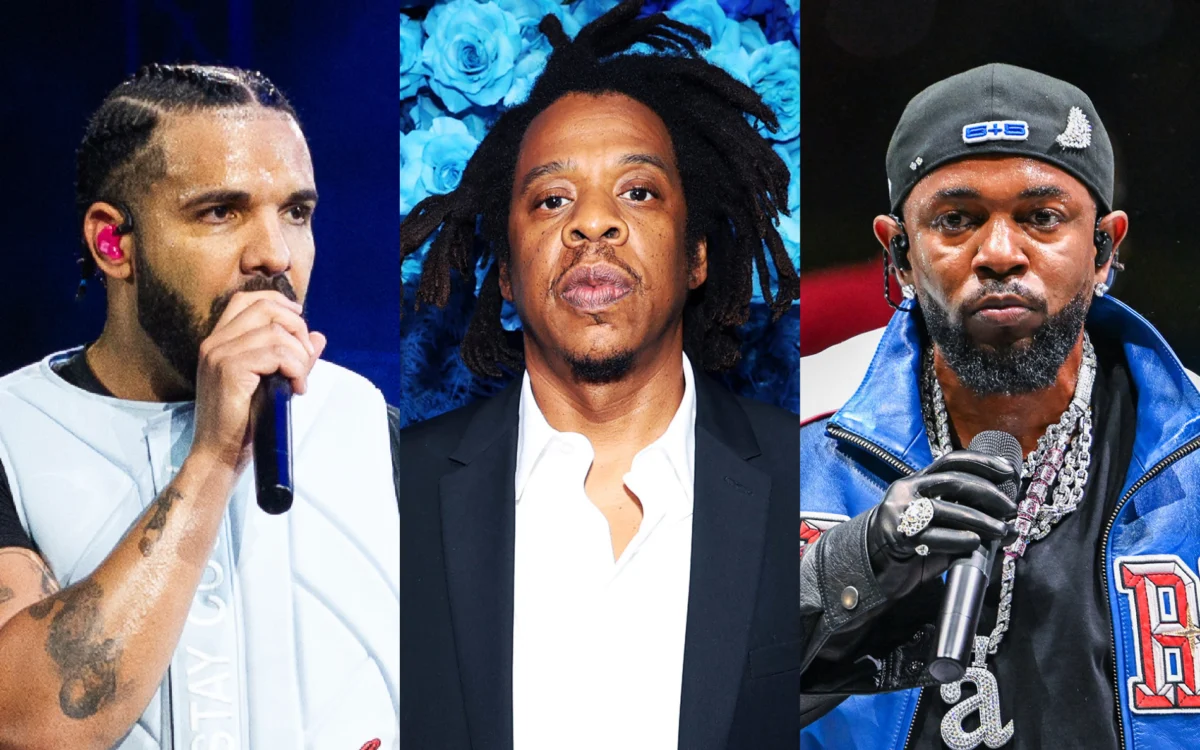
Shawn "JAY-Z" Carter, one of hip-hop’s most influential figures, has finally weighed in on the seismic 2024 rap battle between Drake and Kendrick Lamar, offering a perspective that challenges traditional notions of lyrical warfare. In a rare and expansive interview with GQ magazine, conducted ahead of his highly anticipated Reasonable Doubt and The Blueprint anniversary shows at New York’s Yankee Stadium in July, the Roc Nation mogul expressed his belief that the recent feud "went too far," signaling a potential shift in the culture’s competitive ethos. This sentiment, coming from an artist renowned for his own fierce lyrical clashes, notably with Nas in the early 2000s, underscores a broader concern for the negative repercussions and divisiveness that such rivalries can now generate within the digital age.
The Evolving Landscape of Rap Beef: Jay-Z’s Perspective
JAY-Z’s critique of the Drake-Kendrick Lamar feud stems from a deep-seated observation about the contemporary climate of hip-hop and society at large. While acknowledging the "excitement" and the "music you get" from such sparring, he lamented the "negative stuff that comes with it," expressing a wish that the battle "didn’t happen." This nuanced stance is particularly striking given his own storied history in the rap arena. The early 2000s saw JAY-Z engage in one of hip-hop’s most iconic and impactful feuds with Queensbridge legend Nas, a rivalry that produced legendary diss tracks like "Takeover" and "Ether." Yet, even in that intense period, the unwritten rules of engagement often steered clear of deeply personal attacks on family members, a boundary that JAY-Z feels was transgressed in the recent Drake-Kendrick exchanges.
The 2024 battle, ignited initially by Kendrick Lamar’s verse on Future and Metro Boomin’s "Like That," quickly escalated into a series of highly personal and explosive tracks from both Drake and Lamar. Songs like "Euphoria," "6:16 in LA," "Meet the Grahams," and "Not Like Us" saw both artists delve into accusations ranging from infidelity and abuse to secret children and alleged criminal activity. The virality of these tracks, fueled by social media, amplified every accusation and counter-accusation, creating an unprecedented level of public scrutiny and division among fanbases. JAY-Z observed, "Now, people that like Kendrick hate Drake, no matter what he makes or says. And it goes far, too. It’s like attacks on his character [and family]. I don’t know if I love that. I don’t know if it’s helpful to our growth." This sentiment highlights a crucial distinction: while past battles often focused on lyrical prowess and street credibility, the current era, with its pervasive social media and intense fan loyalty, risks permanent damage to artists’ public image and personal lives.
The Roc Nation mogul went further, suggesting that the Drake-Kendrick beef inadvertently set hip-hop "a couple steps back" and questioned whether the "age-old tradition of battling even needs to be a part of the culture anymore." This provocative question from a figure who has both participated in and benefited from such traditions underscores the gravity of his concern. He acknowledged the irony of his position, stating, "I hate that I have this point of view because I know what it sounds like, I know what it feels like. I hate it! It’s just how I feel." His candor suggests a genuine reflection on the evolving dynamics of the genre and the responsibility that comes with its influence.
A Call for Collaboration Over Conflict
In seeking a constructive path forward, the 56-year-old artist laid out a vision for keeping hip-hop’s competitive spirit alive without resorting to damaging personal attacks. He proposed, "I think we can achieve the same thing, as far as sparring with music, with collaborations more so than breaking the whole thing apart." This idea champions artistic rivalry through joint efforts, where artists push each other to excel through shared creative endeavors rather than destructive one-upmanship. Such an approach could foster innovation, broaden artistic horizons, and cultivate a more unified and supportive community.
The concept of "sparring with music" through collaboration is not new to JAY-Z. His own career is replete with examples of powerful collaborative projects, most notably Watch the Throne with Kanye West, which showcased two titans of the genre pushing each other creatively to deliver a critically acclaimed and commercially successful album. This approach, he implies, allows for the same competitive energy and display of skill but channels it into creation rather than destruction, ultimately benefiting the art form and its audience.
Navigating Super Bowl Speculation: Kendrick’s Halftime Show
Beyond the immediate fallout of the rap beef, JAY-Z also addressed a tangential but significant controversy: the backlash surrounding Kendrick Lamar’s 2025 Super Bowl halftime show. Rumors and accusations circulated that JAY-Z and Roc Nation, who oversee the annual spectacle, had "picked sides" in the Drake-Kendrick feud by awarding the coveted performance slot to the Compton superstar.
JAY-Z vehemently dismissed these claims, asserting that the decision was purely based on merit and artistic momentum. "I chose the guy that was having a monster year. I think it was the right choice. What do I care about them two guys battling? What’s that got to do with me? Have at it," he argued. This statement positions Roc Nation’s decision as a professional endorsement of Kendrick Lamar’s undeniable artistic and commercial success leading up to the Super Bowl announcement, rather than a partisan move in a rap beef.
Indeed, Kendrick Lamar had a high-profile year, marked not only by the intense engagement of the Drake beef but also by the continued critical acclaim and cultural resonance of his previous work, Mr. Morale & The Big Steppers, and the subsequent tours and appearances that solidified his status. JAY-Z further laughed off suggestions of a "conspiracy" to "undermine" Drake, stating with characteristic confidence, "It’s like, what the fk? I’m f**ing JAY-Z! [laughs.] All due respect to him. I’m fing Hov. Respectfully. It doesn’t make any sense." This response firmly establishes his independence from the personal drama of other artists, emphasizing his focus on the broader impact and integrity of the events Roc Nation curates.
He also offered high praise for Kendrick Lamar’s artistic choices during the Super Bowl performance itself, particularly his decision to incorporate newer material rather than solely relying on established hits. "He could have made it a little easier on himself. The artistic choice to play the new album was brave in front of that big of an audience. Because even if 10 million people know some of these songs, there’s 120 million people that’re like, ‘What is he doing?’ As an artist, to stand up there and do it and complete your vision — I had to tip my hat. I had high respect for him already, but, like, even more my respect was like, ‘He’s really about what he says he’s about.’" This commendation highlights JAY-Z’s appreciation for artistic integrity and courage, further dispelling notions of favoritism based on personal feuds.
The Mogul’s Mindset: Wealth, Art, and "Tricknology"
JAY-Z also took the opportunity to address the often-debated topic of his billionaire status and the perception of success within the hip-hop community. He candidly discussed the "backlash to him being a billionaire," a sentiment that sometimes frames financial prosperity as a "sell-out" move for artists, particularly those from marginalized backgrounds.
He meticulously dismantled this "struggling artist" allure, labeling it "tricknology" – a term often used in conscious hip-hop to describe deceptive tactics. "The only thing I heard coming up was the American dream. ‘You could make it, if you pull yourself up by the bootstraps.’ I heard that my entire life — until we started being successful. Then it was like, ‘You’re selling out because you’re making money.’ People had this allure for the ‘struggling artist’ — that’s a mind game, what we would call, back in the day, ‘tricknology.’ I’m not going for that."
His philosophy is clear: "I make art first and then I make sure that I’m compensated for my art." He emphasized that his wealth was not accumulated through exploitation or loopholes, but through a pragmatic understanding of the world as it is, not as he wishes it to be. "I didn’t get here by taking advantage of people or taking advantage of the loopholes in the system, or some wrinkle in a capitalist structure. That structure exists; I just see the world for what it is, not for what I want it to be. I’m a realist. It’s not idealistic. People speak about the world how they want to see it. You’re never going to win like that."
This perspective is central to JAY-Z’s entire entrepreneurial journey, from co-founding Roc-A-Fella Records in 1995 to building Roc Nation into a diversified entertainment empire encompassing music, sports management, and philanthropy. He views his success not merely as personal gain but as a means to empower others. "I have to deal with the reality of the world, and I’m going to navigate this world, not only for me, but for a bunch of people that’s been disenfranchised by a system that doesn’t play fair for us. In order for us to progress forward, we have to deal with the world the way it is." He acknowledged the systemic challenges, noting that "nowhere you’re going to go that Black people control distribution and control media. At some point, you’re going to have to partner with somebody," justifying his strategic collaborations with established entities while maintaining ownership and influence.
Creative Introspection: New Music and Timelessness
Amidst his reflections on the industry and culture, JAY-Z also offered rare insight into his current creative process and the challenges of making new music. He admitted to having "a lot of scratch ideas and they’re all bad," expressing a period of self-doubt. "I got to be honest… I don’t know what I need to create currently that’s going to fulfil me and make me happy, because that’s most important. I know I just got to be honest about what I feel and where I am. Maybe I’m overthinking it. Maybe I’m stopping myself from just creating."
His pursuit of authenticity remains paramount. "Whatever it is, it just needs to be a true representation of how I feel. Trying to create something that people like is where I think a lot of artists get jammed up. And people can feel that because it’s not authentic. I just got to make something timeless that I really love and that’s really honest and true to who I am." This statement reflects a mature artist’s dedication to his craft, prioritizing genuine expression over commercial appeal or external validation, a journey evident in his discography’s evolution.
Reflecting on Milestones: Reasonable Doubt at 30 Years
With his Reasonable Doubt and The Blueprint anniversary shows approaching, JAY-Z reflected on the initial reception of his seminal debut album. Reasonable Doubt, released in 1996, initially sold a modest 43,000 records, a figure that belied its eventual legendary status. "When we first dropped Reasonable Doubt, we sold 43,000 records. The energy was like, ‘You’re new. You haven’t proven yourself.’ But in our mind, the fact that we released an album was proof enough of concept. We did it. Remember, we’re not in control of distribution, marketing, anything."
He emphasized the grassroots impact: "We’re going like a street-level, street-team approach to this. And so when we put the album out — that was the win. We had some success, and remember: on the streets we were platinum. Anywhere you was going to go, you was going to hear Reasonable Doubt." This anecdote vividly illustrates the disconnect between official sales figures and cultural penetration in the pre-digital era, highlighting the album’s organic rise to classic status. Its enduring influence, celebrating its 30th anniversary, continues to resonate with new generations of listeners and artists alike.
The Weight of Vulnerability: 4:44 and Personal Trauma
JAY-Z delved into the profound personal significance of his 2017 album, 4:44, describing it as an intensely vulnerable project that he finds difficult to revisit. "I can’t really even listen to 4:44. It’s the album that I was always afraid to make… Just pure and vulnerable, the real interior thoughts." The album, which addressed marital infidelity, personal growth, and generational trauma, marked a significant departure from the more boastful persona of his earlier works.
He connected this vulnerability to deeply buried childhood experiences. "It was a lot of trauma [growing up], a lot of loss, a lot of seeing things that nine-year-olds shouldn’t be seeing. We tuck it away and we bury it, and then it shows up in different ways… At some point you got to figure out how you’re going to navigate the world." He contrasted this with his earlier artistic approach: "[My earlier albums were] just all bravado. Part of it was closed off and it works… People like the hothead. That excitement and that danger has an allure to it. That’s Jigga. It was very useful, but it’s also not sustainable. You don’t want to look up one day and just be in some insane asylum somewhere, alone, no family. It’s another side of that that had to happen." This self-analysis reveals an artist who has consciously evolved from a persona of impenetrable strength to one embracing authentic, if painful, self-reflection.
Mentorship and Independence: The J. Cole Narrative
The interview also touched upon JAY-Z’s relationship with J. Cole and Roc Nation’s role in his early career, challenging the perception that the label didn’t fully support the North Carolina rapper. "I don’t have any negative feelings for him. I’m actually super proud of him and what he’s done," JAY-Z stated. He clarified Roc Nation’s approach to artist development, emphasizing empowerment and creative freedom over dictatorial control.
"The narrative is that we [Roc Nation] didn’t love Cole. No, we believed in him enough to let him find his journey. It took him a minute, but he found his way. I was giving him a chance to take his talent and show it to the most people possible, but his way." He contrasted this with his mentorship of artists like Memphis Bleek, who, as his "little brother," was more amenable to direct instruction. JAY-Z recounted an instance where J. Cole declined to work with hitmakers Stargate, known for their work with Rihanna and Wiz Khalifa. "Stargate made humongous records with Rihanna; Wiz Khalifa ‘Black and Yellow’. Biggest songs in the world. You don’t want to go sit with them? Fine." This anecdote underscores Roc Nation’s commitment to allowing artists like J. Cole to forge their own path, even if it meant a longer road to mainstream success, ultimately fostering a more authentic and enduring career.
Personal Trials: The Withdrawn Lawsuit and Past Rules
JAY-Z also spoke with raw emotion about a sexual assault lawsuit filed against him, which was later withdrawn. He described the experience as "hard. Really hard. I was heartbroken." The lawsuit, which alleged an incident from the early 1990s, stirred significant public discourse. "That s**t took a lot out of me. I was angry. I haven’t been that angry in a long time, uncontrollable anger. You don’t put that on someone — that’s a thing that you better be super sure."
He referenced a code of conduct he learned from the streets: "Even when we were doing the worst things, we had those kind of rules. There was a line: no women, no kids. You hear those sayings, but those are the things that I took from the street. We lived and died by that. So it’s strict for me, like it meant a lot to me." His conviction in his innocence was unwavering. "I knew that we were going to walk through that because, first of all, it’s not true. And the truth, at the end of the day, still reigns supreme."
Unexpected Wisdom: Jon Bon Jovi and Clipse
The interview revealed an unlikely source of wisdom for the hip-hop mogul: rock icon Jon Bon Jovi. Upon taking the president job at Def Jam in 2004, JAY-Z received crucial advice. "This is the strangest thing, but you get advice from places that you just wouldn’t expect it. When I took the president job at Def Jam, Jon Bon Jovi told me, ‘You’re an artist. Don’t forget you’re an artist.’" This counsel likely served as a reminder to balance the demands of corporate leadership with his core creative identity, a lesson he appears to have carried throughout his multifaceted career.
He also briefly addressed rumors of almost appearing on Clipse’s Let God Sort Em Out, indicating he was "close" but reconsidered, suggesting a need to address personal matters first. "I think the first thing that I say [about the sexual assault lawsuit], it has to be said from me. [Pauses and reconsiders.] I don’t want to be so rigid with it, though. I’m going to keep that open. I’m going to take that back. I don’t want to be so rigid. But at that moment, I was like, ‘Yeah, I want to do something.’ But in order for me to move forward, I got to get this s**t out. I got to get it out." This offers a glimpse into his meticulous approach to public statements and artistic contributions, ensuring authenticity and personal readiness.
Conclusion: A Sage of the Culture
JAY-Z’s GQ interview paints a portrait of an artist and entrepreneur who is deeply reflective, critically engaged, and continuously evolving. His nuanced take on the Drake-Kendrick Lamar beef signals a potential turning point in hip-hop’s battle culture, urging a shift from destructive rivalry to constructive collaboration. His unapologetic embrace of his billionaire status, coupled with his commitment to empowering marginalized communities, redefines success within the genre. From his candid struggles with new music to his emotional recounting of personal trials and his insights into iconic albums, JAY-Z offers a masterclass in introspection and leadership. As he prepares to celebrate seminal works like Reasonable Doubt, his comments underscore his enduring role not just as a music icon, but as a sage voice guiding hip-hop’s future trajectory.