Aveline Kirana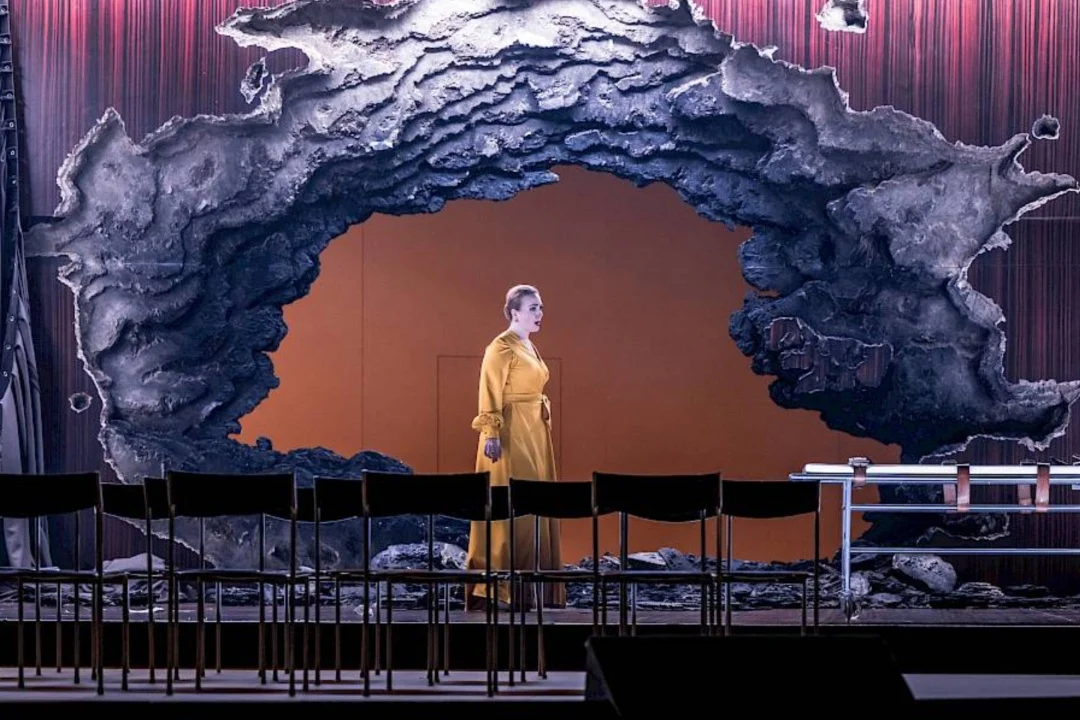
Wolfgang Amadeus Mozart’s final opera, "La clemenza di Tito," composed in the pivotal year of 1791, was originally conceived as a grand celebration of Leopold II’s ascension as King of Bohemia and Holy Roman Emperor. The opera’s libretto, a masterful adaptation of Pietro Metastasio’s work, extols the virtues of the Roman Emperor Tito, portraying him as a magnanimous and forgiving ruler. This portrayal resonated deeply with the enlightened monarch Leopold II, whose reign was characterized by reform, compromise, and the embrace of Enlightenment principles, including the abolition of torture, confiscation of property, and the archaic crime of lèse-majesté. It is widely believed that these progressive ideals would have appealed to Mozart, himself a Freemason, who thus lent his unparalleled genius to celebrating Leopold’s reign with one of his most profound masterpieces. However, a recent production at the Zurich Opera House, helmed by director Damiano Michieletto, presents a starkly contrasting interpretation, one that seems to question the very foundations of Mozart’s celebratory intent.
A Director’s Dissonant Vision: Clemency as Vulnerability
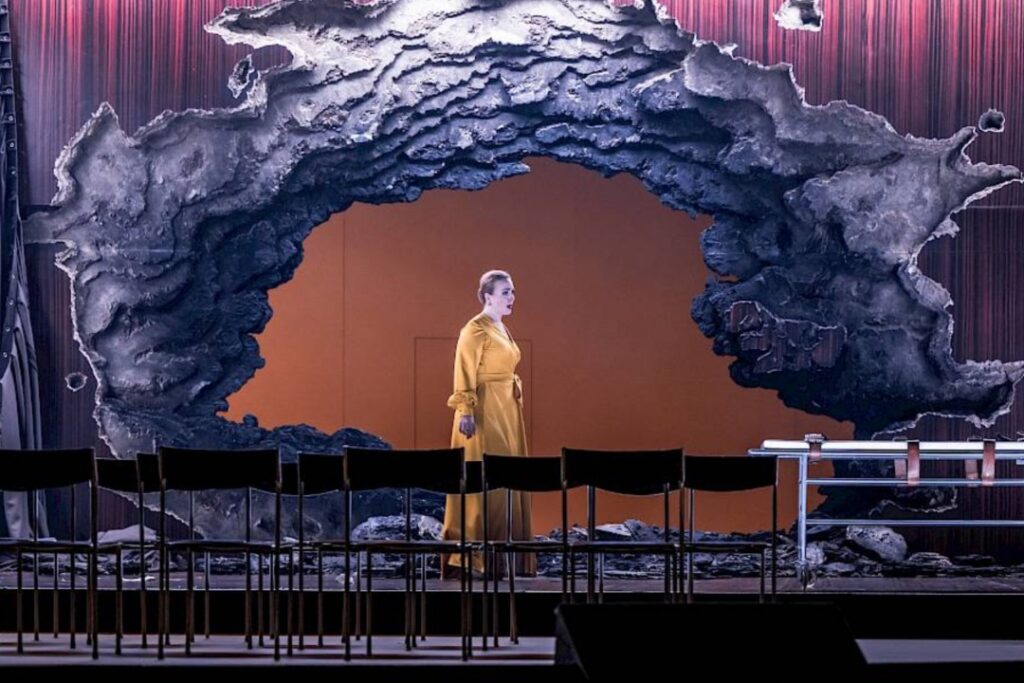
Director Damiano Michieletto’s vision for "La clemenza di Tito" at the Zurich Opera House diverges dramatically from the opera’s celebratory origins, appearing to reject Mozart’s admiration for Tito the Magnanimous. Michieletto’s production frames Tito not as a paragon of virtue, but as a ruler surrounded by individuals who openly despise him, treating his inherent kindness and forgiving nature with disdain, viewing him as naive and foolish. The opera’s setting is transplanted to the mid-20th century, a choice underscored by Klaus Bruns’ costume designs, which feature uniformly suited and tied men, evoking a sense of bureaucratic or political austerity.
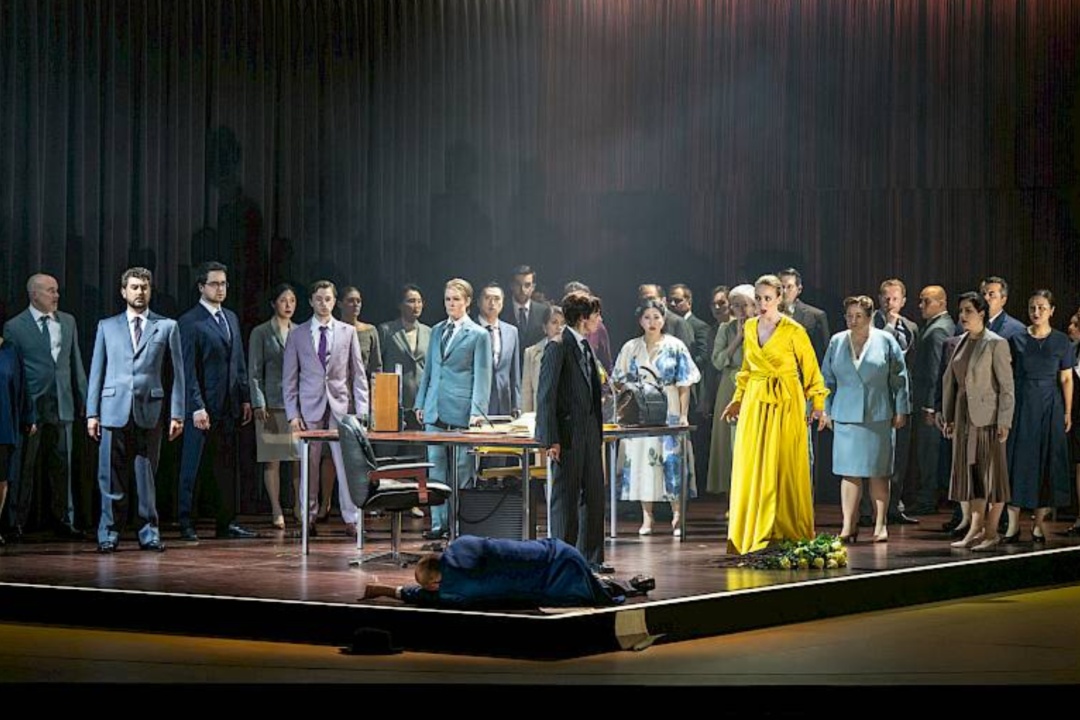
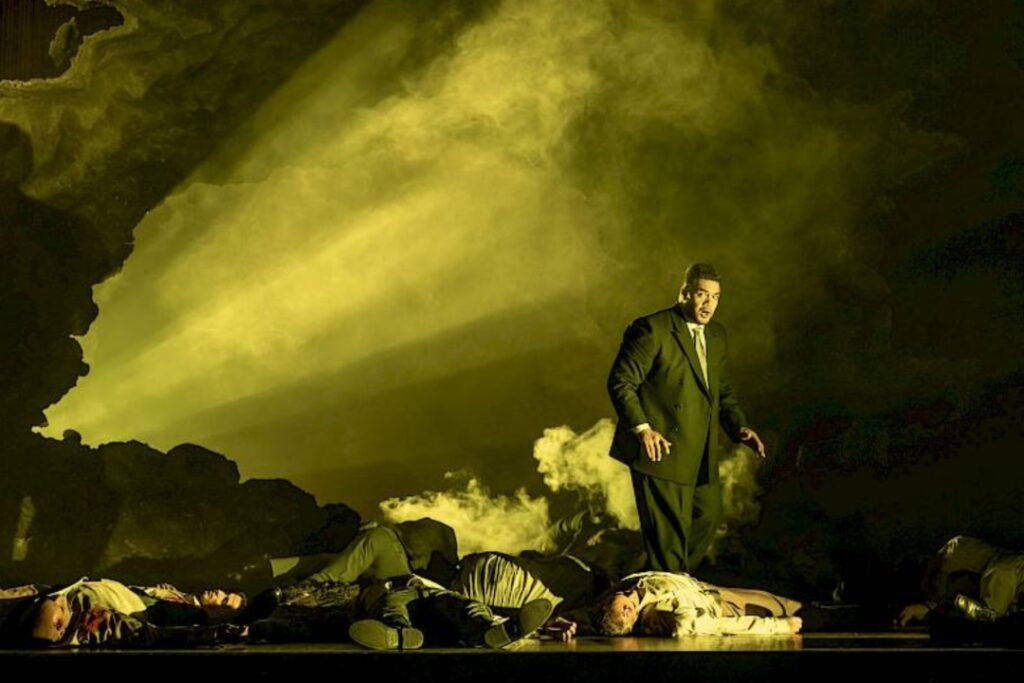
Paolo Fantin’s sets contribute to this atmosphere of suspicion and surveillance. They depict a structure strongly reminiscent of the iconic bar in Edward Hopper’s "Nighthawks," ingeniously placed on a revolving platform that seamlessly transitions between public and private spaces. The opera’s overture sets a tone of intrigue, with Publio, the Praetorian Prefect, reimagined as a clandestine operative. His actions, such as planting listening devices beneath furniture, establish a pervasive atmosphere of espionage and distrust from the outset. In this rendition, Tito’s ascent to power is portrayed as the result of Publio’s machinations, rather than popular acclaim. This subversion of the narrative is further emphasized in an early aria where four men mock Tito by theatrically wrapping surveillance tape around his head, their laughter underscoring his perceived vulnerability. Throughout the performance, Tito’s gestures of kindness and compassion – an embrace of a friend, a comforting pat on a citizen’s shoulder – are met with recoiling annoyance and palpable irritation from those around him, highlighting a profound disconnect between the ruler and his populace. The dramatic climax of this interpretation sees Publio, after Tito mercifully forgives the conspirators following Sesto’s betrayal and the destruction of the Campidoglio, taking matters into his own hands and poisoning the emperor. Tito’s death in the finale thus becomes a consequence not of his clemency, but of its perceived weakness. Michieletto’s directorial choice strongly suggests a belief that effective leadership cannot be guided by compassion and justice, raising a fundamental question about his motivations for staging an opera that, at its core, champions these very qualities.
Musical Interpretation: Minkowski’s Expressive, Yet Uneven, Mozart
The musical direction of the production fell to conductor Marc Minkowski, leading La Scintilla, the Zurich Opera House’s resident period instrument ensemble. Minkowski coaxed a rich and characterful sound from the orchestra, marked by considerable nuance. However, his interpretation frequently veered towards extremes, with rapid passages feeling excessively hurried and slower movements becoming almost languid. This approach suggested a conductor who, perhaps, did not fully trust Mozart’s score to convey its intended emotions independently, leading to an exaggeration of every affective nuance. This tendency was particularly noticeable in Sesto’s pivotal aria, "Parto, parto," which was taken at an unusually deliberate tempo, testing the limits of its dramatic impetus.
Further questionable musical decisions involved the chorus. In many instances, choral passages were rendered pianissimo, at times to the point of obscuring the text and diminishing their impact. This stylistic choice notably softened the dramatic power of the Act I finale, where the chorus’s lament, "O nero tradimento," lacked the forceful condemnation it typically commands. It is plausible that this was a directorial directive, a further attempt to diminish any sense of popular support for Tito and amplify the opera’s underlying theme of isolation and distrust.
Vocal Performances: A Stellar Cast Navigates Theatrical Challenges
Despite the directorial and musical divergences, the production was significantly elevated by its exceptional cast, whose performances provided moments of genuine brilliance.
Margaux Poguet as Vitellia: A Commanding and Complex Portrayal
Margaux Poguet delivered a truly commanding performance as Vitellia, the Roman noblewoman whose rejected affections ignite the conspiracy against Tito and lead her to seduce Sesto into complicity. Poguet’s soprano is full-bodied and smooth, capable of delivering dramatic high notes and dazzling coloratura with equal skill. Her interpretation was deeply committed; in the first act, she embodied the femme fatale with conviction, captivating the audience as effectively as she ensnared Sesto. The second act presented a different facet of her character. As the assassination attempt falters and Sesto faces condemnation, Vitellia undergoes a profound emotional breakdown. Poguet conveyed this descent with remarkable strength, finding a desperate dignity as she confesses her role in the conspiracy in a bid to save Sesto. Her rendition of "Non più di fiori" was a masterclass in nuanced performance. Too often sung with a showy bravura, Poguet transformed the aria into a poignant confession and an acceptance of defeat, utilizing her dramatic chest voice, broken breathing, and a profound emotional depth. Her performance marks her as a young artist whose career trajectory will be compelling to follow.
Léa Desandre as Sesto: Fragility and Splendor in a Challenging Role
Léa Desandre offered a profoundly moving portrayal of Sesto, a role that demands both vocal agility and deep emotional resonance. Her mezzo-soprano possesses a beautiful timbre, capable of soaring high notes and flawless coloratura. While a specialist in Baroque repertoire, Desandre demonstrated an exceptional affinity for Mozart, building upon her acclaimed performance as Cherubino. Her Sesto was a figure of compelling fragility, visibly overwhelmed by his infatuation with Vitellia and manipulated by her desires. The immediate remorse following his attempt on Tito’s life was rendered with palpable sincerity and emotional truth. Vocally, Desandre was ideally suited to the role, her interpretation of "Parto, parto" being splendid, even when confronted with the sluggish tempo set by the conductor. Her breath control was exceptional, sustaining the demanding passages with apparent ease. A notable directorial choice, however, proved disconcerting: Vitellia’s departure from the room during Sesto’s aria, despite the text being a direct address to her ("My love, please make peace with me… look at me, and I will forget everything…"), rendered the emotional core of the scene disjointed.
Pene Pati as Tito: Restoring Dignity to an Undermined Emperor
Pene Pati, as Emperor Tito, brought a much-needed sense of dignity and nobility to a character deliberately undermined by the production. His tenor, described as light and bright, perhaps leaned towards monochromaticity but was technically impeccable. Pati executed Tito’s most challenging aria, "Se all’impero, amici Dei," with remarkable agility, demonstrating agile coloratura and effortless high notes. His vocal performance served as a crucial counterpoint to Michieletto’s depiction of Tito as a figure of ridicule, effectively restoring the emperor’s inherent gravitas and moral authority.
Supporting Roles: Solid Contributions
Siena Licht Miller delivered a highly convincing performance as Annio, Sesto’s loyal friend and devoted to Servilia. Licht Miller, singing the trouser role with a bronzed mezzo-soprano that projected effectively, imbued her aria, "Torna di Tito al lato," with sincerity and emotional depth. Yewon Han, as Servilia, Sesto’s sister and Annio’s beloved, offered a silvery high soprano that aptly captured the character’s innocence and honesty. While her interpretation of "S’altro che lagrime" may have been somewhat generic, her duet with Licht Miller, "Ah, perdona al primo affetto," was enchanting. Andrew Moore, as Publio, lent the Praetorian Prefect a fitting authority with his well-rounded bass. While he encountered some challenges keeping pace with Minkowski’s brisk tempo in his sole aria, "Tardi s’avvede," his portrayal of the manipulative schemer, treating Tito as a mere political pawn, was precisely executed and aligned with the production’s darker themes.
Historical Context and Artistic Implications
"La clemenza di Tito" was commissioned under specific political circumstances. The coronation of Leopold II as King of Bohemia took place on September 6, 1791, in Prague. Mozart, already engaged with the composition of "The Magic Flute" and working on his Requiem, was compelled to complete this opera in a remarkably short timeframe, reportedly just eighteen days. This rush, coupled with the opera’s ceremonial nature, has led some scholars to suggest it may not represent the absolute pinnacle of Mozart’s operatic output, yet its intrinsic musical and dramatic qualities remain undeniable. The opera’s historical connection to Leopold II, a ruler celebrated for his progressive reforms, imbues it with a layer of meaning that Michieletto’s production appears to deliberately challenge.
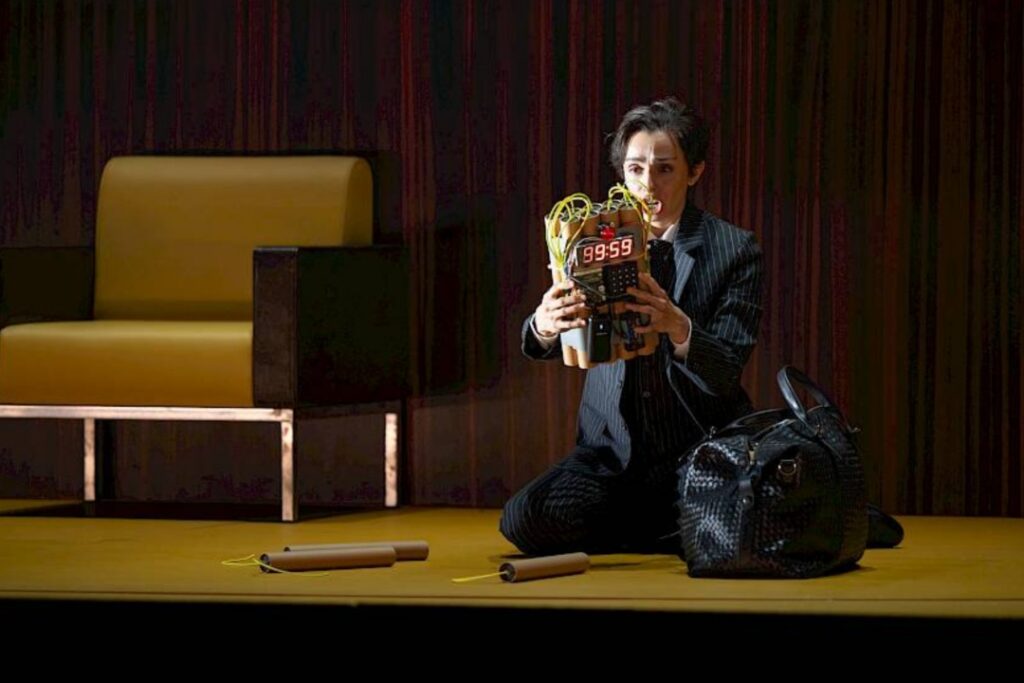
The Zurich Opera House’s decision to stage such a deconstructive interpretation raises broader questions about the role of opera in contemporary society. While artistic reinterpretation is vital for the continued relevance of classical works, the extent to which a director can diverge from the composer’s and librettist’s original intent is a subject of ongoing debate. Michieletto’s staging, by portraying clemency as weakness and forgiveness as folly, fundamentally alters the moral and political landscape of the opera. This reinterpretation invites audiences to question the efficacy of benevolent leadership in a world seemingly dominated by cynicism and surveillance. The production’s success lies in its ability to provoke such questions, even as it diverges from the celebratory spirit that Mozart originally intended to capture. The interplay between historical context, musical brilliance, and bold directorial vision ensures that "La clemenza di Tito" continues to be a work that sparks dialogue and elicits strong reactions, years after its initial premiere.