Aveline Kirana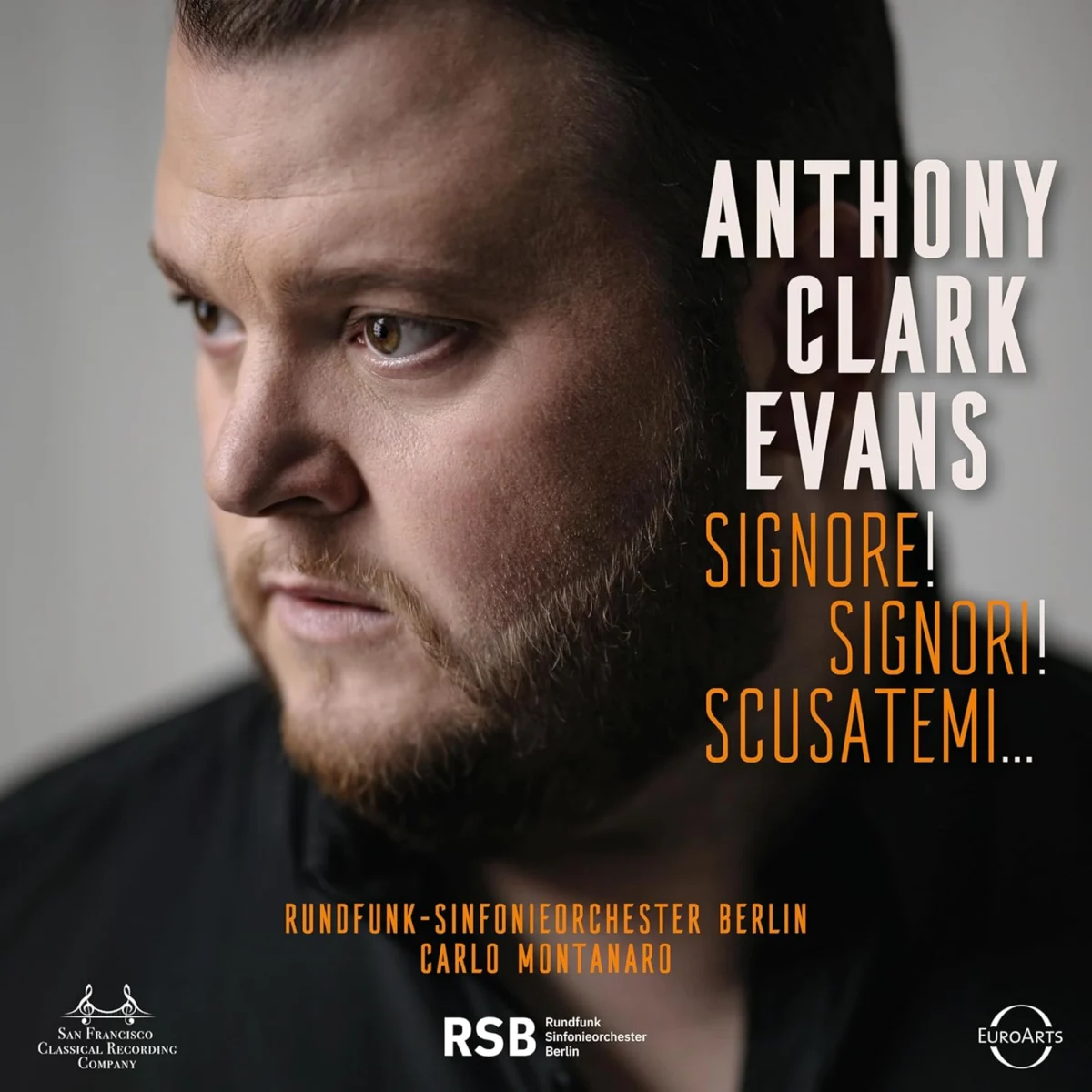
Anthony Clark Evans’ debut recital for EuroArts, titled "Signore! Signori! Scusatemi," named after Leoncavallo’s iconic captatio benevolentiae from "Pagliacci," presents a broad and ambitious exploration of the American baritone’s vocal capabilities. The recording, released by EuroArts, traverses a diverse repertoire spanning Italian verismo, French lyricism, and German Romanticism, offering listeners a comprehensive, albeit at times uneven, showcase of Evans’ artistry. The album’s title itself suggests a degree of self-awareness, perhaps acknowledging the inherent challenges of such a wide-ranging selection for a debut recital.
A Panoramic Repertoire: Ambitious Scope and Varied Success
The recital opens with the aforementioned "Pagliacci," a cornerstone of the Italian operatic canon, immediately setting a dramatic and passionate tone. This is swiftly followed by arias from other prominent Italian composers such as Giordano and Puccini, genres often associated with powerful vocal projection and intense emotional expression. However, the program’s ambition extends far beyond the verismo tradition. It delves into the complexities of Wagner’s "Tannhäuser," the dramatic intensity of Thomas’s "Hamlet," the sparkling charm of Offenbach’s "Les Contes d’Hoffmann," and the bel canto elegance of Donizetti’s "Roberto Devereux," alongside mid-period Verdi. This ambitious tapestry, while commendable for its breadth, has been noted by critics as presenting a "somewhat imperfect cross-section of the American baritone’s capabilities," suggesting that not every facet of his talent is equally illuminated by the chosen selections. The sheer variety of styles and dramatic demands within a single recital disc necessitates a high degree of vocal and interpretive flexibility, a challenge that Evans navigates with varying degrees of success.
Navigating Diverse Operatic Landscapes
The performance of Offenbach’s "Scintille, diamant" from "Les Contes d’Hoffmann" provides an early illustration of the challenges presented by the album’s diverse repertoire. While Evans demonstrates vocal "firmness," this quality is described as sitting "uneasily with the lilting waltz idiom" of the aria. The critic notes a diminution of the "quasi-languorous elasticity" required to embody the character of Dapertutto, the sorcerer who conjures both the allure and the underlying danger of the jewel. This suggests that the vocal production, while technically sound, may not always align perfectly with the specific stylistic nuances of each composer’s idiom.
Similarly, the brindisi-like aria "Ô vin, dissipe la tristesse" from Thomas’s "Hamlet" presents a different set of interpretive considerations. The "buoyancy" expected in such a celebratory number, according to critical assessment, does not entirely coalesce with the "forward placement of Evans’ tone." While the aria alternates between percussive inflections and broader legato passages, and Evans’s technical execution is deemed "irreproachable," the interpretation is characterized as somewhat "conservative." This lack of what might be described as "theatrical poise" suggests a tendency towards a more reserved delivery, which may not fully capture the effervescent spirit of the piece.
The Strength of Wagner and the Challenges of Italian Repertoire
A notable highlight of the recital appears to be the German repertoire, particularly the arias from Wagner. The rendition of "Wie Todesahnung… O du, mein holder Abendstern" from "Tannhäuser" is praised for its "wonderfully grave" quality, with "spot on" diction effectively conveying Wolfram’s self-denial and the poignant premonition of Elisabeth’s fate. The delivery is described as a "gloriously spun mezzo piano," indicating a sensitive and nuanced vocal control.
Evans further demonstrates "significantly greater aplomb" in his Wagnerian selections. His performance of the "Tannhäuser" aria is characterized as "purposeful," and in "Die Frist ist um" from "The Flying Dutchman," he is noted for driving the narrative with "full rhetorical command." The portrayal of the cursed captain is imbued with an "appropriate degree of weariness," with the character seemingly enduring his monologue. The opening of this aria is particularly singled out for setting a compelling tone, eschewing outright heroism or complete resignation in favor of a synthesized "tragic bitterness" conveyed through a "firmly chiseled declamatory style." This suggests a mature understanding of the character’s profound suffering and existential plight.
In contrast, the Italian repertoire, while central to many baritone careers, presents a more mixed picture. The absence of Germont’s aria from Verdi’s "La Traviata," an aria reportedly central to Evans’ career, is noted with surprise. Instead, the recital features Luna’s "Il balen del suo sorriso" from "Il trovatore." While sung with "fine legato," it is critiqued for lacking "chromatic nuance" and the characteristic "Italianate snarl" often associated with this repertoire. Similar observations are made regarding the aria from "Andrea Chénier," where the top notes, while ringing freely, are not described as overly radiant. The "cantilena lines" throughout much of the Italian selections are described as residing in a "grey area," lacking the definition that might be achieved with "greater vocal malleability." Compared to the Wagnerian interpretations, the Verdi performances are deemed "strikingly monochromatic." The inclusion of ariosi and orchestral preludes is appreciated, but the omission of the cabaletta from "Il balen" ("Non può nemmeno un Dio") is seen as a missed opportunity to showcase a fuller range of vocal technique and dramatic flair.
Bel Canto and a Strong Conclusion
The recital revisits the bel canto tradition with Donizetti’s "Forse in quel cor sensibile" from "Roberto Devereux." Here, Evans is credited with preserving the composer’s "bel canto lyricism." His Duke of Nottingham is described as projecting "firmly," and this particular interpretation is noted for vaguely recalling the vocal aesthetic of Albert Schagidullin, a renowned interpreter in this repertoire.
The album concludes with "Nulla! Silenzio!" from an unspecified work (likely a dramatic opera that lends itself to a more somber conclusion, possibly drawing from the dramatic intensity of the Wagnerian selections). This piece benefits from the "half-declamatory grimness" reminiscent of the Wagner arias, allowing Evans to leverage the "solidity of his lower and middle registers." These registers effectively convey "authority and suffering with confidence," hallmarks of Evans’s vocal profile at its most persuasive. This ending suggests a strong command of dramatic declamation and a capacity for profound emotional expression when the repertoire aligns with his vocal strengths.
Context and Broader Implications
Anthony Clark Evans’ debut recital on EuroArts arrives at a significant point in his burgeoning career. As a baritone, the exploration of such a wide array of operatic styles is a testament to his ambition and the breadth of his vocal training. The selection of pieces, from the visceral drama of Leoncavallo and Giordano to the lyrical complexities of Verdi and the profound introspection of Wagner, aims to present a multifaceted artistic identity to a global audience.
The decision to title the album after Leoncavallo’s famous plea for audience favor is particularly noteworthy. It subtly acknowledges the inherent risks of a debut recital that attempts to span such a vast stylistic landscape. The initial operatic convention of captatio benevolentiae (seeking goodwill) is mirrored in the artistic endeavor to win over listeners through a diverse program.
The critical reception, while acknowledging technical prowess and notable successes, also points to the inherent challenges of such a broad repertoire. For a debut, a more focused approach might have allowed for deeper exploration of a particular operatic idiom, potentially solidifying Evans’s artistic identity in specific areas. However, the choice to present such a wide spectrum also offers a clear indication of his vocal range and interpretive potential across different national and stylistic traditions.
The collaboration with conductor Carlo Montanaro is also a significant aspect of the recording. While Montanaro’s tempi are described as "comfortably average" and "broadly supportive of Evans’s voice," there are instances where a more nuanced or dynamic approach might have further enhanced certain selections, particularly the French arias which are perceived as feeling "rushed" despite the conductor’s seemingly steady pace. This suggests that the interplay between soloist and conductor is crucial in navigating the subtle stylistic demands of diverse operatic works.
The implications of this debut recital extend beyond a single recording. For aspiring opera singers, the pressure to demonstrate versatility is immense. Evans’s approach, while facing some critical scrutiny, reflects a broader trend in the industry where artists are encouraged to cultivate a wide range of skills. The success of such a broad approach often hinges on the artist’s ability to adapt their vocal production, interpretive insights, and stylistic understanding to each composer’s unique demands.
Moving forward, the critical feedback from "Signore! Signori! Scusatemi" will likely inform Evans’s future repertoire choices and performance strategies. The clear strengths in Wagnerian and dramatic declamatory passages suggest a promising direction, while the areas requiring further refinement, particularly in the nuanced delivery of Italian bel canto and French lyricism, offer valuable opportunities for artistic growth. As Anthony Clark Evans continues his career, this debut recital serves as a significant marker, showcasing both his considerable talents and the ongoing journey of artistic development in the demanding world of opera. The album, therefore, is not just a collection of arias but a strategic statement of intent and a public declaration of artistic scope.