Nayara Elvina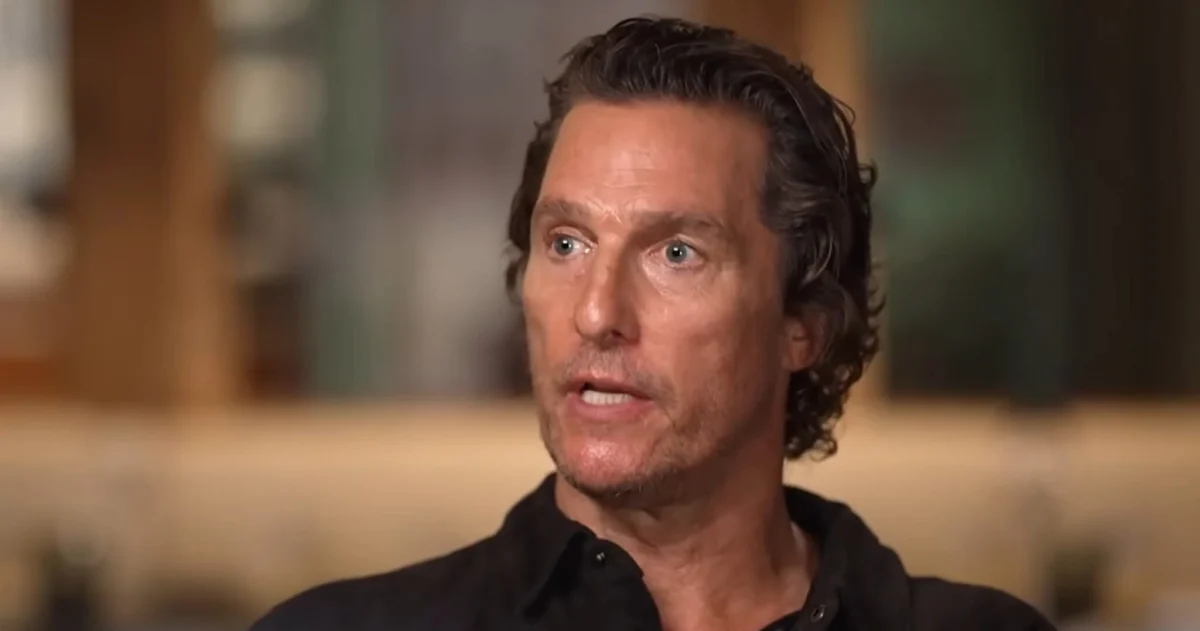
In a wide-ranging conversation that bridged the gap between Hollywood artistry and civic philosophy, Academy Award-winning actor Matthew McConaughey sat down with Willie Geist for a featured "Sunday Sitdown" segment to discuss his evolving role as a public intellectual, author, and potential political figure. The interview served as a platform for McConaughey to introduce his latest literary work, Poems & Prayers, a spiritual successor to his 2020 New York Times bestselling memoir Greenlights. Beyond the promotional circuit, the dialogue delved into McConaughey’s personal battle with cynicism and his increasingly vocal stance on the necessity of "belief" as a functional tool for societal progress.
The Genesis of Poems & Prayers and the Fight Against Cynicism
McConaughey’s latest book, Poems & Prayers, represents a shift from the anecdotal storytelling of Greenlights toward a more introspective and spiritual framework. During the interview, McConaughey was candid about the personal origins of the collection, noting that the writing process was born out of a period of internal struggle. He revealed that he began penning the verses when he felt his own reservoir of optimism beginning to drain—a significant admission for a public figure often associated with a "just keep livin" philosophy.
The actor explained to Geist that the book was initially a private exercise intended to recalibrate his own worldview. He noted that he felt himself "looking down his nose" at the world, a precursor to the cynicism that he believes is currently permeating much of modern discourse. McConaughey’s insistence on "not waving the white flag" to doubt is a central theme of the work. He argues that belief—whether directed toward a traditional deity, one’s family, or the potential of the self—is a requisite for any form of constructive action. This sentiment echoes broader sociological concerns regarding a "crisis of meaning" in the 21st century, where institutional trust has seen a measurable decline across various demographics.
Artistic Contributions: The Lost Bus and the Portrayal of Heroism
The interview also touched upon McConaughey’s upcoming cinematic project, The Lost Bus. Directed by Paul Greengrass and written by Brad Ingelsby, the film is based on the harrowing true events of the 2018 Camp Fire in California, the deadliest wildfire in the state’s history. McConaughey portrays Kevin McKay, a school bus driver who, along with teacher Mary Ludwig, navigated a bus full of children through the flames to safety.
Industry analysts suggest that McConaughey’s choice of roles has become increasingly aligned with his public persona—focusing on grounded, everyday heroism and the resilience of the human spirit. The Lost Bus serves as a narrative companion to the themes found in Poems & Prayers, illustrating the practical application of belief and duty under extreme duress. By highlighting the actions of ordinary individuals in extraordinary circumstances, McConaughey continues to build a body of work that emphasizes community responsibility and personal fortitude.
The Concept of a Punk Rock Rebellion of Belief
One of the more striking moments of the interview occurred when the discussion transitioned from personal spirituality to the broader American landscape. McConaughey rejected the idea of passive or "tranquil" approaches to societal change. Instead, he proposed what he termed a "punk rock rebellion" of belief. This rhetorical framing suggests that maintaining faith in the American experiment and in one’s fellow citizens has become a counter-cultural act.
"I think it’s going to take some rage on the part of believers," McConaughey told Geist, clarifying that this "rage" is directed at the status quo of apathy and division. He described a "grabbing the mic back" from the loudest, most divisive voices in the room. This concept aligns with a growing movement of "radical centrism" or "exhausted majority" theory, which posits that a significant portion of the population is weary of extreme polarization and is looking for a more assertive, yet unifying, path forward.
A Chronology of Political Speculation: 2021 to 2026
The question of McConaughey’s political aspirations has remained a fixture of his public profile for several years. To understand the weight of his current statements, a look at the timeline of his potential candidacy is essential:
- 2020–2021: Following the release of Greenlights, McConaughey began making media appearances where he frequently discussed "the middle" and the need for a "new values-based" politics. Polls conducted in Texas in late 2021 showed McConaughey leading incumbent Governor Greg Abbott and challenger Beto O’Rourke in hypothetical matchups, despite the actor having no formal political platform.
- November 2021: McConaughey released a video statement clarifying that he would not run for Governor of Texas in the 2022 cycle, stating that leadership was a path he was choosing "not to take at this moment."
- 2024: During the high-stakes election year, McConaughey re-emerged as a prominent voice for civic engagement, particularly following his advocacy for gun safety legislation in the wake of the Uvalde school shooting in his hometown. His "Greenlights Grant Initiative" was launched to help school districts access federal mental health and safety funding.
- 2026: In the current interview with Willie Geist, McConaughey’s stance remains one of "calculated openness." While he stopped short of announcing a campaign, his refusal to rule out a future in the "political category" suggests that the infrastructure for a run may still be under consideration.
Analysis of Potential Leadership Roles
McConaughey’s hesitation to enter the formal political arena is often attributed to his desire to remain "useful" without the constraints of partisan optics. In the interview, he mentioned looking for "an avenue I don’t even know yet," hinting at non-traditional leadership roles. This could involve non-profit leadership, advisory roles, or a continued expansion of his "Minister of Culture" title—a role he currently holds at the University of Texas at Austin.
However, the "call to action" he referenced suggests a sense of urgency. Political analysts note that celebrities who successfully transition into politics, such as former California Governor Arnold Schwarzenegger or former Minnesota Governor Jesse Ventura, often do so by tapping into a deep-seated frustration with the professional political class. McConaughey’s rhetoric regarding "not conceding" to the way things are suggests he is positioning himself as a disruptor of cynicism rather than a traditional partisan operative.
Societal Impact and the Role of the Modern Influencer
The broader implication of McConaughey’s "Sunday Sitdown" is the reflection of a shifting trend where cultural icons are expected to provide more than entertainment. As traditional institutions—including religious organizations and political parties—face declining participation, figures like McConaughey are increasingly filling the void as "secular chaplains" or philosophical guides.
His emphasis on "doubling down" on belief in the future and in the "better self" serves as a call for individual agency. From a journalistic perspective, McConaughey is testing a unique brand of "aggressive optimism." It is a strategy that seeks to weaponize hope as a tool for civic renewal. Whether this translates into a formal ballot appearance in the coming years or remains a literary and cinematic crusade, McConaughey’s influence on the American cultural dialogue continues to expand.
Conclusion and Future Outlook
As Matthew McConaughey continues his promotional tour for Poems & Prayers and prepares for the release of The Lost Bus, his message remains remarkably consistent: the refusal to accept decline as an inevitability. His conversation with Willie Geist underscores a pivotal moment in his career where his personal faith and his public duty are becoming inextricably linked.
The next few years will be telling for the actor. If he continues to build a platform based on the "punk rock rebellion" of belief, he may find himself at the center of a movement that transcends the entertainment industry. For now, McConaughey remains a "minister" of a different sort—one who uses the medium of film, the written word, and the televised interview to advocate for a more resilient and believing American public. The "white flag" of doubt, it seems, is nowhere in sight.

![Sijya announces Leather and Brass [Retrofitted] EP, shares Do I Know [Rachika Nayar Edit]: Listen](https://empire-music.net/wp-content/uploads/2026/09/sijya-announces-leather-and-brass-retrofitted-ep-shares-do-i-know-rachika-nayar-edit-listen.webp)