 Johan Budi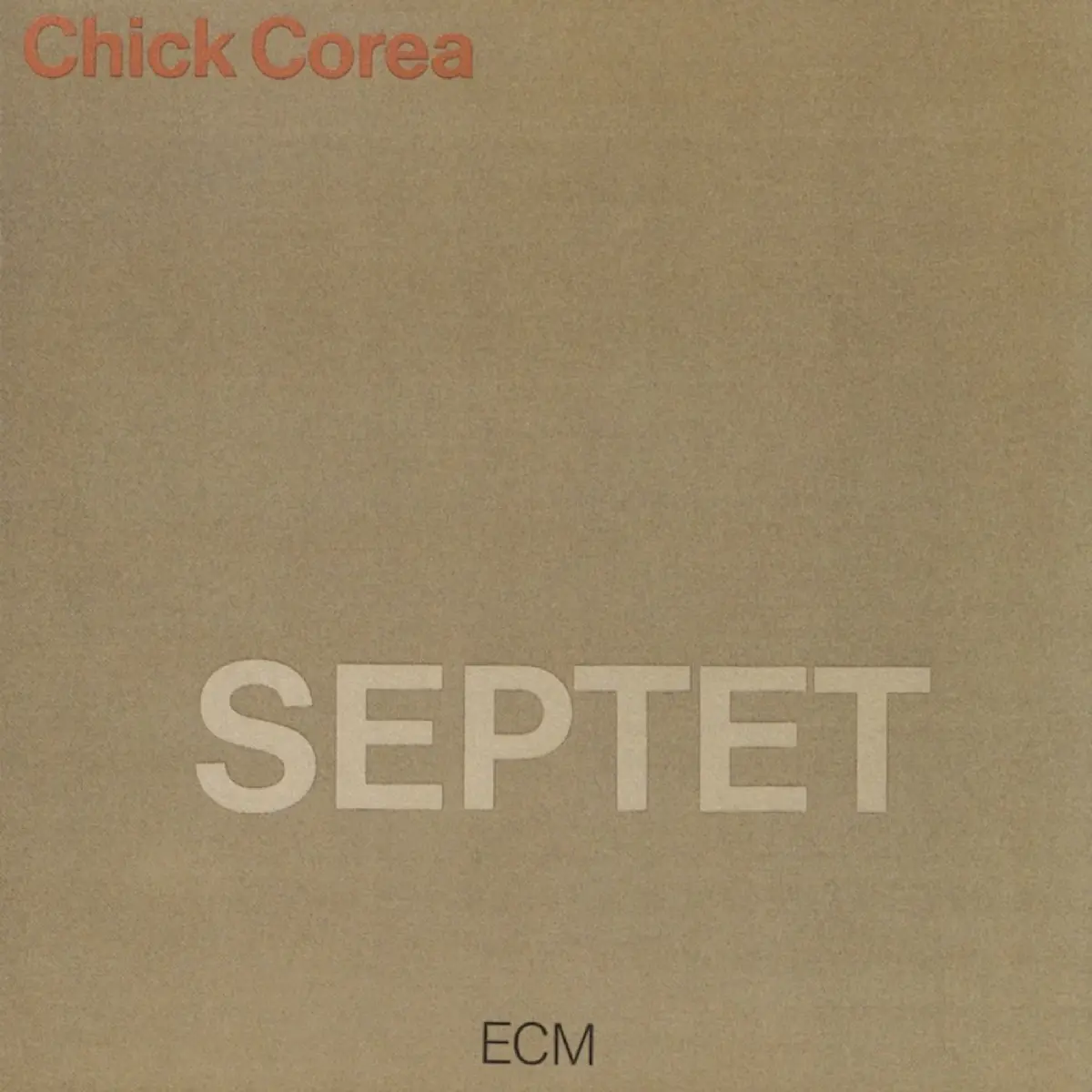
The release of Chick Corea’s Septet on the ECM label marks a significant departure from the traditional jazz landscapes that have long defined the career of the acclaimed pianist and composer. Recorded in Los Angeles in October 1984, this ambitious project highlights Corea’s growing fascination with classical forms, moving away from the syncopated improvisations of his fusion and post-bop eras toward a structured chamber music aesthetic. While the album is released under the banner of ECM—a label synonymous with avant-garde and European jazz sensibilities—the content of the recording suggests a deliberate move into the realm of "Third Stream" music, where the boundaries between classical composition and jazz performance become increasingly blurred.
The Septet features a distinctive ensemble that bridges the gap between the two worlds. Joining Corea on piano are notable classical figures, including violinists Ida Kavafian and Theodor Arm, violist Steven Tenenbom, and cellist Fred Sherry. The ensemble is rounded out by Steve Kujala on flute and Peter Gordon on French horn. This specific instrumentation allows for a tonal palette that is rare in the jazz idiom, favoring the textures of a string quartet augmented by woodwind and brass colors. The result is a recording that demands to be evaluated not through the lens of swing or blues, but through the rigorous standards of contemporary classical composition.
Historical Context and Artistic Evolution
To understand the emergence of Septet, one must look at Chick Corea’s trajectory during the early 1980s. Following the massive success of his fusion group Return to Forever and his explorations in acoustic jazz with the trio featuring Miroslav Vitous and Roy Haynes, Corea began to seek a more formal compositional language. This period saw the release of Children’s Songs (1984), a collection of minimalist piano pieces that drew comparisons to Béla Bartók’s Mikrokosmos.
Septet represents the logical progression of this interest. During this era, many jazz musicians were exploring the "Third Stream" concept—a term coined by Gunther Schuller to describe a synthesis of classical music and jazz. However, unlike many of his peers who sought to integrate jazz rhythms into orchestral settings, Corea’s Septet leans heavily into the European tradition. The influence of early 20th-century masters is palpable throughout the five movements of the title piece, signaling a period of intense study and stylistic maturation for the composer.
Compositional Analysis: The Five Movements of Septet
The centerpiece of the album is the five-movement suite titled Septet. Analysts and critics have noted that the work showcases Corea’s "unquestioned orchestral skill" and a sophisticated grasp of late-classical idioms. The movements are meticulously structured, moving away from the "head-solo-head" format typical of jazz performances. Instead, the thematic material is developed through the ensemble, with the piano often acting as a percussive and harmonic anchor rather than a solo vehicle.
The stylistic fingerprints of Igor Stravinsky are evident in the jagged rhythmic profiles and the precise, often dry, articulation of the strings. Furthermore, the French Impressionist school, particularly the works of Maurice Ravel, informs the harmonic language and the lush, atmospheric woodwind writing. Some scholars have also pointed to the influence of Benjamin Britten in the way Corea handles the interplay between the French horn and the strings, creating a sense of dramatic tension and release.
Despite these heavy influences, the work is characterized by a high degree of lyricism. While some critics have argued that the music is derivative of these European masters, others point to the original instrumentation as a redeeming factor. The combination of a string quartet with flute and French horn provides a unique chamber music texture that Corea utilizes to explore varying moods, from the pastoral to the frenetic.
The Temple of Isfahan: An Eclectic Departure
The second half of the album features a standalone piece titled The Temple of Isfahan. While the Septet suite is praised for its disciplined construction, The Temple of Isfahan is viewed as a more experimental and, at times, polarizing composition. The work is noted for its "Hispanic tinge," a recurring theme in Corea’s work since his landmark album My Spanish Heart. However, in this setting, the Spanish influence is often described as cosmetic rather than organic, serving as a decorative layer over a more eclectic structural base.
The piece is characterized by a series of individual "effects" and stylistic shifts that challenge the listener’s expectations. Toward the conclusion of the work, Corea introduces a surprising array of musical references. These include a transposition of Sidney Bechet’s "Petite Fleur" for the French horn and a segment of "Palm Court Mexicana" for the string section. Perhaps most unexpectedly, the piece features a section where Steve Kujala’s flute lines evoke the "spaghetti-western" sounds famously associated with composer Ennio Morricone and the film The Good, The Bad, and The Ugly.
This postmodern approach to composition—blending high-classical tropes with cinematic and folk references—highlights Corea’s willingness to take risks, even if the results occasionally lack the central discipline found in the primary suite.
The Tension Between Improvisation and Structure
One of the most intriguing aspects of the Septet project is the discrepancy between Corea’s public statements about his process and the technical reality of the music. On the album’s inner sleeve, Corea suggests a somewhat spontaneous approach to the composition, claiming, "I just kept on writing till I ran out of time and then I composed an ending."
However, musicological analysis of the score suggests otherwise. The Septet is densely structured and carefully worked out, showing little evidence of the "contended improvisation" or the "running out of time" narrative Corea playfully offered. The precision required for the ensemble to execute the complex rhythmic unisons and the intricate counterpoint suggests a composer who was deeply involved in the minutiae of the score. This discrepancy highlights a common trope in jazz-classical crossovers: the desire to maintain a "jazz-like" aura of spontaneity even when the music is strictly through-composed.
Personnel and Performance Standards
The success of Septet relies heavily on the caliber of the performers involved. By recruiting members of the Chamber Music Society of Lincoln Center and other high-level classical musicians, Corea ensured that the technical demands of his score would be met with professional rigor.
- Ida Kavafian and Theodor Arm (Violins): Their contributions provide the necessary bite and clarity required for the Stravinsky-esque rhythmic passages.
- Fred Sherry (Cello): A veteran of contemporary music, Sherry’s presence lends the recording a sense of authority in the classical idiom.
- Steve Kujala (Flute): Kujala, a frequent collaborator with Corea, acts as a bridge between the two styles, providing fluid, lyrical lines that occasionally hint at jazz phrasing.
- Peter Gordon (French Horn): Gordon’s role is crucial in adding weight and a distinct tonal color to the ensemble, particularly in the more dramatic sections of the fifth movement and The Temple of Isfahan.
Corea’s own performance on the piano is notably restrained. He avoids the flashy, virtuosic runs that characterized his fusion work, opting instead for a touch that is sensitive to the chamber music context. His role is that of a "primus inter pares" (first among equals), integrating the piano into the fabric of the ensemble rather than dominating it.
Broader Impact and Critical Reception
The release of Septet (ECM 1297) has sparked a broader conversation about the role of jazz musicians in the world of formal composition. While some jazz purists have expressed disappointment at the lack of swing and improvisation, the classical community has generally welcomed Corea’s contribution as a sincere and "absorbing" entry into the chamber music repertoire.
The album reinforces ECM’s reputation as a label that defies categorization. Under the direction of producer Manfred Eicher, ECM has long championed music that exists in the "cracks" between genres. Septet fits perfectly into this philosophy, offering a listening experience that is "lyrical and absorbing," even if it remains "far removed from the normal preserve" of traditional jazz publications.
In the years following this release, Chick Corea would continue to pursue classical interests, eventually performing Mozart concertos and composing full-scale orchestral works. Septet stands as a pivotal moment in this evolution—a document of a master musician "developing into a composer of considerable breadth and great charm."
Conclusion: A Legacy of Synthesis
Chick Corea’s Septet remains a fascinating artifact of the mid-1980s musical landscape. It serves as a testament to the pianist’s refusal to be pigeonholed and his enduring curiosity about the mechanics of music. While the album may be "derivative" in its homage to the greats of the 20th century, its execution is handled with such skill and "unquestioned orchestral skill" that it holds a unique place in Corea’s massive discography.
For the listener, Septet offers a journey through a hybrid world where the precision of the string quartet meets the adventurous spirit of one of jazz’s greatest minds. Whether viewed as a "serious contribution" to the classical genre or a sophisticated experiment by a jazz giant, the album continues to be a subject of study for those interested in the intersection of composition and performance. As Corea’s career progressed, the lessons learned during the recording of Septet—the importance of structure, the exploration of varied tonal colors, and the integration of disparate influences—would continue to inform his work, solidifying his status as a truly universal musician.