Reynand Wu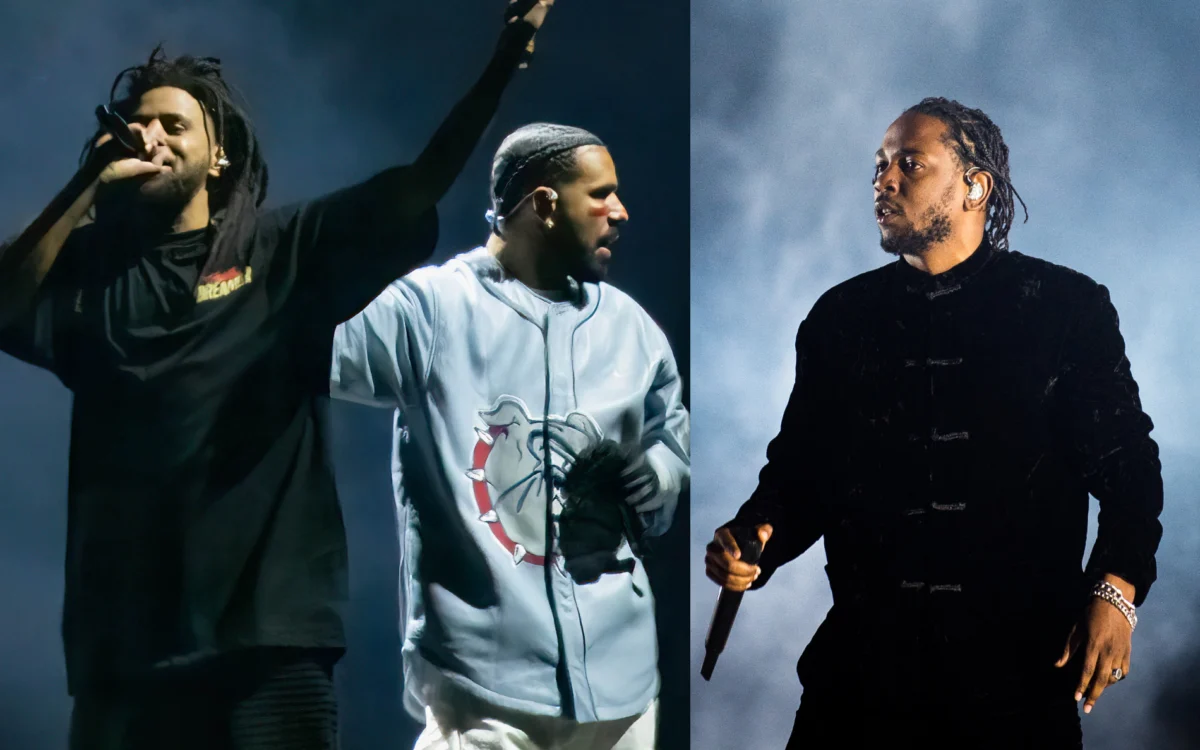
Recent revelations from J. Cole have peeled back layers of speculation surrounding the creation of Drake’s chart-topping track "First Person Shooter" and the tumultuous lead-up to the 2024 Dreamville Festival, offering a candid glimpse into the complex relationships and pressures within hip-hop’s elite echelons. Speaking on Carmelo Anthony’s 7PM In Brooklyn podcast as part of his promotional tour for the highly anticipated album The Fall-Off, the Dreamville co-founder clarified long-standing rumors, confirming that Drake’s initial vision for the track involved Kendrick Lamar, not himself. This disclosure, alongside insights into the planned Dreamville Festival appearances and the dynamics of the recent Drake-Kendrick Lamar beef, paints a vivid picture of a landscape fraught with artistic ambition, strategic maneuvering, and unexpected shifts.
The Genesis of "First Person Shooter": A Shifting Collaborative Vision
J. Cole’s account disabused the notion that "First Person Shooter" was ever intended as a three-way collaboration featuring all three titans – Drake, Kendrick Lamar, and himself. Instead, Cole revealed that the beat, crafted by Boi-1da, a frequent Drake collaborator, was initially earmarked for a Drake and Kendrick Lamar joint effort. "Before that beat ever made it to me, I think Drake wanted that to be a him and [Kendrick] song," Cole explained, suggesting a strategic move by Drake to unite two of hip-hop’s most revered lyricists.
However, according to Cole’s interpretation, Kendrick Lamar did not readily embrace the invitation. "My interpretation is like… maybe when it wasn’t moving fast enough or he wasn’t getting the response he wanted, maybe he was like, ‘Let me hit Cole.’" This narrative implies a potential snub from Kendrick, leading Drake to pivot and enlist Cole. It was Boi-1da, the acclaimed producer behind the track, who reportedly championed Cole’s involvement, pushing Drake to extend the invitation to the Fayetteville rapper.
For J. Cole, receiving the beat presented a unique challenge and immense pressure. He recounted, "I never looked at that song like it was going to be all of us. I thought it was me and Drake. And I just had the beat; there was nothing on it. And I felt mad pressure ’cause I wanted to come through for him. I had to write that verse several times." This sentiment underscores the weight of expectation placed upon artists when collaborating with peers of Drake’s stature, particularly on a track destined for commercial success. "First Person Shooter," released in October 2023 as part of Drake’s For All the Dogs album, indeed debuted at number one on the Billboard Hot 100, marking a significant commercial milestone for both artists and further solidifying their positions in mainstream music. Cole’s admission of multiple rewrites highlights his meticulous approach and the desire to deliver a verse that could stand alongside Drake’s, ensuring the collaboration met the high standards expected from two of the genre’s most respected figures.
The "Big Three" Narrative and its Unraveling Context
For over a decade, hip-hop enthusiasts and critics alike have debated the concept of the "Big Three" – a triumvirate comprising Drake, Kendrick Lamar, and J. Cole, widely considered the most influential and commercially successful rappers of their generation. Each artist, with their distinct styles and lyrical prowess, has carved out an indelible legacy, often operating in their own lanes while occasionally acknowledging or subtly referencing one another. "First Person Shooter" was initially perceived by many as a moment of unity, a rare convergence of two members of this unofficial trinity, sparking excitement about the possibility of an even larger collaboration or a new era of friendly competition.
The track’s lyrics, particularly Cole’s verse, which included lines like "I’m one of the best, they had to make a new list / I took a loss, but me and Drake get along / It’s like, who the f*** is this on the song?", were seen as a playful nod to the ongoing "Big Three" discourse and a reaffirmation of his standing. Drake’s verse also contained lines that could be interpreted as a response to the constant comparisons, solidifying the idea that they were embracing, rather than shying away from, their collective dominance.
However, the recent revelations from Cole, particularly the implied reluctance of Kendrick Lamar to participate, add a new layer to this narrative. It suggests that while the public often grouped them together, the internal dynamics and collaborative interests among the three artists might have been more complex and less aligned than commonly assumed. This underlying tension, now brought to light, provides crucial context for the dramatic escalation of the Drake-Kendrick Lamar beef that unfolded just months after "First Person Shooter" hit the airwaves, revealing cracks in the perceived "Big Three" unity.
Dreamville Festival 2024: A Prevented Collision of Titans
Beyond the specifics of "First Person Shooter," J. Cole offered a fascinating look into his ambitious, ultimately thwarted, plans for the 2024 Dreamville Festival. He revealed his intention to bring both Drake and Kendrick Lamar to the stage, a monumental feat that would have undoubtedly gone down as one of hip-hop’s most iconic live moments. "I was trying to get Kendrick to come, too. That was my plan for Dreamville Fest that year. Mind you, I never got a chance to [ask Kendrick]. I told Drake. Drake knew that that was something that I wanted to happen," Cole recounted, expressing his desire to create a historic moment of unity. "When we were on tour I was like, ‘Yo, it’d be crazy if both of y’all came out at Dreamville Fest.’ It’s silly now to say. It’s like, ‘Nah, n*gga! There were other plans in the works.’"
The Dreamville Festival, held annually in Raleigh, North Carolina, is J. Cole’s flagship event, celebrating hip-hop culture and showcasing a diverse lineup of artists. The prospect of Drake and Kendrick Lamar sharing a stage, orchestrated by Cole, would have been a crowning achievement for the festival and a dream come true for fans. However, as the simmering tensions between Drake and Kendrick Lamar rapidly boiled over into an all-out lyrical war, these plans became untenable.
Drake, who was slated to perform at the festival, ultimately withdrew, a decision that Cole now credits to Drake’s foresight and consideration. Dispelling rumors that Drake’s absence was due to a disagreement with him, Cole clarified, "He could tell, when me and him talked, that my heart wasn’t equivalent to his. So he was like, ‘Yo, I didn’t want to come down there and put you in a situation on that stage and say some shit that you would have to stand behind.’ And I was like, ‘Thank you!’ Because it left the space for me to [do] what I was supposed to do." This candid admission reveals Drake’s strategic awareness and a surprising act of camaraderie, choosing to remove himself from a potentially volatile situation to protect his colleague and the integrity of the festival. Cole’s gratitude highlights the delicate balance artists must maintain in their relationships amidst public rivalries.
The Unfolding Beef: A Timeline of Escalation and Cole’s Retreat
The context for Drake’s withdrawal and Cole’s subsequent actions lies in the rapid and dramatic escalation of the beef between Drake and Kendrick Lamar, which truly ignited in late March 2024.
-
March 22, 2024: The rap world was jolted by the release of Metro Boomin & Future’s album We Don’t Trust You. On the track "Like That," Kendrick Lamar delivered a blistering verse that directly targeted both Drake and J. Cole, famously declaring, "It’s just Big U and me, and we ain’t even gotta bring the f*cking stats up / It’s just us / F** the Big 3, ngga, it’s just Big Me." This verse effectively dismantled the "Big Three" narrative and threw down the gauntlet, setting the stage for direct confrontation.
-
March 29, 2024: J. Cole released Might Delete Later, a surprise mixtape. Tucked within the project was "7 Minute Drill," a direct response to Kendrick Lamar’s "Like That" verse. In the track, Cole critiqued Kendrick’s discography and implied a challenge to his lyrical supremacy. This move momentarily positioned Cole squarely in the escalating conflict.
-
April 5, 2024: During his headlining performance at the Dreamville Festival, J. Cole delivered a poignant and unprecedented apology for "7 Minute Drill." He told the crowd, "I was torn, because I know how much this shit means to me, and I know how much I love and respect my nas that’s in this game." He referred to the diss track as "the lamest shit I ever did in my fing life" and announced its removal from streaming services, effectively withdrawing himself from the direct lyrical battle.
-
April 13, 2024: Following Cole’s retreat, Drake intensified the conflict by releasing "Push Ups" (which had leaked days prior), a scathing diss track that not only targeted Kendrick Lamar but also took aim at Rick Ross, Metro Boomin, Future, The Weeknd, and A$AP Rocky, significantly broadening the scope of the beef.
-
April 19, 2024: Kendrick Lamar responded with "Euphoria," a lengthy and venomous track widely praised for its lyrical dexterity and directness, further escalating the feud.
-
April 30 – May 4, 2024: The beef reached a fever pitch with a rapid exchange of highly personal and controversial diss tracks, including Kendrick’s "6:16 in LA," "Meet the Grahams," and "Not Like Us," and Drake’s "Family Matters," each track delving into increasingly personal attacks and allegations.
Cole’s decision to apologize and withdraw from the conflict before this final, intense volley of diss tracks highlights his intention to avoid being drawn deeper into what became a highly contentious and potentially damaging lyrical war. His early exit, facilitated in part by Drake’s considerate withdrawal from Dreamville Festival, allowed him to maintain a degree of neutrality that would have been impossible had he chosen to stand by his initial diss.
J. Cole’s Rationale for "7 Minute Drill": Pressure and Preservation
J. Cole’s involvement in the highly publicized battle, though brief, has been a significant talking point during his recent press run. In an interview with Cam’ron, Cole candidly admitted that "7 Minute Drill" was a product of perceived pressure, not genuine malice. He felt compelled to respond to Kendrick Lamar’s "Like That" verse to prevent it from overshadowing the rollout of The Fall-Off, his long-anticipated album, and the preceding mixtape, Might Delete Later.
"There wasn’t any disrespect in [Kendrick’s verse]! My feeling was, ‘F!’ Because now I know this [album] that I’ve been working on for eight years, plus this other [mixtape, Might Delete Later] that I did as a set-up, nas ain’t gonna never let me put that out until I address this," Cole explained. This reveals the immense pressure artists face to engage in lyrical warfare, even when it doesn’t align with their artistic or personal inclinations. Cole’s primary concern was the protection of his creative output and career momentum.
He elaborated on his mindset during the creation of "7 Minute Drill," stating, "There was no malice in my heart… I [was] like, ‘Let me say just enough to where it looks like I said something.’ Everything I’m saying, I know and he knows, it’s all survivable. I’m not hitting him with no fatal blows." This quote underscores Cole’s calculated approach: a response designed to appease expectations without causing irreparable damage or genuinely escalating a conflict he seemingly wished to avoid. His subsequent apology and removal of the track further solidified this stance, marking a rare instance of an artist publicly retracting a diss track in the midst of a high-profile hip-hop beef. This act, while met with mixed reactions, cemented Cole’s unique position in the saga, distinguishing his approach from the more confrontational styles of Drake and Kendrick Lamar.
Implications for Hip-Hop and the Artists
J. Cole’s recent disclosures carry significant implications for the hip-hop landscape and the careers of the artists involved:
-
The Redefinition of the "Big Three": Cole’s candidness about Kendrick’s implied disinterest in "First Person Shooter" and his own swift withdrawal from the beef effectively redefines the "Big Three" narrative. It suggests a more fragmented reality, where collaborative efforts are not always mutual, and rivalries can quickly overshadow long-held perceptions of unity. Cole’s actions position him as an artist who prioritizes personal integrity and artistic legacy over engaging in prolonged, potentially destructive conflicts, effectively placing him in a different lane than the direct combatants.
-
Authenticity vs. Commercial Pressure: Cole’s admissions highlight the inherent tension between an artist’s desire for authentic expression and the commercial pressures of the music industry. His feeling of being "pressurized" to respond to Kendrick, despite lacking "malice," speaks volumes about the expectations placed on top-tier rappers to engage in lyrical combat, especially when their perceived standing is challenged. His decision to apologize, however, showcases a willingness to prioritize self-awareness and peace over maintaining a combative facade.
-
Drake’s Calculated Strategy: Drake’s initial attempt to collaborate with Kendrick on "First Person Shooter" and his later decision to gracefully withdraw from Dreamville Festival reveal a highly strategic mind. His foresight in avoiding a situation that could have compromised Cole underscores a calculated approach to managing relationships and public perception, even amidst intense rivalry. It shows an awareness of optics and the long-term impact of his actions.
-
Kendrick Lamar’s Unwavering Stance: Kendrick’s implied refusal to join Drake on "First Person Shooter" and his subsequent aggressive stance in the beef further solidify his image as an uncompromising artist driven by his own creative agenda. His disinterest in certain collaborations and his willingness to directly challenge peers reinforce his independent artistic vision, regardless of commercial or social expectations.
-
The Evolving Nature of Hip-Hop Beef: Cole’s apology for "7 Minute Drill" is a significant moment in the history of hip-hop beef. While traditional beef often entails an escalating exchange of disses, Cole’s retraction offers a different model, one that acknowledges the human element behind the lyrics and prioritizes personal values. This act has sparked debate about the future of lyrical warfare and the boundaries of artistic conflict.
-
Impact on The Fall-Off: While Cole intended for "7 Minute Drill" to protect The Fall-Off rollout, the entire saga, including his apology, has undeniably reshaped public anticipation for his album. The narrative surrounding his brief involvement in the beef, and his subsequent retreat, will now form an integral part of The Fall-Off‘s reception, potentially influencing how listeners interpret its themes and lyrical content.
In conclusion, J. Cole’s recent candor has offered an invaluable, behind-the-scenes look at the intricate relationships, strategic decisions, and profound pressures that shape the careers of hip-hop’s biggest stars. From the nuanced origins of "First Person Shooter" to the aborted plans for Dreamville Festival and his unique navigation of the Drake-Kendrick Lamar beef, Cole’s revelations underscore the complex interplay of collaboration, competition, and personal integrity in the unforgiving spotlight of the music industry. His transparency not only enriches the understanding of specific events but also provides a deeper insight into the evolving dynamics of modern hip-hop.