Reynand Wu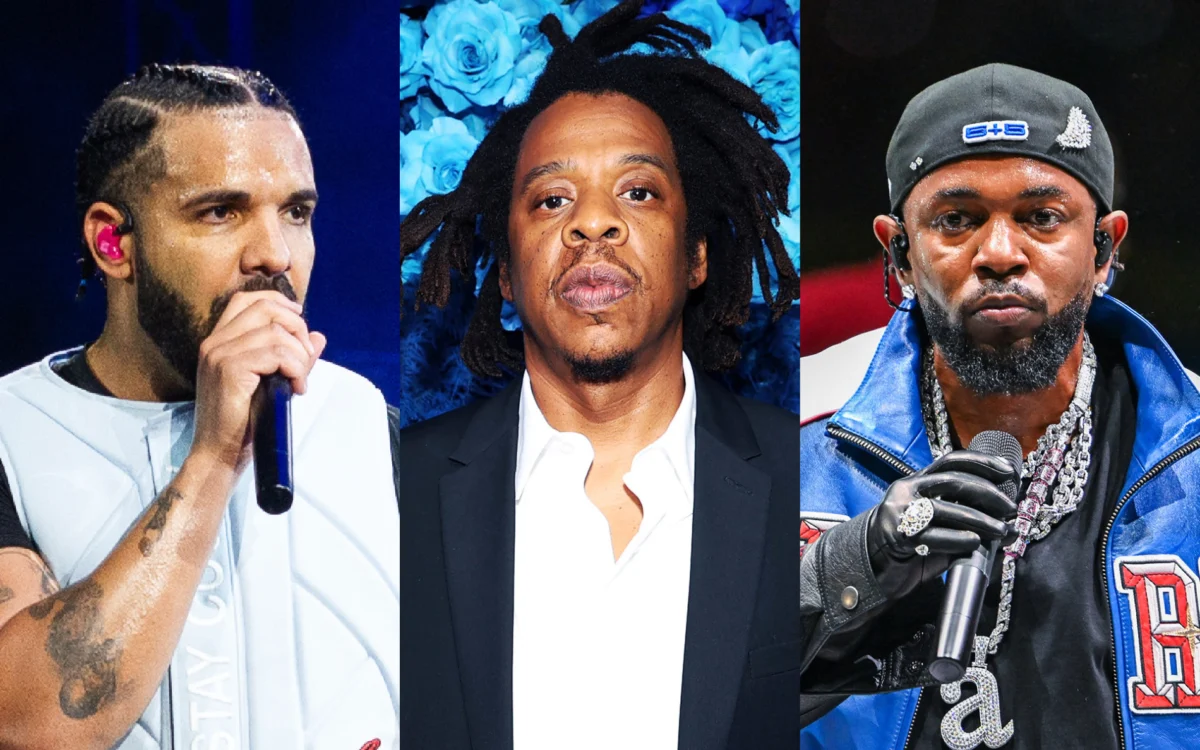
Hip-hop titan Shawn "JAY-Z" Carter has finally offered his perspective on the seismic 2024 rap battle between Drake and Kendrick Lamar, articulating a stance that challenges traditional views on lyrical warfare within the genre. In a rare and expansive interview with GQ magazine, JAY-Z expressed profound disapproval for the extent to which the feud escalated, describing it as having gone "too far" and fostering "negativity and division" detrimental to the culture. This viewpoint from an artist who himself participated in one of hip-hop’s most legendary feuds—with Nas in the early 2000s—highlights a significant shift in the perceived boundaries of competitive rap.
The Anatomy of a Modern Rap Feud
The Drake and Kendrick Lamar beef, which dominated headlines and streaming charts throughout 2024, began with simmering tensions that erupted into a full-blown lyrical war. What initially appeared as a typical rap rivalry quickly spiraled into an unprecedented exchange of highly personal and often disturbing allegations. The conflict was ignited by Kendrick Lamar’s verse on Future and Metro Boomin’s track "Like That," where he declared himself, Drake, and J. Cole as the "big three" but then asserted, "It’s just big me," directly challenging Drake and Cole’s standing. This aggressive declaration broke an unspoken truce among the genre’s top artists, setting the stage for a series of diss tracks that captivated and, at times, horrified the music world.
Over several weeks, Drake and Kendrick Lamar released a barrage of records, each attempting to outdo the other in lyrical venom and shocking revelations. Drake’s initial responses included "Push Ups" and "Taylor Made Freestyle," though the latter was quickly pulled due to the use of AI-generated vocals of Tupac Shakur and Snoop Dogg. Kendrick Lamar countered with "Euphoria" and "6:16 in LA," which were praised for their intricate wordplay and pointed attacks. The feud escalated dramatically with Drake’s "Family Matters" and Kendrick’s "Meet the Grahams" dropping almost simultaneously, followed swiftly by Kendrick’s "Not Like Us" and Drake’s "The Heart Part 6."
The allegations hurled during this period were deeply personal, traversing accusations of sexual assault, domestic abuse, infidelity, secret children, ghostwriting, and even pedophilia. These claims, particularly those regarding family and private lives, pushed the boundaries of traditional rap beef, moving beyond artistic critique or competitive posturing into potentially damaging character assassinations. The public reaction was intense, with fans and critics dissecting every lyric, searching for clues, and debating the ethics of such deeply personal attacks. Social media became a battleground, amplifying the toxicity and division, as JAY-Z noted, causing fans to "hate" the opposing artist "no matter what he makes or says."
JAY-Z’s Reflective Critique
JAY-Z, a veteran of hip-hop who has navigated its competitive landscape for decades, observed that the "negative stuff that comes with it" in the current era makes him "almost wish it didn’t happen." He lamented the collateral damage, specifically mentioning "attacks on his character [and family]," questioning if such tactics are "helpful to our growth" as a culture. His concern extends beyond the individual artists involved, suggesting that the beef inadvertently "set hip-hop a couple steps back." This perspective from a figure of JAY-Z’s stature, one who has consistently championed the genre’s evolution and commercial viability, carries significant weight.
He acknowledged the inherent appeal of rap battles, stating, "We love the excitement and I love the sparring and the music you get." However, he expressed profound discomfort with the modern manifestation, particularly the enduring animosity it generates among fanbases. "Now, people that like Kendrick hate Drake, no matter what he makes or says. And it goes far, too," he explained. This sentiment underscores a broader anxiety about the long-term impact on fan culture and the overall health of the hip-hop community.
JAY-Z’s own history includes the legendary feud with Nas in the early 2000s, a period marked by iconic diss tracks like "Takeover" and "Ether." While intensely competitive, that era’s feuds often remained largely within the confines of lyrical skill and street credibility, with certain lines implicitly understood as off-limits. Reflecting on his past, JAY-Z admitted, "I hate that I have this point of view because I know what it sounds like, I know what it feels like. I hate it! It’s just how I feel." This self-awareness highlights his struggle with reconciling his past as a participant in fierce lyrical battles with his current concerns about the genre’s future. He even expressed regret over his past beef with Nas, stating, "[Our feud] didn’t happen at the Summer Jam — that happened with ‘Lex with TV sets, the minimum’. It was a whole bunch of stuff leading up to that point. I actually regret that because I really like Nas. He’s a really nice guy." This statement from a man renowned for his competitive spirit offers a powerful testament to the emotional toll and lasting impact of such conflicts.
A Path Forward: Collaboration Over Conflict
In seeking alternatives to destructive feuds, JAY-Z proposed a shift towards more constructive forms of competition. "I think we can achieve the same thing, as far as sparring with music, with collaborations more so than breaking the whole thing apart," he suggested. This vision advocates for artists to channel their competitive energies into joint projects or synergistic releases that elevate the genre rather than fragmenting it. Such an approach would maintain the artistic drive and lyrical prowess that define hip-hop while fostering unity and collective growth. This perspective aligns with his broader business philosophy, which often emphasizes strategic partnerships and collective advancement.
Addressing the Super Bowl Halftime Show Speculation
Beyond the immediate beef, JAY-Z also addressed the controversy surrounding Kendrick Lamar’s 2025 Super Bowl halftime show, which Roc Nation, his entertainment company, oversees. Accusations arose that JAY-Z and Roc Nation had "picked sides" in the beef by awarding the coveted gig to Kendrick Lamar. JAY-Z vehemently dismissed these claims.
"I chose the guy that was having a monster year. I think it was the right choice. What do I care about them two guys battling? What’s that got to do with me? Have at it," he stated, emphasizing a decision based purely on artistic merit and commercial momentum. He further scoffed at suggestions of a "conspiracy" to "undermine" Drake, asserting his own iconic status with a mix of humor and gravitas: "It’s like, what the f? I’m fing JAY-Z! [laughs.] All due respect to him. I’m f***ing Hov. Respectfully. It doesn’t make any sense."
He also lauded Kendrick Lamar’s artistic bravery during the performance, particularly his choice to showcase material from his then-new album. "He could have made it a little easier on himself. The artistic choice to play the new album was brave in front of that big of an audience," JAY-Z remarked, noting that while some fans knew the songs, millions more would have been unfamiliar. "As an artist, to stand up there and do it and complete your vision — I had to tip my hat. I had high respect for him already, but, like, even more my respect was like, ‘He’s really about what he says he’s about.’" This commentary reinforces JAY-Z’s respect for artistic integrity and conviction, qualities he clearly values deeply.
Beyond the Beef: Insights into Art, Business, and Life
The GQ interview delved into numerous other facets of JAY-Z’s expansive career and personal philosophy, offering a comprehensive look at the mogul’s current mindset.
On Artistic Purity and New Music: JAY-Z candidly discussed his struggle with creating new music, admitting, "I have a lot of scratch ideas and they’re all bad [laughs]." His current artistic quest is driven by a desire for authenticity and fulfillment, rather than commercial success or public approval. "I don’t know what I need to create currently that’s going to fulfil me and make me happy, because that’s most important," he elaborated. This introspective approach is about making "something timeless that I really love and that’s really honest and true to who I am," contrasting with the trap of "trying to create something that people like," which he believes leads artists astray.
Reflecting on "4:44": He highlighted 4:44 as an album he was "always afraid to make" due to its raw vulnerability. The project, which addressed personal trauma, infidelity, and emotional growth, was described as "pure and vulnerable, the real interior thoughts." He linked this vulnerability to childhood experiences, including "a lot of trauma, a lot of loss, a lot of seeing things that nine-year-olds shouldn’t be seeing." This album marked a departure from the "bravado" of his earlier works, which, while "very useful," he recognized as "not sustainable" for long-term well-being.
The Enduring Legacy of "Reasonable Doubt": Approaching its 30th anniversary, JAY-Z reflected on his debut album, Reasonable Doubt, recalling its modest initial sales of 43,000 records. Yet, he emphasized its immediate impact on the streets: "in our mind, the fact that we released an album was proof enough of concept. We did it… on the streets we were platinum." He underscored the grassroots success, asserting that "anywhere you went, any car, Reasonable Doubt was going to play," cementing its status as a foundational classic despite initial commercial figures. His upcoming Reasonable Doubt and The Blueprint anniversary shows at Yankee Stadium in July underscore the timeless appeal of these pivotal works.
Mentorship and J. Cole’s Journey: JAY-Z provided insight into his role as a mentor and label head at Roc Nation, specifically regarding J. Cole’s early career. He debunked the "narrative that we [Roc Nation] didn’t love Cole," explaining, "No, we believed in him enough to let him find his journey. It took him a minute, but he found his way." His philosophy was to empower artists to find their own direction, providing "the tools" without dictating creative choices, even if it meant declining collaborations with major producers like Stargate.
On His Billionaire Status and "Tricknology": Addressing the backlash often directed at successful Black artists for accumulating wealth, JAY-Z challenged the notion of "selling out." He pointed out the irony of being told to pursue the "American dream" only to face criticism upon achieving it. "People had this allure for the ‘struggling artist’ — that’s a mind game, what we would call, back in the day, ‘tricknology’," he asserted. His approach is to "make art first and then I make sure that I’m compensated for my art," emphasizing that his success comes from navigating the existing system strategically, not exploiting it. He views his wealth as a tool for collective empowerment: "I’m going to navigate this world, not only for me, but for a bunch of people that’s been disenfranchised by a system that doesn’t play fair for us." He stressed the necessity of partnering with established companies in a world where Black people do not control all distribution and media, advocating for realism over idealism in achieving progress.
Personal Trials and Principles: JAY-Z also spoke about the emotional toll of a since-withdrawn sexual assault lawsuit, describing it as "hard. Really hard. I was heartbroken. I was angry. I haven’t been that angry in a long time, uncontrollable anger." He reiterated his deeply held principle from his past, "no women, no kids," highlighting the gravity of such accusations. He expressed unwavering confidence in the truth, stating, "I knew that we were going to walk through that because, first of all, it’s not true. And the truth, at the end of the day, still reigns supreme."
Finally, he shared an unlikely piece of advice from Jon Bon Jovi when he took the president job at Def Jam in 2004: "You’re an artist. Don’t forget you’re an artist." This seemingly simple counsel encapsulates JAY-Z’s enduring commitment to his craft, even as he navigates the complex worlds of business and cultural leadership.
Conclusion: A Mogul’s Evolving Vision
JAY-Z’s comprehensive interview with GQ paints a picture of a cultural icon in a reflective, yet forward-thinking, phase of his career. His strong condemnation of the Drake-Kendrick Lamar beef, particularly its highly personal nature and divisive impact, signals a desire for hip-hop to evolve beyond destructive rivalries. By advocating for collaboration and artistic integrity, and by candidly sharing his struggles with creating new music, reflecting on past triumphs, and navigating complex personal and professional challenges, JAY-Z reinforces his role not just as a musician, but as a critical voice shaping the discourse and direction of global culture. His insights offer a valuable roadmap for future generations of artists and entrepreneurs, emphasizing authenticity, strategic vision, and an unwavering commitment to both individual and collective empowerment within a rapidly changing world.