Reynand Wu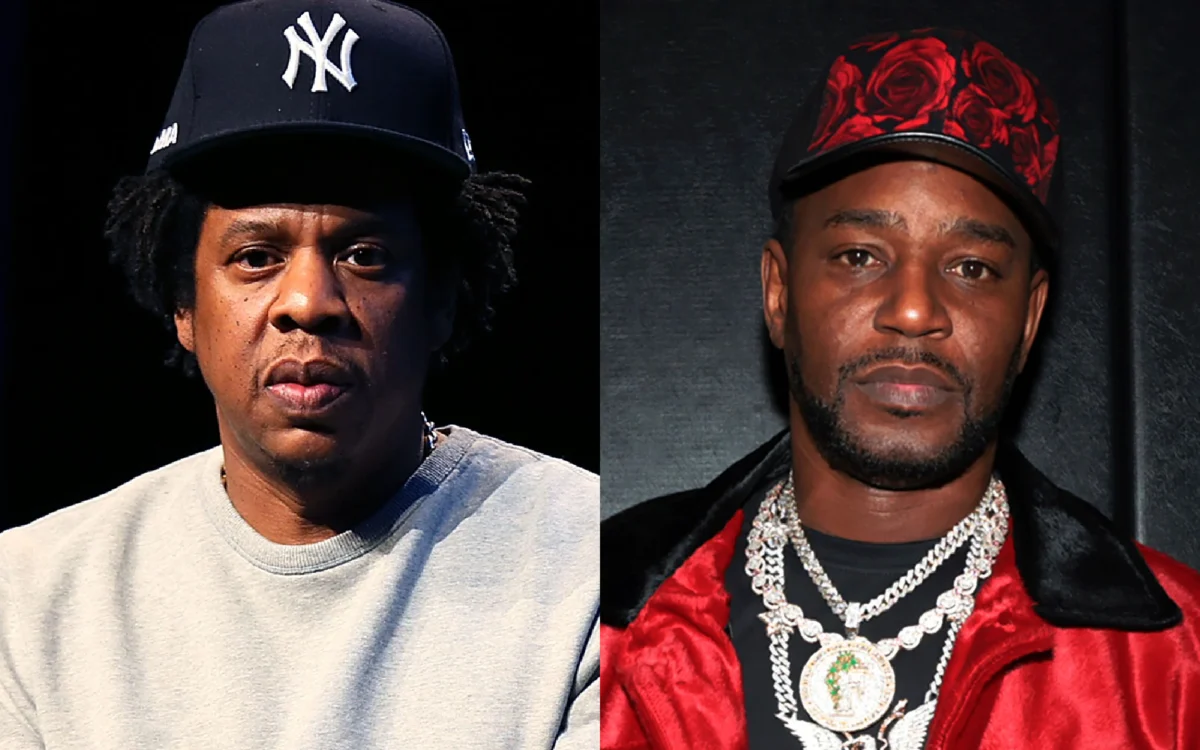
A masterful display of lyrical subtlety by JAY-Z, long admired for his intricate wordplay and strategic messaging, has resurfaced after fifteen years, revealing a meticulously crafted subliminal jab aimed at fellow New York rap legend Cam’ron on the 2011 Watch the Throne track "Otis." The revelation, shared by Killa Cam himself during a recent episode of his REVOLT series Talk With Flee, has sent ripples through the hip-hop community, highlighting the enduring depth of lyrical sparring in the genre and the unforeseen longevity of such carefully placed barbs.
The Unearthing of a Hidden Diss
Cam’ron’s candid discussion on Talk With Flee brought to light a lyrical maneuver that had gone unnoticed by even the most dedicated fans of both artists for over a decade. The Harlem rapper detailed how JAY-Z’s verse on "Otis," a cornerstone track from his collaborative album with Kanye West, contained a direct response to a diss Cam’ron had levied against Kanye West in 2010. This discovery underscores JAY-Z’s reputation as one of hip-hop’s most astute lyricists, capable of weaving complex narratives and retaliations into his music with such finesse that their true meaning can remain hidden for years.
The specific sequence of events leading to this revelation began in 2010 when Cam’ron, alongside Jim Jones, released a freestyle over Kanye West’s critically acclaimed track "Runaway." On this freestyle, Cam’ron directly addressed Kanye, rapping: "Kanye, you a sucka ngga / Dissed Dame, so my attitude is fuck a ngga / Suckin’ Jigga, how you gon’ live with that? / Took your beat, now come get it back." This verse was a direct critique of Kanye West’s perceived disloyalty to Damon Dash, co-founder of Roc-A-Fella Records alongside JAY-Z, and a thinly veiled accusation of West aligning too closely with JAY-Z following the fracturing of the label. The "Dame" reference points to Damon Dash, who had a well-documented falling out with JAY-Z, leading to the dissolution of their partnership and subsequent solo ventures. Cam’ron, a prominent member of Dipset (The Diplomats), a group initially signed to Roc-A-Fella Records, often sided with Dash in these internal disputes, reflecting the complex web of loyalties and rivalries within the Roc-A-Fella empire.
Deciphering the "Otis" Counter-Attack
According to Cam’ron, JAY-Z’s response arrived mere months later with the release of "Otis." The specific lines in question, delivered by Hov in his second verse on the track, are: "Live from the Mercer, run up on Yeezy the wrong way I might murk ya / Flee in the G450, I might surface / Political refugee, asylum can be purchased." Cam’ron meticulously broke down the hidden meaning, connecting the word "asylum" directly to his distribution deal with Asylum Records at the time. This label, a division of Warner Music Group, became Cam’ron’s home after his departure from Roc-A-Fella and later Def Jam, marking a significant chapter in his career as he navigated the music industry with increased independence. The implication was clear: JAY-Z was subtly mocking Cam’ron’s professional refuge, framing it as a purchased sanctuary rather than a natural progression.
Adding another layer of complexity to the lyrical jab, the "political refugee" line can also be interpreted as a pointed reference to The Diplomats’ contentious departure from Roc-A-Fella Records. The group, which included Cam’ron, Jim Jones, Juelz Santana, and Freekey Zekey, had a tumultuous history with the label, culminating in their exit amidst various disputes over creative control, financial arrangements, and the shifting power dynamics within the Roc-A-Fella hierarchy. By labeling Cam’ron a "political refugee," JAY-Z not only acknowledged the past tensions but also subtly diminished Cam’ron’s narrative of independence, suggesting his move was more an escape than a strategic career advancement. This dual interpretation underscores JAY-Z’s unparalleled ability to craft lines that operate on multiple levels, rewarding close listeners with layers of meaning and historical context.
The revelation left Cam’ron and his co-host Sen City in fits of laughter, a testament to the sheer cleverness and longevity of JAY-Z’s lyrical prowess. Both agreed on the undeniable "slickness" of the bars, acknowledging the artistry in delivering such a potent diss under the radar for so many years. This incident serves as a powerful reminder of the intellectual depth embedded within hip-hop lyricism, where feuds are often waged not just through direct confrontation but also through intricate, coded messages designed to be deciphered by a knowing audience.
The Broader Context: Roc-A-Fella’s Fractured Empire and Hip-Hop Rivalries
To fully appreciate the significance of this rediscovered diss, it is crucial to understand the intricate web of relationships and rivalries that defined Roc-A-Fella Records in the late 1990s and early 2000s. Founded in 1995 by JAY-Z, Damon Dash, and Kareem "Biggs" Burke, Roc-A-Fella quickly rose to prominence as a dominant force in hip-hop, fostering the careers of artists like JAY-Z, Kanye West, Beanie Sigel, and Memphis Bleek. The label’s success was built on a foundation of shared vision and aggressive entrepreneurship, but internal tensions eventually led to its splintering.
The fallout between JAY-Z and Damon Dash, which intensified in the mid-2000s, was a pivotal moment. JAY-Z’s ascension to President of Def Jam Records in 2004, a position that placed him above his former partner, exacerbated the divide. Dash felt sidelined and betrayed, leading to a public and acrimonious split that saw many artists and affiliates forced to choose sides. Cam’ron and The Diplomats, who had signed with Roc-A-Fella in 2002 after building a formidable buzz independently, often found themselves caught in the crossfire, frequently aligning with Dash’s perspective, especially as their own relationship with JAY-Z grew strained.
The "Runaway" freestyle, with Cam’ron’s explicit defense of Dame Dash and criticism of Kanye West for "suckin’ Jigga," was a direct consequence of these internal politics. Kanye West, initially a producer for Roc-A-Fella, had transitioned into a superstar artist under JAY-Z’s mentorship, and his loyalty was perceived by some as shifting from the original Roc-A-Fella brotherhood to JAY-Z’s individual empire. Cam’ron’s diss was not just a personal attack but a public declaration of allegiance within a fractured dynasty, tapping into the raw emotions surrounding the label’s demise and the perceived betrayals.
The release of Watch the Throne in 2011, the collaborative album between JAY-Z and Kanye West, represented a symbolic consolidation of power and artistic vision between two of hip-hop’s biggest titans. It was a commercially successful and critically acclaimed project, topping charts globally and spawning multiple hit singles like "Otis." The album’s very existence, a testament to the strong bond between JAY-Z and Kanye, stood in stark contrast to the earlier fractured relationships and implicitly countered any notions of disloyalty that Cam’ron had raised. Thus, JAY-Z’s subliminal jab on "Otis" was not just a response to Cam’ron but also a reinforcement of his alliance with Kanye, delivered at a moment of peak cultural relevance for both artists.
The Art of the Subliminal Diss in Hip-Hop
The incident between JAY-Z and Cam’ron serves as a prime example of the "subliminal diss" – a cherished and often devastating tactic in hip-hop beef. Unlike direct call-outs, subliminal disses require a deeper understanding of the artists’ histories, relationships, and ongoing narratives. They allow the aggressor to maintain plausible deniability while simultaneously sending a clear message to the intended target and an informed audience. JAY-Z, in particular, has mastered this art form throughout his career, often preferring strategic, coded messages over overt confrontations. His ability to craft lines that are both widely appealing and specifically cutting to a select few is a hallmark of his lyrical genius.
This particular diss remaining undiscovered for fifteen years speaks volumes about its sophistication. It wasn’t merely a vague insult; it was a precise, contextualized jab that leveraged Cam’ron’s professional trajectory and the historical nuances of their shared past. The fact that it took Cam’ron himself to break down the connection highlights how deeply embedded these messages can be, often operating like intricate puzzles waiting for the right key. For many hip-hop enthusiasts, the discovery adds another layer of appreciation for the genre’s lyrical depth and the ongoing, often silent, battles that shape its narrative.
JAY-Z’s Continued Relevance and Strategic Moves
The revelation about the "Otis" diss comes at a time when JAY-Z has been firmly back in the headlines, signaling what many fans interpret as a strategic soft-launch for a long-awaited musical comeback. Despite having achieved billionaire status and transitioning into a formidable business mogul, JAY-Z’s connection to music remains potent, and his recent activities suggest a deliberate re-engagement with his artistic roots.
In recent months, the Roc Nation founder has orchestrated the re-release of several rare gems from his extensive catalog, including the original version of "Dead Presidents." These carefully curated drops are not merely nostalgic gestures; they serve to re-engage his core fanbase, remind the public of his foundational contributions to hip-hop, and potentially lay the groundwork for new material. The strategic timing of these re-releases, often accompanied by minimal fanfare, allows the music itself to generate renewed conversation and anticipation.
Further solidifying his presence in the cultural landscape, JAY-Z announced a series of high-profile shows at New York’s iconic Yankee Stadium. These concerts are slated to celebrate the anniversaries of two of his most seminal albums, Reasonable Doubt (1996) and The Blueprint (2001). Both albums are universally acclaimed as masterpieces that redefined the sound and scope of hip-hop, and performing them in a venue of Yankee Stadium’s magnitude underscores JAY-Z’s legendary status and his enduring connection to New York City. The announcement of these shows generated immense excitement, with tickets expected to be in high demand, demonstrating his unparalleled drawing power even after years of limited live performances.
Looking further ahead, JAY-Z has been confirmed as the headliner for the 2026 Roots Picnic festival in Philadelphia. This booking, two years in advance, speaks volumes about his cultural impact and the festival organizers’ desire to secure an artist of his caliber. Headlining such a prestigious event further positions him at the forefront of major musical gatherings, reinforcing his status as a perennial festival draw.
Beyond musical performances and catalog management, JAY-Z recently participated in a rare and extensive interview with GQ magazine. During this candid conversation, he delved into a range of contemporary hip-hop topics, including the much-discussed rivalry between Kendrick Lamar and Drake, offering his seasoned perspective on the dynamics of modern rap beef. He also addressed the backlash surrounding Kendrick Lamar’s Super Bowl halftime show performance and spoke openly about his relationship with J. Cole, another artist often compared to JAY-Z in terms of lyrical prowess and conceptual depth.
In the interview, JAY-Z also revealed he was "close" to appearing on Clipse’s Grammy-nominated album Let God Sort Em Out, offering a glimpse into unreleased collaborations and his continued engagement with the creative process of other artists. Crucially, he addressed the widespread speculation about his potential return to music with a new album. While he joked about having "a lot of scratch ideas and they’re all bad," his subsequent remarks provided a deeper insight into his artistic philosophy. He articulated a clear struggle with finding a creative direction that would truly fulfill him, stating, "I don’t know what I need to create currently that’s going to fulfil me and make me happy, because that’s most important. I know I just got to be honest about what I feel and where I am. Maybe I’m overthinking it. Maybe I’m stopping myself from just creating."
He concluded his thoughts on new music by emphasizing the importance of authenticity and timelessness: "Whatever it is, it just needs to be a true representation of how I feel. Trying to create something that people like is where I think a lot of artists get jammed up. And people can feel that because it’s not authentic. I just got to make something timeless that I really love and that’s really honest and true to who I am." These statements underscore JAY-Z’s commitment to artistic integrity over commercial appeal, a philosophy that has defined much of his celebrated career.
Implications and Enduring Legacy
The unearthing of JAY-Z’s "Otis" diss after 15 years adds a fascinating new chapter to the storied history of hip-hop rivalries and JAY-Z’s enduring legacy as a lyrical craftsman. It reinforces the idea that in hip-hop, every word can carry weight, and every historical context can be mined for deeper meaning. For Cam’ron, the revelation offers a moment of reflection and perhaps even a touch of admiration for his former label mate’s strategic brilliance. For fans, it’s a testament to the rich tapestry of hip-hop history, where even seemingly innocuous lines can harbor intricate backstories and hidden jabs.
This incident also speaks to the generational impact of these artists. Both JAY-Z and Cam’ron, veterans of the genre, continue to shape its narrative, whether through new music, business ventures, or retrospective revelations. The longevity of their careers and the continued analysis of their past work highlight hip-hop’s unique position as both a commercial force and a cultural archive, constantly being re-examined and re-interpreted. As JAY-Z contemplates his next musical move, his ability to weave such subtle yet potent messages into his art remains a defining characteristic, ensuring that his lyrics will continue to be dissected and celebrated for decades to come.


![Sijya announces Leather and Brass [Retrofitted] EP, shares Do I Know [Rachika Nayar Edit]: Listen](https://empire-music.net/wp-content/uploads/2026/09/sijya-announces-leather-and-brass-retrofitted-ep-shares-do-i-know-rachika-nayar-edit-listen.webp)