Johan Budi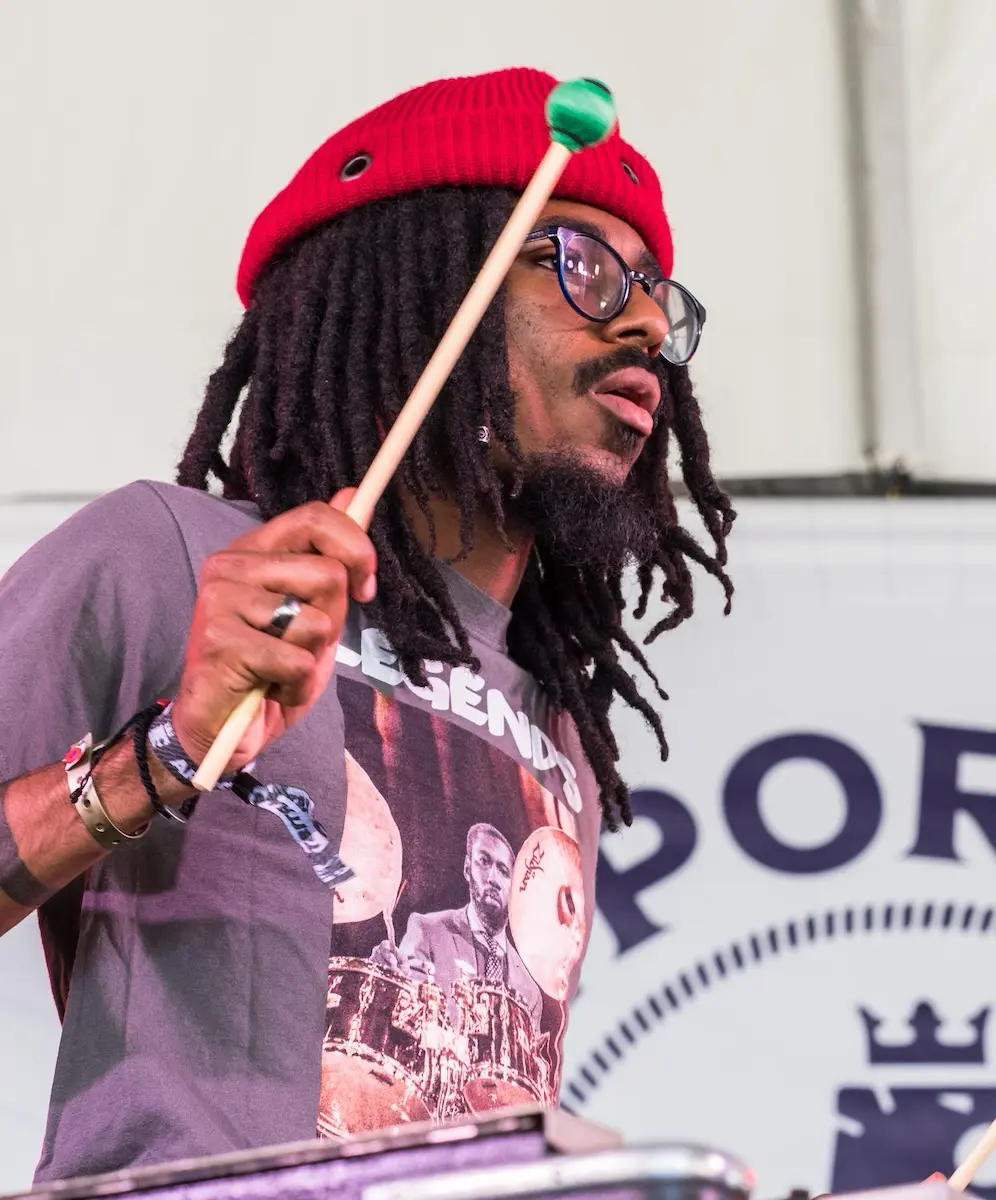
The landscape of contemporary jazz continues to evolve through a sophisticated blend of ancestral reverence and avant-garde exploration, a trend vividly illustrated by the latest releases from vibraphonist Joel Ross and vocalist Aneta George, alongside a critical re-evaluation of the classic collaboration between Gary Peacock and Ralph Towner. These three distinct projects, spanning from archival 1993 recordings to 2025 studio productions, provide a comprehensive overview of the genre’s current trajectory. As the industry navigates the complexities of physical media—ranging from double vinyl pressings to independent digital distributions—the technical proficiency and conceptual depth of these artists underscore the enduring vitality of the jazz tradition.
Joel Ross and the Reimagining of Spiritual Jazz
Joel Ross has solidified his position as a leading voice on the vibraphone, a feat further cemented by his 2025 release for Blue Note Records, titled Gospel Music. While the title suggests a journey through the traditional hymns and soulful structures of the Black Church, the album represents a more nuanced, "sonic interpretation" of Ross’s upbringing. Rather than adhering to the well-worn paths of traditional gospel music, Ross utilizes the genre as a foundational ethos for a deeply individualistic and technical exploration.
Ross’s approach to the vibraphone is notably distinct in a field where many contemporary players favor the harmonic density of four mallets. By opting for a two-mallet technique, Ross emphasizes linear dexterity and rhythmic precision. This choice allows him to navigate complex, shifting rhythms that eschew strict time signatures in favor of fluid, organic movement. The tracks Hostile, Trinity, and Protoevangelium serve as the structural pillars of the album, establishing a modus operandi where bold lines and intentional tension-building figures are stretched to their limits.
The ensemble accompanying Ross includes alto saxophonist Josh Johnson, tenor saxophonist Maria Grand, pianist Jeremy Corren, bassist Kanua Mendenhall, and drummer Jeremy Dutton. This group functions as a cohesive unit, reworking discernible themes over fluctuating rhythmic backdrops. Despite the technical expertise and high production values associated with the Blue Note imprint, some critics note that the later, shorter tracks—such as Praise To You, Calvary, and The Giver—introduce vocal elements that deviate from the instrumental intensity of the album’s first half. Nevertheless, the project stands as a testament to Ross’s growth as a composer and his ability to translate personal history into a modern jazz vernacular.
The Archival Resonance of Oracle: Gary Peacock and Ralph Towner
In a poignant look back at the history of the ECM label, the reissue and re-evaluation of Oracle, a collaborative effort between bassist Gary Peacock and guitarist Ralph Towner, offers a bridge between jazz’s past and present. Originally recorded in Oslo in 1993 and gaining renewed attention following Michael Tucker’s 2026 obituary of Towner, the album remains a definitive example of the "ECM sound"—characterized by spaciousness, melodic clarity, and impeccable recording quality.
Oracle was initially met with mixed reviews in the early 1990s, yet three decades later, it is recognized as a masterclass in duo performance. The chemistry between Peacock and Towner is rooted in their shared commitment to melodicism. While Peacock was often associated with the "free" end of the jazz spectrum, his long tenure in the Keith Jarrett Standards Trio highlighted his ability to anchor complex improvisations with strong, lyrical lines. On Oracle, this lyricism finds a perfect counterpart in Towner’s classical and 12-string guitar work.
The repertoire is largely composed by Peacock, with Towner contributing Hat And Cane and both artists sharing credit for the title track. The recording captures a sense of effortless interaction, with Towner’s assured picking providing a dominant voice that is nonetheless matched by Peacock’s mobile and authoritative bass lines. Historically, Peacock faced occasional criticism regarding his intonation, but Oracle serves as a rebuttal to such claims, showcasing a level of instrumental command that few of his peers could match. The album’s ability to remain accessible without falling into the trap of "easy listening" remains its most enduring quality.
Aneta George and the Fusion of Balkan Traditions
Moving from the established giants of the American and European scenes to the vibrant independent circuit, Macedonia-born vocalist Aneta George has released her fifth album, Eclipses. Recorded in Paris in 2024, the album is a conceptual work timed to coincide with major celestial events—specifically solar and lunar eclipses. This astronomical theme provides a backdrop for George’s exploration of her cultural heritage and its intersection with contemporary jazz and electronic influences.
George’s vocal style is versatile, transitioning seamlessly between wordless improvisations, English lyrics, and her native Macedonian. A centerpiece of the album is Ne Si Prodavaj Koljo Cifligot, a traditional Macedonian piece that stands as the only non-original composition on the record. This track, along with the album’s closer, Dharma, highlights George’s unique position in the global jazz community. Dharma is particularly noteworthy for its "powerful fusion of drum-and-bass with Balkan jazz," a stylistic pivot that injects a modern energy into the otherwise slow-to-mid-tempo collection.
The supporting quintet—featuring Martin Milcent on piano, Denis Guivarc’h on alto saxophone, Nicolas Bauer on bass, and Helios Mikhail on drums—adds significant weight to George’s compositions. Guivarc’h and Mikhail, in particular, provide a robust framework that allows George’s voice to act as an integrated instrument rather than a mere lead. For an artist operating on an independent label, the technical execution of Eclipses is remarkable, signaling George as a talent worthy of broader international recognition.
Chronology of Recordings and Cultural Context
The timeline of these releases illustrates the different speeds at which the jazz world operates:
- May 1993: Gary Peacock and Ralph Towner record Oracle in Oslo, Norway, for ECM Records. The session captures the peak of the label’s influence on European chamber jazz.
- 2024: Aneta George records and releases Eclipses in Paris, utilizing the city’s diverse jazz scene to blend Balkan folk with modern rhythmic structures.
- 2025: Joel Ross releases Gospel Music on Blue Note, marking a significant moment in the label’s ongoing efforts to document the evolution of the vibraphone in the 21st century.
- 2026: The jazz community reflects on the legacy of Ralph Towner following his passing, leading to a resurgence of interest in his collaborative works like Oracle.
This chronology highlights the cyclical nature of jazz, where new releases by young innovators like Ross and George exist in constant dialogue with the archival masterpieces of the previous generation.
Technical Analysis and Industry Implications
The production of these albums reflects the current state of the music industry’s distribution models. Joel Ross’s Gospel Music is available in both digital formats and as a double vinyl set, catering to the growing "audiophile" market that values the tactile and sonic qualities of analog media. This dual-format strategy is increasingly common for major labels like Blue Note, which seek to capitalize on the vinyl resurgence.
In contrast, Aneta George’s Eclipses represents the strength of the independent sector. By releasing the album independently, George maintains full creative control, though she faces the challenges of reaching a global audience without the marketing machinery of a major label. The inclusion of diverse linguistic and cultural elements in her music suggests a target audience that is increasingly globalized and open to "world jazz" fusions.
From a technical standpoint, the instrumentation across these three projects varies significantly. Ross’s vibraphone-led sextet offers a dense, harmonically rich soundscape. The Peacock/Towner duo focuses on the intimate, acoustic interplay of strings. George’s quintet explores the intersection of human voice and electronic-influenced rhythms. Together, they represent the breadth of modern jazz, proving that the genre remains a "big tent" capable of housing spiritual explorations, folk-inflected fusions, and high-concept archival re-evaluations.
Conclusion and Broader Impact
The collective impact of these releases suggests a jazz scene that is both introspective and outward-looking. Joel Ross’s Gospel Music demonstrates that even the most personal and traditional inspirations can be transformed into rigorous, technical art. The enduring relevance of Peacock and Towner’s Oracle reminds listeners that melodic clarity and instrumental chemistry are timeless virtues. Finally, Aneta George’s Eclipses points toward a future where regional folk traditions and modern rhythmic innovations continue to merge.
As these artists continue to tour and record, their work contributes to a broader understanding of jazz as a living, breathing entity. Whether through the prestigious halls of Blue Note and ECM or the independent studios of Paris, the commitment to technical excellence and conceptual depth remains the common thread that binds these disparate musical journeys together. For the listener, these albums offer a rich tapestry of sounds that demand—and reward—attentive engagement.