Jia Lissa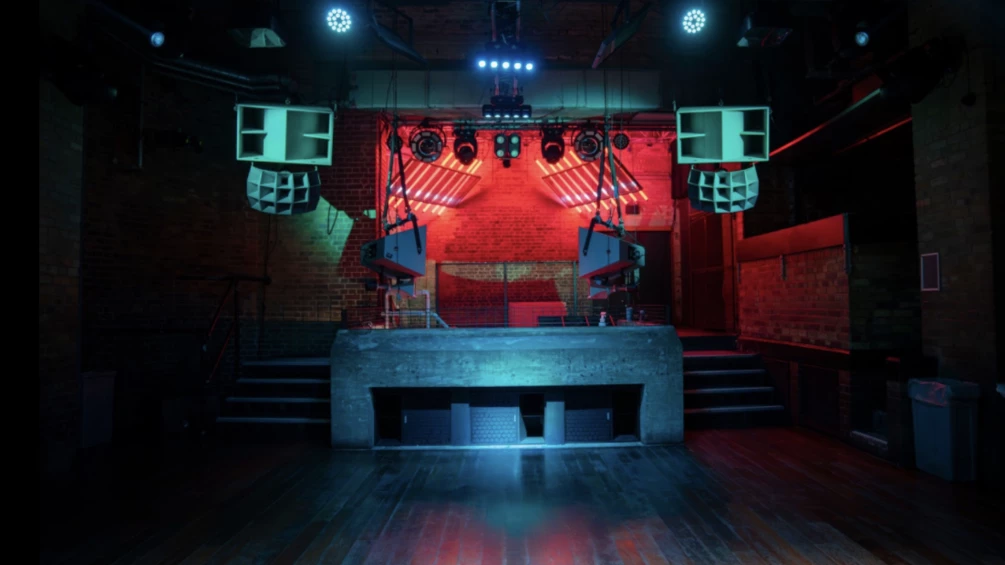
London’s iconic electronic music institution, fabric, has officially announced a monumental upgrade to the sound systems in its renowned Rooms 2 and 3, signifying the first comprehensive redesigns of these integral spaces in nearly a decade. This substantial investment underscores fabric’s unwavering commitment to delivering an unparalleled auditory experience, a hallmark that has defined the club since its inception in 1999. The ambitious project is the result of a meticulous collaboration between Norway’s esteemed venue installation specialists, NNNN Audio, and fabric’s dedicated Technical Manager, Matt Smith, with each new rig meticulously conceived and tailored to the unique architectural nuances, material compositions, and inherent physical dynamics of its respective room.
A Deeper Dive into the Architectural Acoustics and Bespoke Engineering
The process of reimagining the soundscapes for Rooms 2 and 3 was far from a conventional installation; it was an intricate exercise in acoustic engineering, blending cutting-edge technology with a profound understanding of each space’s characteristics. The objective was not merely to replace old equipment but to craft an entirely new sonic identity, optimized for clarity, impact, and an immersive experience that resonates deeply with both the audience and performing artists.
Room 2: Precision, Power, and Panoramic Bass
For Room 2, the engineering team has implemented a sophisticated six-point sound system, a configuration that transcends traditional stereo setups by offering enhanced spatial imaging and a more enveloping sound field. Matt Smith elaborated on the specific technical innovations, stating, "In Room 2, it’s a six-point system — really a quad with side fills — but the unique thing here is the multicell full-range boxes with a 21-inch bass horn on top." This description highlights several critical advancements. A quad system, augmented by side fills, allows for a much broader sweet spot, ensuring consistent sound quality across the dance floor, rather than concentrating optimal audio in a single central point. This approach minimises the phenomenon of "power alley" often found in simpler stereo setups, where bass frequencies coalesce strongly in the middle but dissipate towards the edges.
The inclusion of "multicell full-range boxes" signifies a commitment to precision in sound dispersion. Multicell horns are designed to provide highly controlled coverage patterns, directing sound energy efficiently and uniformly throughout the space while minimising unwanted reflections from walls and ceilings. This contributes significantly to overall sound clarity and intelligibility, ensuring that every nuance of the music is heard distinctly.
Perhaps the most striking innovation in Room 2, as highlighted by Smith, is the integration of a "21-inch bass horn on top." This is a significant specification in professional audio. A 21-inch driver is exceptionally large for a bass speaker, capable of moving a substantial volume of air to produce very low frequencies with considerable power. When coupled with a horn-loaded enclosure, the efficiency and projection of these bass frequencies are dramatically increased. Horn-loaded designs use the principle of acoustic impedance matching to couple the speaker driver more effectively with the air, resulting in higher sound pressure levels (SPL) for a given amount of power and an incredibly visceral bass response. This means not only a deeper, more resonant bass but also one that feels more immediate and impactful on the body, a crucial element in electronic music experiences.
Further enhancing the low-frequency performance, Smith revealed, "We’ve also got seven bass bins around the room in a horseshoe shape." This strategic placement of multiple subwoofers around the perimeter of the room is a sophisticated approach to bass management. Instead of concentrating all bass energy from a single point, a distributed system helps to create a more even bass response throughout the space, reducing standing waves and nulls that can occur with fewer, centrally located subwoofers. The "horseshoe shape" suggests a deliberate pattern designed to complement the room’s geometry, optimising bass delivery for maximum impact and consistency across the dance floor, allowing the sub-bass to envelop club-goers from multiple directions. The cumulative effect of these meticulously designed elements is a sound system that promises unparalleled clarity, immense power, and a deeply immersive low-frequency experience in Room 2.
Room 3: Conquering Acoustic Challenges with Ground-Shaking Bass
Room 3 presented its own unique set of challenges, as acknowledged by Matt Smith: "Room 3’s actually really tricky, but the most impressive thing about that system is the new subs in there — they can wobble the concrete floor." The difficulty in Room 3 likely stems from its specific dimensions, ceiling height, and perhaps the reflective nature of its construction materials, common issues in industrial-style venues. Concrete floors and walls, while durable, are notorious for their poor acoustic properties, often leading to excessive reverberation and an uncontrolled bass response.
To mitigate these issues and tame the challenging acoustics, the team initiated the project by installing "acoustic panels." These panels are crucial for absorbing unwanted sound reflections, particularly in the mid and high frequencies, thereby reducing reverberation time and improving overall sound clarity. This foundational acoustic treatment creates a more controlled sonic environment, allowing the new sound system to perform optimally without being hindered by the room’s inherent reflections.
The true marvel of Room 3’s upgrade, however, lies in its new subwoofers. The statement that they "can wobble the concrete floor" is not hyperbole but a testament to their immense power and precision. Modern subwoofer technology, leveraging advanced driver materials, powerful voice coils, and highly efficient amplification, is capable of generating incredibly high sound pressure levels at very low frequencies, often below the threshold of human hearing, yet perceivable as physical vibration. These subs likely employ high-excursion drivers within robust, precisely tuned enclosures, driven by amplifiers capable of delivering massive bursts of clean power. The result is a tactile, physical bass experience that literally vibrates through the floor, transforming the act of dancing into a full-body sensation – a signature element of the fabric experience.
The rapid deployment of this complex system is also noteworthy. Smith recounted, "We did the acoustic panels, removed the old system and put this new system up within five days, then opened for a 24-hour event." This compressed timeline speaks volumes about the meticulous planning, pre-fabrication, and highly efficient execution by NNNN Audio and fabric’s technical team. Such a swift turnaround for a major sound system overhaul minimises operational downtime, allowing the club to maintain its demanding schedule and cater to its loyal patrons without significant interruption. This logistical feat underlines the professionalism and dedication invested in these upgrades.
A Legacy of Sonic Excellence: fabric’s Unrelenting Pursuit of Perfection
Fabric’s reputation as a global leader in electronic music is inextricably linked to its pioneering approach to sound. Since its grand opening in 1999, the Farringdon venue has consistently prioritised audio quality, setting benchmarks for the industry and cementing its status as a pilgrimage site for discerning clubbers worldwide. This latest upgrade to Rooms 2 and 3 is not an isolated event but a continuation of a sustained, strategic investment in the club’s core offering.
A Chronology of Innovation and Investment:
- 1999: Grand Opening & Initial Acoustic Prowess: fabric opens its doors, immediately distinguishing itself with an unparalleled sound system, particularly the legendary Martin Audio rig in Room 1, setting a new standard for club acoustics.
- 22nd October 2016: Room 2’s Last Major Upgrade: Prior to the current overhaul, Room 2 received its last significant sound system upgrade, enhancing its capabilities to meet evolving demands.
- 2018: Room 3’s Previous Enhancement: Room 3 also saw an upgrade, though less extensive than the current full redesign, demonstrating ongoing commitment to maintaining high standards.
- 2023: Holistic Enhancements Beyond Sound: The venue expanded its offering, introducing a corner shop and a pizza station within the club, showcasing a broader strategy to enhance the overall patron experience, though the core focus remained on the musical journey.
- Early 2024: Room 1’s Transformative Upgrades: In a landmark move, fabric initiated a major enhancement to its iconic Room 1. This included the installation of a groundbreaking Bodykinetic dance floor, a pioneering technology designed to improve low-frequency transmission directly to the dancer’s body, transforming bass into a physical sensation. Simultaneously, Room 1’s legendary Martin Audio rig received its first substantial enhancement in the club’s 25-year history, ensuring its continued dominance in the realm of club sound.
- Mid-2024: Rooms 2 & 3 Full Redesigns: The culmination of this investment strategy sees the complete redesign and installation of new, bespoke sound systems in Rooms 2 and 3, marking the most comprehensive overhaul in these spaces in almost a decade.
This timeline clearly illustrates fabric’s proactive approach to maintaining its sonic supremacy. Unlike many venues that might only upgrade out of necessity, fabric consistently invests to push the boundaries of what is possible in a club environment. The upgrades to Room 1, including the Bodykinetic dance floor, which uses tactile transducers to transmit sub-bass frequencies directly through the floor, effectively turning the dance floor itself into a giant subwoofer, highlight fabric’s willingness to embrace experimental technologies to deepen the immersive experience. The enhancement of the quarter-century-old Martin Audio rig in Room 1 also speaks to a respect for legacy combined with a drive for continuous improvement.
The Philosophy Behind the Sound: NNNN Audio’s Vision
The collaboration with NNNN Audio brings a specific philosophical approach to sound system design, as articulated by a spokesperson for the Norwegian firm: "At fabric, sound, architecture and culture are inseparable. Our approach to these systems was to design an experience that is not just technically optimised for the rooms, but that also belong visually and physically within fabric’s raw, industrial spaces." This statement encapsulates the holistic design methodology that guided the project. It acknowledges that a club’s sound system is not merely an assemblage of loudspeakers but an integral part of its identity, influencing the aesthetic, the atmosphere, and ultimately, the cultural impact of the venue.
NNNN’s philosophy emphasises seamless integration, both acoustically and visually. "The goal has been simple: to create a system that disappears visually into the architecture, but is deeply felt on the dance floor — delivering clarity, energy and emotional impact for both the audience and the DJs." This principle of "disappearing visually" is critical in industrial-style venues like fabric, where the raw, utilitarian aesthetic is part of the charm. The technology should enhance the experience without overtly dominating the visual space, allowing the focus to remain on the music and the interaction.
The emphasis on "clarity, energy and emotional impact" for both audience and DJs is a nuanced understanding of the club experience. For the audience, clarity ensures every layer of the music is heard, energy fuels the dance floor, and emotional impact creates lasting memories. For DJs, a precise and powerful monitor system allows them to mix with greater confidence and expressiveness, fostering a stronger connection with their craft and the crowd. This mutual benefit underscores a design philosophy centered on the entire club ecosystem.
Broader Implications and Industry Impact
These significant investments by fabric carry substantial implications, both for the club itself and for the wider electronic music industry.
Elevating the Clubbing Experience:
For patrons, the upgrades promise an even more profound and immersive experience. The enhanced clarity across all frequency ranges, combined with the visceral, body-shaking bass, will allow them to connect with the music on an unprecedented level. Less acoustic fatigue, greater sonic detail, and a more consistent sound field mean longer, more enjoyable nights on the dance floor. For DJs, performing on systems of this calibre is a dream, allowing them to showcase their selections with maximum fidelity and impact, fostering greater creativity and engagement.
Setting New Industry Standards:
In an increasingly competitive global clubbing landscape, fabric’s continuous investment in its core offering sets a new benchmark for audio excellence. While many venues might focus on aesthetics or diverse programming, fabric consistently reiterates that the fundamental experience – the sound – remains paramount. This could inspire other venues to re-evaluate their own sound infrastructure, driving an overall improvement in audio quality across the industry. Such innovation helps to solidify London’s position as a global hub for electronic music.
Technological Advancement and Bespoke Solutions:
The bespoke nature of these installations, tailored specifically to each room’s unique characteristics, highlights a trend towards highly customised audio solutions rather than off-the-shelf systems. It showcases the power of combining expert acoustic design with cutting-edge audio technology, pushing the boundaries of what is achievable in a live club environment. The specific technical details, such as 21-inch horn-loaded bass drivers and multicell full-range boxes, demonstrate a commitment to pushing technological frontiers for optimal sonic performance.
Reinforcing a Legacy:
By consistently reinvesting in its sound, fabric reinforces its legacy as a pioneer and a guardian of the clubbing experience. It demonstrates a forward-thinking vision that balances respect for its rich history with a relentless pursuit of innovation. These upgrades are not just about sound; they are about preserving and enhancing the very essence of what makes fabric a cultural institution.
Conclusion
The comprehensive redesigns of Rooms 2 and 3’s sound systems at fabric represent more than just a technical overhaul; they symbolise a renewed commitment to the club’s foundational ethos: delivering an unparalleled auditory journey. Through the collaborative expertise of NNNN Audio and fabric’s internal technical team, the venue has once again elevated its sonic capabilities, ensuring that every beat, melody, and texture is delivered with breathtaking clarity, power, and emotional resonance. As fabric continues its quarter-century journey, these upgrades cement its position at the vanguard of the global clubbing scene, promising an even more immersive and unforgettable experience for generations of music lovers to come. The sound of fabric, already legendary, has just become even more extraordinary.