Mia Khoirunisa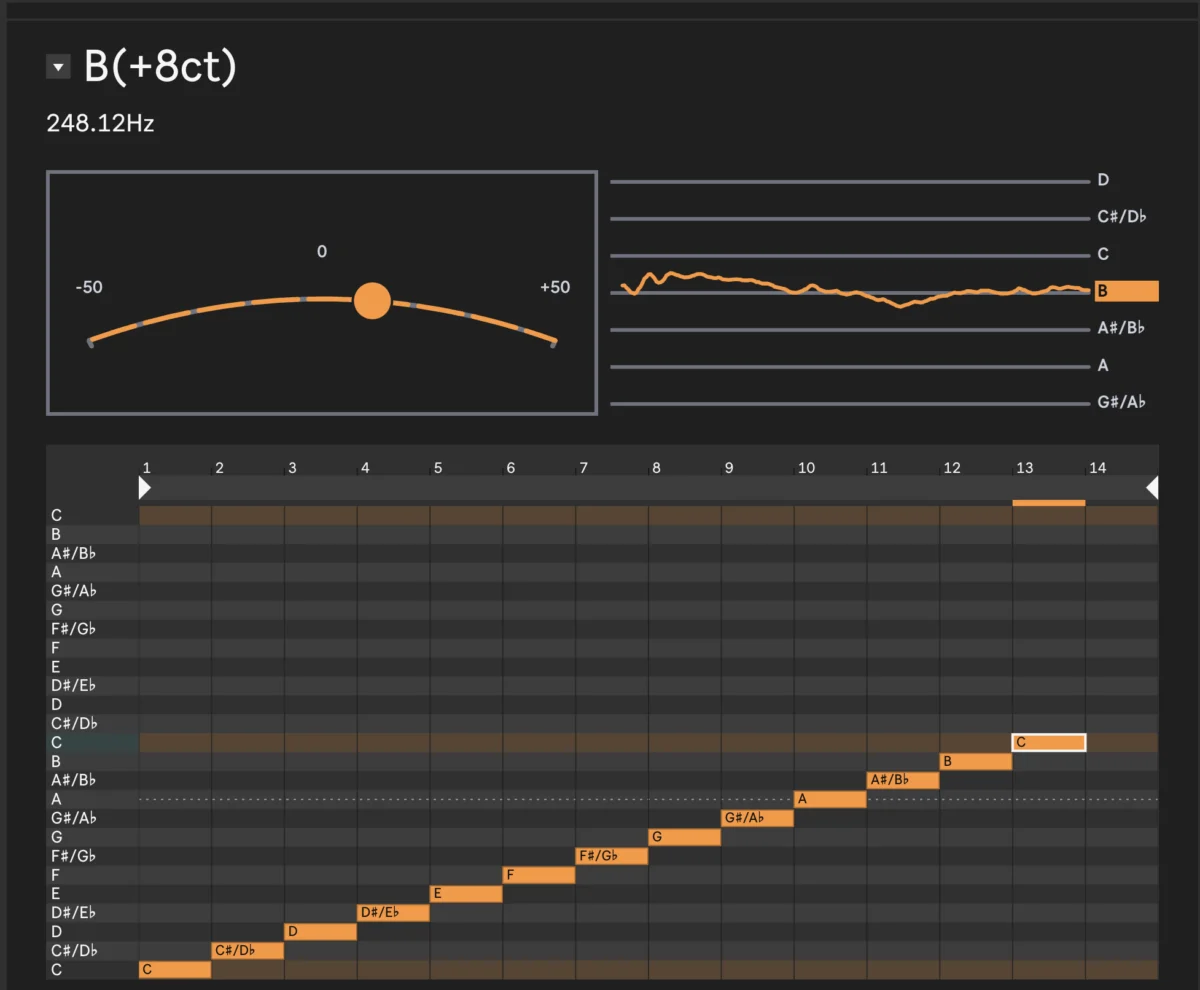
Feeling the need to make music making a little less solitary? In this multi-part series, we’ll be exploring some resources for adapting Ableton Live to playing with others — playing in tune, in sync, sharing ideas, and producing together. So let’s start as instrumental ensembles do: by tuning up. This article contains some affiliate links; if you buy something from a CDM link, we may earn a commission.
The Imperative of Harmonic Cohesion in Digital Music Creation
In the evolving landscape of music production, the desire for collaborative creation within digital audio workstations (DAWs) like Ableton Live has grown significantly. While the solitary nature of studio work has long been a hallmark of electronic music, the advent of sophisticated tools and workflows is now bridging the gap between individual creativity and group performance. This comprehensive exploration delves into the multifaceted ways Ableton Live can be adapted to foster collaborative music-making, with a particular focus on achieving harmonic and temporal synchronicity. This initial installment concentrates on the foundational element of playing in tune, a critical aspect for any ensemble, whether acoustic or electronic.
The impetus behind this series stems from a recognition that shifting from solo creative endeavors to collaborative sessions, especially within the technological realm of Ableton Live, often necessitates dedicated preparation and the adoption of specific strategies. This article aims to compile and elucidate these approaches, fostering discussion and further exploration within the music production community. The focus is specifically on in-person, physical space collaboration, acknowledging the unique demands and opportunities presented, particularly when integrating with acoustic musicians.
Establishing a Shared Sonic Foundation: The Role of Tuning
The journey into collaborative music-making with Ableton Live begins with ensuring a unified harmonic foundation. For instrumental ensembles, this is typically achieved through meticulous tuning. Ableton Live, while a powerful standalone tool, requires specific configurations to facilitate this shared tuning objective.
Leveraging Built-in and Third-Party Tuners
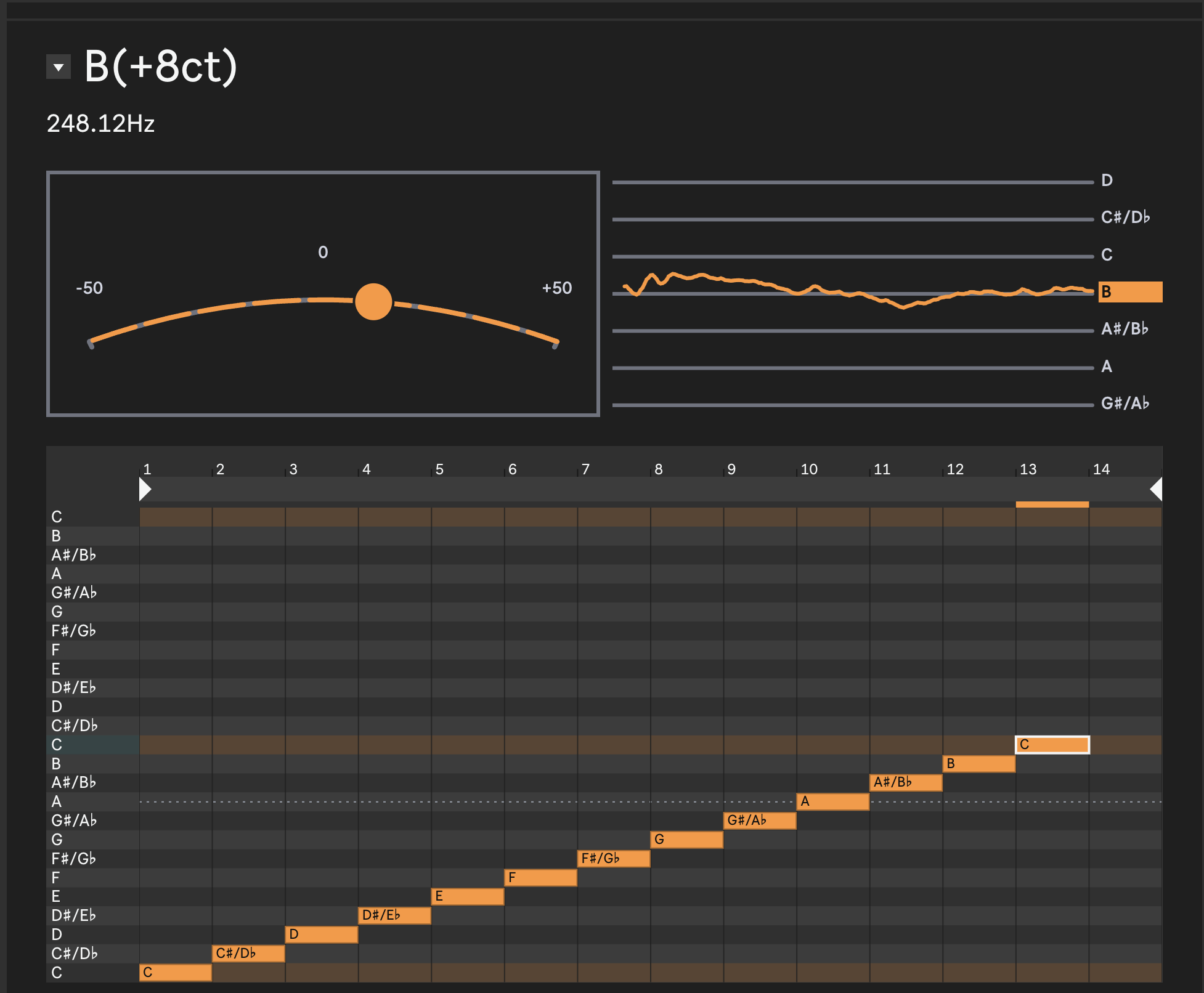
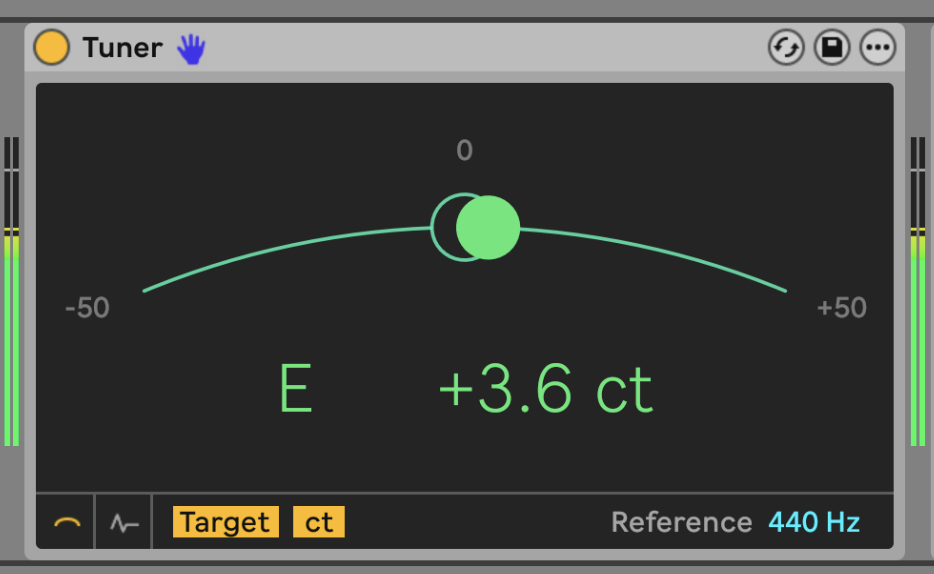
Ableton Live, by default, does not possess a singular, universally referenced pitch standard outside of its "Tuning Systems" feature introduced in Live 12. However, the integrated Tuner device, first introduced in Ableton Live 9.2, serves as a crucial tool for monitoring incoming audio pitch. This device can function as a tuner for external instruments or provide a reference point for calibrating software synthesizers and the Live session itself. By inserting the Tuner on a track receiving audio input or following a software synthesizer, users can accurately measure and adjust pitch.
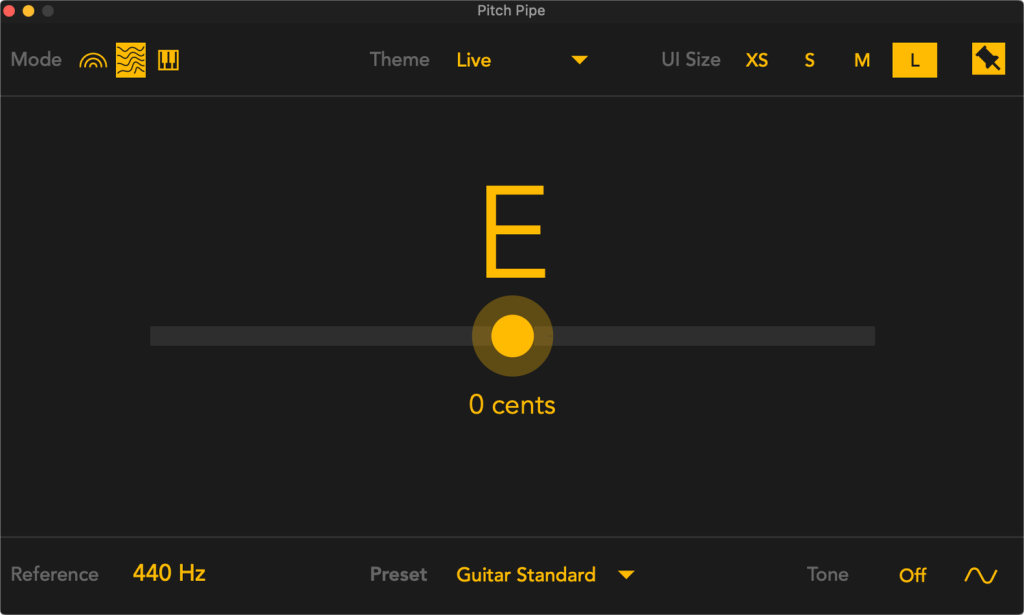
Beyond the native offering, third-party Max for Live devices significantly enhance tuning capabilities. Iftah’s Pitch Pipe is a prime example of an advanced tuner designed with accessibility in mind, catering to visually impaired and sighted users alike. It offers specialized modes for various instrument families, including strings and percussion. Available on a pay-what-you-choose model, Pitch Pipe aims to remove financial barriers to high-quality tuning tools while supporting ongoing development.
Bridging the Analog and Digital Divide: CV Tools and Modular Integration
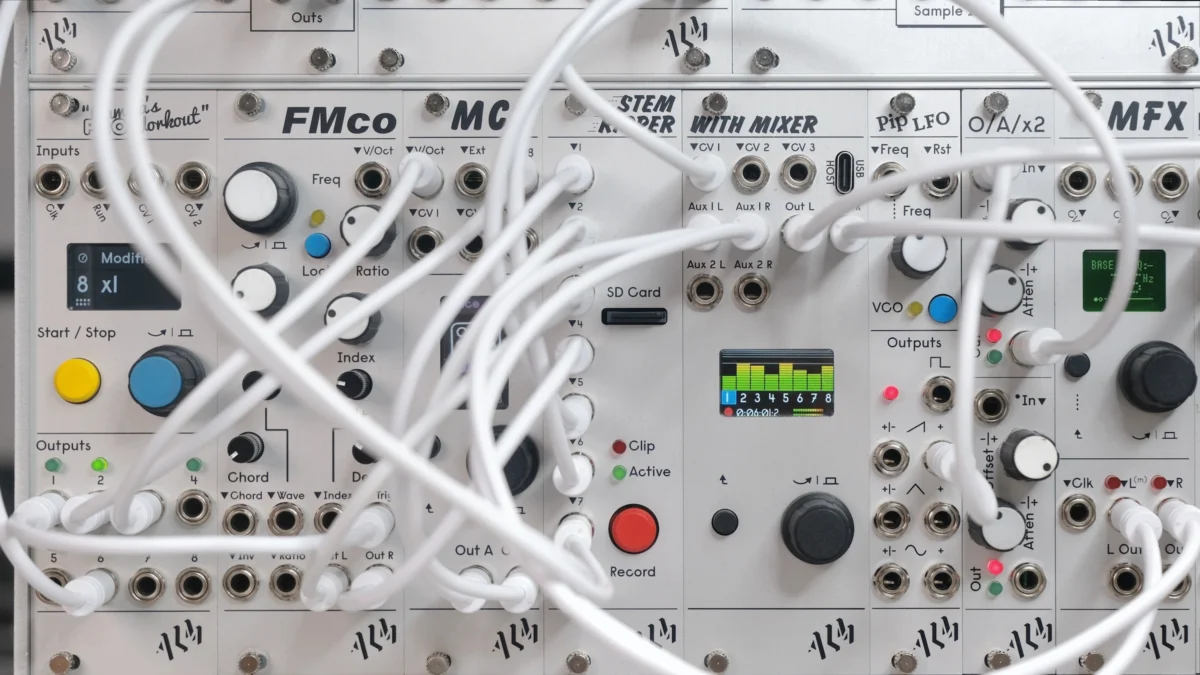
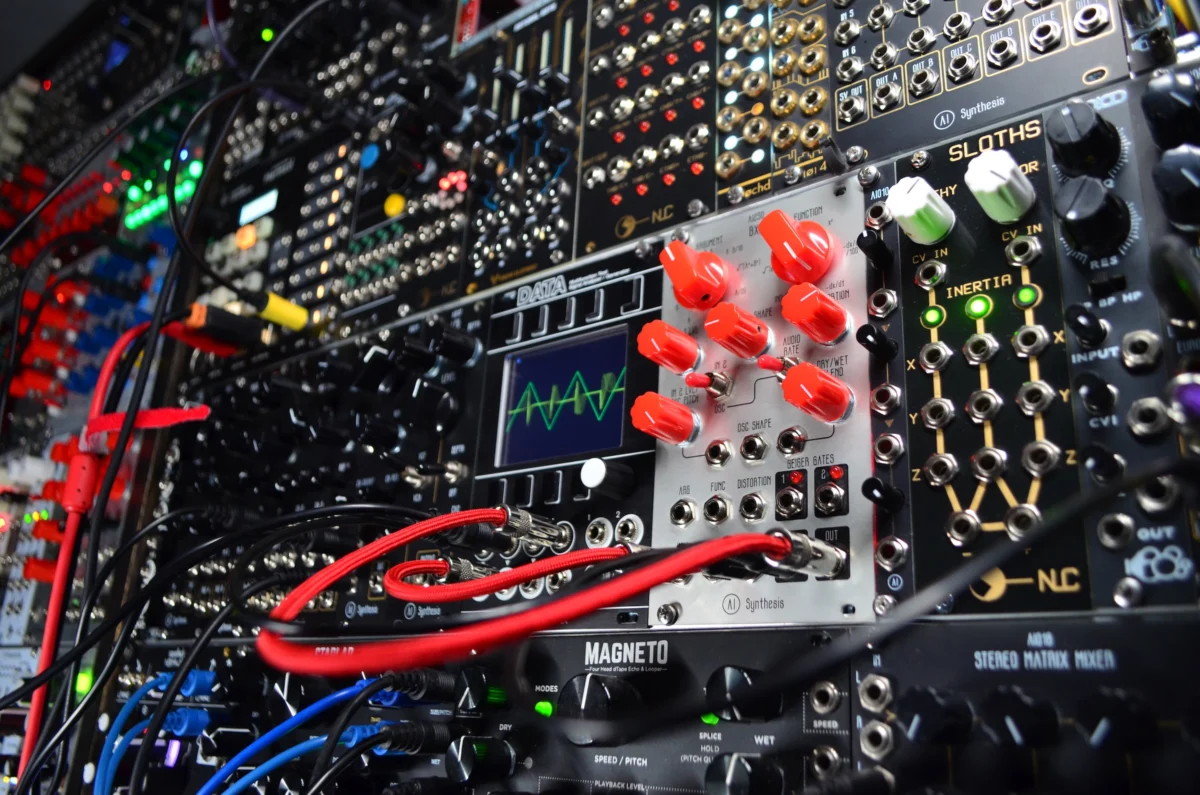
The principles of tuning analog oscillators in modular synthesizers mirror those of tuning traditional instruments, and many of the same tuning tools can be effectively employed. Ableton Live 10.1 and later versions support Ableton CV Tools, a suite of devices that enables seamless integration with modular hardware. For users with Push 3, the hardware itself can serve as a powerful interface, even in its standalone mode.
The CV Instrument device within CV Tools is instrumental in tuning modular equipment. Extensive guides, such as the one provided by Kirk Degiorgio, demonstrate its practical application. A critical consideration for utilizing CV Instrument is the use of a DC-coupled audio interface. Unlike AC-coupled interfaces, DC-coupled versions allow for the direct transmission of control voltage (CV) signals without attenuation, which is essential for accurate pitch and gate information. Ableton’s own FAQ and resources from audio equipment retailers like Sweetwater offer guidance on identifying and utilizing DC-coupled interfaces.
Even without a dedicated DC-coupled interface, the CV Tools suite offers valuable functionalities. Devices like CV Clock, CV Clock Out, and CV Triggers enable precise synchronization. The "Pitch" mode of CV In converts incoming pitch to CV, which can then be used to control external gear. Furthermore, any MIDI-to-CV converter can facilitate pitch calibration, with some interfaces offering their own built-in calibration routines. The integration of software modular systems within Live, such as VCV Rack, Cardinal, AAS Multiphonics CV-3, Softube Modular, and Reaktor Blocks, also benefits from these techniques, often leveraging their internal tuning, scale constraints, and pitch tracking capabilities.
Capturing and Responding to Pitch and Amplitude
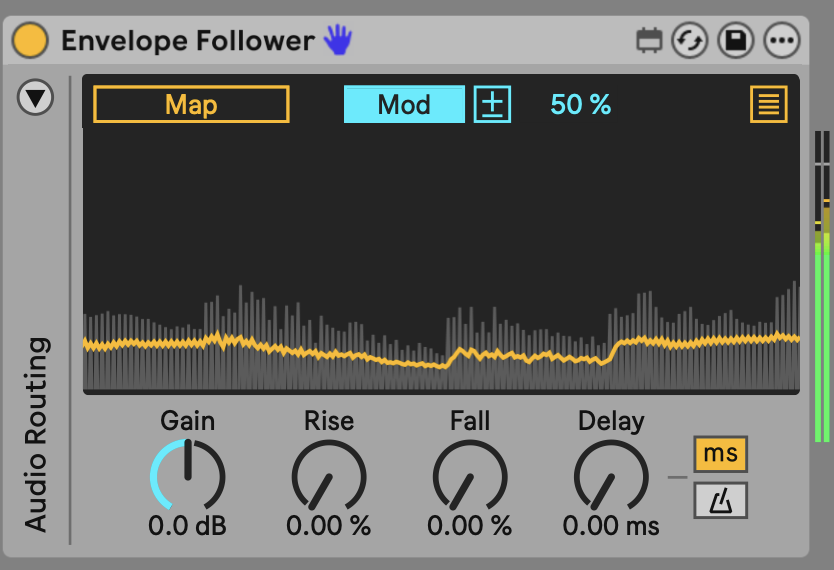
Beyond transmitting signals out of Live, the ability to respond to incoming audio is crucial for dynamic collaboration. The Envelope Follower, now a standard modulator in Ableton Live (with a version available in Max for Live Essentials dating back to Live 9), tracks the amplitude envelope of an audio signal. While not directly related to pitch, this tool opens avenues for dynamic control based on the nuances of an external performance.
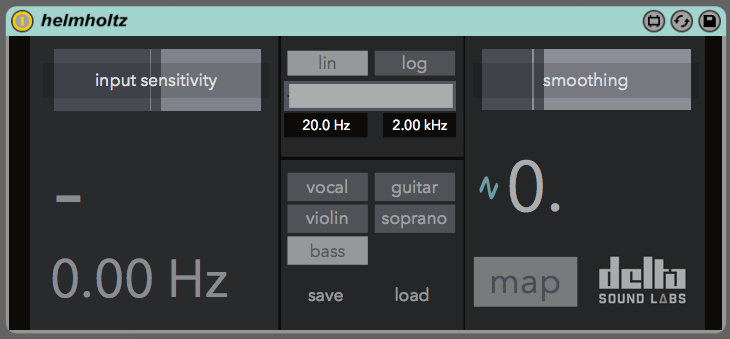
However, for direct pitch tracking, Live currently lacks a built-in Pitch Follower. A highly regarded third-party solution is the free Helmholtz Pitch Follower by Delta Sound Labs, available via Max for Live. This device allows users to map pitch tracking data to virtually any parameter within Live, enabling real-time sonic responses to melodic input.
Navigating the Landscape of Musical Keys and Scales
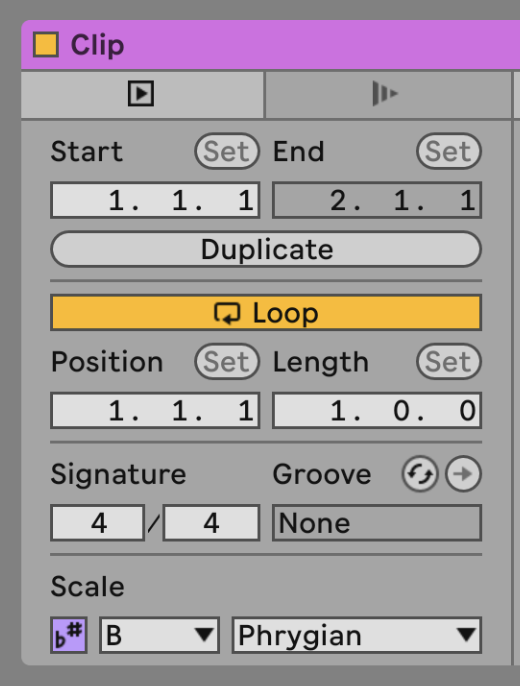
For musicians working within the framework of 12-Tone Equal Temperament (12-TET) or closely related tunings, Ableton Live’s Scales and Scale Root features offer significant advantages for live performance and collaborative jamming. These tools can be applied not only to clip editing but also to real-time MIDI input, particularly when using hardware controllers like Push.
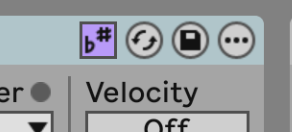
The Scale Root and Scale Name are set in the toolbar, with a dedicated toggle for Scale mode. It is important to note that these features do not alter the underlying tuning of Live; rather, they constrain MIDI notes to conform to the selected scale. While some non-Western scale names might be less directly applicable to 12-TET without specific tuning adjustments, many modern interpretations of scales like Pelog, Hirajoshi, and Iwata are often adapted to 12-TET in contemporary music.
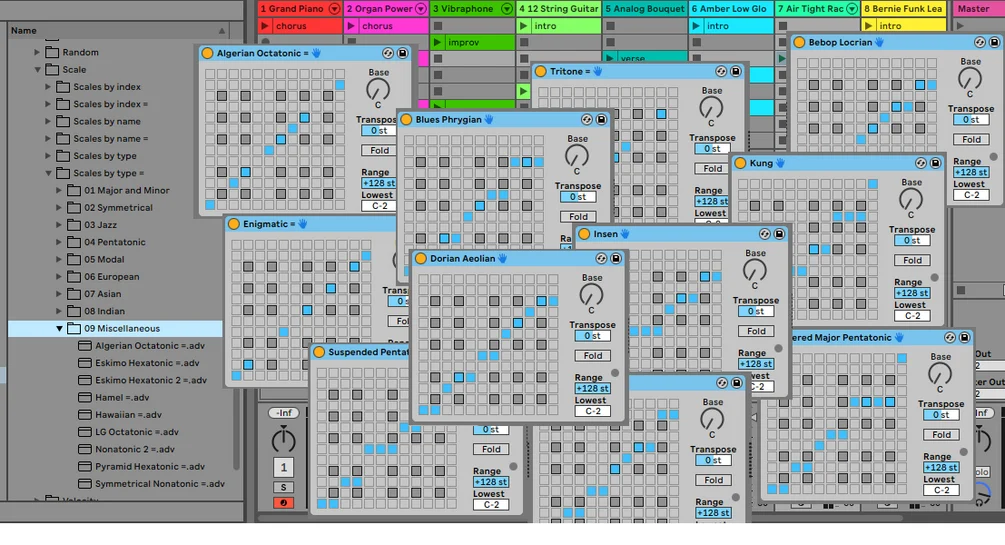
Numerous Ableton devices are designed with Scale Awareness, meaning they adapt their behavior based on the selected scale and root note. When applied to a MIDI track or used with Push in standalone mode, these devices ensure that performances remain harmonically coherent within the chosen scale, fostering a sense of effortless improvisation and reducing the likelihood of playing "wrong notes." This feature can be particularly beneficial for producers and performers seeking to explore complex harmonic structures with ease.
The Quantizer device, with its "Auto Shift" function, can also be used for auto-tuning, which is useful for synchronizing oscillators and filters in complex instruments like Meld. Devices supporting Scale Awareness typically display a Scale icon in their device toolbar, indicating their compatibility.
Automating scale changes can further enhance live performances. By assigning different root notes and scales to specific clips, musicians can trigger harmonic shifts dynamically during a set. This strategy allows for evolving musical textures and can transform arpeggiators and improvisational passages, ensuring they remain in sync with the established mode or scale. Advanced Max for Live devices, such as "Advanced Scale Awareness Control for Ableton Live 12," offer even greater flexibility, enabling scale changes to be automated from Arrangement view for those who prefer that workflow.
Expanding the Palette: User-Generated and Third-Party Scale Libraries
While Ableton’s built-in scales are not directly editable within Live, users can create custom scale presets using the Scale MIDI Device. The midi-2-the-max library offers a substantial collection of free scale presets for Ableton Live 11, greatly expanding the available harmonic options.
For users seeking more comprehensive scale management and synchronization across their projects, Scale-O-Mat is a valuable tool. It integrates with Live’s native Scale Device, synchronizing all instances of the device throughout a set and facilitating transposition.
Hardware Integration: Pushing the Boundaries of Live Performance
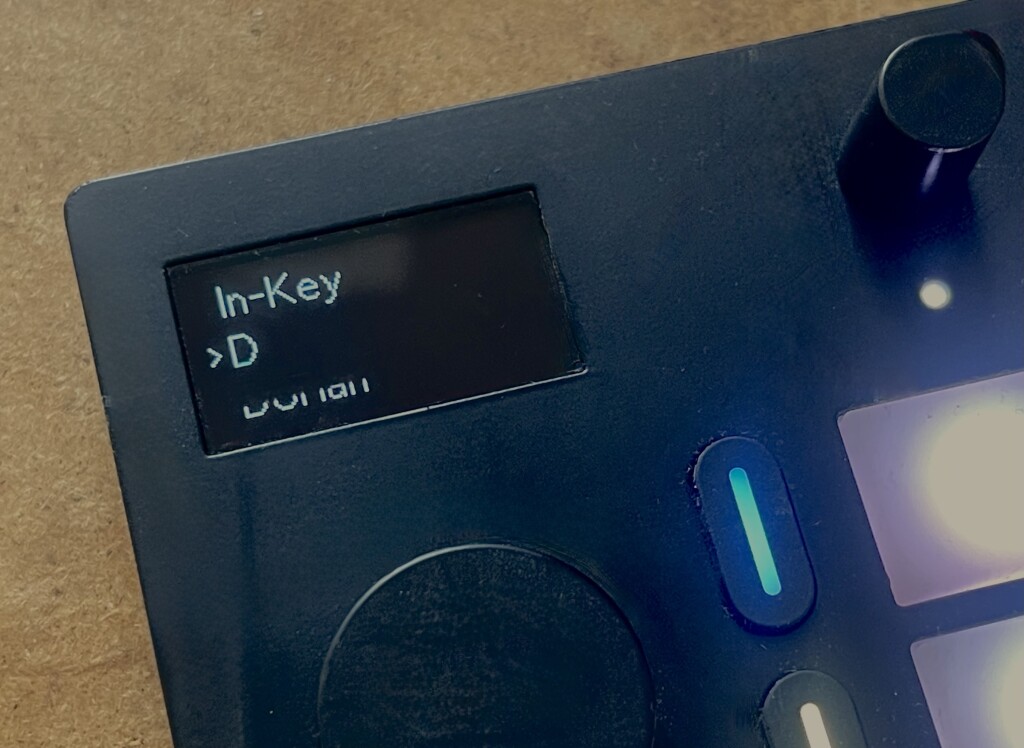
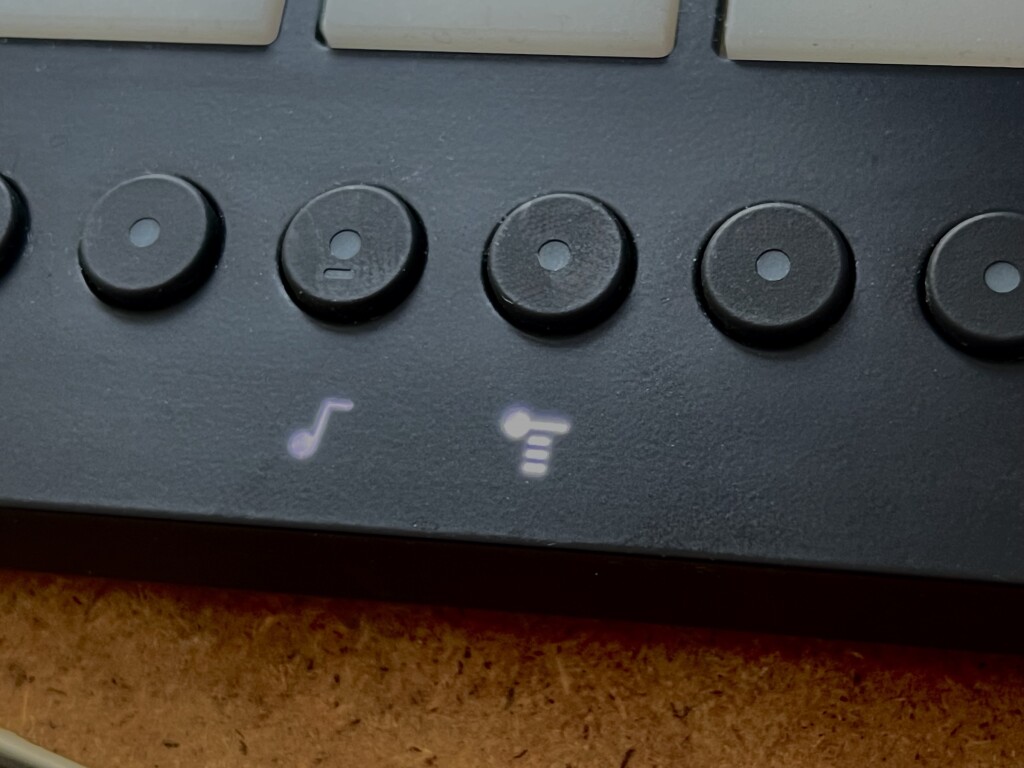
Ableton’s dedicated hardware controllers, Push and its successor, Move, offer integrated scale settings that streamline live performance. On Move, the "In-Key" options provide direct access to scale constraints. Setting up instrument layouts on Move before a jam session can significantly enhance portability and spontaneity.
Push 2 and Push 3 share a similar Note Mode setup, which can be reviewed in dedicated tutorials. Crucially, these configurations are now saved with Ableton Live Sets, allowing for the creation of song-specific scale settings within a setlist.

Advanced Tools for Harmonic Exploration
The Max for Live community continues to provide innovative solutions that extend Ableton’s native capabilities. Tritonet v3 by Tolga Zafer Özdemir is a recent, powerful device that offers extensive harmonic control. It features live visualizations of the circle of fifths, hundreds of scales, chord generation, and integrations with MIDI (including MPE) and audio (Resonator). Tritonet v3 is highly compatible with Push and Move but also functions effectively with other MIDI controllers.
Chord Change by XY Studio Tools focuses on real-time chord progressions and can synchronize harmonic changes across up to eight tracks simultaneously, enabling a form of "conducting" harmonic movement within a composition.
The Nuances of Tuning Systems: Beyond Equal Temperament
Ableton Live 12 introduced Tuning Systems, a groundbreaking feature that addresses the limitations of 12-Tone Equal Temperament. While common in Western music, not all instruments or musical traditions adhere to this tuning standard. Tuning Systems allow users to define and apply precise tuning configurations to their Live session, ensuring compatibility with musicians employing alternative tunings.
Users can select from built-in presets or import Scala files, which are a standard format for microtuning information. Loading a Tuning System disables Live’s Scale mode, as Scale mode inherently assumes equal-tempered intervals. The selected Tuning System then influences all tuning-aware devices within Live.
Internal Ableton instruments and some audio effects are designed to work seamlessly with Tuning Systems. For third-party plug-in support, MPE (MIDI Polyphonic Expression) compatibility is often required. Enabling MPE mode and applying tuning to per-note pitch bend within these plug-ins is crucial. Some plug-ins, like Arturia’s Pigments, may also require internal MPE pitch settings to be configured. Thorough testing, starting with Ableton’s native Drift synthesizer before moving to third-party options, is recommended to ensure accurate implementation.
The widespread adoption of MPE pitch support in modern plug-ins and software modular environments means that per-note pitch control, essential for microtunings, is increasingly accessible even without explicit MPE expression.
Crafting Bespoke Tunings for Collaborative Harmony
The ability to create custom tuning systems is paramount for authentic collaboration with musicians using non-standard tunings. Ableton’s free tuning.ableton.com/make-your-own-tuning/ website provides comprehensive tools for learning about tunings and constructing personalized ones, complete with MIDI and pitch input. These custom tuning systems can be exported as Scala files and seamlessly integrated into Live by dragging and dropping them into the active Tuning System slot.
For more advanced tuning design, tools like Leimma by Counterpoint and Khyam Allami offer sophisticated features for creating ratios and fine-tuning measurements that surpass Ableton’s browser tool. Leimma allows for exporting in Scala file format, ensuring compatibility with Live.
Alternative Tuning and Microtuning Solutions
Beyond Ableton’s native features, MTS-ESP offers a compelling alternative for automating tunings across multiple devices, independent of the Ableton and MPE ecosystem. It provides advanced internal tuning editing capabilities.
Scale Breaker by Chaos Culture is another advanced tool offering unique microtuning features, including morphing and adaptive just intonation, with compatibility extending back to Live 10.
The Path Forward: Embracing Collaborative Musicality
The exploration of tuning and scale manipulation within Ableton Live is merely the first step in a broader journey towards seamless collaborative music-making. Future installments in this series will delve into critical aspects such as achieving temporal synchronicity through clock and sync mechanisms, leveraging Ableton Link, managing latency, exploring the new Ableton Link Audio feature, facilitating project exchanges, and discovering innovative methods for live collaboration and jamming.
The tools and techniques discussed herein represent a significant leap forward in empowering musicians to connect and create together within the digital domain. Whether orchestrating complex harmonic landscapes or simply ensuring a shared sonic foundation, Ableton Live, augmented by its ecosystem of devices and community-driven innovations, offers a robust platform for realizing the full potential of collaborative musical expression.
The availability of Live 12, with its enhanced features for tuning and scales, alongside flexible upgrade paths and rent-to-own options, further lowers the barrier to entry for musicians eager to explore these collaborative possibilities.
For questions, ideas, or feedback, direct engagement with the creators and community is encouraged. This series aims to be a valuable resource, a bookmarkable guide for anyone preparing for their next musical collaboration, fostering a more connected and harmonically rich future for digital music creation.


![Sijya announces Leather and Brass [Retrofitted] EP, shares Do I Know [Rachika Nayar Edit]: Listen](https://empire-music.net/wp-content/uploads/2026/09/sijya-announces-leather-and-brass-retrofitted-ep-shares-do-i-know-rachika-nayar-edit-listen.webp)