Johan Budi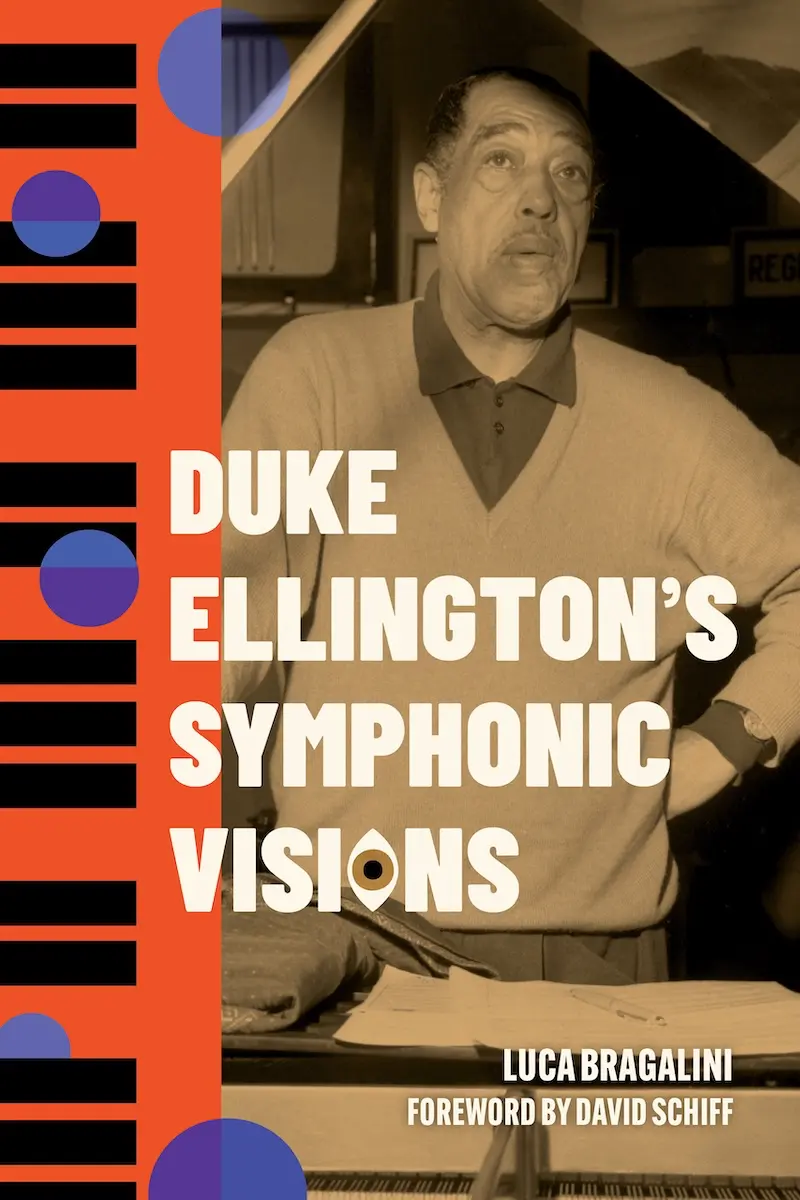
Academic Publication and Musicological Scope
The publication of Duke Ellington’s Symphonic Visions marks a significant moment in the study of "Third Stream" music—a term coined to describe the synthesis of classical music and jazz. Bragalini’s work is characterized by its forensic approach to Ellington’s scores, many of which have remained under-studied compared to his standard three-minute swing hits. The book specifically targets the period in the early 1960s when Ellington’s creative focus shifted toward longer, more structured forms that required the scale and timbre of a full symphony orchestra.
A primary focus of the text is the series of recordings first released on Frank Sinatra’s Reprise label in 1963. These recordings, which are currently available as part of the "Duke Ellington: The Reprise Studio Recordings" CD set (specifically Disc III), represent a pinnacle of Ellington’s orchestral ambition. Bragalini provides a movement-by-movement breakdown of "Night Creature," a three-movement suite; "Non-Violent Integration," which spans two movements; "La Scala"; "She Too Pretty To Be Blue"; and the expansive "Harlem," which stands as the longest track in the collection at 14 minutes and 5 seconds.
Historical Context: The Symbiosis of Harlem and Composition
Bragalini situates Ellington’s symphonic work within the broader socio-cultural landscape of the early 20th century, particularly the Harlem Renaissance. The author examines the non-musical elements that shaped Ellington’s creative output, arguing that his music was an auditory reflection of the African American intellectual and spiritual experience. During the 1920s, Ellington was deeply embedded in the cultural fabric of Harlem, associating with seminal figures such as James Weldon Johnson, W.E.B. Du Bois, and Roi Ottley.
The influence of these intellectual giants is seen in Ellington’s commitment to "tone parallels"—musical works designed to capture the history and character of his people. Bragalini notes that Ellington’s exposure to the diverse cadences of Harlem’s Black churches provided a rhythmic and melodic foundation that would eventually inform his symphonic visions. This connection to the Black church allowed Ellington to develop what Bragalini describes as the most versatile conception of the blues in American music history. By analyzing these roots, the book illustrates how Ellington moved beyond the constraints of traditional jazz to create a "prismatic" musical language that could express the complexities of racial identity and history.
The Reprise Years and European Orchestral Collaborations
A significant portion of the book is dedicated to the 1963 sessions that Ellington conducted in Europe. This period was marked by a unique partnership with the Reprise label, which allowed Ellington the financial and artistic freedom to record with world-class symphonic ensembles. These sessions were not merely jazz bands backed by strings; they were integrated efforts that challenged the classical musicians to adapt to Ellington’s unique harmonic language.
The work "Harlem," originally commissioned by Arturo Toscanini for the NBC Symphony Orchestra, is a central point of Bragalini’s analysis. He traces the evolution of the piece from its conception to its various recorded iterations, highlighting how the 1963 recording captured a definitive symphonic vision of the neighborhood’s vibrancy and struggle. Similarly, "Night Creature" is explored as a sophisticated attempt to merge the "swing" of the Ellington band with the lush textures of an orchestra, creating a piece that felt at home in both a jazz club and a concert hall.
Forensic Analysis and the "Prismatic" Musical Framework
Bragalini employs what he terms "prismatic" analysis to dissect Ellington’s late-career masterpieces, "Black, Brown and Beige" and "Three Black Kings." The latter, composed shortly before Ellington’s death in 1974, is treated with particular reverence. Bragalini argues that these works represent the culmination of Ellington’s lifelong effort to elevate the African American experience to the level of high art through symphonic structure.
The technical analysis within the book is dense, featuring numerous extracts from musical scores. Bragalini dives into the minutiae of Ellington’s orchestration, discussing specific harmonic choices that define his "symphonic" sound. For example, in his analysis of "La Scala," Bragalini points to an ingenious use of a dominant pedal in the opening bars. He describes how this technique immerses the listener in a Mixolydian mode on G, which serves to disguise a sophisticated blues structure actually rooted in C major. This level of detail highlights the "hidden" complexity in Ellington’s work, suggesting that while the music remains accessible to the listener, its underlying architecture is as rigorous as any Western classical composition.
Chronology of Ellington’s Symphonic Evolution
To understand the scope of Bragalini’s study, it is essential to look at the timeline of Ellington’s symphonic development:
- 1943: The premiere of "Black, Brown and Beige" at Carnegie Hall, signaling Ellington’s intent to move into extended-form composition.
- 1950: The commission of "Harlem" by the NBC Symphony Orchestra, though Ellington would continue to revise it for decades.
- 1955: The premiere of "Night Creature" at Carnegie Hall with the Symphony of the Air.
- 1963: The recording sessions for Reprise Records in Europe, where Ellington collaborated with the Paris Symphony and other European orchestras.
- 1974: The composition of "Three Black Kings" (Les Trois Rois Noirs), Ellington’s final major work, which was completed by his son, Mercer Ellington.
- 2025: The publication of Luca Bragalini’s original Italian text and the subsequent English translation by University Press of Mississippi.
Critical Reception and Technical Accessibility
While Bragalini’s work has been praised for its depth, the English edition has faced criticism regarding its accessibility and prose style. Some critics have noted that the book’s "avuncular" and didactic tone can be repetitive. The structure of the book, which includes a vast bibliography and extensive indexes of works, titles, and names, has been described as cumbersome, with the supplementary material occupying nearly as much space as the core text.
Furthermore, the inclusion of complex musical notation has led to discussions about the book’s intended audience. While invaluable for musicologists and professional musicians, these sections may prove difficult for general readers or jazz enthusiasts without a background in music theory. There are also indications that the translation from Italian to English may have introduced some circumlocutions and dense phrasing, such as Bragalini’s highly technical descriptions of modal shifts, which some readers have found challenging to parse.
The "Benign Costume": Ellington’s Social Activism
Beyond the music, Bragalini offers a compelling psychological profile of Edward Kennedy Ellington. He posits that Ellington’s public persona—a "benign and moderate character"—was a calculated "costume" used to camouflage a more radical man and activist. This perspective aligns with contemporary scholarship that views Ellington as a "race man" who used his platform and his music to advance the cause of Civil Rights without the overt political rhetoric that might have alienated his broad audience.
The book includes five previously unpublished photographs taken by an Italian journalist during the recording sessions of "La Scala." These images provide a rare, candid look at Ellington in the studio, capturing the focus and intensity of a composer working at the height of his intellectual powers. These visual elements, combined with Bragalini’s analysis of Ellington’s social circles, paint a portrait of a man whose symphonic visions were inextricably linked to his desire for racial integration and social progress.
Broader Impact and Implications for Jazz Scholarship
Duke Ellington’s Symphonic Visions contributes to a growing body of work that seeks to re-evaluate jazz composers through the lens of classical musicology. By treating Ellington’s scores with the same forensic rigor usually reserved for figures like Stravinsky or Gershwin, Bragalini asserts that Ellington’s contributions to the symphonic canon are as significant as his contributions to the Great American Songbook.
The book serves as a companion to other recent scholarly works, such as Jack Chambers’ "A Tone Parallel To Duke Ellington: The Man In The Music" (2025). Together, these texts suggest a shift in jazz historiography toward a more holistic view of the artist—one that balances the spontaneity of improvisation with the deliberate architecture of symphonic composition. Bragalini’s work ensures that Ellington’s "prismatic music" continues to be studied not just as a historical artifact of the 1960s, but as a living, complex body of work that continues to challenge and inspire the musical world.
Through its detailed exploration of the Reprise recordings and its deep dive into the cultural influences of Harlem, Duke Ellington’s Symphonic Visions provides a comprehensive, if technically demanding, account of a legendary artist’s pursuit of musical transcendence. It stands as a testament to Ellington’s enduring legacy as a composer who refused to be confined by genre, instead choosing to create a symphonic language that was uniquely his own.