Aveline Kirana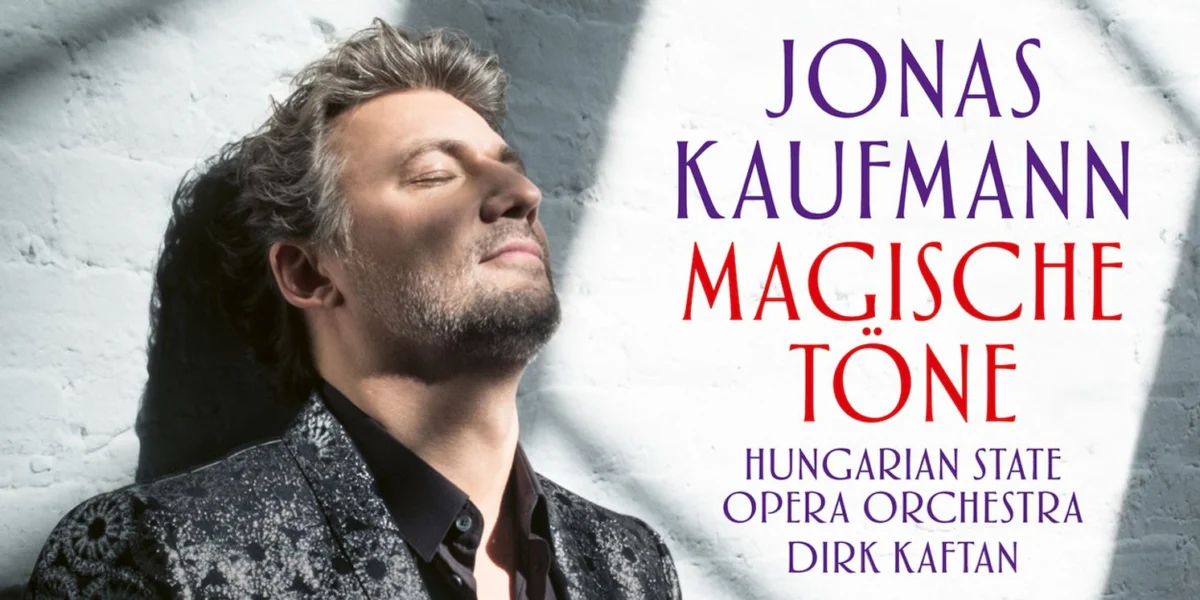
Jonas Kaufmann, the internationally acclaimed tenor, has once again captivated audiences with his latest musical offering, "Magische Töne" (Magical Sounds). This ambitious recording ventures into the often-underappreciated realm of Austro-Hungarian operetta, presenting a rich tapestry of Belle Époque charm, imbued with playful, mischievous, and ultimately bittersweet sentiments. The album, released by Sony Classical, marks a significant expansion of Kaufmann’s repertoire, building upon the foundations laid by his previous successful recordings such as "Du bist die Welt für mich" (2014) and "Wien" (2019).
A Curated Journey Through Operetta’s Golden Age
"Magische Töne" features a meticulously curated selection of 22 tracks that traverse the landscape of Austro-Hungarian operetta, a genre celebrated for its melodic richness, romantic narratives, and often poignant emotional depth. The album showcases a compelling blend of beloved standards and more obscure gems, offering listeners a comprehensive and immersive experience. Among the highlights are iconic pieces like the "Wolgalied" ("Es steht ein Soldat am Wolgastrand"), a perennial favorite that evokes a sense of longing and dramatic storytelling.
Complementing these familiar melodies are less frequently performed works, such as Paul Abraham’s "Julia" and Fred Raymond’s "Maske in Blau." These selections demonstrate Kaufmann’s commitment to unearthing and reintroducing pieces that deserve wider recognition. The album also pays homage to the titans of Viennese operetta, with substantial contributions from Emmerich Kálmán and Franz Lehár. Kálmán, known for his sophisticated melodies and vibrant orchestrations, is represented by excerpts from "Gräfin Mariza," "Kaiserin Josephine," and "Die Csárdásfürstin." Lehár, the undisputed master of the Viennese operetta, graces the album with pieces from "Das Land des Lächelns" and "Friederike." This judicious selection ensures that "Magische Töne" offers a nuanced portrait of the genre, moving beyond mere sentimentalism to embrace its inherent theatricality and emotional complexity.
Evolution of Kaufmann’s Operetta Exploration
Compared to its predecessor, "Du bist die Welt für mich," "Magische Töne" presents a program that is arguably more expansive and diverse. While the 2014 album was more focused on romantic showpieces, the new release excels in its presentation of individual vignettes. Each track functions as a miniature theatrical moment, a self-contained narrative painted with broad, expressive strokes. This mosaic-like structure allows Kaufmann to explore a wider spectrum of characterization and emotional nuance, moving beyond a single overarching romantic theme.
The album’s thematic coherence, despite its diverse origins, is a testament to Kaufmann’s artistic vision. The Belle Époque, a period characterized by artistic innovation, social change, and a certain nostalgic yearning for a bygone era, serves as a unifying thread. The operettas selected often capture this spirit, blending lighthearted entertainment with underlying currents of melancholy and the fleeting nature of happiness.
Vocal Recovery and Artistic Flourishing
Significantly, "Magische Töne" arrives at a time when Jonas Kaufmann has demonstrably overcome significant vocal challenges. After a period of vocal brittleness and health issues, most notably a persistent and severe lung infection caused by a multi-resistant germ, Kaufmann’s voice has regained its renowned golden luminescence. This resilience is palpable in his performances on the album, where he navigates the demands of the repertoire with renewed strength and expressive power.
His approach to the operetta material is refreshingly versatile. While his operatic training is evident in the breadth and control he brings to longer, more lyrical phrases, he also demonstrates a masterful command of the lighter, more conversational style essential to operetta. In pieces like "Der schönste Gedanke auf Erden," Kaufmann adopts a crooning quality that is both intimate and captivating. His interpretation of "Die Juliska aus Budapest" from "Maske in Blau" is particularly noteworthy for its wry humor and theatrical flair, reminiscent of his earlier performance of "Diwanpüppchen." This ability to imbue his characters with a sense of playful exaggeration and charming theatricality sets his operetta interpretations apart, painting vivid portraits that are distinct from the profound psychological depth often explored in traditional opera.
Nuances in Interpretation and Repertoire
However, not all tracks on "Magische Töne" are uniformly characterized by this theatrical effervescence. The "Wolgalied" ("Es steht ein Soldat am Wolgastrand") presents a more profound emotional landscape. Despite its inherent sentimentality, Kaufmann’s phrasing of its arching lines reveals a Puccinian influence, a connection that is also evident in the song’s thematic material. Here, Kaufmann employs a broader vocal approach, inflecting his lines with subtle dynamic variations and rich tonal colors, demonstrating a keen understanding of the music’s dramatic underpinnings.
Despite the overall strengths of the recording, a desire for greater elasticity in terms of rubato and spontaneity might be noted by some listeners, perhaps echoing the vocal artistry of singers like Fritz Wunderlich. The arrangements, credited to Matthias Spindler, while generally effective, may contribute to this slightly more restrained feel. Information regarding the specific arrangements and their genesis is notably scarce in the album’s booklet, relegated to a brief footnote, which leaves room for conjecture regarding their precise impact.
Orchestral Collaboration and Production
The collaboration with conductor Dirk Kaftan and the Hungarian State Opera Orchestra is largely commendable, though certain passages on the album could have benefited from a more dynamic realization. This is particularly apparent in the pastoral interlude leading into the second cantabile of one of the tracks. While the string-led surge of this section is impactful, the preceding pastoral interlude, in this reviewer’s assessment, did not quite reach its full potential in terms of expressive nuance.
A further point of reservation arises with the title track, "Magische Töne," drawn from Karl Goldmark’s opera "Die Königin von Saba." This is one of only two operatic excerpts included on the album. While the performance is technically proficient, it occasionally feels somewhat mannered, particularly in its reliance on a demi-falsetto vocal production. It lacks some of the self-irony and playful charm that characterize other selections on the album. This stands in contrast to the excellent duets with emerging tenor Nikola Hillebrand, who shines particularly brightly in "Tanzen möcht’ ich." Hillebrand’s contribution adds a welcome dynamic and youthful energy to the recording.
Linguistic Versatility and Nostalgic Resonance
A testament to Jonas Kaufmann’s remarkable linguistic abilities is his seamless command of multiple languages on "Magische Töne." The Hungarian-language selections on the album are delivered with the same lightness and heartfelt nostalgia that imbue the German-language pieces. This linguistic fluency not only enhances the authenticity of the performances but also deepens the emotional connection to the repertoire, allowing the inherent charm and pathos of each song to resonate fully.
Concluding Thoughts on "Magische Töne"
In essence, "Magische Töne" can be likened to a box of exquisite Viennese pastries – a delightful and satisfying indulgence, intended as a playful nod to the album’s thematic origins. The recording effortlessly continues the artistic trajectory established by "Du bist die Welt für mich" and "Wien," solidifying Kaufmann’s position as a preeminent interpreter of German-language song and operetta. However, in terms of both vocal prowess and the breadth of repertoire explored, "Magische Töne" arguably surpasses its predecessors, offering a more profound and multifaceted listening experience.
The album’s release represents a significant contribution to the genre, breathing new life into beloved operetta traditions and introducing them to a wider audience through the artistry of one of today’s most celebrated operatic voices. The careful selection of pieces, combined with Kaufmann’s nuanced interpretations and vocal recovery, makes "Magische Töne" a compelling and essential addition to the discography of any admirer of Viennese operetta and the rich musical heritage of the Austro-Hungarian Empire. It is a testament to Kaufmann’s enduring artistic curiosity and his ability to connect with audiences through the power of melody and heartfelt expression.