 Mia Khoirunisa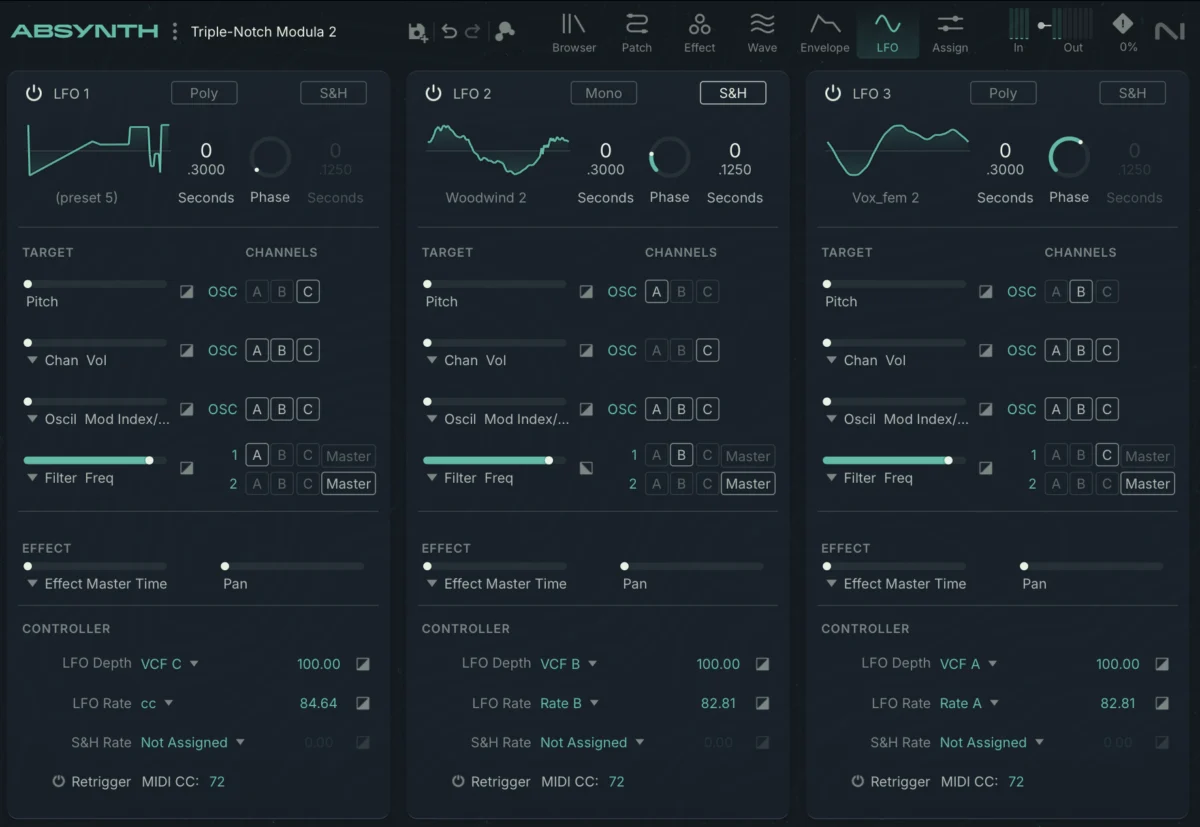
Native Instruments has quietly released Absynth 6.1, a significant update to its celebrated semi-modular software synthesizer, introducing highly anticipated LFO retrigger functionality, an undo/redo feature, and a groundbreaking new audio modulator. This release, which arrived without extensive fanfare, addresses long-standing user requests and introduces innovative tools that further solidify Absynth’s position as a powerhouse for complex sound design and ethereal soundscapes. The update is available now for existing Absynth 6 users via Native Access.
The announcement of Absynth 6.1 has been met with considerable interest within the music production community, particularly from those who have championed the unique sonic capabilities of the Absynth platform. The inclusion of LFO retrigger and undo/redo functions directly responds to feedback gathered from a dedicated user base who have pushed the boundaries of Absynth’s creative potential since its initial release. The addition of a new audio modulator, however, represents a more profound expansion of the synthesizer’s architecture, promising to unlock entirely new dimensions of sonic manipulation.
A Strategic Evolution: The Absynth Update Timeline
The journey of Absynth, from its inception to the current 6.1 iteration, is a testament to Native Instruments’ commitment to evolving its flagship instruments. Absynth first emerged in the early 2000s, quickly distinguishing itself with its hybrid synthesis approach, blending subtractive, FM, and granular synthesis with a unique sampling engine. It was lauded for its ability to generate otherworldly textures, evolving pads, and complex, unpredictable sonic mutations. Over the years, Absynth has seen several major updates, each building upon its core strengths. Absynth 5, for example, introduced significant enhancements to its effects section and overall workflow.
The release of Absynth 6 in 2026 marked a significant milestone, bringing the beloved synthesizer into a modern production environment with updated features and compatibility. However, even with its substantial improvements, users continued to identify areas where further refinement and expansion could unlock even greater creative possibilities. The 6.1 update, arriving less than a year after Absynth 6, demonstrates a focused and responsive development strategy from Native Instruments, prioritizing key feature additions that directly address user needs and push the sonic envelope. This rapid iteration cycle underscores the company’s agility in responding to community feedback and the dynamic nature of digital audio workstation (DAW) integration.
Key Innovations in Absynth 6.1
The Absynth 6.1 update introduces several compelling new features, with the Audio Modulator taking center stage. This powerful new tool allows internal audio signals generated within Absynth’s engine to be harnessed as modulation sources. This is a significant leap forward, transforming the synthesizer into an even more self-contained ecosystem for complex sound shaping.
The Audio Modulator: A New Frontier in Internal Synthesis
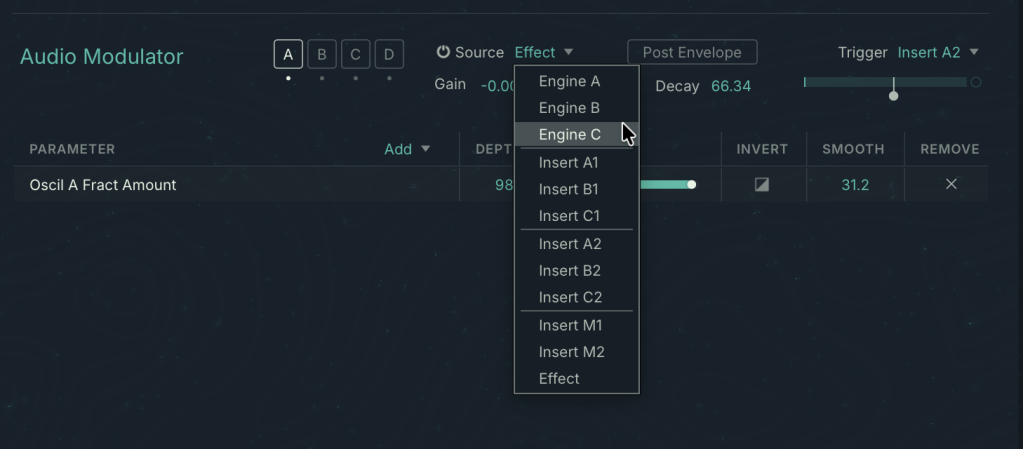
At its core, the Audio Modulator feature grants users the ability to route audio signals from various internal sources – including different synthesis engines, insert effects, and even post-envelope stages – to modulate almost any parameter within Absynth. This capability moves Absynth beyond its already sophisticated modulation matrix, offering a level of internal audio-rate modulation that typically requires a fully modular synthesis setup.
The implementation is remarkably deep. Absynth 6.1 provides not one, but four distinct Audio Modulators, each offering granular control. Users can select their source signal from a comprehensive list of internal components. Crucially, the ability to choose between pre- or post-envelope signals for modulation adds further nuance, allowing for dynamic and reactive sonic sculpting. Furthermore, users can specify which module should trigger the modulation based on a signal threshold, and precisely control the depth, inversion, and smoothing for each modulator independently. This level of control over internal audio-rate modulation opens up a vast sonic palette, enabling the creation of intricate, evolving textures and dynamic sonic events that respond intelligently to the instrument’s own internal activity.
The implications of the Audio Modulator are far-reaching for sound designers. It allows for the creation of self-modulating patches where elements of the sound can influence other elements in real-time, leading to organic, evolving, and often unpredictable sonic results. This feature is particularly well-suited for generating the complex, otherworldly soundscapes that Absynth is renowned for. The ability to derive modulation from the very signals being synthesized within Absynth means that the resulting sounds will possess an inherent cohesion and character that is uniquely Absynthian.
Auto Trigger: Streamlined Workflow for Drones and Effects
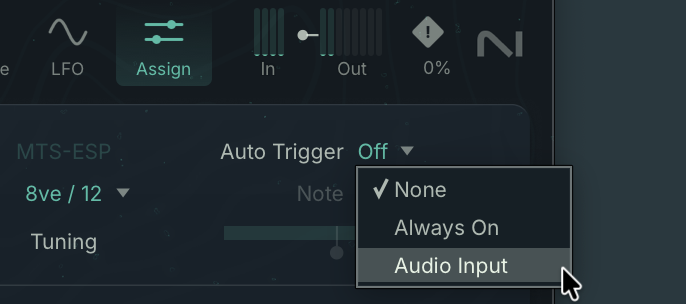
Complementing the advanced modulation capabilities, Absynth 6.1 introduces the Auto Trigger feature. Located on the Assign page, this function offers two primary modes: "Always On" and "Audio Input." The "Always On" mode ensures that Absynth continuously generates sound on a selected note, making it ideal for creating sustained drones or evolving pads without the need for continuous note input. The "Audio Input" mode proves particularly useful when Absynth is employed as an effect processor. In this configuration, the Auto Trigger can be used to process incoming audio signals, allowing for dynamic effects application that responds to the incoming signal’s presence.
While the Auto Trigger is a welcome addition for workflow efficiency, the review notes a potential missed opportunity: the absence of pitch following capabilities within this feature. The author suggests that incorporating pitch following would further enhance its utility, allowing for more sophisticated audio-reactive effects. However, this observation also highlights the continuous potential for innovation within the Absynth platform, even in its current iteration.
LFO Retrigger and Polyphonic Behavior: Enhanced Rhythmic Control
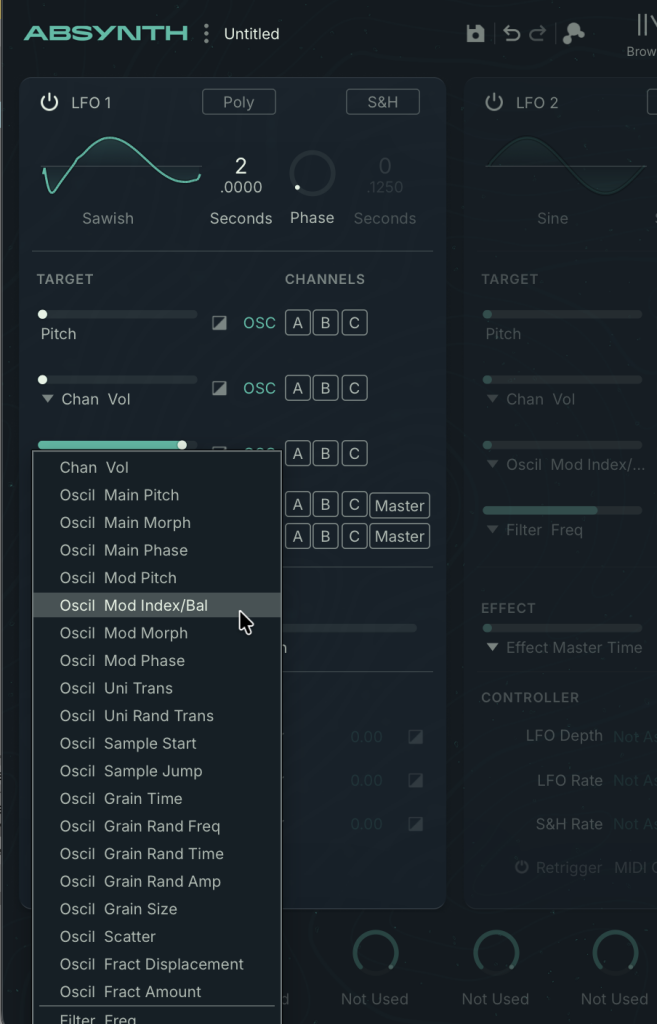
The update also addresses user feedback regarding LFO functionality, introducing a long-awaited LFO retrigger option. Absynth’s LFOs, three in number, are a fundamental component of its modulation system. Previously, in mono mode, these LFOs would free-run without resetting their phase, even when new notes were played. This could lead to a lack of rhythmic cohesion, particularly in performances with rapid note changes or arpeggios.
Absynth 6.1 now offers a robust LFO retrigger feature. In polyphonic mode, each new note event will independently trigger its own LFO phase. This creates a more dynamic and responsive modulation, especially noticeable when playing chords or rapid melodic lines. The staggered modulation can lead to rich, undulating effects that evolve organically with the musical performance. A demonstration video accompanying the announcement showcases this distinction between mono and polyphonic LFO behavior, clearly illustrating how the retriggering impacts the sonic output.
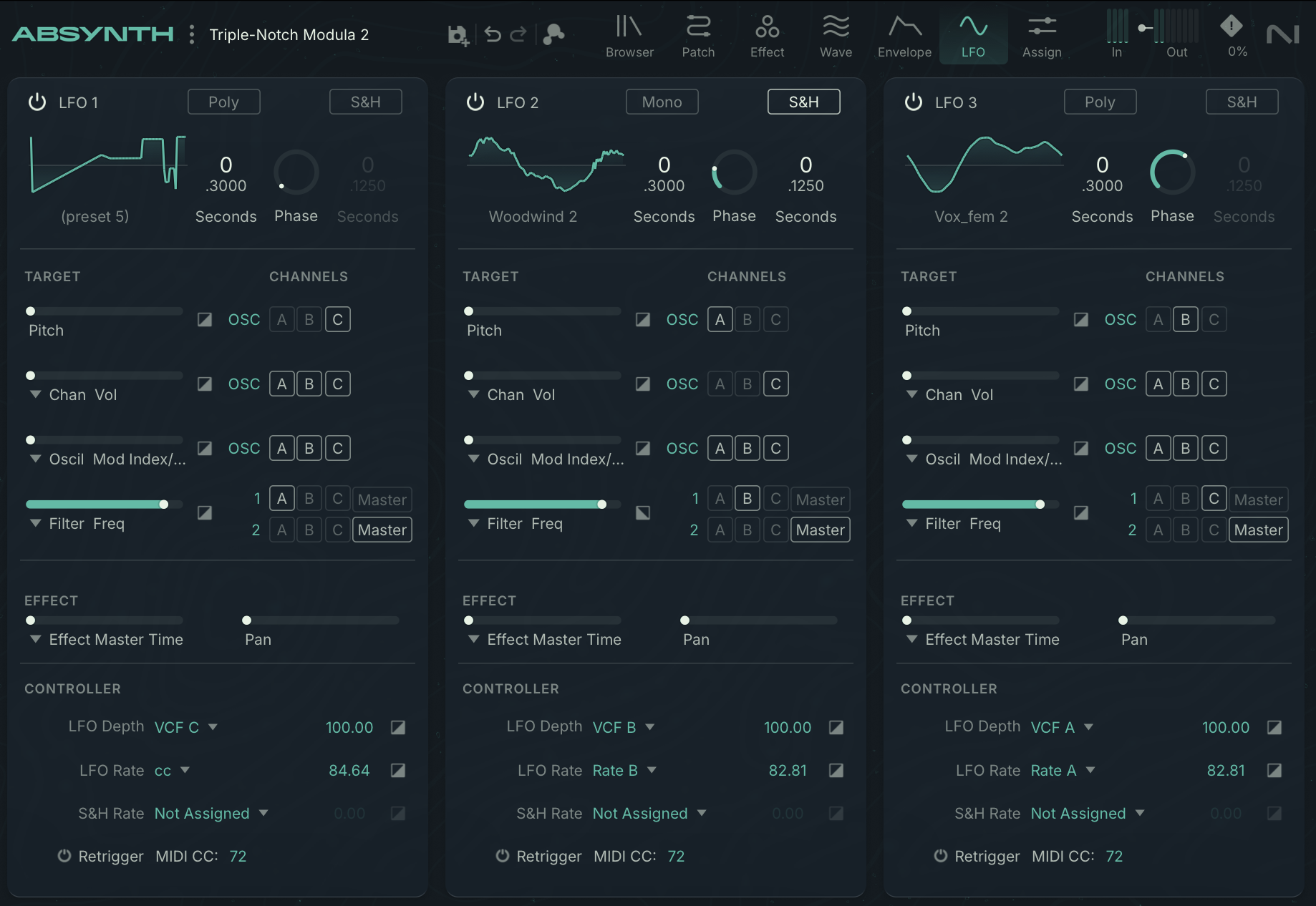
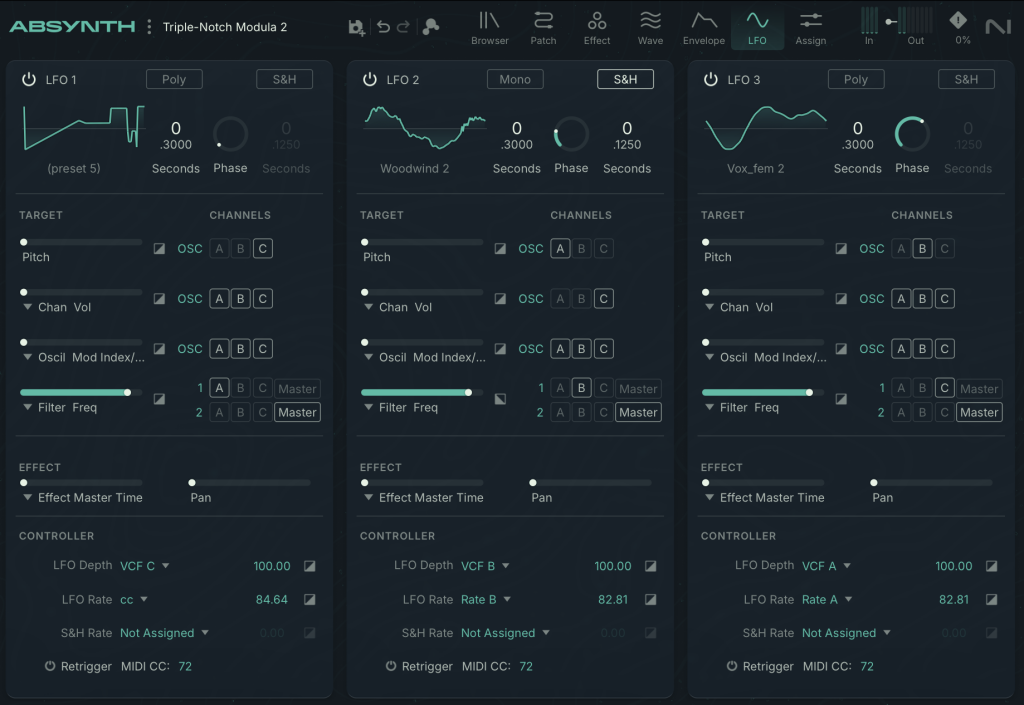
Beyond the polyphonic retriggering, a manual retrigger option has been reintroduced for mono mode. This allows users to assign a MIDI CC to each of the three LFOs. Any MIDI CC value above zero – such as turning a knob or pressing a button – will reset the LFO’s phase. This feature, a callback to earlier Absynth versions, empowers performers to "play" the LFOs in real-time, offering a new level of expressive control and rhythmic engagement. The ability to manually reset LFOs provides a unique opportunity for live performance manipulation and intricate sound design sequencing. The on/off switch and MIDI CC assignment for this feature are conveniently located at the bottom of each LFO column within the interface.
Preset Compatibility and User Feedback
A crucial technical consideration with the Absynth 6.1 update is the change in preset format. Patches created in version 6.1 are not backward compatible and can only be opened with Absynth 6.1 or later. This is a common occurrence with significant software updates that introduce new functionalities and underlying architecture changes. Users are advised to be mindful of this when saving and sharing presets.
The release of Absynth 6.1 has been met with positive reactions from industry publications and content creators. Synth Anatomy provided an early overview, drawing attention to the update’s key features. Similarly, KAN Samples offered a comprehensive write-up, further validating the significance of the new modulation tools. These acknowledgments highlight the community’s anticipation and appreciation for Native Instruments’ continued development of this iconic synthesizer.
Broader Implications for Sound Design
The enhancements in Absynth 6.1 have significant implications for the broader sound design landscape. The Audio Modulator, in particular, elevates Absynth from a powerful subtractive and sample-based synthesizer to a more akin to a self-contained modular system within a traditional software interface. This empowers sound designers to create highly complex and dynamic sounds with unprecedented ease. The ability to feed audio signals back into the modulation matrix allows for emergent sonic behaviors that can be difficult to predict, leading to serendipitous discoveries and unique sonic signatures.
The LFO retrigger functionality, while seemingly a smaller addition, profoundly impacts the rhythmic and dynamic possibilities of Absynth. For electronic music producers, especially those working in genres that rely on intricate rhythmic programming and evolving sequences, this feature offers a new level of control and expressiveness. The ability to synchronize LFOs with note events or manually trigger them provides a powerful tool for creating compelling grooves and dynamic sonic textures.
Looking Ahead
Native Instruments’ commitment to iterating on Absynth, particularly with the swift release of 6.1 following the major Absynth 6 update, suggests a long-term vision for the platform. The continued integration of user-requested features and the introduction of innovative new tools like the Audio Modulator indicate that Absynth remains a vital instrument in the company’s portfolio and a cornerstone for creative sound design. As the digital audio landscape continues to evolve, Absynth, with its unique architecture and ongoing development, is well-positioned to remain a go-to instrument for artists seeking to explore the outer reaches of sonic possibility. The 6.1 update is not merely an incremental patch; it is a strategic enhancement that deepens Absynth’s inherent power and expands its creative horizons, inviting a new wave of sonic exploration from its dedicated user base.