Johan Budi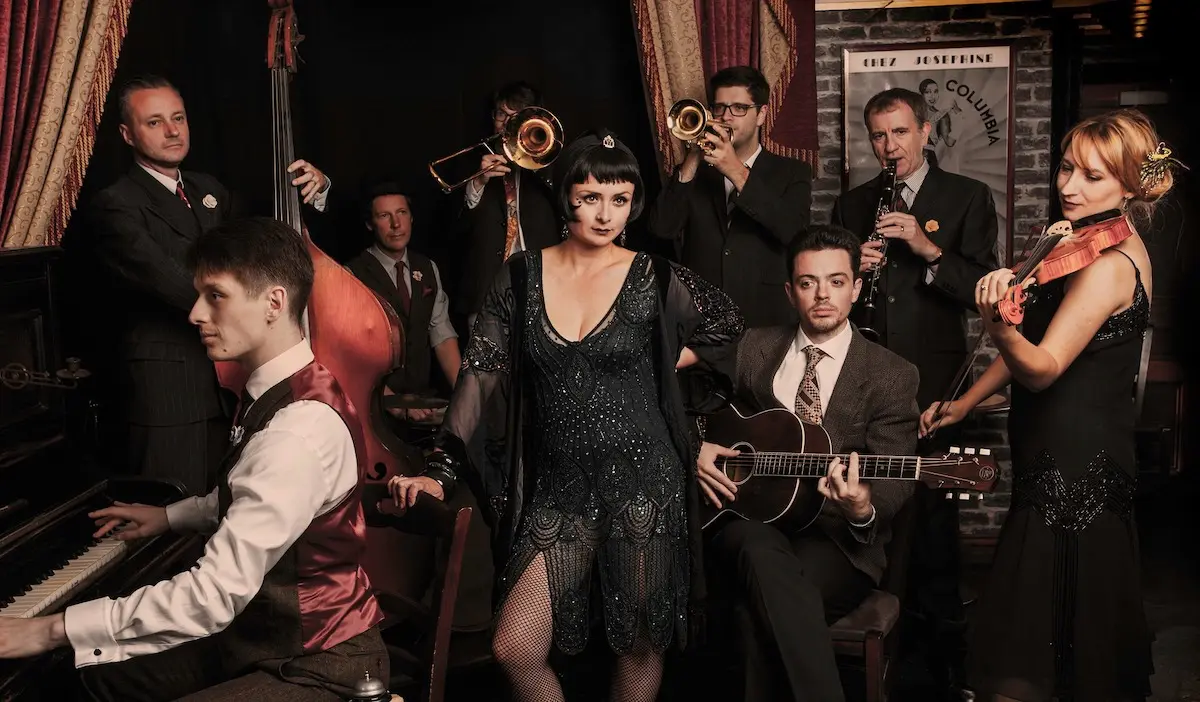
The contemporary jazz landscape continues to demonstrate a profound capacity for both historical preservation and stylistic innovation, as evidenced by a trio of significant new releases that span the spectrum from vintage swing revivalism to archival Afro-Cuban collections and neo-soul fusion. At the forefront of this movement is the Newcastle-based nonet House of the Black Gardenia, whose latest offering, Mazurka In Jazz, serves as a testament to the enduring appeal of the 1920s and 30s aesthetic when filtered through a modern lens. Complementing this revivalist energy is the scholarly depth of Frémeaux & Associés’ comprehensive double-CD set, Cuba – Cha Cha Chá 1950-1962, which meticulously charts the global ascent of one of the 20th century’s most influential dance rhythms. Rounding out this diverse musical triptych is Sarah L. King’s The Light Ahead, a project that bridges the gap between traditional jazz sensibilities and the polished production of 1980s neo-soul.
The Genesis and Evolution of House of the Black Gardenia
House of the Black Gardenia represents a unique intersection of community-driven dance culture and high-level musicianship. The ensemble was founded by double bassist Neil Hopper and vocalist Elise Rana Hopper, figures who were already deeply embedded in the cultural fabric of Newcastle through their management of popular swing-dance events. Their transition from curators of recorded music to creators of live performance was born out of an immersive study of the early jazz era. By 2014, the duo recognized a void in the local scene for a large-format ensemble that could capture the specific "hot" vintage swing sound while maintaining a contemporary edge.
The formation of the nonet was not without its logistical challenges. According to Neil Hopper, the process of assembling a group capable of navigating the complexities of early 20th-century arrangements required a strategic recruitment approach. The band ultimately drew heavily from the Strictly Smokin’ Big Band and other established North East jazz collectives, effectively "nicking" top-tier talent to form a cohesive unit. This recruitment strategy ensured that while the band’s origins were rooted in the social dance scene, its technical execution met the standards of professional concert performance.
The band’s discography began in earnest with the 2020 release of The New Lowdown, an album that established their credentials in the vintage jazz community. Six years into their recording journey, the release of Mazurka In Jazz in 2025 marks a significant maturation. The album features ten tracks, seven of which are original compositions by the Hoppers. This shift toward original material distinguishes the group from mere "tribute" acts, as they contribute new entries to the swing canon. Guitarist and banjoist Michael Littlefield also contributed the track "Should We Dance?", further diversifying the album’s creative voice.
Historical Context: The Global Proliferation of the Cha Cha Chá
While House of the Black Gardenia revitalizes the swing era, Frémeaux & Associés has turned its attention to the mid-century evolution of Latin music. The release of Cuba – Cha Cha Chá 1950-1962 provides an essential academic and auditory resource for understanding how a regional Cuban rhythm became a global phenomenon. The 44-track collection is structured to illustrate a specific chronological and stylistic transition: the movement from the structured danzón, the romantic bolero, and the energetic mambo into the syncopated accessibility of the cha cha chá.
The first disc of the set focuses on the "Golden Age" of the genre within Cuba. It features seminal recordings by Pérez Prado, often cited as the "King of the Mambo," alongside the legendary Celia Cruz and Benny Moré. These recordings capture a period of intense musical ferment in Havana, where bandleaders like Enrique Jorrín (who is credited with inventing the cha cha chá) were simplifying the complex mambo rhythms to make them more accessible to social dancers.
The second disc shifts focus to the genre’s international expansion, particularly its impact on the United States and Europe. The inclusion of tracks like Mongo Santamaria’s "Cha Cha Rock" and Sexteto La Plata’s "The Hollywood Cha Cha" highlights the commercial strategies employed by composers to lure American audiences. Perhaps most significantly, the collection includes Tito Puente’s 1962 masterpiece "Oye Cómo Va." This track serves as a crucial historical marker; while it was a hit for Puente in the early 60s, its subsequent 1970 cover by Santana would cement the cha cha chá’s influence on the rock era. The inclusion of "Chanchullo," the song that originally inspired Puente’s composition, provides a rare look at the iterative nature of Afro-Cuban musical development.
Artistic Reinvention: Sarah L. King and the Neo-Soul Fusion
In contrast to the historical focus of the other releases, Sarah L. King’s The Light Ahead represents a personal and stylistic evolution. King’s trajectory into the professional music world is unconventional, characterized by a "late-bloomer" narrative that has resonated with many in the industry. Despite growing up in a household defined by jazz—her father was a trumpeter and her grandmother a conductor—King initially pursued a successful career in film and television scriptwriting. It was only eight years ago, upon joining a soul and gospel choir, that she began to channel her creative energies into songwriting.
The Light Ahead is King’s third major project, following the 2024 album Fire Horse and a 2020 EP. Produced by the acclaimed Claire Martin, the album moves away from the more somber tones of her debut toward a "celebratory" atmosphere. The record is a blend of 1980s neo-soul, funk, and jazz fusion, featuring eight original compositions alongside four carefully selected covers.
The covers—Stevie Wonder’s "Overjoyed," Nicola Conte’s "Like Leaves in the Wind," Clifton Davis’s "Never Can Say Goodbye," and Barry Mann & Cynthia Weil’s "Just A Little Lovin’"—provide a stylistic anchor for the album. The personnel involved in the recording represent a "who’s who" of the contemporary UK jazz and session scene, including pianist Jim Watson and bassist Laurence Cottle. The result is a production that, while leaning heavily toward the sophisticated "smooth" sounds of the 80s, retains the improvisational spirit of jazz through guest appearances by trumpeter James McMillan and trombonist Chris Traves.
Chronology of Production and Release
The timeline of these releases reflects a broader trend of multi-year development cycles in the independent music sector:
- 2014: Formation of House of the Black Gardenia in Newcastle.
- 2020: House of the Black Gardenia releases The New Lowdown; Sarah L. King releases her debut EP of standards.
- 2024: Sarah L. King releases her first full-length album, Fire Horse.
- 2025: Release of Mazurka In Jazz by House of the Black Gardenia (recorded in Thropton & Gilsland, Northumberland).
- 2025: Release of The Light Ahead by Sarah L. King, produced by Claire Martin.
- 2025: Frémeaux & Associés issues the Cuba – Cha Cha Chá retrospective, covering the 1950-1962 historical period.
Technical Specifications and Comparative Analysis
The House of the Black Gardenia release, Mazurka In Jazz (Catalog: HOTBG 002), is notable for its instrumentation. The use of the sousaphone (Neil Hopper) alongside the double bass and banjo (Michael Littlefield) provides a rhythmic density characteristic of early New Orleans styles, yet the inclusion of a violin (Katja Roberts) adds a European "hot club" texture. The album’s total runtime of 44 minutes and 38 seconds is concise, mirroring the duration of traditional vinyl LPs from the era it celebrates.
Frémeaux & Associés’ Cuba – Cha Cha Chá (Catalog: FA5925) serves as a scholarly archive. Each disc runs approximately 66 minutes, totaling over two hours of music. The inclusion of a 16-page bilingual booklet (French/English) with notes by Bruno Blum elevates the release from a simple compilation to an educational tool, providing necessary sociopolitical context for the music’s migration from Havana to New York.
Sarah L. King’s The Light Ahead (Catalog: Peccadillo PD00151922) clocks in at 48 minutes and 15 seconds. The production quality is a focal point of this release; the "smooth" veneer is achieved through the engineering expertise of James McMillan and the vocal arrangements of Claire Martin. While some critics argue that the album’s heavy reliance on funk and disco elements pushes it toward the periphery of the jazz genre, the technical proficiency of the backing trio (Watson, Cottle, and Murray) ensures it remains grounded in jazz methodology.
Implications for the Contemporary Jazz Market
These three releases highlight the diverse strategies currently employed to maintain the relevance of jazz and its related genres in the 21st century. House of the Black Gardenia demonstrates the power of "community-first" music—projects that grow out of specific social scenes (swing dance) and eventually achieve independent artistic standing. Their success suggests a robust market for live, high-energy acoustic music that prioritizes danceability.
The Frémeaux & Associés compilation underscores the importance of the "curator" in the digital age. By providing historical context and high-quality remastering of tracks from the 1950s, the label ensures that the roots of modern Latin and pop music are not obscured by time. This release is particularly relevant given the ongoing global resurgence of interest in Afro-Cuban rhythms.
Finally, Sarah L. King’s work illustrates the blurring of genre boundaries. Her move from scriptwriting to soul-jazz composition reflects a broader cultural trend where artistic careers are no longer linear. The "optimism" embedded in her lyrics and the polished, accessible production of The Light Ahead suggest a strategic move toward a broader, "crossover" audience that appreciates the sophistication of jazz but prefers the rhythmic accessibility of soul and funk.
Together, these projects confirm that the jazz world remains a vibrant ecosystem where the past is constantly being rediscovered, recontextualized, and reinvented for new generations of listeners. Whether through the mischievous swing of the Hoppers, the archival depth of Bruno Blum’s curation, or the hopeful neo-soul of Sarah L. King, the genre continues to expand its reach and influence.