Nayara Elvina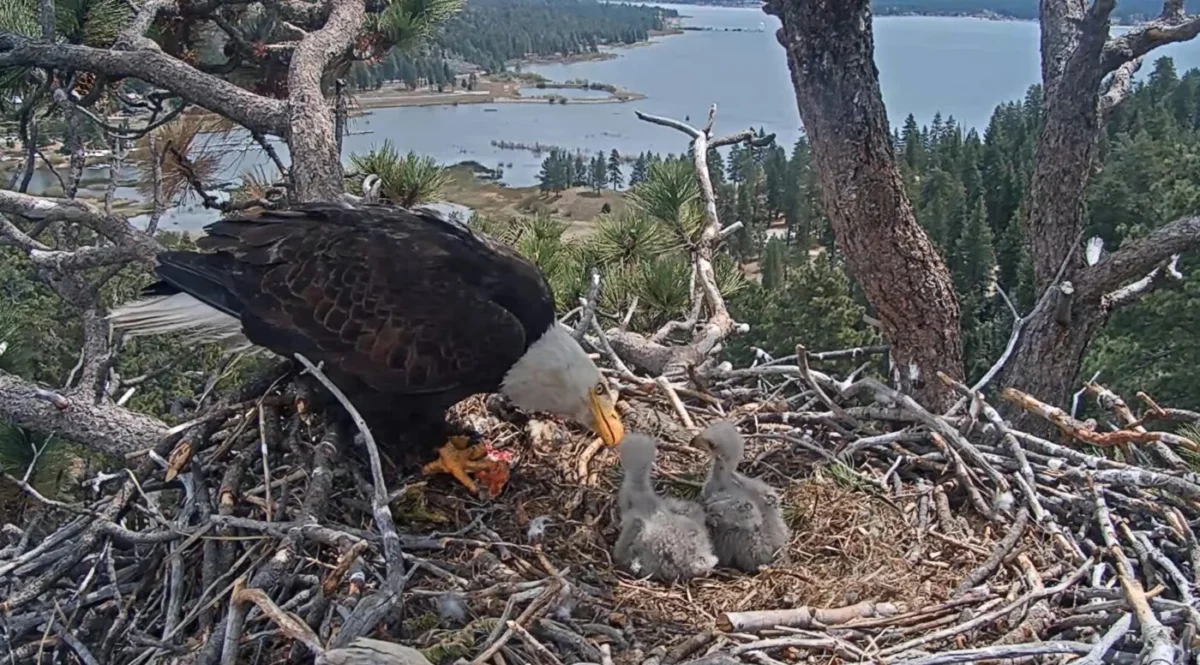
The San Bernardino National Forest has become the focal point of international avian interest as Friends of Big Bear Valley, a non-profit organization dedicated to environmental preservation, announces a public naming contest for two newly hatched bald eagles. These eaglets, born to the world-renowned pair Jackie and Shadow, represent a significant success for local conservation efforts following a challenging winter season marked by predatory losses. Residents and wildlife enthusiasts from around the globe are being invited to participate in a multi-stage selection process that integrates community fundraising with local elementary education.
The Recent Hatching and Current Nest Status
The two eaglets emerged during the Easter holiday weekend in early April, marking a triumphant return for the parental pair. Earlier in the winter season, Jackie and Shadow had laid an initial clutch of eggs that were unfortunately predated by ravens, a common natural challenge for nesting raptors in the California mountains. The resilience shown by the pair in laying and successfully incubating a second clutch has been a primary driver of the current public interest.
Since the hatching, the 24/7 live-streamed camera—maintained by Friends of Big Bear Valley (FOBBV)—has captured the intricate parental behaviors required to sustain the young. Jackie and Shadow have been observed rotating shifts to ensure the chicks remain warm and protected from the variable mountain temperatures. At this stage of development, the eaglets are entirely dependent on their parents for food, which primarily consists of fish harvested from Big Bear Lake and small mammals found in the surrounding forest.
The chicks have shown consistent growth, exhibiting healthy feeding behaviors and increasing mobility within the nest. According to observations from FOBBV, the parents have been highly attentive, with Shadow frequently delivering prey while Jackie manages the direct feeding and brooding. This period is critical for the eaglets as they develop the strength and feathering necessary for their eventual fledge, which typically occurs between 10 and 14 weeks after hatching.
The Naming Contest and Community Involvement
To commemorate the arrival of the new eaglets, Friends of Big Bear Valley has launched a formal naming initiative designed to engage both the global online community and local residents. The process is structured to support the organization’s ongoing conservation and educational programs.
The contest operates on a donation-based submission model. Participants can submit potential names by making a contribution to the non-profit, with options to submit one, three, or ten names depending on the donation tier. This fundraising mechanism provides the necessary capital for maintaining the high-definition camera equipment, supporting the live stream infrastructure, and funding habitat protection efforts in the Big Bear Valley.
The deadline for name submissions is set for Sunday, April 26, at 11:59 PM Pacific Time. Following the submission period, a computer program will randomly select a list of finalists from the pool of entries. In a move to foster local environmental stewardship, the final decision will be placed in the hands of third-grade students in the Big Bear Lake community. These students will vote on the finalists to determine the official names for the two eaglets. This educational partnership aims to instill a sense of pride and responsibility for local wildlife in the younger generation.
Biological Profile and Nesting Habits of Bald Eagles
The bald eagle (Haliaeetus leucocephalus) is one of the largest raptors in North America, and the individuals in Big Bear Lake serve as prime examples of the species’ physical prowess. Adult bald eagles can reach heights of up to 40 inches and weigh between 8 and 12 pounds, with females typically being larger than males. Their wingspan, which can range from six to nearly eight feet, allows them to soar at high altitudes and dive at speeds reaching 75 to 100 miles per hour when hunting.
Nesting is a monumental task for these birds. Bald eagles build some of the largest nests of any North American bird, often referred to as "eyries." These structures are typically constructed in large, sturdy trees—such as the Jeffrey pines found in the San Bernardino National Forest—or on cliff sides and high rock formations. The nests are composed of sticks and lined with softer materials like moss, grass, and feathers. Over years of reuse, these nests can reach diameters of five to six feet and depths of several feet, sometimes weighing over a ton.
The location of Jackie and Shadow’s nest is strategically optimal. Situated high in a tree with a panoramic view of Big Bear Lake, it provides easy access to the water for fishing while offering a defensive advantage against ground-based predators. The elevation also provides the necessary thermals for the eagles to lift off and soar with minimal energy expenditure.
Chronology of the 2024 Nesting Season
The current success of the Big Bear nest follows a timeline of high-stakes environmental drama that has captivated thousands of viewers:
- Early Winter 2024: Jackie and Shadow begin their annual nest refurbishment, bringing in new sticks and "fluff" to prepare for the breeding season.
- January/February 2024: The first clutch of eggs is laid. Despite the parents’ diligent efforts, the nest is targeted by local ravens during a brief period when the eggs were exposed. The loss of the first clutch was a significant blow to the "cam community" and the local ecosystem.
- March 2024: In a display of biological resilience, Jackie lays a second clutch of two eggs. The pair enters a period of intense incubation, braving mountain snowstorms and freezing temperatures.
- Early April 2024: The first signs of "pipping" (the process of the chick breaking through the shell) are observed. Both eggs hatch successfully over the Easter weekend.
- Mid-April 2024: The eaglets enter the "nestling" stage, characterized by rapid growth and the transition from downy white feathers to a darker gray coat.
- April 26, 2024: The scheduled deadline for the public naming contest.
Environmental Challenges and Conservation Implications
While the hatching of the eaglets is a cause for celebration, the bald eagles of Big Bear Lake face ongoing challenges that highlight the delicate balance between nature and human activity. One of the most pressing concerns currently being monitored by conservationists is the potential impact of local land development.
Reports have surfaced regarding a luxury development project in the vicinity of the nesting site. Environmental advocates express concern that increased human activity, noise pollution, and habitat fragmentation could stress the eagle pair or even force them to abandon their long-term nesting site. Under the Bald and Golden Eagle Protection Act, it is illegal to "disturb" bald eagles, which is defined as agitating or bothering a bird to a degree that causes injury, interferes with normal breeding, feeding, or sheltering behavior, or leads to nest abandonment.
The Friends of Big Bear Valley organization has been active in monitoring these developments, emphasizing the importance of maintaining a buffer zone around the nesting tree. The fame of Jackie and Shadow has turned them into "ambassador birds," helping to raise awareness about the legal protections required to sustain eagle populations in areas seeing increased tourism and residential growth.
The Role of Technology in Wildlife Education
The 24/7 live stream of Jackie and Shadow’s nest has transformed from a simple nature camera into a global educational platform. By providing an unedited look at the life cycle of bald eagles, the stream offers valuable data for both amateur naturalists and professional ornithologists. It allows for the observation of rare behaviors, such as the specific vocalizations used between mates and the precise techniques used to shield chicks from wind and rain.
Furthermore, the digital presence of the eagles has created a robust community of "citizen scientists" who monitor the nest around the clock, documenting feeding times, prey types, and parental exchanges. This collective observation provides a level of detail that would be impossible for a single researcher to achieve.
Broader Impact on Local Ecology and Tourism
The presence of a successful bald eagle breeding pair has significant implications for the Big Bear Lake ecosystem. As apex predators, bald eagles play a vital role in maintaining the health of fish and small mammal populations. Their success is often an indicator of the overall health of the environment, including water quality and the availability of prey species.
Economically, the "eagle effect" has bolstered local tourism. Big Bear Lake, already a popular destination for skiing and boating, has seen an influx of birdwatchers and nature photographers hoping to catch a glimpse of the famous pair from a safe distance. This "ecotourism" provides a sustainable boost to the local economy while fostering a culture of conservation among visitors.
As the April 26 deadline for the naming contest approaches, the focus remains on the health and safety of the two young eaglets. Whether they are named after local landmarks, historical figures, or popular culture icons, their journey from fragile hatchlings to majestic raptors will continue to be followed by a global audience, serving as a powerful reminder of the resilience of the natural world and the importance of proactive environmental stewardship.