Mia Khoirunisa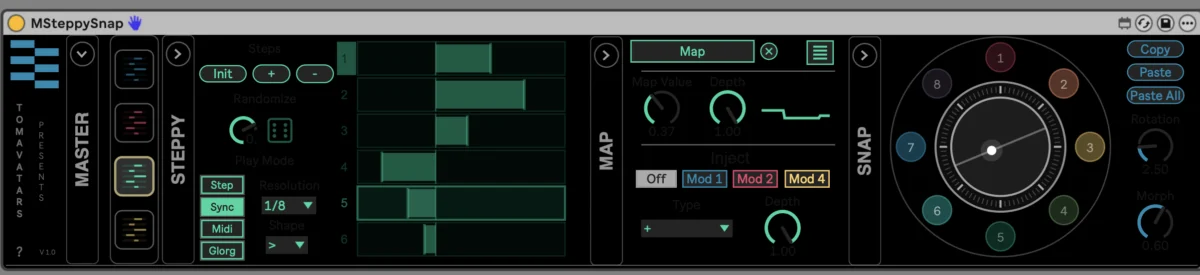
In the intricate world of digital audio production, achieving nuanced and dynamic sound design often involves navigating complex modulation matrices, intricate envelope shaping, and cascading free-running oscillators. These processes, while powerful, can sometimes obscure the creative flow, leading producers to seek more direct and intuitive methods. Addressing this challenge, Tomavatars has introduced MSteppySnap, a Max for Live device designed to streamline the creation of "steppy, snappy, whooshy, glorgy" modulation that is both playable and capture-ready. The device’s innovative approach promises to democratize complex modulation, making it accessible for immediate creative exploration and sophisticated arrangement.
Revolutionizing Modulation: The Core Concept of MSteppySnap
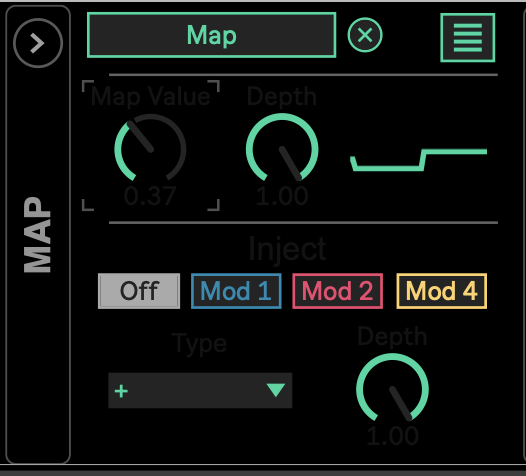
At its heart, MSteppySnap offers a refreshingly straightforward concept: create your modulation patterns, and then step through them with each incoming MIDI trigger. This paradigm shift moves away from the often convoluted setups previously required for similar sonic results. Users can seamlessly integrate MSteppySnap into their Ableton Live projects by placing it on a track alongside instruments and effects. The device allows for the intuitive drawing of modulation values, which can then be mapped to any parameter using standard Ableton Live mapping procedures. The true innovation lies in its response to MIDI input; as users play notes via MIDI, the device advances through its programmed modulation steps. This functionality extends to audio tracks, where MIDI can be routed from an external source, ensuring broad applicability across various production workflows.
The device’s design prioritizes immediate usability, a factor often cited as a hurdle for complex Max for Live creations. Tomavatars has notably addressed this by providing a remarkably clear and concise release trailer. This pedagogical approach is a significant asset, allowing users to grasp the device’s capabilities quickly. The video demonstrates not only the functional aspects of MSteppySnap but also its potential for live performance and studio arrangement, providing a tangible understanding of its creative applications. This clarity in presentation is a testament to the developers’ commitment to user experience, a crucial element in the competitive landscape of music production software.
The "Steppy" and "Snappy" Dimensions of Modulation
MSteppySnap’s functionality can be broadly categorized into its "steppy" and "snappy" components, each contributing to its unique modulation capabilities.
The Steppy Part: Sequential Modulation Driven by MIDI
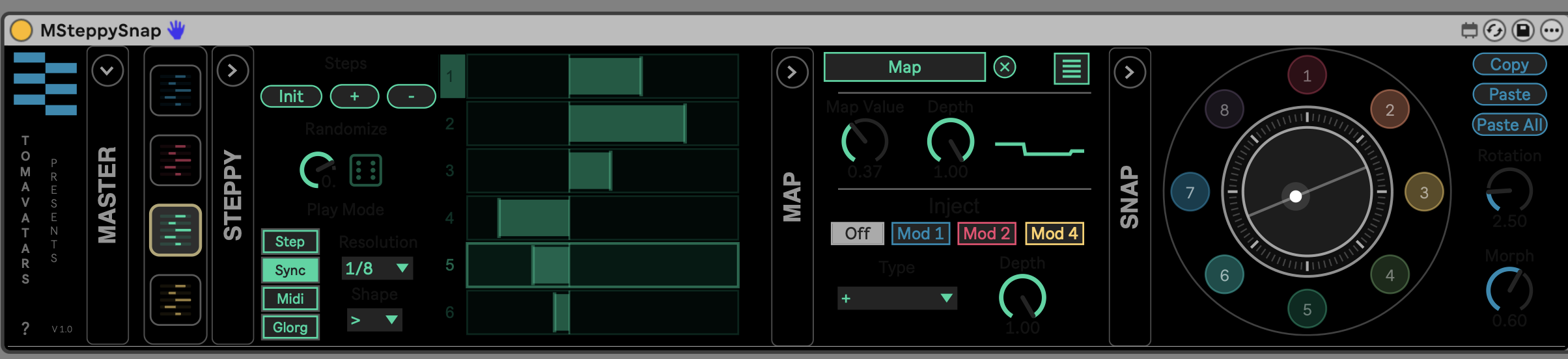
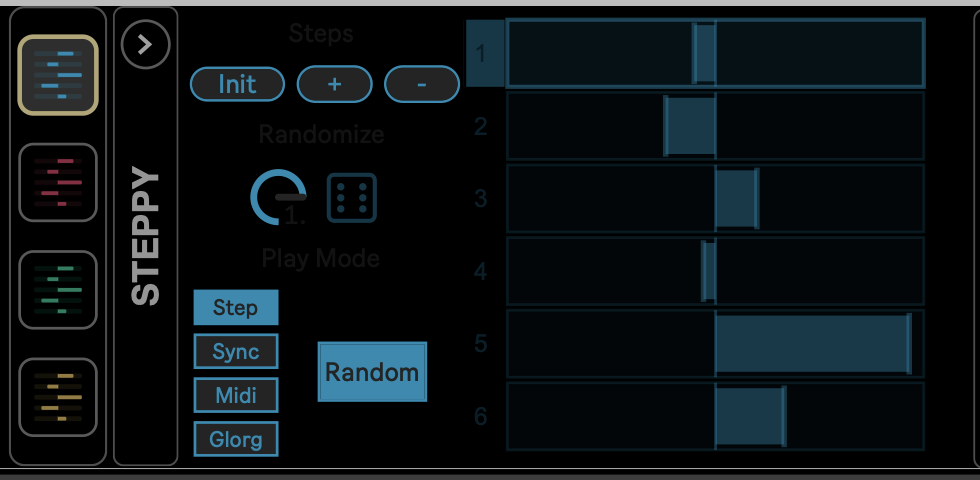
The foundational element of MSteppySnap is its "steppy" function. This refers to the sequential nature of the modulation. Once a modulation pattern is designed – essentially a series of distinct parameter values – it is divided into discrete steps. Each time the device receives a MIDI trigger, it progresses to the next step in the sequence. This creates a rhythmic and evolving modulation that can be precisely controlled.
The mechanism for triggering these steps offers flexibility. In its default "step" mode, any incoming MIDI note-on message acts as a trigger, advancing the modulation. For more nuanced control, the "midi" mode allows for scaling pitch to different modulation steps. This enables users to use the pitch of MIDI notes to select specific modulation steps, offering an additional layer of performance expressiveness. This is particularly useful for creating complex evolving textures and dynamic parameter changes that respond directly to musical input.
The Snappy Part: Snapshotting and Morphing Modulation States
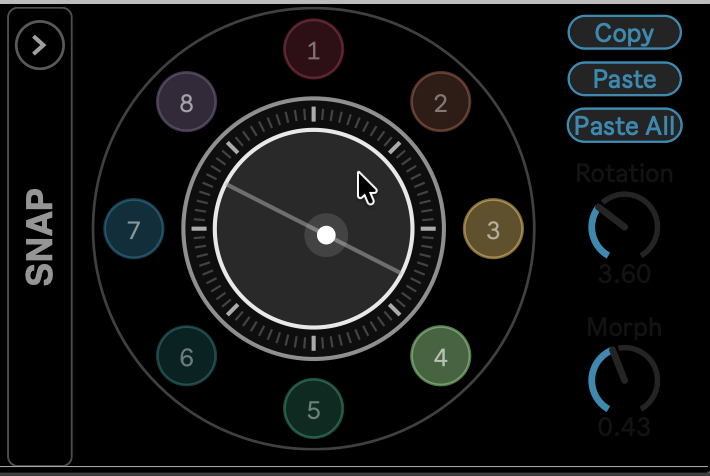
Complementing the sequential "steppy" aspect is the "snappy" element, which refers to the device’s ability to capture and recall modulation states through a radial layout of "snapshots." These snapshots represent distinct configurations of the modulation parameters at a given moment. Users can not only trigger these snapshots directly but also morph between them.
This morphing capability is a powerful tool for creating smooth, organic transitions between different modulation behaviors. It allows for fluid sonic evolution, moving beyond abrupt changes to more nuanced and musical shifts. This is invaluable in both live performance scenarios, where dynamic transitions are key to engaging an audience, and in studio arrangements, where subtle sonic development can elevate a track. The radial interface for managing these snapshots further enhances usability, providing a clear visual representation of the available modulation states and their relationships.
Modulation of Modulation: Building Complex Structures Intuitively
A key aspect of MSteppySnap’s design philosophy is its ability to facilitate "modulations of modulations." This concept, while potentially complex in other contexts, is handled with remarkable simplicity by this device. By sequencing and manipulating modulation itself, users can generate sophisticated sonic structures that would otherwise require extensive patching and configuration.
The device offers various "play modes" that allow users to strike a balance between live control and generative processes. This means that producers can choose which aspects of the modulation they want to control directly during a performance or arrangement, while other elements can operate more autonomously, evolving based on the programmed sequence. This intelligent design empowers users to focus on the creative intent, rather than getting lost in the technical minutiae.
Playability and Performance Integration
The emphasis on "playability" is a recurring theme in the discussion of MSteppySnap. The tactile satisfaction of triggering modulation steps with MIDI notes is a significant draw for performers and producers who favor an improvisational approach. The ability to play different presets and morph between snapshots adds further layers of interactive control.
Furthermore, MSteppySnap is designed for seamless integration with hardware controllers. Its mapping capabilities extend easily to devices like the Ableton Push, and it can also be configured for custom MIDI controllers. This allows for a hands-on, performance-oriented workflow, transforming modulation from a background process into an active, engaging element of the creative act. The device encourages a workflow that is less about setting and forgetting and more about real-time manipulation and jamming, fostering a more immediate connection between the artist and their sound.
Scalability: From Simple to Complex Modulation
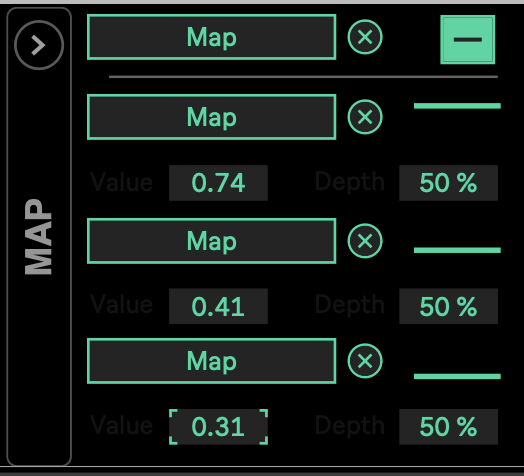
MSteppySnap’s architecture is designed to be scalable, accommodating a wide range of complexity. For users who require a straightforward, single-lane modulation sequence with just a few steps, the device provides an uncomplicated entry point. However, it also offers the ability to layer multiple lanes and map up to four parameters per lane. This extensibility allows users to build increasingly intricate modulation patterns as their needs and creative ambitions grow.
The interface itself contributes to this ease of use and scalability. It features clear color-coding for visual organization and an intuitive randomization function, which can be a powerful tool for sparking new ideas and exploring unexpected sonic territories. This unified and well-organized interface ensures that even complex configurations remain manageable and visually coherent.
Synergy with Other Tomavatars Devices
MSteppySnap is presented as a complementary tool to other offerings from Tomavatars, notably MGenBend. While MGenBend excels at time-based warping and pitch manipulation, MSteppySnap focuses on sequential and snapshot-based parameter modulation. This synergistic relationship allows producers to combine the distinct strengths of each device, creating even richer and more dynamic sonic landscapes. The combination enables a comprehensive approach to sound design, encompassing both fluid, evolving textures and precisely controlled, step-based parameter changes.
The "Glorg" Ecosystem: A Glimpse into Future Development
An intriguing aspect of MSteppySnap’s release is its connection to a broader, somewhat enigmatic project referred to as "Glorg." While the full capabilities of Glorg remain largely undisclosed, its mention suggests an evolving ecosystem of tools and concepts from Tomavatars. This hints at a potential future where MSteppySnap and related devices might interact within a larger framework, offering even more advanced and interconnected creative possibilities. The developer’s playful yet intriguing references to "Glorg overlords" suggest a creative and perhaps experimental direction for future developments, sparking curiosity within the user community.
Availability and Developer Background
MSteppySnap is available for purchase through Tomavatars’ Gumroad page, positioned as a "Max for Live Modulation Powerhouse." This release further solidifies Tomavatars’ reputation for creating innovative and user-friendly Max for Live devices. The developer has a history of producing highly regarded tools, including SBAM, which was previously highlighted among favorite Max for Live devices. Their work often demonstrates a deep understanding of creative production workflows and a commitment to pushing the boundaries of what is possible within the Ableton Live environment.
The accompanying release materials also feature demonstrations of MSteppySnap in action. One video showcases the creator experimenting with the device, constructing an entire track sketch using MSteppySnap for all its sonic elements. This practical demonstration serves as a compelling testament to the device’s versatility and power. The developer’s own musical output, including an album created entirely on a Dirtywave M3 without Ableton Live, underscores a commitment to diverse musical exploration and technical proficiency.
Broader Implications for Sound Design and Music Production
The introduction of MSteppySnap arrives at a time when music production software continues to evolve towards greater flexibility and user-driven customization. Devices like MSteppySnap address a growing demand for tools that empower artists to craft unique sonic identities without requiring extensive technical expertise. By simplifying complex modulation, it democratizes access to sophisticated sound design techniques, enabling a wider range of producers to achieve professional-sounding results.
The emphasis on "playability" also reflects a broader trend in music production, where the lines between composition, performance, and sound design are increasingly blurred. Tools that facilitate real-time interaction and improvisation are highly valued, as they foster a more organic and engaging creative process. MSteppySnap’s ability to integrate seamlessly with MIDI controllers and performance interfaces further cements its role in this evolving landscape.
The availability of MSteppySnap coincides with promotional periods for Ableton Live and its Suite edition, which includes Max for Live. This timing likely encourages new and existing users to explore the creative potential of the platform, with MSteppySnap serving as a prime example of the innovative tools available within the Max for Live ecosystem. The ongoing sales and upgrades for Ableton Live Suite present an opportune moment for producers to invest in tools that can significantly enhance their creative output.
In conclusion, MSteppySnap by Tomavatars represents a significant advancement in accessible and intuitive modulation for Ableton Live users. Its blend of sequential stepping, snapshot morphing, and direct MIDI control offers a powerful yet easy-to-grasp approach to complex sound design. The device not only streamlines intricate modulation tasks but also encourages a more playful and performative interaction with sound, making it a valuable addition to the toolkit of any electronic music producer.