Nayara Elvina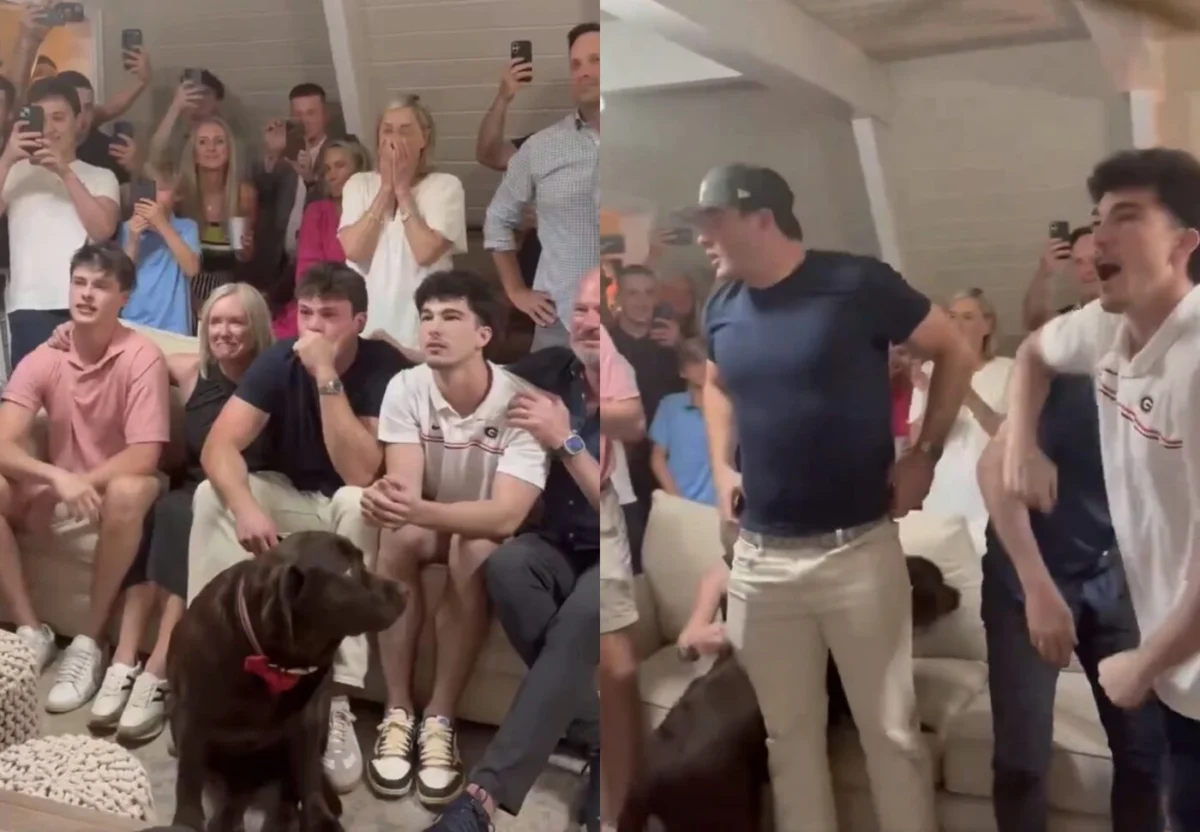
The 2026 NFL Draft concluded its three-day residency in Pittsburgh this weekend, marking a pivotal turning point for 257 collegiate athletes who transitioned into the professional ranks. While the event featured high-profile selections and strategic maneuvers by all 32 franchises, one of the most widely circulated moments occurred far from the main stage. Oscar Delp, a standout tight end from the University of Georgia, was selected by the New Orleans Saints with the 73rd overall pick in the third round. However, the technical details of his scouting report were momentarily eclipsed by a domestic scene that captured the attention of national audiences: as Delp rose to celebrate his selection with family and friends, his chocolate laboratory seized the opportunity to occupy his vacated seat on the living room sofa.
This lighthearted incident underscored the increasingly personal nature of the NFL Draft, which has evolved into a multi-platform media event where the private lives of prospects are frequently showcased. While several top prospects opted to attend the green room ceremonies in Pittsburgh, many others, including the first overall selection, quarterback Fernando Mendoza, chose to remain in their hometowns. Delp’s selection on Friday night served as a highlight for both the Saints’ rebuilding efforts and the Georgia Bulldogs’ continued reputation as a premier developmental program for NFL-caliber talent.
Chronology of the 2026 NFL Draft and the Saints’ Selection Process
The 2026 NFL Draft followed the traditional three-day format, beginning with the first round on Thursday evening. The New Orleans Saints entered the draft with a clear mandate to revitalize an offensive unit that had struggled with consistency during the 2025 season. In the first round, the Saints addressed their perimeter needs by selecting wide receiver Jordyn Tyson out of Arizona State. This move was intended to provide second-year quarterback Tyler Shough with a dynamic vertical threat.
As the draft moved into its second day on Friday, New Orleans shifted its focus toward the trenches and versatile offensive weapons. In the second round, the Saints selected defensive tackle Christen Miller, a former teammate of Delp at Georgia, bolstering their interior defensive line. By the time the third round commenced, the Saints’ front office, led by their scouting department, identified Oscar Delp as the optimal choice for the 73rd overall pick.
The selection of Delp was the culmination of a four-year evaluation process. Unlike many contemporary athletes who utilize the NCAA Transfer Portal to seek more immediate playing time or lucrative Name, Image, and Likeness (NIL) opportunities, Delp remained committed to the University of Georgia for the duration of his collegiate career. This stability is increasingly rare in the modern landscape of college football and was reportedly a factor in the Saints’ evaluation of his character and professional maturity.
Analytical Profile: Oscar Delp’s Impact at the University of Georgia
Oscar Delp’s tenure at Georgia was defined by his reliability and his ability to contribute within a highly competitive offensive system. Georgia has earned a reputation as "Tight End U" in recent years, consistently producing elite prospects at the position. Delp followed in the footsteps of predecessors who set high standards for both blocking and receiving capabilities.
During his senior campaign in Athens, Delp recorded 20 receptions for 261 yards and a touchdown. While these statistics might appear modest compared to primary wide receivers, they must be viewed within the context of Georgia’s offensive philosophy, which frequently utilizes multiple tight end sets. Delp shared significant playing time with Lawson Luckie, another high-caliber prospect, requiring both players to be efficient with their targets.
Over the course of his four-year career with the Bulldogs, Delp accumulated 70 receptions for 854 yards and nine touchdowns. Beyond the raw data, NFL scouts praised Delp for his "pro-style" frame and his technical proficiency as an in-line blocker. At 6’5" and approximately 245 pounds, Delp possesses the physical dimensions required to contend with NFL-level linebackers and defensive ends. His durability and experience in the Southeastern Conference (SEC)—often cited as the closest collegiate approximation to the NFL—provided the Saints with a high degree of certainty regarding his developmental floor.
Strategic Implications for the New Orleans Saints’ Offense
The New Orleans Saints’ decision to prioritize a tight end in the third round reflects a broader shift in their offensive strategy under the leadership of their current coaching staff. During the 2025 season, the Saints’ tight end production was historically low. The roster featured three players at the position, yet none of them recorded more than two receptions over the course of the entire season.
The bulk of the "tight end" responsibilities had been handled by veteran Taysom Hill. Hill, a versatile athlete known for his ability to play quarterback, fullback, and special teams, served as a primary offensive spark plug for years. However, with Hill’s contract set to expire and the organization opting not to pursue an immediate extension, a significant void emerged in the Saints’ depth chart.
By drafting Delp, the Saints are signaling a transition toward a more traditional offensive structure. While Hill provided unconventional playmaking, Delp offers a consistent presence in the passing game and a reliable asset in pass protection. This is particularly critical for Tyler Shough, the Saints’ young quarterback. As Shough enters his second year, the presence of a dependable "safety valve" at tight end is expected to improve his completion percentage and reduce the pressure he faces in the pocket.
Comparative Context: The 2026 Draft Class
The 2026 draft class was noted for its depth at several key positions, but the tight end group was considered top-heavy. By securing Delp at the 73rd spot, analysts suggest the Saints achieved significant value. The draft began with high expectations for Fernando Mendoza, the quarterback who went first overall, setting a standard for a class that focused heavily on offensive reconstruction.
The Saints’ draft strategy mirrored a league-wide trend of prioritizing SEC talent. The familiarity between Delp and his Georgia teammate Christen Miller is also expected to aid in their transition to the professional environment in New Orleans. Team chemistry is often an overlooked aspect of the draft, and having familiar faces in the locker room can expedite the acclimation process for rookies.
Regional Integration and Professional Outlook
As Delp prepares to relocate to New Orleans, often referred to as the "Big Easy," he enters a city with a unique cultural landscape and a fervent fan base. The viral moment involving his dog has already endeared him to a segment of the Saints’ following, highlighting the intersection of sports and social media. New Orleans is known for its pet-friendly atmosphere, featuring numerous establishments that cater to animal owners, and the city’s annual "Mystic Krewe of Barkus" parade during the Mardi Gras season.
From a professional standpoint, Delp’s immediate focus will be on the Saints’ upcoming rookie minicamp and the subsequent organized team activities (OTAs). The transition from the Georgia Bulldogs’ playbook to an NFL system is substantial, but Delp’s four years of experience in a disciplined collegiate program provide a strong foundation.
Financial analysts note that as a third-round pick, Delp is expected to sign a four-year contract consistent with the NFL’s rookie wage scale. While the exact figures are subject to the league’s salary cap adjustments, third-round selections typically receive significant signing bonuses and guaranteed money, reflecting their status as expected contributors to the 53-man roster.
Conclusion and Broader Impact
The selection of Oscar Delp by the New Orleans Saints serves as a microcosm of the 2026 NFL Draft: a blend of high-stakes professional maneuvering and human-interest narratives. For the Saints, the move is a calculated attempt to fix a glaring weakness in their offensive production and provide their young quarterback with the tools necessary for success. For Delp, it is the fulfillment of a four-year journey at one of the nation’s top football programs.
While the image of a chocolate lab reclaiming a spot on a couch may remain a favorite anecdote for fans, the reality of the NFL is far more demanding. Delp will soon trade the comfort of his home for the intensity of the Caesars Superdome. As the Saints look to rebound from a challenging 2025 season, the integration of players like Jordyn Tyson, Christen Miller, and Oscar Delp will be the primary metric by which the success of this draft class is measured. For now, the Saints appear confident that they have found a foundational piece for their future, and a player whose path to the pros was marked by both collegiate excellence and a viral moment of domestic levity.