Johan Budi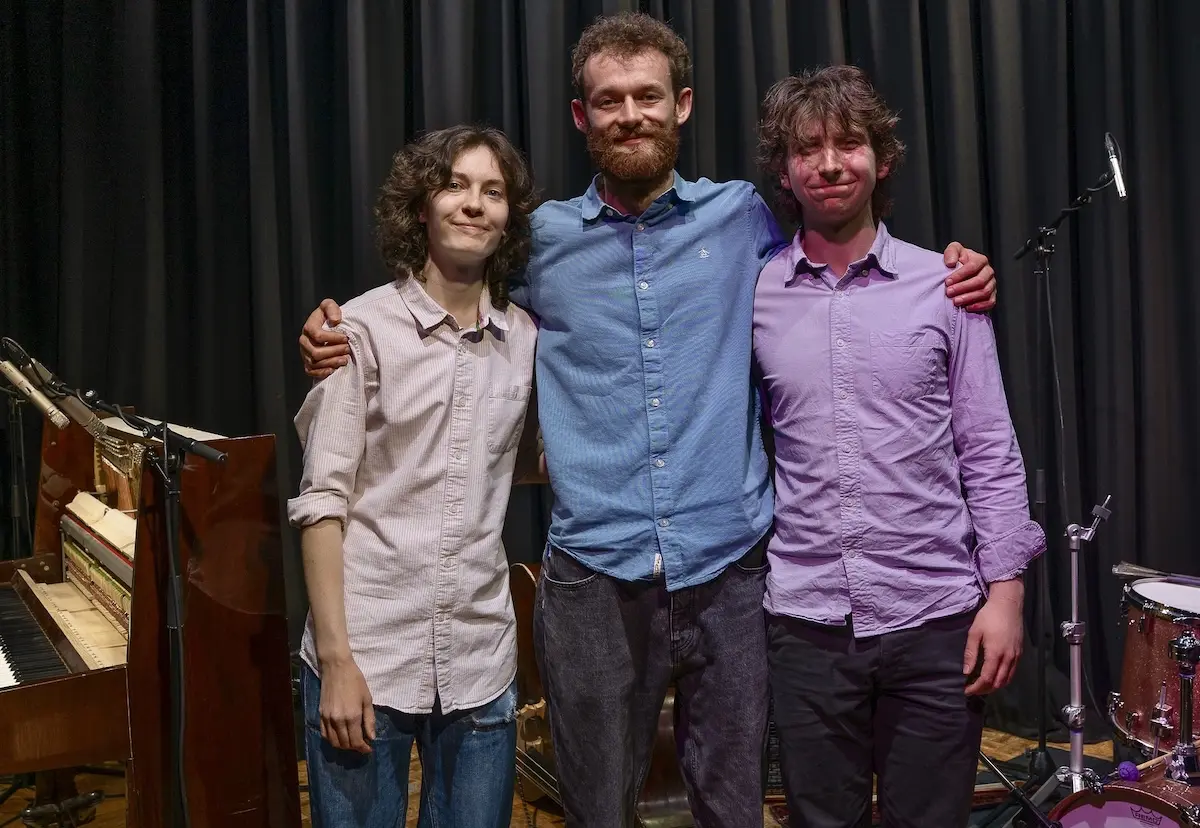
The landscape of contemporary jazz in the British Isles is currently undergoing a significant shift, characterized by a return to regional identity and a departure from the traditional hierarchies of the piano trio. This evolution was on full display on April 26, 2026, at the Melville Community Arts Centre in Abergavenny, where the Nils Kavanagh Trio delivered a performance that synthesized technical virtuosity with a deep, almost ancestral connection to place. Featuring Nils Kavanagh on piano, Sam Green on drums, and guest bassist Ursula Harrison, the concert served as a showcase for a new generation of musicians who are redefining the "post-Bill Evans" aesthetic for a modern audience.
Kavanagh, a pianist whose reputation has ascended rapidly following his recognition as the Young Irish Jazz Musician winner in 2022 and his status as a finalist in the 2024 BBC Young Jazz Musician contest, represents a growing movement of "localist" jazz. Much like his Scottish contemporary Fergus McCreadie, Kavanagh draws heavily from the topography and folklore of his home. Born in Sligo—a region synonymous with the mists and myths of W.B. Yeats—Kavanagh’s music is an exploration of both his Irish roots and his partial Danish heritage. This duality of "Hibernian" and Nordic influences provides a unique sonic palette that distinguishes his work within the crowded field of contemporary European jazz.
The Evolution of the Egalitarian Trio
The performance at Abergavenny highlighted a critical shift in the structural dynamics of the jazz trio. Historically, the piano trio was often a vehicle for a singular soloist, with the bass and drums serving as what critics have termed "perimeter metronomes"—reliable but secondary timekeepers. However, following the path blazed by the Esbjörn Svensson Trio (E.S.T.) and the Brad Mehldau Trio, the Nils Kavanagh Trio operates as a democratic unit.
Ursula Harrison, the winner of the 2024 BBC Young Jazz Musician title, provided a compelling demonstration of this modern balance. Her role was not merely supportive; she acted as an organizational force within the compositions, her intensity and assurance providing a grounded counterpoint to Kavanagh’s more kinetic style. Sam Green, the trio’s regular drummer, complemented this with a performance defined by understated power and grace. The interplay between the three musicians suggested a shared intellectual and emotional burden, where the narrative of the music was distributed equally across the instruments.
Kavanagh’s physical presence at the piano further emphasized this intensity. Observers noted a performance style that fluctuated between the introspective, bowed posture of Bill Evans and the more gymnastic, visceral movements associated with Keith Jarrett. This physicality is more than mere showmanship; it reflects a deep engagement with the instrument, a "recoiling and re-engaging" that suggests a struggle to extract specific emotional truths from the keys.
A Chronology of the Performance: From Folklore to Modern Lament
The setlist for the evening was primarily drawn from the trio’s album No Expectations, a body of work that serves as a musical map of Kavanagh’s influences. The concert opened with a sequence that established the trio’s ability to navigate complex thematic waters.
One of the highlights was Queen Maeve’s Grave, a composition that draws inspiration from the burial site of the legendary sovereign at the summit of Knocknarea in County Sligo. The piece successfully resurrected the spirit of the ancient figure through what was described as a "pagan clamour." This track demonstrated Kavanagh’s ability to translate the rugged, ancient energy of the Irish landscape into a sophisticated jazz idiom.
In stark contrast was Your Drawer, Empty, a poignant reflection on loss. The piece was reportedly written after an audience member at a previous engagement shared the story of her cat’s passing. The composition served as a study in emotional versatility; while the previous tracks had leaned into the celebratory and the mythical, this work utilized Harrison’s "super arco" bass work to create a tone of profound lamentation. The use of the bow on the double bass added a vocal-like quality to the performance, underscoring the trio’s ability to handle delicate, narrative-driven themes.
The performance then moved into more atmospheric territory with The Old House On The Hill. Inspired by a derelict structure in Sligo, the piece utilized sonic effects to simulate a gathering thunderstorm, moving from light percussive "showers" to a full-scale auditory deluge. This was followed by For The Tired And Weary, a more somber, contemplative piece that Kavanagh introduced as an acknowledgement of the artist’s role in society. The composition reflects on the perceived lack of utility in art compared to the "front line" toil of the working world, yet it transitioned seamlessly into the rhythmic, onomatopoeic Bornholmerur, a tribute to a Danish grandfather clock that showcased the trio’s precision and timing.
Reinterpreting the Great American Songbook
While much of the evening focused on original compositions, the trio also addressed the history of jazz through the lens of the Great American Songbook. Reinterpreting standards like Young And Foolish and Stella By Starlight, the ensemble paid homage to the methods of Keith Jarrett.
The trio’s approach to Stella By Starlight was particularly noteworthy for its refusal to settle into a predictable pattern. They adopted an exploratory opening, gradually working their way into the core melody before launching into a hard-swinging groove. This section of the performance allowed for significant exchanges between the bass and drums, proving that while the trio is firmly rooted in modern "localist" jazz, they possess a deep fluency in the traditional language of swing and bop.
Analytical Perspective: Structure and Predictability
As the concert progressed toward its conclusion with the title track No Expectations, a distinct structural pattern emerged in Kavanagh’s writing. His compositions often follow an "arc-like" trajectory: starting with an uncertain, atmospheric direction, building through a calculated crescendo toward a summit of high-intensity fervour, and eventually resolving into quietude.
From a critical perspective, this "sound-storm" approach, while effective in capturing the audience’s attention, has been noted for a degree of predictability. The regulation of rising action and climax suggests a highly disciplined approach to composition, but some analysts suggest it may leave less room for the raw, spontaneous improvisation that defined earlier eras of jazz. Nevertheless, the capacity crowd at the Melville Community Arts Centre appeared captivated by the regulated intensity of the performance, suggesting that Kavanagh has found a successful formula for engaging modern listeners.
Broader Implications for the Jazz Circuit
The success of the Nils Kavanagh Trio’s performance in Abergavenny is indicative of a broader trend in the UK and Irish jazz scenes. The influence of regional conservatories and youth competitions is creating a pipeline of highly disciplined, technically proficient musicians who are increasingly looking toward their own cultural heritages for inspiration rather than solely toward the American tradition.
The collaboration between Kavanagh and Harrison is particularly significant. Both are products of a competitive environment that prizes innovation as much as technical skill. Harrison’s win at the 2024 BBC Young Jazz Musician contest and Kavanagh’s 2022 Irish title mark them as leaders of a cohort that is likely to dominate the European festival circuit for the remainder of the decade.
The absence of an encore at the Abergavenny gig, despite the enthusiasm of the capacity crowd, left a lingering sense of "what if" among the attendees. Some suggested a reprise of a track like Dwelling might have provided a fitting conclusion, allowing the audience to re-experience the "Milesian" (referring to the legendary ancient settlers of Ireland) and Danish homeliness that defines Kavanagh’s aesthetic.
Conclusion
The Nils Kavanagh Trio’s performance on April 26, 2026, was more than just a concert; it was a statement on the durability and adaptability of the jazz piano trio. By grounding his music in the specific geography of Sligo and Denmark, Kavanagh has moved beyond the abstract and into the narrative. Supported by the formidable talents of Ursula Harrison and Sam Green, the trio has established itself as a vital voice in the evolution of the genre, balancing the "negative vibes" of a derelict house with the "pagan clamour" of ancient queens. As they continue to tour the material from No Expectations, the trio’s influence on the post-Bill Evans landscape is expected to grow, further cementing the role of locale and history in the future of improvised music.